Oxford

Pigs, pranks, but no Dave

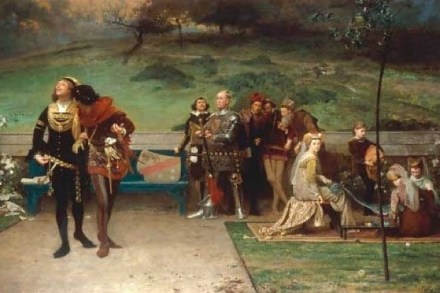
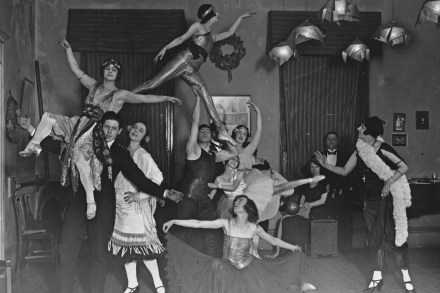
I attended the Piers Gaveston Society in the mid-1980s, when I was at Oxford in the year above David Cameron. The parties were debauched and tremendous fun. But Dave was not there. The most remarkable figure at the heart of the Gaveston was Gottfried von-Bismarck, the Iron Chancellor’s great-great-grandson who, after his untimely death at just 44 in 2007, was said by the Telegraph to have led an ‘exotic life of gilded aimlessness’. The paper’s beautifully written obituary almost paid tribute to this ‘louche German aristocrat with a multifaceted history as a pleasure-seeking heroin addict, hell-raising alcoholic, flamboyant waster and reckless and extravagant host of homosexual orgies…’ I did not

The shocking truth about the Piers Gaveston society? It’s incredibly dull

Regarding the pig’s ear of a story currently circulating thanks to Lord Ashcroft’s vendetta against David Cameron, perhaps I could add a codicil. As many readers will know, the allegation is that at a Piers Gaveston event attended by David Cameron while a student at Oxford, our present Prime Minister went through an initiation ritual which involved him putting his private member into a pig’s mouth. I doubt that anybody – not even Labour spin doctors or Lord Ashcroft – seriously believes the story. It stinks of the university-years version of a Chinese whisper, whereby any exaggerated urban legend is attributed to the person who becomes most well known after

Universal appeal

As a novelist, Iain Pears doesn’t repeat himself, and he gives with a generous hand. In Arcadia, he provides a dystopian vision of the 23rd century, scholarly espionage set in Cold War Oxford, and an Arts-and-Crafts pastoral called Anterwold, which involves swords and scholars and may or may not be the product of the imagination of one of the characters elsewhere. All this (and much else) is somehow connected to an 18th-century text known as The Devil’s Handwriting containing a mathematical formulation that wasn’t invented until five centuries later. Confused? It gets far more complicated. Arcadia is not so much a novel as a cornucopia of narratives. These unfold through

Degrees in disaster

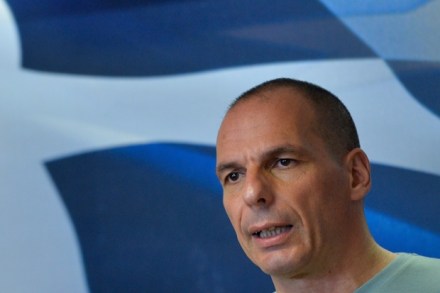
So farewell, Yanis Varoufakis. You used to be Greece’s finance minister. Then you resigned, or were you sacked? You took control of the Greek economy six months ago when it was growing. Yes, honestly! Growth last year ran at 0.8 per cent, with forecasts of 3 per cent this year. The government had a primary budget surplus. Unemployment was falling. Until you came along. Varoufakis was a product of British universities. He read economics at Essex and mathematical statistics at Birmingham, returning to Essex to do a PhD in economics. With the benefit of his British university education he returned to Greece and, during his short time in office, obliterated the

From Major to minor

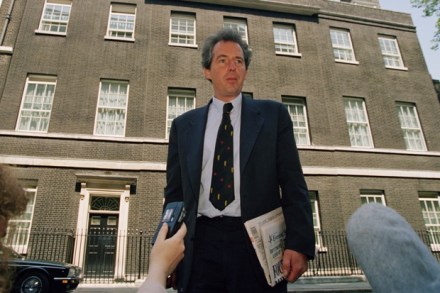
‘Lobbying,’ writes William Waldegrave in this extraordinary memoir, ‘takes many forms.’ But he has surely reported a variant hitherto unrecorded in the annals of politics. The Cardinal Archbishop of Cardiff (‘splendidly robed and well supported by priests and other attendants’) had come to lobby him (then an education minister) against the closure of a Catholic teacher-training college. After discussion the archbishop suggested their respective entourages leave the room. Face to face and alone with Waldegrave, the archbishop told him he had a distinguished 16th-century ancestor, who was a candidate for beatification. The unspoken implication was left hanging. ‘The Roman Catholic college duly closed,’ adds Waldegrave, ‘and I heard no more

Students worrying about ‘value for money’ miss the point of an arts degree

University towns are already awash with fur-trimmed gowns and proud parents, but behind the smiles there’s a glimmer of resentment: four in 10 of those graduating this year think they’ve been ripped-off. According to a survey of 1000 final-year students by ComRes, students are split over whether they think their degree was good value for money. One factor determining their verdict was their subject, with two-thirds of those studying science, technology, engineering and maths saying their course was worth the fees. Just 44 per cent of humanities and social science students agreed. An obvious reason for this discrepancy is contact time: medics get at least 20 contact hours a week

From ambrosia to zabaglione

Should sugar be taxed? Some of the contributors to The Oxford Companion to Sugar and Sweets seem to think so. Sugar certainly appears less appealing than it used to. Its negative effect on our teeth is undeniable, and it now takes the rap for many of the ills we formerly blamed on fats, such as obesity, high blood pressure and diabetes. But sugar is also now bound up with politics, because of its historical connection with slavery. Our awareness of this we owe to the groundbreaking, imaginative scholarship of Sidney Mintz, whose 1985 Sweetness and Power: The Place of Sugar in Modern History is easily the most frequently referenced work

Young people should be wary of the Guardian’s university league table

This week, the Guardian published its annual university league table. The rankings are as bewildering to anyone acquainted with the reality of university reputations as they are misleading to anyone who is not. Should you wish to study Economics, for instance, you are told that you would do better taking an offer from Surrey (4) than LSE (13). If you’re really short of options, then you could settle for a place at Manchester (54) or Newcastle (60). Equally, for an aspiring physicist Leicester (5) or Hertfordshire (6) are deemed superior to Imperial (8) or indeed UCL (12). This list does not reflect what graduate employers actually think. From an employer’s perspective,

‘What will they do when I am gone?’

Edward Thomas was gloomy as Eeyore. In 1906 he complained to a friend that his writing ‘was suffering more & more from a silly but unavoidable nervous interest in the children’s movement in and out of the house’. The following year, he noted, I have no ‘interests’ at all, and marriage, he said, is ‘continually encrusting the soul’. To be fair, his life was a torment — depression, worrying about and writing for money, a miserable marriage — and perhaps most cruel of all he was denied the comfort we have, as later readers, of knowing that it will all turn out all right in the end. His was a

‘Anti-lad’ crusaders have begun a cultural cleansing of British universities

You can’t be on a campus for more than 10 minutes nowadays without hearing about inclusivity. Universities and students’ unions are mad for it. At the University of Sussex, a statement declaring that ‘The Union is committed to providing an inclusive and supportive environment’ has to be read, aloud, before every students’ union meeting. Students who want to set up a new society at the University of Bristol must satisfactorily prove that they will ‘respect and promote the Bristol SU values of equality, diversity, safe space and inclusivity’. It’s big in America, too. Not least at the University of Delaware, where, in 2007, it was revealed that the administration was

Reuniondues

A couple of weeks ago I returned to my old Oxford college for a ‘gaudy’ — posh, Oxford-speak for a reunion. This one was for those of us who came up to Brasenose in 1983, 1984 and 1985. That group includes the Prime Minister but, not surprisingly, he wasn’t there. I imagine he didn’t want to risk being photographed at a black-tie dinner with a bunch of his Oxford pals in the middle of a general election campaign — or maybe he just finds these occasions a bit of a bore. When I attended my first gaudy about 15 years ago, I assumed that the only people who’d bother to

Remembering Raymond

I first heard of Raymond Carr, who wrote for this magazine for more than 40 years, when I was in Italy in the army at the end of the second world war, and I had a letter from my sister in London saying that she had met the most marvellous man who was not only very funny but immensely clever, and I must meet him when I got back. By the time I did, Raymond had moved from being a wartime schoolmaster at Wellington College to a being a resident fellow of All Souls, Oxford. He was, yes, both immensely funny and rather grand. Raymond Carr had been educated at

What are we meant to say about grooming rings?

It is a tragedy that some of us are born in the wrong times. According to that increasingly gobby conduit of right-on morality, the NSPCC, girls these days feel compelled to act like porn stars in order to ingratiate themselves with boys. I am not sure quite what, in day to day life, this involves. I only know that they made no similar attempts during my adolescence, or if they did I didn’t notice. I vaguely recall one young lady in my school class telling me, when I was 14, that she had engaged in sexual intercourse the previous night with a boy from a neighbouring town. ‘What was it

Mini Election: Nicola Blackwood on fighting to hold one of the most marginal seats

If the Liberal Democrats stand any chance of making gains at the Conservatives expense, then Nicola Blackwood is precisely the sort of MP they need to depose. She won her seat, Oxford West and Abingdon, with a gossamer majority of 176 and its in the top three Lib Dem targets. Perhaps for that reason she has been in campaigning mode ever since she was elected. Vital statistics Seat Oxford West and Abingdon Party Conservative MP Nicola Blackwood Main opponent Liberal Democrats Majority 176 Latest Ashcroft poll 4% Lib Dem-Con swing Given Blackwood’s majority, few in 2010 would have expected her to hold onto the seat this time around. But since

Maybe it’s a problem when all artists are like James Blunt. But it’s worse when Labour MPs are like Chris Bryant

What should we do with James Blunt? This is what I have been asking myself. And I am not looking for comedy answers here, such as ‘Lock him in a shipping container and force him to listen to songs by James Blunt’ or ‘Allow him to become a properly recognised bit of Cockney rhyming slang’. No. It’s a genuine question. I refer, of course, to the enjoyable spat conducted this week via open letters to the Guardian, between the singer (private school and Bristol University), and the shadow culture secretary, Chris Bryant (private school and Oxford), over whether people in the arts are too posh. I don’t know why, even

Blunt is right. Being posh in the arts is career suicide

Yesterday saw Labour’s shadow minister for the arts, Chris Bryant MP, amusingly and justly savaged by the pop star James Blunt for some ill-advised remarks about the predominance of public school boys in the arts: he cited both the Old Harrovian Blunt and the Old Etonian Eddie Redmayne as evidence of a lack of diversity. Now, I am sure the multi-award-winning, multi-platinum-selling former Captain Blunt can look after himself, and during awards season, the Oscar-nominated Redmayne has other things on his plate, but it reminds this former actor of how narrow the arts really are. It was after my first successful audition in 2007, for a part in a Jacobean tragedy

Rugger, Robin Hood and Rupert of the Rhine: enthusiasms of the young Antonia Fraser

Despite it being a well known fact that Antonia Fraser had earthly parents, I had always imagined that she had somehow skipped infancy and emerged instead from a celestial cloud, surrounded by hordes of trumpet-wielding cherubim, a fully-formed Venus in pink and gold and white. Turreted castles, a constant shower of sovereigns, a title, a jewelry box whose contents might have made Liz Taylor wince: this was the milieu suggested by her tremendous beauty and mysterious half-smile. My History, a captivating memoir of her childhood and early youth, proves otherwise. In fact Antonia’s father, Frank Pakenham, was a second son who married the very clever daughter of a Harley Street

Four (more) reasons to loathe Oxford

Nick Cohen observed in a recent Spectator: ‘The graduates of Oxford’s Politics, Philosophy and Economics course form the largest single component of the most despised generation of politicians since the Great Reform Act.’ Who could argue? However, Oxford does not only lead the UK in punting, prime minister production and sales of academic gowns. Here are four more nightmarish records held by the city of dreaming spires: 1. Oxford is the most expensive locale in the UK outside of London. The average price-tag on a house in Oxford is £340,864 – eleven times average local annual earnings; also, roughly two-and-a-half times the typical house price in the UK’s cheapest city, Stirling, per

A woman who wears her homes like garments

Depending on your approach, home is where your heart is, where you hang your hat, or possibly where you hang yourself. Our homes reflect our characters, social milieux and finances, but we also reflect them. Leonard Woolf wrote that a house ‘has an immense influence on its inhabitants’, and contended that Monk’s House (where he lived with Virginia Woolf from 1919–1941) was ‘the most powerful moulder’ of how they had lived their lives. Taking a lead from this notion, Margaret Forster has produced a memoir focussing on the homes she has lived in throughout her 76 years. This is no history of the buildings or who came before, like Julie

My Schubert marathon

On 10 October, the Sheldonian Theatre in Oxford will host the first concert in ‘the biggest ever celebration of the life and work of Franz Schubert’. Over three weeks, all 650 songs (or thereabouts) will be performed, most of them in England’s oldest concert hall, the Holywell Music Room just around the corner from the Sheldonian. We’re promised the greatest assembly of Schubert singers in history: they include Sir Thomas Allen, Ian Bostridge, Sarah Connolly, James Gilchrist, Robert Holl, Wolfgang Holzmair, Angelika Kirchschlager, Christopher Maltman, Mark Padmore, Christoph Prégardien — plus the cream of accompanists: Julius Drake, Graham Johnson and Roger Vignoles. There will be orchestral, chamber and piano music,