Olaf scholz

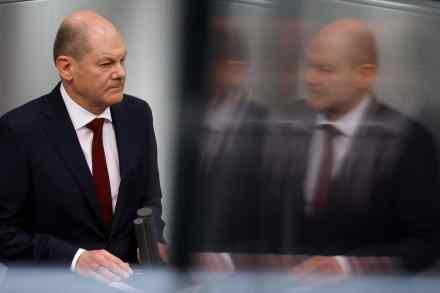
Olaf Scholz has won a hollow victory in Brandenburg’s state elections

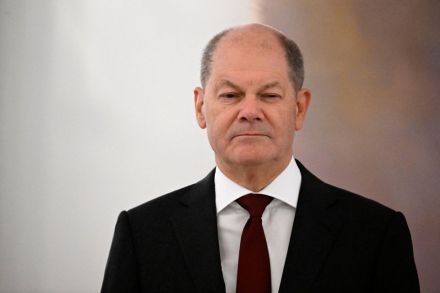
In what will surely come as a relief to the German chancellor Olaf Scholz, his SPD party has won this weekend’s state elections in Brandenburg. Securing themselves another term in power, the party squeaked past the far-right Alternative für Deutschland (AfD) with 30.7 per cent of the vote. The AfD missed out by just 1.2 percentage points – less than 26,000 votes – with 29.5 per cent of the vote, denying them the chance of a second victory at state level in three weeks. While it will in all probability take officials a day or two to verify the final result, it appears Sunday’s vote has secured the SPD 32 seats in Brandenburg’s parliament – just two more seats than AfD.
What’s behind Starmer’s ‘reset’ with Europe?

16 min listen

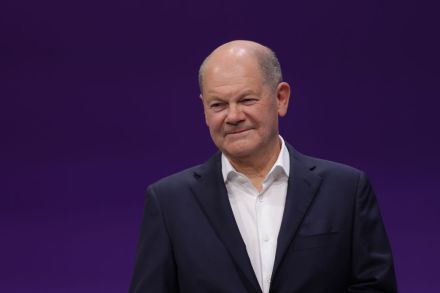
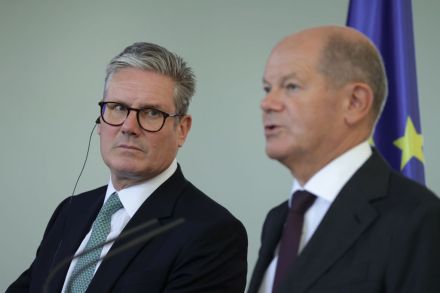
Keir Starmer has been in Germany today visiting Chancellor Olaf Scholz, before heading to Paris to meet President Macron. This is part of his plan to 'reset' relations with Europe - but how close does he want to get to the EU? And, given Brexit wounds are still raw, what's achievable?  James Heale is joined by Katy Balls and Sophia Gaston, head of the foreign policy unit at Policy Exchange to discuss. Produced by Megan McElroy and Patrick Gibbons.

Germany’s folly: Berlin has miscalculated on Russia and China

From our US edition

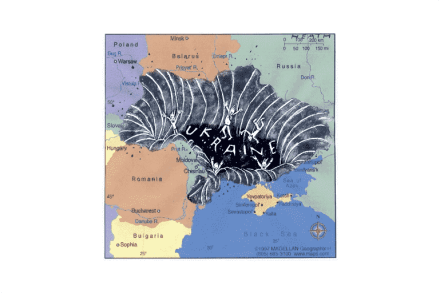
The notion that closer trade connections with the West will necessarily set less enlightened nations on a course toward prosperity and liberty is nonsense, but convenient nonsense. Germans have a phrase for it — Wandel durch Handel, change through trade — often given as a justification for their business dealings with Russia and China. Unfortunately, the change they triggered was in Germany. In one case it has been for the worse; in the other it appears to be headed that way. To start with Russia, it’s true that Germany’s ultimately disastrous dependency on natural gas from the east has its origins in the Ostpolitik years: by 1989 the Soviets were supplying West Germany with around a third of its gas.

germany

Biden is the war president Ukraine needs

From our US edition

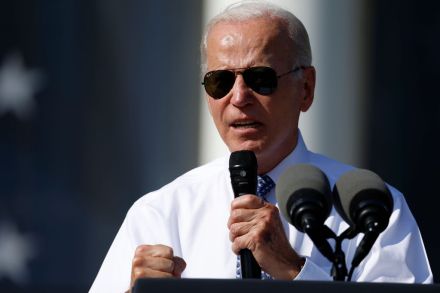
Joe Biden is upping the ante in Ukraine. Even as Vladimir Putin directs a fresh barrage of missiles, Biden is apparently planning a trip to Europe next month to deliver a major address on the anniversary of the Russian invasion and announce a substantial military aid package for Kyiv. Good for him. A speech in Poland or Lithuania — both leaders in the struggle against Russian aggression — will strengthen NATO and demonstrate that a year into the conflict, unity, not dissension, prevails when it comes to confronting Putin’s revanchist ambitions. At every step, Biden has checked Putin, who assumed he could invade and occupy Ukraine in a thrice.

What the US can do about Germany’s hardball on Ukraine

From our US edition

Once again, German Chancellor Olaf Scholz has crushed the hopes of NATO allies and, most of all, the millions of Ukrainians suffering under Russia’s assault. Originally, he refused to send tanks to Ukraine for fear that Russia would escalate the war. More recently, Scholz has said he'd only consider sending tanks if it was part of a coalition, not just Germany acting alone. Last week, the United Kingdom announced it would be sending Challenger 2 main battle tanks (MBT) to Ukraine, making it the first nation to supply modern, Western MBTs to Kyiv. Poland, Finland, and Denmark have also indicated that they would be willing to send their own Leopard 2 tanks. Those are German-origin weapons, so they first require a nod of approval from Berlin in order to export.

Germany’s Faustian entanglement with China

From our US edition

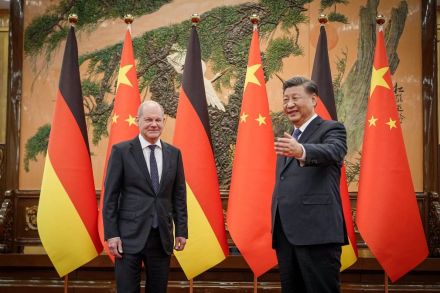
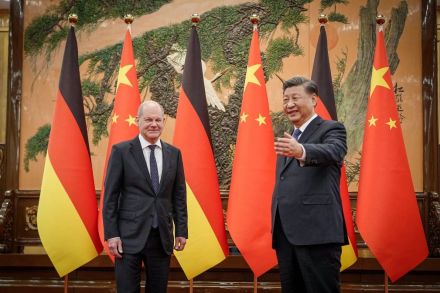
Back in November, German Chancellor Olaf Scholz met with Chinese Communist Party (CCP) chairman Xi Jinping. His visit to China was the first by a G7 leader in three years. Facing heated domestic and international pushback, Scholz framed his visit as an effort to “further develop” economic cooperation between Berlin and Beijing. In this context, such “further development” means further cementing Germany’s Faustian bargain with China, one in which European-based players, like Airbus and Volkswagen, claim immediate revenue — but at their long-term expense and at great strategic cost.

Xi’s nuclear warnings are a coup for Scholz

Checks and balances on Vladimir Putin don’t come from inside Russia. The people around him supported forced mobilisation, pushed his plans to annex eastern Ukraine, and wanted more nuclear posturing. Xi Jinping and Narendra Modi, of China and India, can do a much better job at constraining Putin. They’re the only two leaders of major powers that haven’t completely ostracised the Russian leader. He needs them to keep his struggling economy afloat. The pair are putting pressure on the Putin to avoid nuclear conflict. This morning, Xi warned Putin off using nukes for the first time, after saying in February that China and Russia’s friendship had ‘no limits’.

Olaf Scholz is tanking

North-Rhine Westphalia is Germany’s largest state, almost as large as the Netherlands. It was a traditional SPD fiefdom during the time of Helmut Kohl, but in 2005 it became a CDU state. Surely, if the SPD was on the march, ready to turn Germany’s regional politics red as it did the chancellery in last year’s election, a state like North-Rhine Westphalia would return to the party? But the big news from yesterday’s federal state elections is that the SPD, the party of German Chancellor Olaf Scholz, scored its worst-ever result in Westphalia: less than 27 per cent of the vote. The CDU won with 35.5 per cent and will probably form a coalition with the Greens.

Boris and Scholz parade the new Europe

Russia's invasion of Ukraine has changed Europe forever. That was the argument that Boris Johnson made on Friday when he held a joint press conference with German Chancellor Olaf Scholz. One of the changes Johnson was keen to emphasise was that European leaders are united in their support of Ukraine and against Putin. This, he argued, was one of the ways in which the Russian President had failed: he had sought to create divisions in Europe, but had 'demonstrably failed'. 'The Europe we knew just six weeks ago no longer exists: Putin's invasion strikes at the very foundations of the security of our continent,' he said, adding: 'Putin has steeled our resolve, sharpened our focus, and he has forced Europe to begin to rearm to guarantee our shared security.

Germany’s progressives have a Putin problem

Eighty-nine years ago this week, the German Social Democrats in the Reichstag cast the only votes opposing Adolf Hitler’s dictatorial power grab, the Enabling Act. Today’s SPD members often cite that moment as the proudest in their party’s 146-year history. With a memory like that, there is something awkward about the current SPD Chancellor’s position. Olaf Scholz is now having to come to terms with decades of SPD appeasement towards the dictator in Moscow. Before Putin’s invasion, Russian doves could be found across the German political spectrum, but Scholz's now-ruling SPD has an especially long and developed history of Kremlin cosiness.

Germany’s attitude to Russia is changing. Does it go far enough?

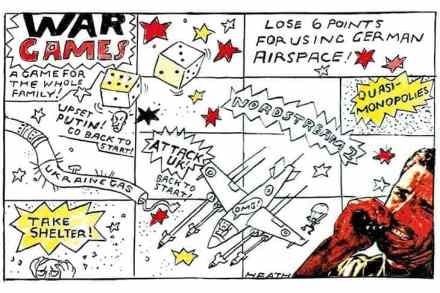
It’s hard to overstate the pace of the change now under way in Germany. A country that had been defined by its reluctance to deploy military force is now sending lethal weapons to Ukraine and promising €100 billion more in defence spending. The Nord Stream 2 pipeline, which would have ferried more Russian gas to Germany, has been abandoned. Germany has accepted Russia’s exclusion from the Swift banking system, in spite of the collateral economic damage. All of this adds up to the biggest policy shift that I can remember. Perhaps the most significant change is in the tone of German public debate. Take last weekend’s gathering of 100,000 on Berlin’s streets: it was not your usual anti-war protest.

Putin is making the EU great again

From our US edition

The Europeans have been jolted awake from their deep Pax Americana slumber, when the continent was largely content to eat the spoils of economic prosperity and allow the United States to do the heavy lifting on all things security. And we have Vladimir Putin to thank for it. Russia’s nearly week-long invasion of Ukraine has shocked the conscience of many who believed Europe would never return to the dark days of large-scale land warfare.

Germany has rejected Merkel’s military legacy

‘We are witnessing a turning point… the world is not the same anymore,’ said German Chancellor Olaf Scholz yesterday in a speech that will be remembered as the country’s biggest military shift since 1945. Staring down the barrel of Putin’s gun, Scholz announced a massive and immediate cash injection for Germany’s armed forces as well as a long-term commitment to higher defence spending. Russia’s unprovoked attack on Ukraine has pulled Germany out of decades of complacency and misguided pacifism. Foreign minister Annalena Baerbock seemed genuinely shocked at the discrepancy between Putin’s words during her visit to Moscow last month and his actions in Ukraine. She has said she feels betrayed: ‘stone-cold lied to.

A new Europe is emerging from this crisis

With every hour that Kiev holds out, the geopolitics of Europe changes more. Germany, which so values its prohibition on sending weapons into warzones, has just announced that it is sending 1,000 anti-tank weapons and 500 Stinger missiles to support the Ukrainian forces. I expect that defence spending will rise considerably in the coming years Germany is also allowing other Nato members to export arms with German-made parts to Ukraine — which will make a material difference to the supplies that the Ukrainian government receives. Yesterday evening, it was announced that Russian banks are going to be cut off from Swift.

Is Germany finally standing up to Russia and China?

When German chancellor Olaf Scholz met Russian president Vladimir Putin yesterday, the visuals said it all. As he had done with Emmanuel Macron, Putin kept his visitor at arm’s length, or rather at five metres’ length. Sitting at opposite ends of the Kremlin’s infamous long table, the two men were as physically far away from each other as they were on content. But Scholz did not seem intimidated by this. On the contrary. At the press conference that followed, he was assertive, even feisty. Are we seeing the beginnings of a post-Merkel foreign policy shift in Berlin?

Why does Germany look so weak on Russia?

From our US edition

A recent survey of Germans done by Forsa, amongst the most reputable polling institutions in that country, shows that at least in one way, the Cold War has not quite ended. A majority of West German respondents (52 percent) blame Russia for escalating the conflict with Ukraine, while a plurality of East German participants (43 percent) blame the United States. All respondents, meanwhile, plead for peace in the region and expressed fear of a looming war between Europe and Russia. The political repercussions here are very real. The generation born in the late 1960s, having been completely educated in the East German communist dictatorship, currently constitutes the most significant single voting block in the East.

Who will succeed Merkel?

The results of the German election have shifted somewhat since last night's exit poll. What we know for sure is that a red-red-green coalition — between the centre-left SPD, far-left Die Linke and the Greens — is short of a majority, which is contrary to what every single opinion poll projected in the last few weeks That is the single biggest news from the German elections. It deprives SPD leader Olaf Scholz of what he would have needed to force the free-market liberals of the FDP and Greens into a coalition, also known as the traffic light coalition. A coalition involving Die Linke could have been leveraged to sharpen minds, the threat of socialists and anti-capitalists having access to the chancellery. That threat is now gone and Scholz's negotiating position is weakened.