Obituaries

Baby takes her final bow

Thousands of social media users have taken to their keyboards to express shock and surprise at the death of Shirley Temple. Almost everyone, it seems, thought that the film star and diplomat had passed away many years ago: Shirley Temple - dead at 85. I had no idea she was still alive. — Gvac (@WMGvac) February 11, 2014 So shocked to read that Shirley Temple, the Academy award winning actress and former child star, was still alive. — John Johnsonson (@JohnJohnsonson) February 11, 2014   Shirley Temple was alive? — Mr Eugenides (@Mr_Eugenides) February 11, 2014 BREAKING NEWS: Shirley Temple was still alive until this week. — Hugh Armitage (@hugharmitage) February 11, 2014   This is a selection of thousands of similar comments.
In memory of my friend Alexandros Petersen – a victim of the Taliban

On Friday a Taliban suicide bomber detonated in downtown Kabul in the doorway of a Lebanese restaurant which was popular with foreigners. Two accomplices then went into the restaurant and gunned down the people inside. The victims included a Labour party candidate for the forthcoming European elections, the IMF’s country director and a young Afghan couple. They also included a friend and colleague, Alexandros Petersen. Educated in London, Alex worked for some years at the Henry Jackson Society as well as at the Atlantic Council and the Woodrow Wilson Center. He had recently joined the political science faculty of the American University in Afghanistan.

RIP: Simon Hoggart. The finest and funniest sketch writer to date

Terribly saddened to hear of the death of Simon Hoggart, a lovely writer and to my mind the finest and funniest purveyor of the House of Commons sketch that we have seen. I saw Simon, surprisingly, in concert in Canterbury, around about this time last year, delighting the audience with anecdotes from his many years watching politicians talk rubbish. We went for a curry afterwards and he seemed on good form, if frail from the punishing bouts of chemotherapy. He was a hugely gifted writer; certainly, the only writer in the English language who could tempt me to read anything about wine, other than the words ‘half price £4.99’.

Elizabeth Jane Howard 1923 – 2014

The novelist Elizabeth Jane Howard died yesterday at the age of 90. She is most famous for the series of 14 Cazelet novels; the last of which, All Change, was published last autumn. Here is a snippet from Nicola Shulman’s review of the book: ‘If there is anything in publishing to melt the realities of book reviewing into this delicious scene it’s the prospect of a new Cazalet novel. Not only do I get to read it in plain sight, but the 19-year break since the last one necessitates a re-read of the whole lot. Days and days, that means, immersed in the lives of that many-petalled flower of the home counties, the Cazalet family.

General ‘Stormin’ Norman’ Schwarzkopf: a tribute

'Stormin’ Norman' Schwarzkopf was a formidable figure: formidable in size, in his fearsome temper—and as a genius in the art of war. I first met the General in Oman a few weeks before the unleashing of the First Gulf War of 1990, where he commanded a remarkable array of coalition forces, including Egyptians and Syrians. At first glimpse it was hard to take seriously the bear-like figure, bursting out of his desert fatigues, with a cap that seemed several sizes too small. But within five minutes it was plain that here was a most remarkable man. Speaking very directly, he made it clear that the coming battle would be ‘short and sharp.’ He was surprisingly open in outlining his strategy.

RIP Leo Cooper

The publisher Leo Cooper has died aged 79. Cooper, who was the husband of novelist Jilly Cooper, had been suffering from Parkinson’s disease for many years. His widow told me last year that the Spectator brought her husband ‘a great amount of pleasure’ in his later years. He remained a subscriber long after his illness was diagnosed. ‘He would read it cover to cover every week,’ she said. Mr S would like to pass on the Spectator's condolences.

On borrowing Elmore Leonard

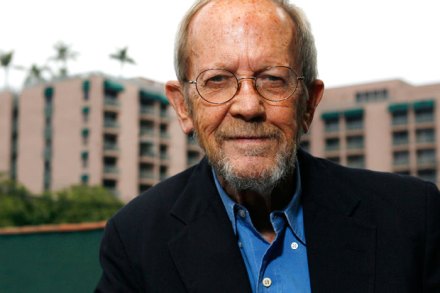
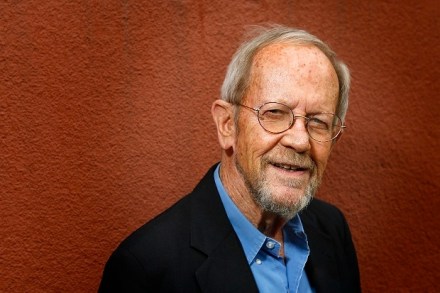
When you walk into a new branch library, or stumble across an unfamiliar secondhand bookshop, which writer do you look for? They can't be too obscure; the idea is to find something. They must be prolific; you're looking for something that's new to you. And they must be reliable: you want to be sure that your discovery will be worth your time. The classic answer is PG Wodehouse. Mine has always been Elmore Leonard. Leonard, whose death was announced today, was a consummate professional pleasure-giver. More than 40 novels over more than 50 years: first westerns, then crime, standard consistently high.

Elmore Leonard dies aged 87

Elmore Leonard has died aged 87. Leonard began his career as a hack and ended it as a modern master. His rule was: ‘if it sounds like writing, I rewrite it’. His writing became sparer over the years, perhaps reaching its purest form in Get Shorty, his best known work. His total war on adverbs and adjectives placed all the reader’s focus on his dialogue. Luckily, Leonard understood how speech worked both on the page and in the ear, and he grasped how characters could be developed through dialogue rather than description. This might explain why so many of his stories have been successfully adapted for big and small screens.

Trevor Grills: the terrible death of a Fisherman’s Friend

I first came to discover the beauty of the Cornish shanty singers Fisherman's Friends when I was on holiday in the West Country last year. I was late to the game and had bought a copy of their CD at Port Isaac on a whim. I assumed it was a novelty record that I would play once or twice on the car stereo on the way home. But as soon I heard the first phrase of the first tune, 'Shanty Man', I was hooked, reeled in, netted by the passion of this singing. The whole family was. And we know that CD by heart. Of all the songs, some humorous, some celebratory, some plain miserable, one stood out. 'The Last Leviathan', a lament to the death of a great whale, is quite simply one of the most beautiful songs I have ever heard.

Obituary of the Week: Jungleyes Love – Spectator Blogs

I've been on Jura on a Wedding Planning Immersion Course* these past few days so, apart from noting that the Pope is retiring (upon which I have no opinion), I've not been paying little attention to the outside world. Some things have crept through, however. Among them this splendid obituary in today's Telegraph. The intro is arresting and in the best tradition of Telegraph obituaries: Jungleyes Love, who has died aged 56, was an Old Harrovian hippie who traded in runic jewellery, dinosaur eggs and fossilised animal excrement, which he sold from his shop on the tourist trail to Kew Gardens in south-west London. Well, you want to know more, don't you? It may not surprise you to discover that Mr Love died unmarried. *Which, I'll have you know, I survived more or less intact.

Death of a Gadfly Playwright

Hugh Leonard has died. His Telegraph obituary reeks of boozy afternoons in Dublin's finest hostelries: Indeed, Leonard relished quarrels. "An Irish literary movement," he used to say, "is when two playwrights are on speaking terms"... Leonard resented what he saw as his exclusion from the Irish arts world, and poured vitriol on lesser performers. The trouble with Ireland, he said, was that it was "a country full of genius, but with absolutely no talent". His critics were equally forthright about the Leonard ego. He was, said one, not an original playwright, merely "an adapter always in search of a plug". Leonard retorted in kind. He eagerly debunked other famous names, including Brendan Behan, who, he said, owed all his success to Joan Littlewood's editing.

Michael Winner’s final words

Michael Winner’s family have announced that he’s paid his last bill and checked out. The 77-year-old director of Death Wish and world renowned food critic died at home in West London earlier today. In what became his last Winner's Dinners column, Winner recently gave his loyal readership a glimpse at his final days, recounting his trip to Switzerland where he stayed at Mr Steerpike’s favourite haunt, the Gstaad Palace, where his ‘bill for 12 nights was 47,900 Swiss francs (£34,963 at 1.37 Swiss francs to the pound, the rate I got at Marks & Spencer).' Winner poignantly signed off with the observation: ‘Gstaad is packed with famous names, all fighting not to be in this column. I totally understand.

Thank you, Christopher Martin-Jenkins

The children who grew up when Christopher Martin-Jenkins began to commentate on cricket (both in print and on the air) have got old. CMJ’s 40-odd year career has been brought to a premature end by cancer; and the cricket writing world has paid tribute to its companion. The pieces by Mike Selvey, Jonathan Agnew and Michael Atherton are very touching, and very, very funny. CMJ’s innate unpunctuality and disorganisation conspired to make episodes of glorious farce. He arrived at Lords to commentate on a Test Match that was being played at the Oval. He stopped a car journey to make an urgent phone call, only to discover that he had mistaken the TV remote control in his hotel room for his mobile phone.

Robert Hughes RIP

It has been a bad week for men of letters, with the loss of Gore Vidal a few days ago and Robert Hughes today. Gore was famous for his feuds, but Hughes, a Spectator contributor, had a softer side, unless your art was phony: 'The greater the artist, the greater the doubt. Perfect confidence is given to the less talented as a consolation prize.' And the man once dubbed the ‘greatest art critic in the world’ was certainly sure of himself. Bret Easton Ellis recalls: ‘The only time I came in contact with Robert Hughes was in 1991 when he threatened to leave Random House if they published American Psycho.

Gitta Sereny and the truth about evil

The death of the author and journalist Gitta Sereny earlier this month drew some strangely critical notices. One piece even tried to blame her for a current cultural tendency to claim people are not responsible for their own actions. Though this was a dissenting view, there was a more general seam of criticism which ran through many obituaries. The claim was, essentially, that Sereny grew too uncomfortably close to her subjects and even ended up on occasions sympathising with them or excusing them. It is probably on the basis of her biography of Albert Speer that most of the criticism has come. It is true that Sereny got close to Speer and liked him.

RIP Ray Bradbury, 1920 – 2012

The revered science fiction, horror and mystery writer Ray Bradbury has died aged 91. He was best known for Fahrenheit 451, his blockbuster of 1953. He became known as a curmudgeon, and was something of a Luddite. He was a virulent opponent of the internet, which he viewed as a transient nonsense, doomed to fail. He refused to allow his books to be sold in digital editions, a stance which was curtailed last year when his publishers made it a condition of his contract. His recalcitrance was perhaps borne of his love of the printed book and of old fashioned libraries. He maintained that libraries were one of the few places that children and adults could ‘meet people’ (in the pages of books).

Amarillo Slim, 1928-2012

From one great Texan to another: Amarillo Slim, giant of poker and peddler of western wisecracks, has died. Now that poker is a mainstream entertainment, you have to do some brain-cudgeling to recall the era when it seemed distant and exotic and even attractively seedy. All that has gone the way of all flesh now that you can, should you be up all night, watch poker on television every day of the week. Poker players, these days, are ordinary guys who can come from anywhere. The game has become a corporate, branded business and, while this has enriched many people, one kinda feels something has been lost too. In the 1980s, Anthony Holden's account of a year as a professional poker player seemed a revelation. People lived like this?

RIP Lord Walker

Peter Walker, Baron Walker of Worcester, has died aged 78. He served as a Cabinet Minister in both the Heath and Thatcher governments. He was what might be termed derisively as a ‘Wet’, and was a leading figure on the liberal side of the Conservative Party for thirty years. He was a founder member of the Tory Reform Group, which propounds One Nation Toryism and economic efficiency, ideals that have, it might be argued, profoundly influenced David Cameron’s leadership. Walker served with distinction throughout the Thatcher government, carrying the brief for Wales, Energy and Food and Fisheries. As Energy Secretary, he was a key figure during the Miner’s Strike.

Alan Ruddock, 1960-2010

I suppose that relatively few people in England knew Alan Ruddock, who died from a heart attack on Sunday aged just 49, but in Scottish and Irish journalistic circles he was a considerable figure. As Kevin Myers reminds us, he defied the IRA as editor of the Sunday Times's Irish edition. Later, as Stewart Kirkpatrick remembers, he was a very fine editor of the Scotsman, presiding over the paper and its coverage of the first elections to the new Scottish parliament in 1999. Later still, and foolishly, the Irish Times declined to give Alan the chance to edit the old lady of d'Olier St. Their loss.

Obituary of the Day

Some New Year cheer, courtesy of the Daily Telegraph's obituaries column. The deceased, in this instance, is Lady Anne Cavendish-Bentinck, one of Britain's largest landowners who, had she not been born on the distaff side, would have been the Duke of Portland. Anyway... Her grandfather, the 6th Duke, a younger half-brother of the Countess of Strathmore (mother of Queen Elizabeth the Queen Mother), had not been in direct line for the dukedom. He succeeded his eccentric second cousin, who had a horror of being seen and so supervised the digging of a network of underground passages and rooms at Welbeck – these included a tunnel 1¼ miles long, and wide enough for two carriages to pass.