Nuclear power

Meet the anti-Gretas: the women celebrating nuclear energy

Over the course of their lives, Americans have an average carbon footprint of 1,300 tons of CO2. Paris Ortiz-Wines, a young woman from San Francisco, has already canceled hers out. She could hop on a flight every week for the rest of her life, eat ribeyes at every meal and sip almond milk all day long, and still be in the clear. Back in 2021, Ortiz-Wines played a key role in the campaign that stopped the closure of California’s only nuclear power plant, Diablo Canyon. This has already saved more than 30 million tons of CO2 emissions.  Ortiz-Wines is part of a new generation of women advocating for nuclear energy, even though surveys show most women are skeptics. Call them the Nuclear Power Rangers.

greta thunberg nuclear

Why going nuclear is humanity’s only hope

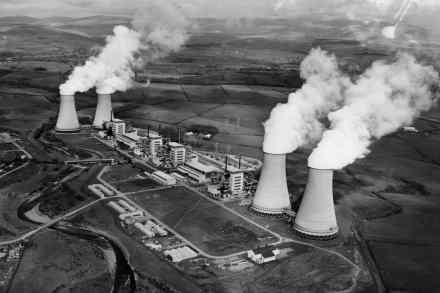
There are three parties when it comes to global warming. First, the hard right, which says it isn’t happening, and even if it is that we can do nothing about it. Then there are the far leftish Luddites who would smash all power generation systems, allowing only wind turbines, wave power etc. Finally there are the suave centrists who know perfectly well that only nuclear can save us. This book will become their bible. Tim Gregory is a nuclear scientist who works at Sellafield. He has a serious problem defending his conviction that nuclear is the answer: radiophobia, the terror people feel about radioactivity. Superficially, this terror seems well-founded.

Voters get the politicians they deserve – so get ready for PM Polanski

It is a truism that in a democracy the voters get the government they deserve – and so we should probably not complain too much if our next prime minister is a snaggle-toothed halfwit who presents to voters an infantile diorama drawn from fairy tales in which dancing is more important than manufacturing, people can be whatever they want to be, the military should be abolished and everyone will be happy except for the Jews, who are to be hounded and vilified and attacked. Zack Polanski’s Greens are the embodiment of what the American writer Rob K. Henderson called ‘luxury beliefs’, which are beliefs in the main based upon fictions – and they are soaring in the polls.

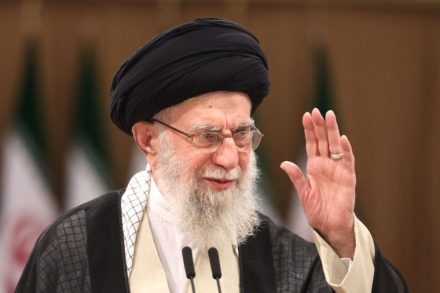
Will Iran take the nuclear win?

From our US edition

To enrich or not enrich? This seems to have been the question dividing Iranian and American negotiators, and there are swelling choruses in Tehran and Washington who hold strong views on the matter. In a report leaked to Axios, it appears that during the last round of talks, the US gave Iran a proposal that would allow limited low-level uranium enrichment for a specified period. The proposal suggested that Iran would be forbidden from building new enrichment facilities and must dismantle “critical infrastructure for conversion and processing of uranium,” adding that research and development on centrifuges would also have to stop. Sanctions relief will only come once Iran is demonstrably adhering to the terms of the deal and has clearly paused its underground enrichment activities.

Iran

Architecture has hit a nadir at the Venice Biennale

Much of Venice’s Giardini this year was as boarded up as a British high street. The Israeli pavilion was empty, apparently awaiting refurbishment. (At the 2024 art biennale, the curators had closed it in the face of pro-Palestinian protests, prompting the latter to demand it should be opened, presumably so they could protest its closure.) The Russian pavilion has been shut, by order of the Biennale, because of the Ukraine war. The Venezuelan pavilion was closed (‘Go look at nature instead,’ said the workman when I approached it.) The Czechoslovakian was shut, the turns taken by the two independent nations faltering during Covid.

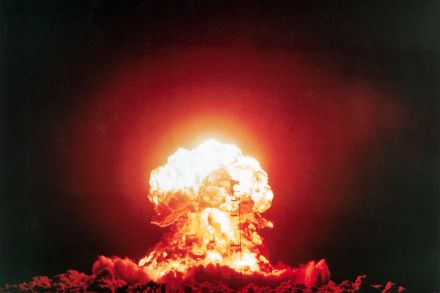
The problem with putting US nukes in Poland

From our US edition

Nuclear weapons are becoming a major issue for Poland. One way or another, both the Polish president and prime minister want their country to host tactical nuclear weapons as a deterrent against President Putin’s Russia. In the latest — but by no means the first — statement on this issue, President Andrzej Duda revealed that he recently discussed stationing American tactical nuclear weapons in Poland with Keith Kellogg, the US special envoy for Ukraine. In an interview with the Financial Times, Duda said: “I think it’s not only that the time has come, but that it would be safer if those weapons were already here.

Meet Meredith Angwin, the grandmother changing the energy industry

From our US edition

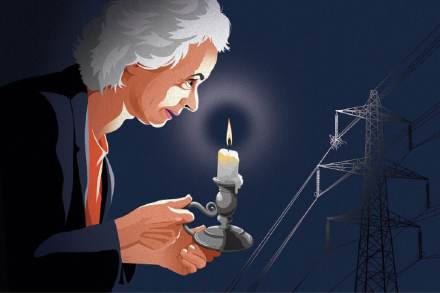
Along a twist in the Connecticut River within an old-style colonial Vermont home lives Meredith Angwin, the Jewish grandmother who saw what almost no one else did: the coming downfall of the American electrical system. Three years ago, Angwin self-published Shorting the Grid: The Hidden Fragility of Our Electric Grid, the first-ever explanation for laymen of America’s labyrinthine, abstruse power markets. Her diagnosis was simple and troubling: when America moved away from the monopoly utility system in the Nineties toward restructured electricity markets, all players were divested from the responsibility of keeping the lights on.

Angwin

Nuclear power is the answer to our energy woes

From our US edition

America is about to spend $126.9 billion on renewable energy thanks to the Inflation Reduction Act. When this is added to the already existing production tax credits, the total is $240 billion. Greens everywhere are rejoicing. Paul Krugman took to the New York Times to wonder if the Democrats had just saved the world from climate change. And why not? America has seen emissions drop to 4.8 trillion tons a year since 2000. That’s a one-trillion ton decrease. In fact, since America has embarked on building out wind and solar, the country has returned to 1949 levels of emissions. But are renewables really to thank? After all, wind and solar only accounted for about 12 percent of our electricity supply in 2021.

nuclear

California goes lights-out thanks to green energy

From our US edition

California has gone full pagan — it lives and dies by the weather. Over the last few days, the state’s power grid has groaned under the strain of a massive heatwave. Combine that with a hydropower-sapping drought and you’ve got a recipe for blackouts. While major weather events pose challenges for any electricity system, California’s has become uniquely vulnerable to blackouts thanks to an over-investment in weather-dependent wind and solar. Every night during the heatwave, solar experiences its scheduled defeat at the hands of sunset and Californians are left praying for the wind to blow and and the imports to flow.

Why are we so afraid of nuclear power? (2021)

The scientist, environmentalist, futurist, inventor and creator of the Gaia hypothesis James Lovelock has died, aged 103. Last October, he wrote the following piece about the importance of nuclear power. May he rest in peace. The climate change summit in Glasgow will have one important part of the discussion missing: the role of nuclear power. It seems the government is in no mood for a discussion with the nuclear industry — every one of its applications to exhibit at the COP26 summit has been rejected. That’s a shame, because there are plenty of myths to be addressed. We could discuss the lessons from the plant at Fukushima, seriously harmed by a tsunami in March 2011.

No. 10 prepares decades-long energy plan

The government's delayed energy strategy is finally due to be released this week. The Prime Minister is due to unveil his plans on Thursday, which will supposedly ensure that the UK is self-reliant on energy supply after Russia's invasion of Ukraine. Not that the proposals will lead to much change overnight. Instead, they are focussed on ensuring self-reliance in the long term – with many of the plans likely to take decades to come to fruition.  So, what's on the agenda? Part of the reason the energy strategy has been delayed several times is a difference of opinion between the Department for Business, Energy & Industrial Strategy, No. 10 and the Treasury.

Biden finalizes terrible new Iran deal

From our US edition

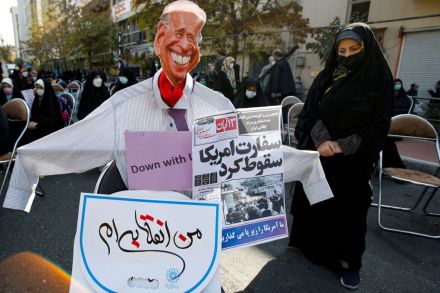
Several sources in the negotiating team in Vienna tell Cockburn we can expect a "new Iran deal" between the Biden administration and the mullahs as early as Thursday morning. For the last few months, Iran has been behaving stubbornly in negotiations, refusing to back down from its “red lines,” including lifting sanctions on Supreme Leader Ali Khamenei and the Islamic Revolutionary Guard Corps. Instead, it's kept to the original timeline on the Iran deal, which would allow it to test ballistic missiles next year and remove all restrictions by 2030. Now, Iran’s resolve seems to have paid off. Sanctions: Cockburn's sources say the Biden team is set to waive virtually all sanctions on Iran.

iran

Sam Brinton and the dorkification of kink

From our US edition

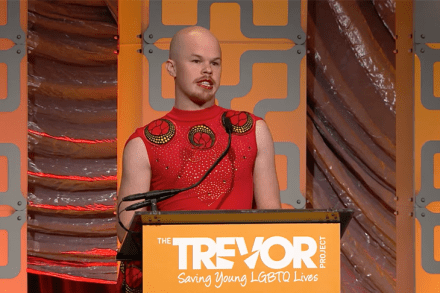
Remember when gay people were cool? Libertines and romantics, reviled, spat-upon, defiant and irreverent? Gay life could be sexy and thrilling, tragic and shameful. If the homosexual offered nothing else, he carried an arsenal of bawdy tales that left any housewife glued and dithering at a cocktail party. Judge his life as you may, but never call it ordinary. The mystique is gone. That dusky boundary between the dark and dirty and the workaday has evaporated. Assimilation has meant the faces of gay are either vapid, Instagram-famous semen receptacles, complete goobers or repulsive shrills. And they’ve dragged the rest of us, by association, into their orbit of cringe. The Forces of Biden particularly love the latter two.

sam brinton

Ed Davey’s nuclear U-turn

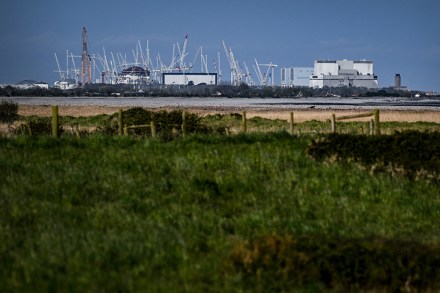
Sir Ed Davey has called on the government to ‘keep the British taxpayer out of’ the Sizewell C nuclear plant, arguing that a part nationalisation of the project would ‘be a total betrayal of taxpayers and cost every household in Britain a small fortune’. Ministers are reportedly considering plans to strip the Chinese state-owned energy firm CGN of its 20 per cent stake, bringing the costs onto the Exchequer’s books. Mr S is pleased to see the Liberal Democrat leader stand as a lone voice for fiscal prudence — particularly because he hasn’t always been opposed to cripplingly costly nuclear deals. Between 2012 and 2015, Davey served as secretary of state for energy in the coalition government.

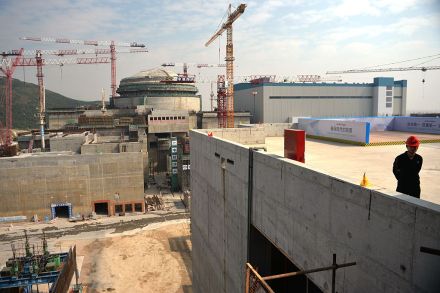
How Taishan almost became China’s Chernobyl

Days after a nuclear power plant began spewing deadly radiation, the ruling Communist party pushed ahead with a huge and self-indulgent celebration of the sort that had become a hallmark of its rule. This was no time for bad news, and the party delayed, dithered and hid the truth about the deadly events that were unfolding.  That was the Chernobyl disaster in 1986. Soviet leaders allowed Kiev’s International Workers’ Day celebrations to go ahead. The participants, meanwhile, were oblivious to events at the stricken reactor just 60 miles away.