Emmet Penney

Emmet Penney is the editor of Grid Brief, a newsletter on fossil fuels, renewables, nuclear, and the grid

Meet Meredith Angwin, the grandmother changing the energy industry

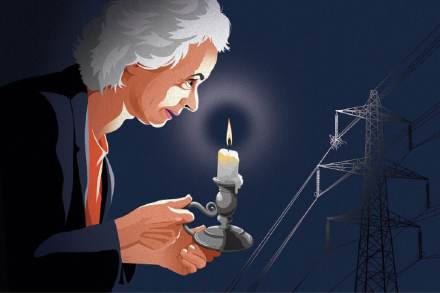
Along a twist in the Connecticut River within an old-style colonial Vermont home lives Meredith Angwin, the Jewish grandmother who saw what almost no one else did: the coming downfall of the American electrical system. Three years ago, Angwin self-published Shorting the Grid: The Hidden Fragility of Our Electric Grid, the first-ever explanation for laymen of America’s labyrinthine, abstruse power markets. Her diagnosis was simple and troubling: when America moved away from the monopoly utility system in the Nineties toward restructured electricity markets, all players were divested from the responsibility of keeping the lights on.
Angwin

ESG is a surprise boon for fossil fuel giants

ESG, or environmental, social and corporate governance, has taken the financial world by storm. It first hit the scene in a 2004 United Nations report that argued the financial sector could rack up more profits if it focused on carbon dioxide reduction and UN-approved progressive causes and has ballooned into a big, green financial juggernaut. In 2021, ESG assets under management hit an estimated $35 trillion. Bloomberg projects that by 2025 $53 trillion will be invested in ESG vehicles — that’s over one third of global assets under management and over five times 2007’s total of $10 trillion of ESG assets.  The main thrust is to hasten the renewable energy transition to solve climate change by diverting capital from fossil projects to various green projects.

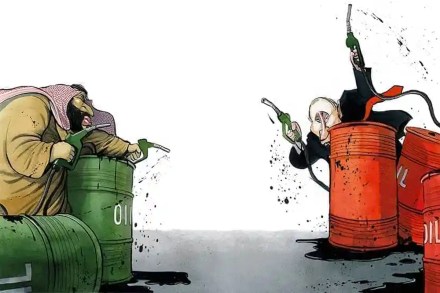
opec aramco esg

The EPA’s death warrant for fossil fuel plants

The Environmental Protection Agency has just released its most aggressive emissions rules to date. The rules demand that coal and gas plants capture almost all of their emissions. In essence, fossil fuel plants will have to cut their emissions by 90 percent between 2035 and 2040 or shut down. Unless, of course, they can afford to run carbon capture systems or swap out natural gas for hydrogen. But is that even realistic? “By requiring carbon capture or hydrogen burning, two technologies that haven’t even had multiple successful demonstration projects, let alone mature supply chains, the Biden administration is essentially signing a death warrant for fossil fuel plants,” Isaac Orr, an energy analyst at the Center for the American Experiment, said in an email.

epa fossil fuels

Nuclear power is the answer to our energy woes

America is about to spend $126.9 billion on renewable energy thanks to the Inflation Reduction Act. When this is added to the already existing production tax credits, the total is $240 billion. Greens everywhere are rejoicing. Paul Krugman took to the New York Times to wonder if the Democrats had just saved the world from climate change. And why not? America has seen emissions drop to 4.8 trillion tons a year since 2000. That’s a one-trillion ton decrease. In fact, since America has embarked on building out wind and solar, the country has returned to 1949 levels of emissions. But are renewables really to thank? After all, wind and solar only accounted for about 12 percent of our electricity supply in 2021.

nuclear

The West is on the road to energy ruin

From our UK edition

Since the beginning of the Ukraine war and the sanctions it triggered, energy prices have skyrocketed. Liz Truss has warned that soaring energy bills are a 'price worth paying' in order to stand up against Vladimir Putin. President Joe Biden has called this year’s rocketing bills 'Putin’s price hike.' Margrethe Vestager, vice president of the European Commission, has encouraged Europeans to take short, cold showers to conserve energy. 'When you turn off the water, say ‘Take that, Putin!’' she urged. But are the high prices really Putin’s fault? He didn’t sanction himself, after all. It’s the West that chose to cut itself off from the Russian fossil fuels upon which it had come to rely.

California goes lights-out thanks to green energy

California has gone full pagan — it lives and dies by the weather. Over the last few days, the state’s power grid has groaned under the strain of a massive heatwave. Combine that with a hydropower-sapping drought and you’ve got a recipe for blackouts. While major weather events pose challenges for any electricity system, California’s has become uniquely vulnerable to blackouts thanks to an over-investment in weather-dependent wind and solar. Every night during the heatwave, solar experiences its scheduled defeat at the hands of sunset and Californians are left praying for the wind to blow and and the imports to flow.