Novels

Evelyn Waugh’s sincerest form of flattery

From our US edition

T.S. Eliot once made the significant point, in an essay on Philip Massinger, that “Immature poets imitate; mature poets steal; bad poets deface what they take, and good poets make it into something better, or at least something different.” Eliot knew exactly what he was talking about (himself). However, change “poets” to “novelists” and the same pertinence applies. In fact, this wholesale, covert purloining may be true of all artists in all ages in all the seven arts. Let’s start with some backstory. Evelyn Waugh (1903-66), as they say, needs no introduction. William Gerhardie (1895-1977) is almost wholly forgotten today, but in the 1920s he was the luminous young wunderkind of English literature — a kind of Donna Tartt or Sally Rooney of his times.

gerhardie

Searching for the American summer novel

From our US edition

I am convinced that the sweet-smelling tycoons that run candle-making companies must have read too much Proust when they were younger. With scents like “Inspire,” “Bohemia,” and “Sunny Daydream,” they cannot be aiming for something as cheap and transitory as mere tawdry olfactory pleasure. They must have become all but obsessed by À la Recherche du Temps Perdu, and be aiming for something akin to his narrator’s nostalgic odyssey upon tasting a madeleine: “and at once the vicissitudes of life had become indifferent to me, its disasters innocuous, its brevity illusory.” Rather pretentious, oui — but what other excuse can there be for a candle that proclaims it can smell like a cool library at midnight, or the depths of some dreamy reverie?

Why don’t men read novels?

From our US edition

It’s hard to move on the literary internet — or that nest of inky vipers, literary Twitter — without coming across a piece that expresses one of two opinions: the first, that men don’t read literary fiction and that this limits their understanding and experience of the world; and the second, that the figure of the heterosexual white man has been crudely and cruelly excluded from the literary debate. “Bring back our Roth, our Amis, our Updike,” these commentators cry, as if they hadn’t received enough acclaim and attention in the past few decades, and if reading them had become illegal rather than just moderately unfashionable.

Is the white male novelist disappearing?

From our US edition

“Women Dominate Shortlist for International Booker Prize,” reads the headline of Alex Marshall’s Thursday article for the New York Times. He notes that five of the six books on the shortlist this year were written by women. The novels do look interesting — I haven’t read Tokarczuk’s The Books of Jacob or Jon Fosse’s latest in his New Name series and want to pick up both — but it’s hardly news that women “dominate” the International Booker. They have dominated every major literary prize in the last few years. Four of the last six winners of the International Booker have been women. While winners of the Booker (not the International Booker) over the last six years are split right down the middle, women outnumber men twenty-two to fourteen on the shortlist.

Turning the page on James Bond

From our US edition

The much-delayed 25th James Bond film, No Time To Die, is finally limping onto the big screen. There are gadget-packed car chases, scarred supervillains and revelations as to the loyalties of supposedly sympathetic characters, but there are also new, socially-conscious elements. Lashana Lynch plays a PoC 00-agent who is very much Bond’s equal at spycraft. Fleabag’s Phoebe Waller-Bridge has been parachuted in as a script doctor, to notify us that this is a post-#MeToo Bond. Without a simultaneous release on a streaming service, Daniel Craig’s swan song as Bond will stand or fall on its theatrical performance.

bond

Remembering David Storey, giant of postwar English culture

There is a famous story about David Storey. It is set in 1976 at the Royal Court where, for ten years, his plays had first been seen before heading away to the West End and Broadway. That same week he had won the Booker Prize with his novel Saville. With unrivalled success across fiction, theatre and cinema, Storey was a giant of postwar English culture. He was also, compared with most writers, an actual giant. This Sporting Life, his novel made into a groundbreaking film, grew out of his experience of playing rugby league for Leeds. Unlike Saville, his new play Mother’s Day was greeted by a raspberry fanfare after Alun Armstrong dried during a speech containing 27 uses of the f-word.

A novel approach to New Zealand’s wine

The last Saturday of lockdown — inshallah — and we were discussing literature. Specifically, when does a detective story become a novel? T.S. Eliot edited the World’s Classics edition of The Moonstone and gave a copy to A.E. Housman, with the inscription: ‘The best detective story in English or any other language.’ Surely Eliot was right. The Moonstone and The Woman in White are superb detective fiction. But they are not novels. Poor Wilkie Collins did try to write novels. Nobody read them. Nobody was wise. We more or less agreed. Ian Rankin, Reginald Hill, P.D. James, Dorothy Sayers, James Lee Burke: all regularly cross the frontier into novelism. Perhaps we should adopt the French term: roman policier.

Elena Ferrante’s Italian job

From our US edition

As there’s nothing more annoying than when someone tells you ‘I told you so’, I shall refrain from telling you so for as long as possible. But it will be hard. There I was, lying on the couch one afternoon at work and reading Twitter, when I noticed LitHub appearing in my feed. Now, I am usually as glad to see LitHub in my feed as a prize race horse is to see cat food in his. LitHub is one of those trendy, sort-of academic websites that talks about things like ‘digital humanities’ and does its earnest best to take the fun out of reading and the point out of book-reviewing when, as any-one knows, reading and writing book reviews is a waste of time unless there’s blood and feathers everywhere by the end of the first paragraph.

elena ferrante

The best novels to read this year

There will be many great new novels published this year, but, sadly, even in lockdown, not enough time to read them all. Here are just a few that might be worth adding to the reading pile:  Mother for Dinner by Shalom Auslander  This is the novel I’m most looking forward to this year. Shalom Auslander’s Hope: A Tragedy is one of the funniest books I’ve ever read, telling the story of a frazzled family man living in a rural US town whose life is made even more stressful when he discovers an elderly Anne Frank hiding in his attic. The premise for this long-awaited new novel, which comes just the nine years after Hope: A Tragedy, is equally as delicious - or perhaps not, as it’s about a man whose mother’s dying wish is for him to eat her.

Why I stopped reading novels

New York I received a letter from a long-time Spectator reader, James Hackett, enquiring about books I am reading. It is not often that I get letters that delight me, as this one did. It is a far cry from the readers’ letters you see in newspapers and magazines in the United States. Lots of them seem sanctimonious, holier than thou; others, I suspect, are written by the glossy magazines themselves promoting their own celebrity culture worship. James Hackett is an American gent whom I’ve never met, and I hope I don’t disappoint with my choices. The last time I read novels was literally some 50 years ago.

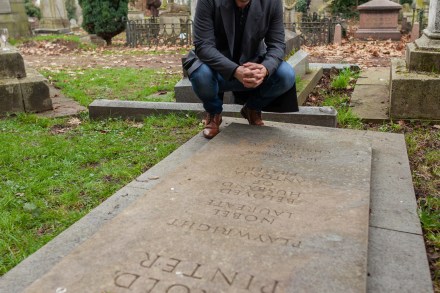
How on earth did Harold Pinter and Danny Dyer become such good friends?

Collectors of TV titles that sound as if they were thought of by Alan Partridge will presumably have spotted Danny Dyer on Harold Pinter. As Dyer himself understatedly put it: ‘This might seem an unlikely pairing: the likely lad and the Nobel Prize winner.’ Yet, what made the programme such an intriguing if undeniably peculiar watch is that the pairing in question wasn’t dreamed up by a desperate (or drunk) commissioning editor. In 2000, aged 22, Dyer auditioned for Pinter’s Celebration at the Almeida Theatre in Islington. ‘I knew the money would be rubbish,’ he told us, ‘so I didn’t care much.’ Nor, unlike his rivals, did he really know who Pinter was.

How Tom Stoppard foretold what we’re living through

A TV play by Tom Stoppard, A Separate Peace, was broadcast live on Zoom last Saturday. I watched as my screen divided itself into four cubes in which appeared the actors, performing from home. The play was written in 1964 and it’s well suited to the split-split screen format because no physical contact occurs between the characters. Director Sam Yates added some rudimentary music and a bit of wobbly background scenery. Mr Brown (David Morrissey) is a mysterious Englishman who asks to be admitted to a private hospital in the middle of the night. Though he has no symptoms he’s given a bed, and he pays his bills in cash. ‘There’s nothing wrong with you,’ complain the medics. ‘That’s why I’m here,’ he says.

The best crime novels to read during lockdown

For those with work to do and kids to homeschool, the idea that you might have lots more time on your hands amid the coronavirus lockdown probably seems like a bad joke. But for those who have a bit of extra reading time to make the most of, here are five crime fiction series to help pass the lockdown hours: The LA Quartet, James Ellroy James Ellroy L.A. Confidential (Cornerstone) James Ellroy is well deserving of his status as the pre-eminent crime fiction writer of our times, and for those yet to discover the demonic delights of his oeuvre, the original ‘LA Quartet’ is definitely the place to start.

michael holroyd novel

My father threatened to sue me for my first novel

From our US edition

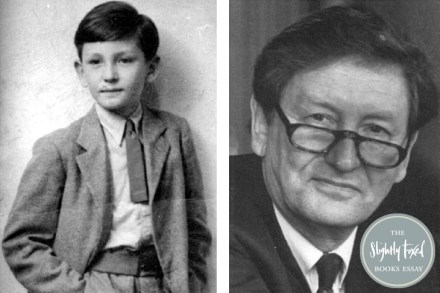
My first novel, A Dog’s Life, was largely autobiographical. It described my grandparents’ life, my parents’ marital exploits, and my own limping attempts to become a writer. But since I seemed unable to harness these first two subjects to the advancement of the third. Then I suddenly saw how I might carve out the first quarter of this spacious family saga and make it a self-contained novella covering 24 hours of family life. Heinemann offered me an advance on royalties of £500, which was ten times what they had given me for my biography of Lytton Strachey. Roland Gant did not wish to publish A Dog’s Life until the two Strachey volumes were out of the way.

The way we read now

From our US edition

For almost 300 years, the novel was a major art form, perhaps the major art form, of the modern world — the device by which we tried to explain ourselves to ourselves. Something new came into art during the transition out of the Middle Ages, through the Renaissance and the Reformation, and into the modern age. We might call it the turn to the interior — an increasing agreement that domestic life and drama are real, not merely minor activities necessary to keep body and soul together while we play out our real lives on the world’s stage. Think how rare domestic drama was before the novel.

novel bottum

Five reasons why the Jack Reacher novels are brilliant

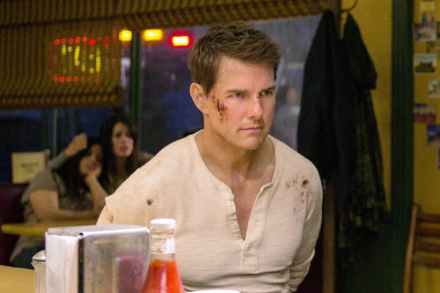
Lee Child’s Jack Reacher is back with the release earlier this month of The Midnight Line, the 22nd book in the series. The Reacher books are hugely popular, but fail to garner much in the way of critical respect. Here are five reasons why the public love Reacher and why critics should… Jack Reacher Reacher is without a doubt one of the most original, complex and compelling characters in crime fiction. An ex-military policeman turned drifter, he has nothing tieing him to the world except for his relentless (and almost psychopathic) desire for justice. He’s the archetypal existential avenging angel – John Wayne, Bogart and Brando rolled into one.