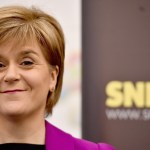
Nicola sturgeon

Scotland has nothing to gain from staying in the single market

The Scottish economy will be left in ruins. Tens of thousands of people will be thrown out of their jobs. The tax base will shrivel. To listen to the latest round of complaints from the Scottish National Party, membership of the single market is absolutely vital to the country’s economy. Indeed, it is so important that it now wants to maintain it, even if England and the rest of the UK leaves. That might be clever politics, if it can be turned into a platform for a second referendum and if you choose to believe that the constitutional lawyers in Brussels can come up with a way of keeping one part of a country inside the single market with the rest outside. But it is terrible economics. Why? Because Scotland gets even less from it than the UK does.

Ten questions of sport

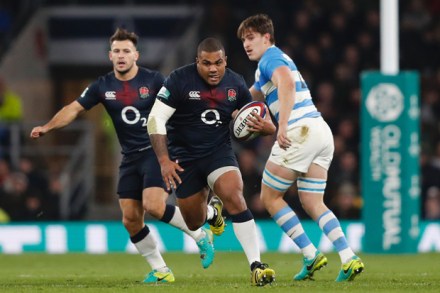
1. Can anyone explain why England wore dark blue, not white, for the autumn international against Argentina, just as they did against Fiji? Is there anybody in the whole country, other than the marketing department at the Rugby Football Union, who thinks it is a good idea to change England shirts for no other reason than to fleece the public whose children might want to wear one? Why don’t England stick to their proper colours: would the Springboks change, or Australia, or would the All Blacks become the All Purples? Seven different shirts in two years! Come off it.   2. Is the ongoing spat between Ben Stokes and Virat Kohli the only really competitive element in the current Test series between England and India?

This St Andrew’s Day, Scottish Tories should count their blessings

As is traditional, St Andrew's Day will be marked in the proper style by expatriate Scots gathering to bless what they’ve left behind. For most of the rest of us it’s just another dreich November day. There is something cheering about this and at least we have spared ourselves the tomfoolery that’s made St Patrick’s day such a toe-curling embarrassment. Still, that’s not to say the day passes without interest. For instance, the Times today publishes a YouGov poll indicating that support for independence is, broadly speaking, back where it was in September 2014. Just (sic) 44 percent of Scots would vote for independence if given the chance tomorrow.  It must be allowed, I think, that the Brexit-bounce the SNP expected has not materialised.

Sturgeon’s secessionist fantasy has been rejected by Europe. So why does she ask Theresa May?

'Downing Street says the PM is set to rebuff calls for a flexible Brexit, which would allow parts of the UK to have their own arrangement,' said the BBC radio news this morning. Not quite. This notion has been rejected in Europe, where the idea of doing some kind of separate deal with Scotland or any constituent part of the UK was never a deal. The 'options' that the SNP talk about do not exist as far as the EU is concerned: it is a giant bluff. It's far from clear why she is asking Theresa May for something that the EU has already rejected.

Press censorship has begun in Scotland

The silencing of Stephen Daisley has nagged away at journalism in Scotland for months. His employer, STV, holds the ITV licences for central and northern Scotland, and is staying very quiet. The Scottish National Party rolls around like a drunk who has won a bar fight. Its politicians and its claque of Twitter trolls celebrate their power to bully and tell direct lies about the journalist they have humiliated. The BBC endorses them. The National Union of Journalists supports them. Everyone behaves as if they are living in a one-party state. Not a dictatorship with men in uniforms marching down the street. But a democratic one-party state like Scotland has become and England and Wales will soon be: a state where it is simply impossible to imagine the ruling party losing power.

Watch: BBC runs video of a gorilla whilst trailing Nicola Sturgeon interview

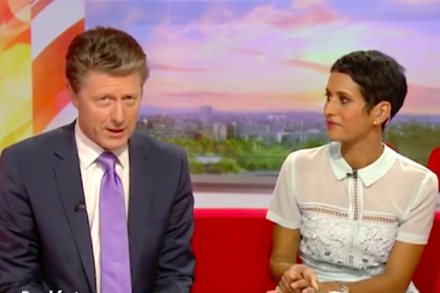
Oh dear. Spare a thought for the brains over at BBC Breakfast today. As the presenters told viewers that they would be speaking to Nicola Sturgeon, video footage of a psycho gorilla flashed up on the screen. This meant Auntie had to issue a hasty apology -- clarifying that they were not suggesting Sturgeon was the agressive gorilla that escaped from London zoo: https://twitter.com/AndrewBloch/status/786848027311009792 Perhaps the Nats were onto something after all with regards to BBC bias...

Nicola Sturgeon is caught in an independence referendum fix

Nicola Sturgeon is in a bit of a fix. After saying that the Scottish independence referendum was a once-in-a-generation event she is calling for a second one just two years after the first. But polls show Scots have no appetite for this vote. Unlike the SNP activist base, which is itching for another fight – and there have even been signs of a Momentum-style infiltration of the SNP, raising the prospect of a split in a party whose strength has (hitherto) been in its discipline. So what’s the First Minister to do? Her answer, in the SNP conference, is to assuage the activists and publish a new referendum bill. Her peg is the Brexit vote, and her shtick is simple.

Nicola Sturgeon’s cherished Brexit grievance rears its head

Politics is a question of priorities. Push always comes to shove and that's when you discover what a party really thinks is important. We've seen this repeatedly this year. The Labour party, for instance, has decided power is for other people. And the Conservative party has decided that leaving the European Union is something worth risking the Union for. If we have to break-up the United Kingdom to save the United Kingdom, then so be it. A price worth paying, you know. But don't pretend you weren't warned about this. Because you were. Repeatedly. There's a reason, you know, why Ruth Davidson and most of her Holyrood colleagues campaigned for a Remain vote. They could see what was coming down the pipe in the event of a vote to Leave.

Alex Salmond: Scotland should block Brexit

Although Alex Salmond is Scotland's First Minister no more, luckily the public still have a chance to hear the SNP politician's thoughts on a weekly basis thanks to his LBC phone-in. Today Salmond led the charge for Nicola Sturgeon blocking Brexit: 'If Scotland could block Brexit, then I think Nicola Sturgeon should do that. I think Nicola Sturgeon should take her instruction from the verdict of the Scottish people; she's Scottish First Minister. If you remember the Scottish people voted decisively to remain.

Another poll shows that Brexit hasn’t changed Scottish appetite for independence

Throughout the EU referendum campaign, we heard that Brexit would not only sink the UK economy but destroy the Union because Scots were likely to vote Remain. In the event there was a difference at the polls—38 per cent of Scots voted for Brexit, vs 52 per cent in the UK as a whole—but was it enough to destroy, or even threaten, the Union? Polls in the immediate aftermath showed an uptick for support for Scottish separation which has since ebbed away. Kantar TNS has today published a poll showing that 53 per cent of Scots are against independence, which confirms the YouGov poll taken at the end of August showing 54 per cent of Scots against. So this is pretty much where things were before the Brexit vote.

European Parliament appoint Guy Verhofstadt as lead Brexit negotiator

As the government try to work out what 'Brexit means Brexit' really means ahead of triggering Article 50, an announcement today from the European Parliament is likely to send a shiver down the spine of No.10 officials. Guy Verhofstadt, the MEP and former Belgian Prime Minister, has been appointed as the European Parliament's lead Brexit negotiator. The outspoken Belgian will work with Michel Barnier, who is leading negotiations for the European Commission. Verhofstadt's duties include helping prepare the EP position in the negotiations and -- once Article 50 is triggered -- helping to shape the EP’s negotiating position. On the surface, this appointment does not appear to be great news for Theresa May.

Sturgeon takes another tiny step towards Scottish independence

It has become one of those journalistic clichés to talk about 'firing the starting gun' in politics. There has been some debate among the hacks at Holyrood as to whether or not Nicola Sturgeon has already 'fired the starting gun' on the next Scottish independence referendum campaign. So, to do justice to that cliché (and to mangle it completely), I suggest something like this: today the First Minister reached for the key to the cabinet holding the starting gun, which would launch a second Scottish independence campaign. She hasn’t yet opened the cabinet but she has the key in her hand, should she decide to place it in the lock and turn.

May says general election will be in 2020

Theresa May is on her way to her first G20 summit. But she has still sat down for the traditional start of term interview with Andrew Marr. Reading the transcript of it, it looks like a classic Theresa May interview: with very little given away. She avoided answering Marr’s questions on whether she would like to see more grammar schools and refused to say whether she shared her chief of staff Nick Timothy’s view that Chinese involvement in the Hinkley point nuclear project would be security risk. On Brexit, May said little new about the deal she would like to strike--confirming the sense that, as one Minister told me, the government is ‘a way away from forming a definitive position’.

Better together

This time two years ago, the United Kingdom stood on the brink of dissolution. The referendum on Scottish independence hung in the balance and momentum was with the nationalists. The optimism and energy of Alex Salmond’s campaign stood in admirable contrast to the shrill hysteria of Project Fear, the name given to a unionist campaign that churned out ever-less-credible warnings about what would happen after separation. The union was saved, but 45 per cent of Scots had voted to leave it. So the referendum had not closed the question, but left it wide open. At the time, the North Sea oil sector was still in fairly good health. In the SNP’s economic manifesto for independence, it gave estimates of up to £7.9 billion a year for oil revenues.

An independent Scotland would now be bankrupt

This time two years ago, the United Kingdom stood on the brink of dissolution. The referendum on Scottish independence hung in the balance and momentum was with the nationalists. The optimism and energy of Alex Salmond’s campaign stood in admirable contrast to the shrill hysteria of Project Fear, the name given to a unionist campaign that churned out ever-less-credible warnings about what would happen after separation. The union was saved, but 45 per cent of Scots had voted to leave it. So the referendum had not closed the question, but left it wide open. At the time, the North Sea oil sector was still in fairly good health. In the SNP’s economic manifesto for independence, it gave estimates of up to £7.9 billion a year for oil revenues.

Where has all the money gone, Nicola Sturgeon?

Just three years ago, the Scottish government enjoyed claiming that an independent Scotland would be one of the wealthiest countries in the world. Perhaps even the sixth wealthiest, as measured by GDP per capita. Sometimes the claims made were a little more modest. Scotland might be only the 14th richest country on earth. But, however the figures were calculated and wherever Scotland was presumed to rank, one thing remained consistent: Scotland would be richer than the United Kingdom it would be leaving behind. Well, you can't make that case any longer. In truth, it wasn't a case sensible people bought in the first place. It was too good to be true, too dependent upon time-sensitive statistical chicanery, to be entirely convincing.

It’s been a year, Nicola Sturgeon. Where are your refugees?

This time last year, as images of refugees fleeing Syria dominated the news, a host of charitable figures offered to do their bit and take refugees into their home. Exasperated that David Cameron was not allowing enough refugees into Britain, Sir Bob Geldof, Yvette Cooper and Nicola Sturgeon were among those who publicly vowed to lead by example. Since then, things appear to have hit a few stumbling blocks. For one, Yvette Cooper claimed -- in an interview with Nick Ferrari -- that we should listen to the Tory government as they have said that 'they don’t want people to take them into their home'. Happily times may now be a'changing.

The SNP has played Scotland’s Catholic Church for a fool

In England and other places there can still be surprise when discussion of football in Scotland segues too smoothly into the discussion of religion. And vice versa. It can also get entangled with toxic politics too. The sectarian divide between Celtic and Rangers doesn't need to be rehearsed, but the tribal hinterlands behind this ancient sporting rivalry point to the sad opposition between Loyalist and Republican, Royalist and Nationalist, Britain and Ireland, Catholic and Protestant. Some say it's fading away, some say it isn't, but there was a manifestation last week that it may be evolving – into something worse. Celtic played the Israeli team Hapoel Beer Sheva in Glasgow on Wednesday in a pulsating European qualifier which the home team won 5-2.

Nicola Sturgeon’s Brexit test is designed to fail

Nicola Sturgeon still believes in Scottish independence. I know, who knew? That's the point of the SNP, a party Ms Sturgeon joined as a teenager back when she felt, or so she has said, that Neil Kinnock was busy leading Labour into the wilderness. That, remember, is when she says it all started going wrong for Labour. This is something worth recalling the next time you see or hear some SNP elected representative concern-trolling the Labour party. The weaker, the more unelectable, Labour is the better that suits the SNP. Anyway, the First Minister gave a speech yesterday in which she spoke about Scotland's five ‘key’ EU interests that ‘must be protected’ if she's to remain a cheerful soul.

Nicola Sturgeon says Scotland could stay in the EU and the UK

We are ‘in uncharted territory with, effectively, a blank sheet of paper’ in front of us – and that means ‘there might be’ a way that Scotland could stay in both the UK and the EU after Brexit, Nicola Sturgeon said on the Andrew Marr Show this morning. So England and Wales would get what they want and Scots what they want – except for the two-in-five Scots who voted to Leave. But Ms Sturgeon had no suggestion as to how such a plan might work in practice, because it wouldn't work in practice. Scotland voted in 2014 to stay in the UK, and the UK voted in June to leave the EU. And EU countries including Spain and France don't want to give Scotland the choice to stay in.