Nhs

James Graham’s small new drama is exquisite: BBC Four’s Unprecedented reviewed

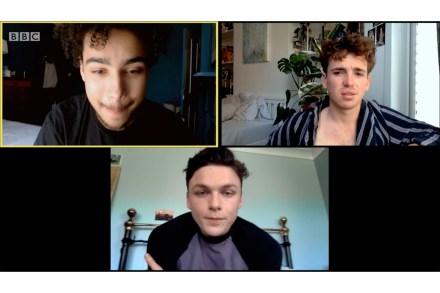
Let’s face it. Theatre via the internet is barely theatre. It takes a huge amount of creativity and inventiveness to make anything remotely like a theatrical drama in the digital sphere. The BBC’s Culture in Quarantine team have invited some talented writers and actors to try and crack it. Unprecedented begins with ‘Viral’, by James Graham, in which three 18-year-old lads enjoy a Zoom chat from their bedrooms. The craftsmanship in this small script is exquisite. The characters are united by a common purpose — creating a globally popular video clip — while each has to grapple with a personal crisis. One has a dying granny, one is coming to terms with his bisexuality, the third has a crush on his mate’s sister.

Has the abuse of ‘test and trace’ started already?

I was followed three times in five days by men I didn’t know. During a pandemic – at any time, really – you would think they would have something better to do. They made gestures, shouted, catcalled, but I managed to lose them each time, partially because they had none of my details. They didn’t know my name, my number or my address. But what if they did know that information? What if they had been working at a bar I had gone to with friends and given my contact details over, for test and trace. That was the experience of one young woman this week. Shortly after she went to the pub, she received a message online by the bartender serving her.

Are whistleblowers being silenced at the NHS gender clinic?

The Gender Identity Development Service (GIDS) at the Tavistock and Portman NHS Foundation Trust carries out some of the most complex and contentious clinical work in the NHS. It deals with children and young people who are experiencing discomfort over their gender identity, but is it raising patient safety concerns? Some of the children it sees go on to change their legal gender. Some receive physical treatment in the form of puberty-blocking medications. Some go on to have further treatments including cross-sex hormones and surgery. The service, which is heavily over-subscribed, is a divisive one. A number say it offers vital, even life-changing care to children in great distress and need, others are less positive.

This NHS clap is not for its carers

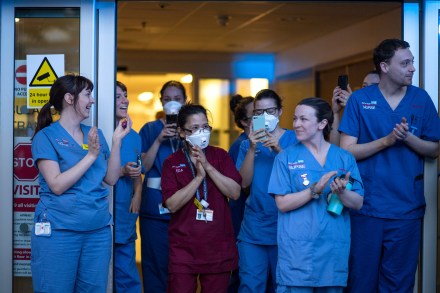
At 5pm, we are being encouraged to head to our windows and doors to clap for the National Health Service on its 72nd birthday – the idea is that we’d be doing, once again, what we did in lockdown. Except we wouldn’t. The original gesture was to show thanks to the many healthcare staff (and a broader scope of key workers) who were putting their lives on the line to help others, treating our sick at the peak of the virus in the UK. These are brave people at the best of times, but especially so in the early months of the pandemic, when we were still in the dark as to how contagious it was, who was most likely to suffer from it, and just how deadly it would become. But this evening’s round of applause for the NHS isn’t like the others.

A minority opinion on Covid deaths

When the media have gone large on the conclusions of an overpoweringly tedious report, one of the biggest favours a columnist can do for a readership is to read the source. Friends, you owe me. I will expect flowers and chocolate. For I have located Public Health England’s ‘Beyond the Data: Understanding the impact of Covid-19 on BAME communities’ and ploughed through the whole bloody thing. This is the report that produced headlines like the Guardian’s ‘Historical racism may be behind England’s higher BAME Covid-19 rate’. Channel 4 News hit the same black-and-brown-patients-are-dying-of-racism note, which conveniently chimes with the current hair-shirtery of Black Lives Matter. A bit too conveniently, I thought, which is why I tortured myself.

How Britain lost the war against coronavirus

Sun Tzu, the great Chinese military commander, said that all battles are won or lost before they are ever fought. By first week of February, the UK and many other European countries had lost the battle against coronavirus. Another of my favourite life sayings is that ‘Assumption is the mother of all screw-ups’. Assumptions by UK government, Sage, NHS, Public Health England and the Department of Health and Social Care were certainly the mother and father of this one. The NHS, PHE and Sage thought they were well prepared for a pandemic: there were dozens of reports, response strategies, protocols, operating plans, models, transmission studies — you name it, there was a long document about it. There was even a full simulation, Exercise Cygnus, in 2016.

Helen Whately is right about student nurses

Helen Whately, the care minister, is being tarred and feathered. She wrote a letter to an MP about student nurses, saying they are ‘supernumerary and not deemed to be providing a service’. The outpouring of fury online and, sadly, from some traditional media outlets provides an object lesson in all that’s wrong with the way Britain debates politics and government in the era of Twitter. Whately’s comments should not be ‘controversial’ or even newsworthy, because she said nothing wrong. Student nurses are indeed ‘supernumerary’, which means that they are not counted towards the total of nursing staff in the NHS. This is not just sensible, it’s something recognised and demanded by bodies such as the Royal College of Nursing (RCN).

The coronavirus app was always doomed to fail

For months now, the British public has been told there’s only one way to resume normal life: a successful virus-tracing scheme. Early on in the pandemic, the UK decided to go its own way in this area, rejecting Apple and Google’s established, decentralised app model by trying to launch its own one. NHSX would create a centralised app that funnels contact details to public health officials once somebody reported their symptoms via their phone. Bad for privacy, good for knowing exactly where infection rates were spiking in something close to real-time. Hailed as a soon-to-be ‘world beating’ app by the Prime Minister, it was launched on the Isle of Wight in early May and touted as a necessary part of the UK’s lockdown easing.

My organ donation opt-out hell

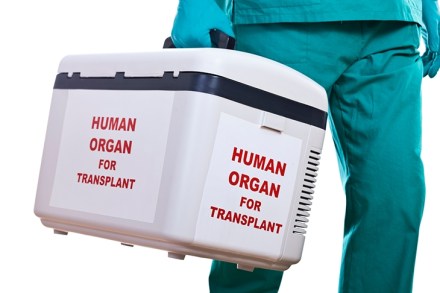
Opting out of organ donation was one of the hardest things I’ve done in a while. I don’t mean the decision was hard. There’s no way I’m donating my body parts to the state. The hard bit was completing the online form and getting the NHS to accept my decision. If you didn’t notice, the law changed on 20 May so that everyone over 18 must fill out a form if they do NOT wish to be carved up after death. If you don’t submit this form, your organs automatically become the property of the state and, once they’ve taken the bits they need, your relatives get to bury what’s left. Many will say how callous I am to point this out as being in some way wrong and thus deny a child, potentially, the chance of life from a transplant.

Letters: What Hong Kong really needs from Britain

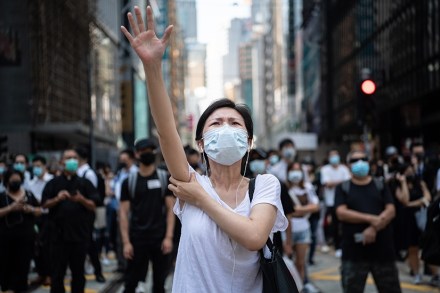
Hong Kong’s future Sir: So we have a moral duty to protect the people of Hong Kong and guide them back to the golden world which existed before 1997 under British rule (‘Let them come’, 6 June)? Come off it. It is true that the hope behind the 1984 Joint Declaration was for HK to move gradually to stronger democratic forms, although under the direct authority of the government of the PRC, as it had been with the UK. What has destabilised Hong Kong and alarmed Beijing is digital grass-roots empowerment — the same thing that half the world’s governments are facing. In Hong Kong it appears in a particularly virulent form. The Chinese have their own way of trying to police it.

Has Covid-19 evolved to become less deadly?

Covid deaths Has Covid-19 evolved to become less deadly?— Global infections reached a new peak on 29 May, with 125,473. The daily average for the past seven days is 108,965, 36% higher than in the week beginning 14 April.— However, deaths peaked at 8,429 on 17 April. The daily total for the past seven days is 3,902, 43% lower than in the week beginning 14 April.Source: Worldometers Quiet hospitals How did NHS activity change in the last quarter of 2019/20 compared with a year earlier?Hospital admissions -9.6% Elective admissions -9.7%GP referrals -13.9% Other referrals -8.

The NHS has quietly changed its trans guidance to reflect reality

Imagine you have a child who says they believe they were born in the wrong body, describing what amounts to a fundamental and painful mismatch between their biological sex and their gender identity. Imagine the child you see as your daughter declaring that they are in fact a boy. Where would you turn for information? No doubt a lot of people in such a position would consult the NHS. That ‘mismatch’, after all, could be a sign of gender dysphoria, a condition recognised – and treated – by the health service. What would you find if you looked up this issue on the excellent and comprehensive NHS website?

The NHS is letting down thousands of patients

I’m embarrassed every Thursday. I don’t mean to sound ungrateful. The outpouring of love for NHS workers at 8 p.m. each week has been touching. Who wouldn’t want to be clapped and cheered? But quietly among ourselves, many of us in the health service have increasingly felt it’s misplaced. I’ve come to dread it. It makes me wince. The fact is that the NHS is currently letting down thousands upon thousands of patients. When the dust has settled, I fear that we will be responsible for the death or morbidity of countless people. Since the pandemic hit, entire NHS services have completely stopped. I fear that this will have catastrophic consequences for the health of the nation.

Boris’s NHS immigrant surcharge shake-up doesn’t go far enough

The Prime Minister has asked the Home Office to remove NHS workers and social care workers from the immigration health surcharge as soon as possible. As Katy Balls reported earlier today, frustrations were growing within the Tory party that healthcare workers could be clobbered with this fee as they work tirelessly to help British patients get through the Covid crisis. It seems Boris Johnson has listened to his backbenchers and u-turned. The fee will be waived for a range of health staff, from doctors and nurses to technicians and cleaners. This exemption is good news for workers in the healthcare sector, but it shouldn’t be the end of the policy review. This update for health workers creates an opportunity to assess the fairness of the surcharge overall.

The Romans showed how quickly hospitals can be built

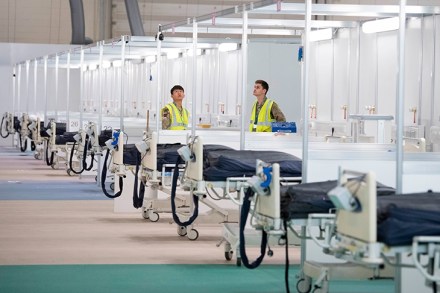
The speed with which ‘model’ Nightingale hospitals have been designed and erected across the UK reminds one of the experts in this sort of thing: the Romans. Legionary fortresses provide a good example. All were designed on roughly the same pattern, and all had a hospital (valetudinarium). The fortress built at Inchtuthil in Scotland offers a typical illustration. Picture a quadrangle about 100 yards by 65 yards, surrounded on all four sides by a ring of ‘wards’, outside that ring a corridor, and outside that an outer ring of ‘wards’. The central corridor provides free movement round the whole block and access to both the inner and outer ring.

Are public health cuts to blame for the UK’s pandemic response?

As we begin to learn best practice in the fight against Covid-19, it is notable that the handful of countries that have reduced the number of new cases to zero have used diagnostic testing and contact tracing on a large scale and have recommended the use of face masks. After two frantic months, the UK has just about got a handle on testing, but its embryonic contact tracing app has the hallmarks of every government IT fiasco, and there are barely has enough face masks for health workers, let alone the general public. No country can prepare perfectly for a new viral pandemic, but Britain’s public health system has fallen conspicuously short. Why?

Track and trace should not be our only exit strategy

The concept of the state tracking our every movement is anathema to this magazine and, we assume, to its liberal former editor now resident in Downing Street. Nevertheless, such is the impasse over coronavirus that it is right the government should attempt to exit lockdown via the application of a voluntary ‘track and trace’ on mobile phones, trials of which began on the Isle of Wight this week. Track and trace appears to have worked for Asia so, given what’s at stake, it’s reasonable to try it here. South Korea, Taiwan, Vietnam — the countries which employed tracking and tracing from an early date — appear to have dealt with Covid-19 the most effectively, minimising the impact on their economics and societies.

In defence of the Isle of Wight’s suitability for tracking and tracing

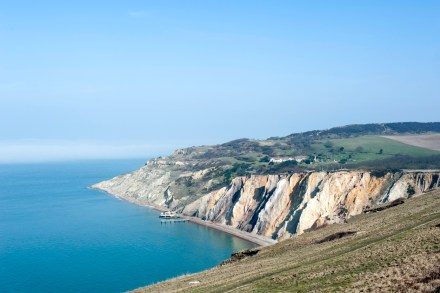
A reply by the Isle of Wight's MP to Freddy Gray’s: Is the Isle of Wight really the best place to launch a tracing app?Dear Freddy, You have written disparagingly about the Isle of Wight, its tech and a little bit about its identity. You said the internet was 'rubbish' and that we live in the 1980s. I would like to challenge that. The internet really does work here. I am aware there’s black hole of sorts in Seaview, where you sometimes stay. However, that is atypical of the Island. I have had Sky’s Adam Boulton, no less, congratulate me on the quality of my connection and I live six fields from the sea, behind a down, in the remote southwest of the Island known as ‘the Back of the Wight’.

Is the Isle of Wight really the best place to launch a tracing app?

Technology can save the world — from South Korea to Singapore to, um, the Isle of Wight. Oh yes. Britain is catching up at super-fibre-optic-lightning speed with the superpowers of tech in its fight against Covid-19. We’ve developed a snazzy ‘track and trace’ app, that's already been trialled at an RAF base in Yorkshire, and the government now intends to roll it out in a pilot scheme on the lovely Isle of Wight and the Scottish Isles, Health Secretary Matt Hancock will announce on Monday. Sod the threats to privacy and liberty — let’s get people-monitoring done! One small problem — the internet on the Isle of Wight doesn’t really work. Mobile telephone reception is notoriously rubbish; so too is broadband. It's a common gripe down here.

The NHS has been protected – care homes have not

As the NHS was preparing for the Covid onslaught, thousands of hospital patients were discharged to care homes in an attempt to free up beds. This worked: about 40,000 NHS beds are now unoccupied, four times the normal amount for this time of year. Attendance at A&E has halved. Almost half of all intensive care beds with mechanical ventilators lie unused. This is before the seven pop-up Nightingale hospitals, most of which are also empty, are factored in. The NHS was effectively protected in this crisis. Care homes were not. While those in hospital were being given the care one would expect from one of the world’s best-resourced health services, most care home residents who fell sick with symptoms of Covid-19 were not even being tested for the disease.