Bob Seely

Dr Robert Seely MBE is the author of The New Total War and a former Member of Parliament.

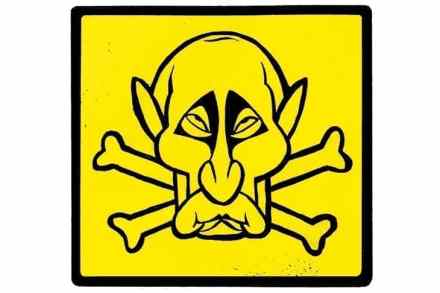
‘Peace’ is just another ploy in Russia’s playbook

From our UK edition

Predicting Russian behaviour is a fool's errand. As a young ‘stringer’ in Kyiv during the dying months of the Soviet Union, I was bemused by the analysis of Western journalists from their elite compounds in Moscow, who saw a very different world to that experienced by those of us in the ‘sticks’. This deal is little more than a sophisticated Kremlin disinformation campaign It is with some trepidation then that I write this. While I’m keeping my fingers crossed for the peace deal Ukraine has reportedly agreed to, I fear any 'agreement' will prove to be little more than a sophisticated Kremlin disinformation operation, designed to hurt Volodymyr Zelensky when his popularity and battlefield morale are at a particularly low point. Let’s look at the timing.
The West is being too slow to arm Ukraine

From our UK edition

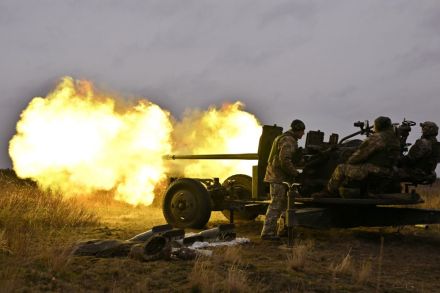
A dangerous truth is emerging from Ukraine. Kyiv is slowly starting to lose the war against Russia because it is running short of ammunition, in large part because promises made by the EU and the USA are not being honoured. Concurrently, Russia has moved to a wartime economic footing, with 40 per cent of government spending now on the military. The result has seen Ukraine start to lose territory. In the east of the country, where I visited last week, talk is turning to which town will fall next. Soldiers are angry that they are dying because they do not have the ammunition – and specifically artillery shells – to return fire on Russian positions. If this continues, disaster awaits Ukraine and a great danger awaits Europe. The facts are as below.

Isn’t it time we stripped Harry and Meghan of their titles?

From our UK edition

Is it time that the Duke and Duchess of Sussex became plain Mr and Mrs Windsor? They seem so full of anger for the institution that gives them their status, why not do the decent thing and renounce their titles? If not, shouldn’t parliament give them a helping hand? First, a declaration. I am not interested in attacking Harry or Meghan per se.  Personally, I feel increasing sorry for them. I worry what happens when even Californians get bored of their tales of victimhood. I worry for Harry especially. Both Harry’s book and the Netflix narcissism of the Duke and Duchess’s recent series tell the story of two privileged people desperate to be victims. They are not.

How should the West respond to Putin’s nuclear threats?

From our UK edition

Can this really be happening? Sadly, the answer is yes. President Putin has just reiterated his threat to use nuclear weapons and announced that Russian-controlled Ukrainian territory will become part of the Russian Federation. Is nuclear weapon use likely or certain? No, not by any means, and we should speak with a sense of proportion and care. Putin wants us to be frightened. But we also need to stop burying our heads in the sand, as we have done with Russia for too long. To minimise the chances of nuclear use – tactical or strategic – we must assume that the threat is real and that at some point, probably as Russian troops face major collapse in south-east Ukraine over the next six to nine months, Putin will either use or come close to using tactical nuclear weapons.

It’s not all good news on Huawei

As with any cell phone contract, the devil is in the small print – and that perhaps is the case with the UK government’s announcement today on Huawei. On the face it is, Tuesday’s ban is very good news. Huawei, the Chinese telecoms giants whose detractors claim is a front for the Chinese Communist party’s desire to dominate UK and global advanced telecoms, needs to be out of the UK’s 5G network by later this decade — 2027 — while no new Huawei kit will be sold into the 5G network after the end of this year. However, the small print is critical and there is a catch — or two. BT and other major vendors can still put Huawei kit bought this year into the network until 2026.

huawei

In defence of the Isle of Wight’s suitability for tracking and tracing

From our UK edition

A reply by the Isle of Wight's MP to Freddy Gray’s: Is the Isle of Wight really the best place to launch a tracing app?Dear Freddy, You have written disparagingly about the Isle of Wight, its tech and a little bit about its identity. You said the internet was 'rubbish' and that we live in the 1980s. I would like to challenge that. The internet really does work here. I am aware there’s black hole of sorts in Seaview, where you sometimes stay. However, that is atypical of the Island. I have had Sky’s Adam Boulton, no less, congratulate me on the quality of my connection and I live six fields from the sea, behind a down, in the remote southwest of the Island known as ‘the Back of the Wight’.

How Russia’s spies became the best known secret agents on the planet

From our UK edition

Russia’s military intelligence agency, the GRU, is back in the news. Ten years ago, it was said to be in a state of terminal decline. Since then, it has become the ‘go-to’ agency for the Kremlin because of its flexibility, aggression and ‘can-do’ attitude. It is president Putin’s one-stop shop for global subversion. But it may now have overstretched itself. The GRU has been accused of plotting to hack into the Organisation for the Prohibition of Chemical Weapons (OPCW), which had been investigating the Salisbury attack.

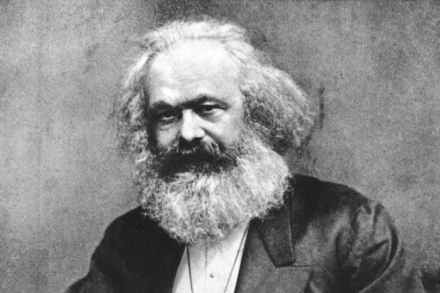
Karl Marx’s sinister legacy of anti-Semitism

From our UK edition

When I lived in the Soviet Union in my early twenties, I developed a personal hostility to socialism. I saw the misery it had visited on that society – the political, spiritual and economic harm. I understood at first-hand how the secret police corrupted personal and public life, how state propaganda denied freedom of thought and how the regime hid the slaughter and imprisonment of millions of its own people. I came to the conclusion that whichever totalitarian power had survived World War II – Nazi Germany or the Soviet Union – they would probably have looked much the same by the time of their demise.

Why the Kremlin likes using poison 

From our UK edition

As 66-year-old former Russian Military Intelligence Colonel, Sergei Skripal, and a companion lie critically ill in a Salisbury hospital. The familiar question is asked: is this another Russian assassination attempt? We don’t yet know if Col. Skripal was deliberately targeted, or by whom – the cause of his illness may be entirely innocent – but either way, poisoning appears to be the weapon of choice for Russian-sponsored murders in the UK. Why is that? Poisons are versatile and flexible. They suit Russia’s newly redeveloped forms of aggressive, covert warfare. They can be ambiguous. A shooting leaves intent and very possibly evidence, but poisoning may leave no trace. How many people has the Russian state killed in the UK in recent years?