New zealand

Landscapes of longing in illuminated Books of Hours

From our UK edition

Christopher de Hamel is an outstanding salesman. At Sotheby’s, back in the 1990s, he brokered the sale of the 15th-century Sherborne Missal to the British Library for £15 million, a record-breaking sum. Over the past decade, his reputation as a salesman has fitted a much less conventional mould. In two dazzlingly illustrated books he has set out to sell to the ordinary reader the power and pleasure of medieval manuscripts. His approach combines enthusiasm with scholarly precision and a conversational style that sits surprisingly easily with the fund of knowledge he has gradually accumulated. Conscious that most of us will never encounter these closely guarded treasures at first hand, de Hamel is more than happy to settle down in a library and turn the pages for us.

What’s wrong with the West?

It is 25 years since Theodore Dalrymple published Life at the Bottom: The Worldview that Makes the Underclass. In this now famous set of essays, Dalrymple, who worked as a psychiatrist in British prisons, describes the damage done to the poorest in society by the West’s progressive middle-classes, who encourage criminals to see themselves as victims and cheer on the destruction of the traditions and norms that once guided working-class life. On the other side of the Atlantic – and the other side of the middle-class divide – the writer Rob Henderson came to the same conclusions as Dalrymple.

Why Trump is freezing out Five Eyes allies

The most powerful intelligence alliance in the world is breaking up. In January, Donald Trump restricted intelligence-sharing on Russia and Ukraine, cutting allies out of negotiations and freezing certain channels entirely. Then in March came the so-called “Ukraine intel blackout,” an unprecedented freeze that shut Britain and Australia out of updates on Russian troop movements. And last month, the Dutch said they were scaling back intelligence-sharing with America over fears of “politicization.” Trump tends to treat intelligence as leverage, a tool to reward countries that fall in line with Washington and punish those that don’t. In his hands, intelligence and secrets have become bargaining chips.

five eyes

Like Gabor Mate set to club beats: Lady Gaga, at the O2, reviewed

From our UK edition

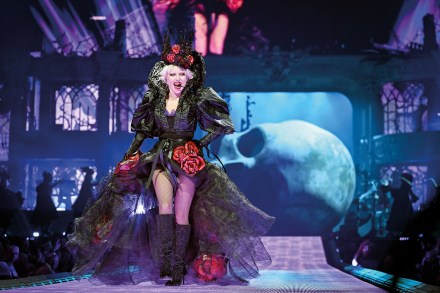
Lady Gaga’s show was to begin at 7.30  prompt, we were told. No opening act. And at 7.30 something did happen: the big screen over the stage started showing a film of Ms Gaga, clad in scarlet finery, writing on a scroll with a peacock-feather quill, while the PA played opera’s greatest hits. For more than an hour the film ran, an impassive Gaga doing nothing but writing. An hour. It was nearly as dull as a Paul Thomas Anderson film, and it’s a miracle it took 45 minutes for the handclaps to start ringing around the arena. Was she about to do a Madonna – who had to keep cutting short her O2 shows because she was about to break their curfew? In the end, no. Gaga just managed to end in time, but it was tight. And she won back her crowd.

Foreign governments have themselves to blame for Trump’s movie tariffs

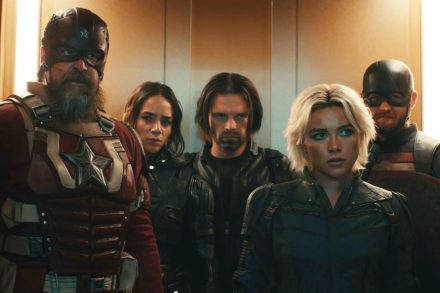
Donald Trump has thrown another trade grenade. His latest idea – a 100 percent tariff on all foreign-made films – is crude, impractical and potentially disastrous for his frenemies in the Hollywood industry that he has suddenly decided to champion. Announcing the tariffs via Truth Social, Trump tried to paint movies produced overseas as a danger: not just to America’s film production industry, but national security too. “WE WANT MOVIES MADE IN AMERICA, AGAIN!" he thundered. Invoking national security to justify these tariffs is legally shaky. Practically, it’s not clear how you even impose tariffs on a complex, multi-national production like a modern movie. Films shot in Croatia, edited in the UK and funded by America pose an administrative nightmare.

marvel movie

How Rory Stewart led me astray

From our UK edition

I have just returned from a tour of Australia and New Zealand, on whose citizens I inflicted An Evening With Stephen Fry. I first ‘played’ Australia in 1981. The Cambridge Footlights Revue that Hugh Laurie, Emma Thompson, Tony Slattery, Paul Shearer, Penny Dwyer and I had put on in Edinburgh attracted the attention of an Australian impresario called Michael Edgley. Would we be interested in taking our show around his country? Tony had another year of university to go and in the end Hugh and Emma joined up with the previous year’s Footlighters, Robert Bathurst and Martin Bergman. That summer Ian Botham had sensationally and all but single-handedly wrested the Ashes urn from the Australians’ grasp, so we called our show – something of a red rag to a bull – Botham, the Musical.

Whoever imagined that geology was a lifeless subject?

From our UK edition

Rocks are still and lifeless things, and geologists are men with beards whose emotional bandwidth is taken up with an unnatural attachment to cherts and clasts and the chill beauty of the subducted lithosphere. Such is the stereotype. The academic geologist and New Yorker contributor Marcia Bjornerud has managed to go a fair distance towards dispelling it. In her previous book, Timefulness, she wrote for the general reader and with persuasive lyricism about readjusting our focus to thinking in geological time.

What Labour could learn from Australia and New Zealand

From our UK edition

I’m just coming to the end of a four-week speaking tour Down Under and have spotted some worrying signs of what our new government might have in store for us, particularly on the free speech front. During its six years in power, the Labour party in New Zealand tried to criminalise ‘hate speech’ against minority groups, and Australia’s Labor government has announced it will bring forward legislation to strengthen laws against speech that incites hatred in relation to race, religion, sexual orientation and transgender identity. Will Keir Starmer do likewise? In England and Wales, it’s already a criminal offence to stir up hatred on the basis of a person’s race, religion or sexual orientation, although Nicola Sturgeon went further.

New Zealand’s culture wars backlash

From our UK edition

I’m in New Zealand on a speaking tour organised by the Kiwi Free Speech Union, and in some ways it’s like visiting Britain in a more innocent era. This struck me when I went on a tour of the Hobbiton movie set, where The Lord of the Rings and The Hobbit were filmed. The Shire of Tolkien’s imagination, lovingly created by Peter Jackson, is an idealised version of rural England – and New Zealand, with its perfectly manicured lawns and open-faced, friendly people, is a bit like that. Although, to be fair, I may be viewing the country through rose-tinted spectacles because Labour was heavily defeated in the most recent election, winning just 34 out of 120 seats.

Alone and defenceless: the tragic death of Captain Cook

From our UK edition

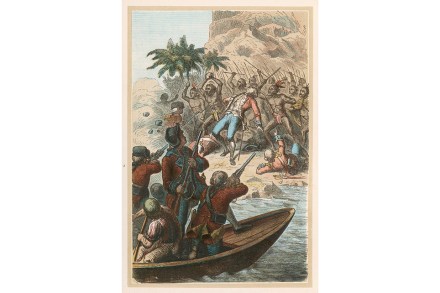
The principal purpose of Captain James Cook’s last voyage, which began in Plymouth on 12 July 1776, was to discover the elusive Northwest Passage. Attempts had been made before, in vain, from the Atlantic, but this time it would be from the west, from the Pacific.  On the way, Cook was to return an Anglicised Polynesian named Mai to Raiatea, ‘a ragged volcanic island’ about 130 miles north west of Tahiti. Mai takes up much of Hampton Sides’s narrative, offering ‘a poignant allegory of first contact’, before being deposited home with his cargo of English domestic farm animals and his suits.  Prior to that, Cook had investigated, in New Zealand, the massacre of ten crew members of the Adventure, the Resolution’s sister ship on his previous voyage.

Has Bazball rescued — or ruined — cricket?

From our UK edition

The date 6 June 2021 was a grim day for cricket. As the world was adjusting to life after the pandemic, a Lord’s Test with a full house felt like ‘the promised kiss of springtime’. And so it was, until the final afternoon, when New Zealand challenged England to make 273 in 75 overs. The gesture was recognised as generous by all except the faint souls in the England dressing room, rendered frit by the possibility of defeat. Thousands of spectators, bewildered by five hours of fearful prodding, withdrew their consent. Cricket has witnessed more profound changes in the past decade than in the previous 100 years With ‘the Hundred’ looming like a pirate’s galleon, caution was inexplicable.

How the National party toppled Labour in New Zealand

From our UK edition

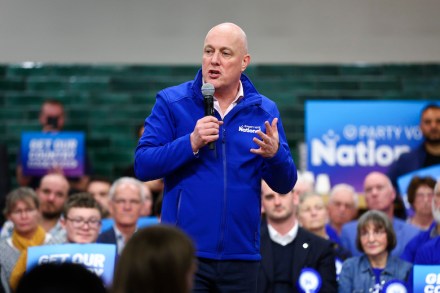
Just three years on from Jacinda Ardern’s phenomenal outright victory, New Zealand’s Labour government has collapsed, slumping to half its vote from 2020. It is on the verge of losing some of its safest seats and languishing behind in most of the Māori electorates. The centre-right National party has won, with Labour prime minister Chris Hipkins calling Christopher Luxon to concede defeat. The National party and its libertarian coalition party, ACT, are in a strong position to form a government, with Luxon, a relative newcomer to politics, becoming the country’s next prime minister. With more than three-quarters of the vote counted, Labour’s vote was a shade higher than 26 per cent – meaning half of the caucus will be out.

In defence of ‘Mickey Mouse’ degrees

From our UK edition

When someone asks ‘How are you?’ you have to assume your interlocutor is only being polite.Anyone who returns a ball-by-ball commentary about their aches and pains, work-life balance and reduced chances of summer fun thanks to the heat storm should immediately be sent to Coventry for the rest of time. That said, I am just back from wintry New Zealand where I have been in a Channel 4 series called Celebrity SAS: Who Dares Wins. Despite my pledge that I’d never do any more shows with the word ‘celebrity’ in the title, this one brought out the Bond Girl manquée in me and I couldn’t resist. I can’t say any more about it as it’s not out till early next year (the Matt Hancock one is about to hit our screens) but if asked I say: ‘Fine, apart from fractured rib and pulled glute.

Jacinda Ardern was the queen of coercive kindness

From our UK edition

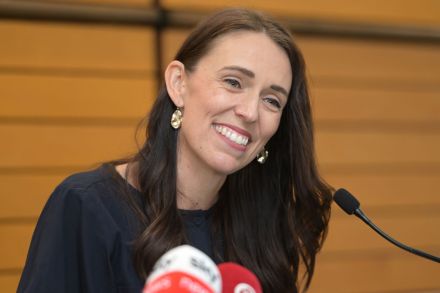
Jacinda Ardern has resigned as Prime Minister of New Zealand. After a period of reflection over the summer break, she concluded that she no longer had ‘enough left in the tank’ to do the job justice. Fakery wasn’t the problem with Ardern. Sincerity was Cynics claim she is jumping ship before the electoral defeat that opinion polls suggest she and her Labour party will suffer in October’s general election. That’s an unkind thing to say. It must disappoint Ardern that, after almost six years at the helm, New Zealand still contains such unpleasant people. If there is one thing that Ardern is all about, and to which she has dedicated herself as Prime Minister, it’s kindness.

Joe Biden should follow Jacinda Ardern out the door

I have a question for New Zealand’s outgoing prime minister Jacinda Ardern: can you take President Biden with you? Ardern announced this week that she would be resigning from her post, ten months before her term ends in October. She acknowledged in her resignation address that her five and a half years have been filled with difficult challenges. Since Ardern’s election in 2017, New Zealand has dealt with terrorist attacks, natural disasters and of course the Covid-19 pandemic. But Ardern stressed the fact that she is not leaving because of the difficulties of the job. Rather, she is departing because... well, to put it simply: she can’t cut it anymore.

jacinda ardern

Must we now despise colonial architecture too?

From our UK edition

Here’s a thing. A disturbing book about disturbing cities. And it’s full of loaded questions. Like Hezbollah, the publisher uses the silhouette of an automatic weapon as its logo. This is a trigger warning. Jonathan Swift wrote: All poets and philosphers who find  Some favourite system to their minds  In every way to make it fit  Will force all Nature to submit. So I give you Owen Hatherley, an architectural critic of the left, adept in the predictable tropes of Guardian-sprache, who exists in a world, as he often tells us, defined by concepts of colonial domination, exploitation and ocean-going misery. As Lionel Trilling observed, leftish people are always glum because things are never quite as perfect as they wish them. Rightish people have more fun.

Jacinda Ardern’s tricky China policy

From our UK edition

New Zealand’s Prime Minister, Jacinda Ardern, has had a busy week on the international circuit. On Friday she appeared in front of a packed audience at London’s Chatham House to discuss New Zealand’s international outlook and to laud what she described as a ‘gold standard free trade agreement’ signed with the UK. And though New Zealand is not a member of Nato, Ardern was also invited to attend its leaders’ summit in Madrid on Wednesday, along with other leaders of the Asia Pacific. Arguably it was Ardern’s tempered warnings about China that stood out. In a speech to the summit, Ardern said: ‘China has in recent times… become more assertive and more willing to challenge international rules.

Jacinda Ardern is New Zealand’s Gorbachev

From our UK edition

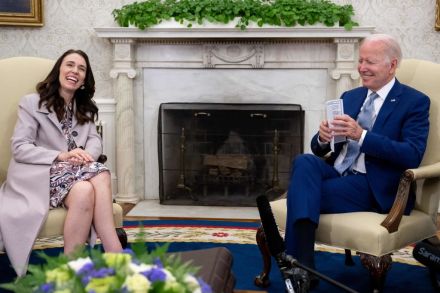
New Zealand Prime Minister Jacinda Ardern is currently leading a trade mission to the United States, with a meeting between her, Joe Biden and Kamala Harris pencilled in for later this week. Her appeal on the world stage is evident – the New York Times over the weekend hailed her ‘inspiring’ – but there is a considerable disconnect now between her high regard internationally and the discontent she is facing domestically. Ardern has several goals. One is spreading the word post-Covid that New Zealand is open for business. But she also wants to beef up international trade and regional security. The US has attempted to pivot to Indo-Pacific in recent years, but that plan is now in question after Russia’s invasion of Ukraine.

The danger of learning too much from Covid

From our UK edition

When Ray Bradbury was asked if his dystopian vision in Fahrenheit 451 would become a reality, he replied: ‘I don’t try to predict the future. All I want to do is prevent it.’ In the hot embers of the Covid-19 pandemic, it may not be enough to foresee infectious disease threats if we lack the ability to forestall them. After all, predictions were made about 2019. In a Ted talk four years earlier, Bill Gates warned about what he later called ‘Disease X’, a respiratory disease that would cause millions of fatalities. Devi Sridhar, a professor of public health at the University of Edinburgh, addressed the Hay Festival in 2018 with an uncanny description of a zoonotic virus from China that could spread across the globe.

In Fortress New Zealand, faith in Saint Jacinda is starting to fade

From our UK edition

Wellington Jacinda Ardern recently told an American television host that she finds it ‘slightly offensive’ when outsiders assume every other New Zealander starred in Lord of the Rings. Quite so. New Zealand has only one real film star in 2022, and that’s the Prime Minister herself. But the way things are heading, she might best suit an adaptation of Lord of the Flies. The place has gone mad. Many countries, even nearby Australia, have responded to the arrival of the Omicron variant by drastically easing many of their formerly draconian measures in response to Covid, in particular the widespread use of lockdowns, or what some might prefer to describe as mass house arrests. New Zealand’s government is not one of them.