Michael Hann

Rosalia’s O2 show was a landmark concert

From our UK edition

If Olivia Dean is the girl next door, Rosalia is the girl next planet. Their shows in successive weeks at the O2 – Dean had six nights, Rosalia two – were object lessons in presentation. Dean’s gig looked like some high-end light entertainment from the 1970s, Rosalia’s like something the National Theatre might dream up for a new revival of Murder in the Cathedral. Rosalia emerged in 2017 as the apparent saviour of flamenco – though flamenco traditionalists disagreed: she was Catalan, not Andalusian, and she wasn’t even a gypsy. Then across four albums, she travelled so far that it’s hard to categorise her extraordinary latest one, Lux: a heavily orchestrated, intensely dramatic reverie about the lives of assorted recondite saints.

Big Thief is this generation’s R.E.M.

From our UK edition

By the time Adrianne Lenker of Big Thief was born in 1991, Kim Gordon had already released seven albums with Sonic Youth. It’s not that there were no women in bands in the 1980s but there were few enough that the concept of the ‘Women in Rock Special’ was very familiar to desperate music journalists. It was also still the case that, within bands, women were seldom granted centre stage – unless they looked extraordinary or ran the band. That meant Gordon, and Kim Deal of Pixies, were more celebrated than any male bassist of a 1980s indie band. (Keith Gregory of the Wedding Present, for example, was never considered brain-meltingly cool simply for existing.

The joy of Belle and Sebastian

From our UK edition

Do Belle and Sebastian have the most polite audience in pop? Normally when a pop singer leaves the stage to promenade through the audience, they are besieged. Even in seated venues most stars ​will make sure to take a security guard with them. I once saw bouncers drag women in red dresses away from Chris de Burgh at the Royal Albert Hall. Not with Belle and Sebastian. When Stuart Murdoch stepped off the stage, barely anyone even stood up. One chap had a little dance with him but no one reached out for a touch of his hand. He climbed from the arena floor to the stalls that circle it, and made his way into a row, where everyone swivelled their seats to let him pass. Yet as soon as he gave them permission, dozens of them were up on stage dancing with this joyful band.

It’s time to redefine what we mean by classic rock

From our UK edition

Classic rock used to be an American radio genre made up of bluesy guitar bands from the past. It spawned Fathers’ Day compilation albums, a magazine and endless lists where ‘Stairway to Heaven’, ‘Bohemian Rhapsody’ and ‘Free Bird’ argued among themselves about which was the public’s favourite. But that’s not classic rock any longer; that’s heritage rock, music by the dead or dying. When the radio format was invented, the bands it celebrated were largely extant, or only recently departed; the oldest of the musicians were not yet 40. Their music was both current and nostalgic because new groups were still nicking from them, and their songs weren’t yet period pieces.

The alluring mess of CMAT 

From our UK edition

The last time I saw CMAT – Ciara Mary-Alice Thompson – was in the middle of a grey afternoon at a festival. She brought a charismatic refusal to be embarrassed to the day, and walked off with rather more fans than she had walked on with. Three albums in, she’s become a big deal – big enough to have screens at the side of the stage for the 10,000 people watching, who knew almost every word of her songs. CMAT’s appeal, I think, is that her aesthetic is that of an ordinary woman acting out and acting up the Charli XCX image. The latter had said that her ‘brat’ aesthetic was: ‘Just, like, a pack of cigs, and, like, a Bic lighter, and, like, a strappy white top. With no bra. That’s, like, kind of all you need.

Flexible and imaginative: Wednesday at the Roundhouse reviewed

From our UK edition

How is it that two things that are fundamentally the same can be completely different? Two bands, each harking back to a specific historical reference point in heavy music, each using distortion and volume as an important part of their presentation. Standing just outside the big old turntable shed’s main room you could just hear them and easily imagine Wednesday and Airbourne following each other on some festival stage and sharing the same audience. Not so much inside the room, though. Wednesday, however they might care to describe themselves, are currently a grunge band, but with a singer-songwriter, Karly Hartzman, who dwells more in introspection and observation than rage and self-flagellation.

John Mulaney at his best is unstoppable

From our UK edition

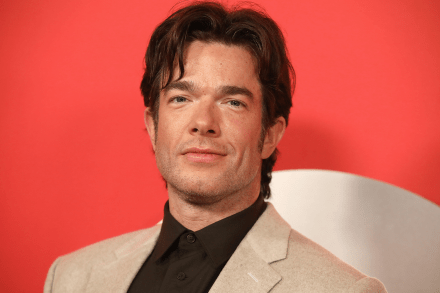
John Mulaney appeared to be just another of those identical, slick, clean-cut, young comedians in suits until Covid. But all was not well. In December 2020, a bunch of his showbiz pals staged an intervention and sent him to rehab for his addictions to cocaine and various prescription drugs. Out of rehab, he promptly parted from his wife, the artist Annamarie Tendler, and met the actress Olivia Munn. As he noted in Mister Whatever, his latest show, when their son was born, he and Munn had known each other for ‘nine months and 45 minutes’. They are now married.

Electrifying: Annie & the Caldwells, at Ronnie Scott’s, reviewed

From our UK edition

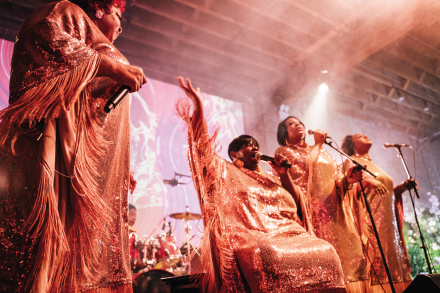
Annie & the Caldwells are a long-running family gospel ensemble from West Point, Mississippi – father and sons playing guitar, bass and drums, mother and daughters singing. The chaps offer a sinewy, stripped-down funk redolent of the late 1970s: dad, Willie J. Caldwell Sr, is a fantastic guitarist, and mother and daughters tear the roof off the place. They came to attention when David Byrne put out a record on his Luaka Bop label, and suddenly they were no longer just a local gospel group. Except they are. In an early show at Ronnie Scott’s, Annie – seated centre-stage in what looked like a black leather housecoat – was there to save souls. She refused to be discouraged by only three hands rising when she asked who believed in Jesus.

Why I will always have time for Bernard Butler

From our UK edition

Bernard Butler has popped up a couple of times in this column, but not alone – once, with two fellow songwriter-guitarists as Butler, Blake & Grant; but also writing and performing with Jessie Buckley, to sublime effect. Over 30 years Butler has become one of pop’s great enablers. He’s worked on hit records, miss records and records that were never intended to be hits. He’s played with everyone, but has seldom sought much of a spotlight himself. Like Johnny Marr, he stepped away from a generational band – Suede – at the height of the mania for them. Like Marr – and unlike most others who step away from stardom and seek the shadows – he continued working, but always on his own terms.

Johnny Rotten’s still got it

From our UK edition

Robert Plant and John Lydon were fixed in the public mind at the age of 20. Plant, a golden-haired lad who had grown up in Worcestershire, became the leonine singer of Led Zeppelin in 1968, a self-proclaimed ‘golden god’. Lydon, a scrawny kid from Holloway, who had been hospitalised for a year with meningitis as a child, became Johnny Rotten, and in 1976 helped deliver ‘the filth and the fury’ – as the Daily Mirror put it – on the nation’s TV screens as a quarter of the Sex Pistols. Both, it would be fair to say, have ambivalent relationships with their pasts. After Zeppelin’s demise in 1980, Plant spent a couple of decades being active, but without much direction.

Christmas II: Dominic Sandbrook, Philip Hensher, Steve Morris, Christopher Howse, Michael Hann & Mary Killen

From our UK edition

41 min listen

On this week’s special Christmas edition of Spectator Out Loud – part two: Dominic Sandbrook reflects on whether Lady Emma Hamilton is the 18th century’s answer to Bonnie Blue; Philip Hensher celebrates the joy of a miserable literary Christmas; Steve Morris argues that an angel is for life, not just for Christmas; Christopher Howse ponders the Spectator’s enduring place in fiction; Michael Hann explains what links Jeffrey Dahmer to the Spice Girls; and, the Spectator’s agony aunt Mary Killen – Dear Mary herself – answers Christmas queries from Emily Maitlis, Elizabeth Day, Rory Stewart and an anonymous Chief Whip of Reform UK.  Produced and presented by Patrick Gibbons.

What links Jeffrey Dahmer to the Spice Girls?

From our UK edition

The path that links the Spice Girls to Jeffrey Dahmer – necrophile mass murderer of at least 17 men – is a circuitous and unusual one. It involves the establishment of Mothercare and Harold Wilson’s Chancellor of the Duchy of Lancaster and the New York underground of the early 1980s. The thread that joins the ends is a 76-year-old Ohioan called Chris Butler. Butler was part of that art underground in 1981. He was – and is – a musician. Back home in Akron he’d started several bands – the wonderful art rock group 15-60-75 (aka the Numbers Band), and Tin Huey – and he’d brought the newest of them, the Waitresses, to New York. They were signed to ZE Records, an extraordinarily hip label run by a Frenchman, Michel Esteban, and an Englishman, Michael Zilkha.

Thom Yorke reminds me of David Brent: Radiohead reviewed

From our UK edition

There were times watching Radiohead’s first UK show for seven years when Ricky Gervais came to mind. As Thom Yorke dad-danced around the circular stage in the middle of the arena, his bandmates all hunched over their equipment – which made it resemble a server room of a call centre – I felt as though I was witnessing David Brent doing the samba around the office. I have to confess that there are large chunks of Radiohead I simply don’t understand.

The rise of psychedelia

From our UK edition

On YouTube – and I urge you to look it up – there is a magnificent piece of footage from German TV, in which big band leader James Last leads his orchestra into a medley of hard rock hits, opening with Hawkwind’s deathless space-rock drone ‘Silver Machine’. And damn it if they don’t nail it. The members of the band with electric instruments play it just as Hawkwind did: the whooshing synth, the thudding bass, the fuzzing guitar. But instead of Lemmy growling out the topline melody, there is a huge rush of brass from the band, the brightness cutting unexpectedly through the murk. It is, unironically, brilliant. I have no desire to investigate much else of Last’s colossal oeuvre, but I can watch those few minutes over and over again.

No band should play Ally Pally

From our UK edition

The last time Gillian Welch and David Rawlings played in London it was a different world: the world of David Cameron and Barack Obama and a Manchester United at the top of the Premier League. Welch and Rawlings have changed, too: Welch is silver rather than red, and Rawlings as grizzled as a bear. Welch was in brown floor-length dress and Rawlings in suede jacket and cowboy hat. With a rather younger upright-bass-player, Paul Kowert, the trio looked like farmers trying to save their land from The Man in some Taylor Sheridan TV series. And then they started singing. Welch and Rawlings have released records under their own names and as a pairing.

In defence of Mick Hucknall

From our UK edition

Before Simply Red came on stage at the Greenwich peninsula’s enormodome, the screens showed a clip of a very young Mick Hucknall being interviewed. What he wanted, he said, was to be a great singer. Usually, that’s the cue for a gag about fate having other plans. Not this time. He’s 65 now, and he truly is a great singer as he showed for the best part of two hours. He knows it, too. A couple of songs in, he benignly told his audience at the first of two nights at the O2 that he liked it when they sang along with the choruses, but maybe leave the verses to him. The person next to you, he explained, had come to hear him sing, not you. But not just hear – Hucknall is worth watching as well. Seeing him was like witnessing one of the great standards singers of the 1950s.

Like Gabor Mate set to club beats: Lady Gaga, at the O2, reviewed

From our UK edition

Lady Gaga’s show was to begin at 7.30  prompt, we were told. No opening act. And at 7.30 something did happen: the big screen over the stage started showing a film of Ms Gaga, clad in scarlet finery, writing on a scroll with a peacock-feather quill, while the PA played opera’s greatest hits. For more than an hour the film ran, an impassive Gaga doing nothing but writing. An hour. It was nearly as dull as a Paul Thomas Anderson film, and it’s a miracle it took 45 minutes for the handclaps to start ringing around the arena. Was she about to do a Madonna – who had to keep cutting short her O2 shows because she was about to break their curfew? In the end, no. Gaga just managed to end in time, but it was tight. And she won back her crowd.

Suede turn their fine new record to mush at the Southbank

From our UK edition

I think a lot about Wishbone Ash. A disproportionate amount. Partly because I have had to listen to them for around ten hours while researching a book. Partly because when I was a kid, I always found it curious that Wishbone Ash were advertised in the weekly music press but never reviewed. Back then, broadsheets barely covered rock, so there was no room for their gigs and albums there. But they were never on Top of the Pops or The Tube or even Whistle Test  either. Perhaps Tommy Vance occasionally gave them a spin on the Friday Rock Show, but other than that they were not on Radio 1. They existed entirely outside of what I perceived of as the world of rock. At that point Wishbone Ash were 15 years on from their first album. Suede are 32 years on from theirs.

Britain’s loveliest, most thoughtful festival

From our UK edition

The last weekend of August is my favourite of the year. That’s when I pootle down to Cranborne Chase to the loveliest, most thoughtful festival in the UK. End of the Road is a festival for those who look at TV coverage of Glastonbury and see only the size and the heaving crowds and come out in a cold sweat. It’s lovely because it’s small – around 15,000 people. You can walk from the furthest campsite to the furthest part of the festival area in 25 minutes or so. If you’re not enjoying what you’re watching, you’ll be able to find something else within five minutes’ walk, via an array of bars without punishing queues.

The Seeds are primitive but magnificent

From our UK edition

I have nothing but admiration for those men who burn a candle for the music of 1966. Partly because, like them, I believe 1966 to be pop’s greatest year, but mainly because being a psychedelic hipster requires a commitment that invites ridicule. It’s one thing to be an ageing fella who likes rock’n’roll – sharp denim and a well-tended quiff can look just fine. And you can never really tell the age of a metalhead – they just look like a metalhead. But to wear your hair in an outgrown bowl cut, and to strut around in tight red trousers as Seeds singer Paul Kopf does, is inevitably to invite catcalls of ‘Oi, Austin Powers!’. You have to really believe in it to go through life like that.