New zealand

Jacinda Ardern’s hijab shows what New Zealanders really think of Muslims

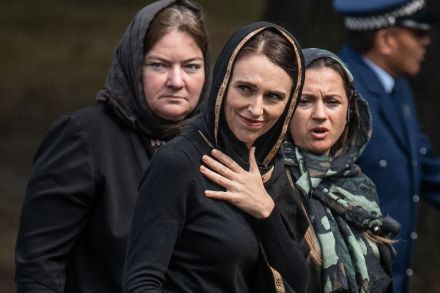
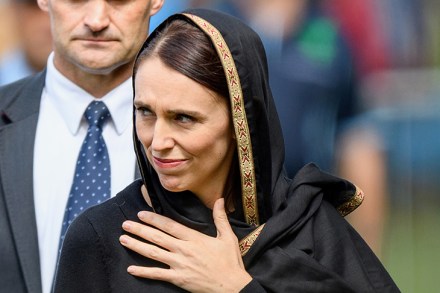
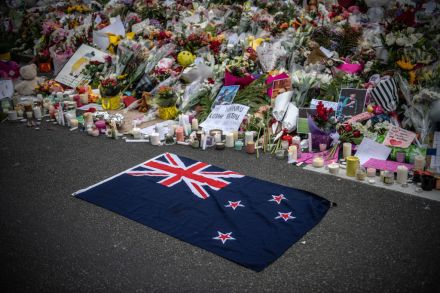
The reaction of New Zealand’s vast non-Muslim majority to the terrorist attack at the Al Noor mosque in Christchurch is both inspiring and alarming. Inspiring because, faced with a group of mostly recent arrivals who constitute a mere 1 percent of New Zealand’s population, the other 99 percent have chosen not to ignore their loss and distress, but to commiserate and console at a time when liberal democracies are beset by factional resentments. What is alarming is the form the reaction has taken. When New Zealand’s prime minister Jacinda Ardern observed Friday prayers in the park outside the mosque, she and many other non-Muslim women wore a hijab.

jacinda ardern

New Zealand’s flag vote makes me proud to be both Kiwi and British

From our UK edition

I'm technically 3/4 Kiwi and 1/4 British, although having lived in the UK most of my life, it doesn't often feel this way. But when it comes to rugby, I support the All Blacks, and when I go walking in the mud, I wear gumboots, not wellingtons. So I've taken a vague interest in the fact that New Zealand has held a referendum about whether to change its national flag, but has now voted by 56.6 per cent to keep the status quo; that is, the traditional flag which features the Union Jack on it. I can see why this has caused so much tension and why it has divided opinion.

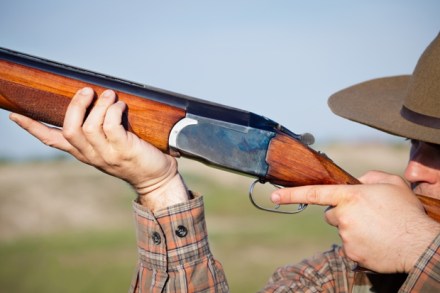
Reality check: New Zealand is awash with guns

From our UK edition

In a blink, everything has changed and yet nothing has changed. Life goes on. The long, hot days of a record summer are lazily tumbling into autumn, gridlock has returned to the motorways, the kids are back at school. But the murderous events in Christchurch last Friday have distorted everything for us as a nation. This far-flung little haven of ours — we’ve been so proud of its unspoilt coastlines, its quirkiness, its outsized achievements (in our minds, anyway), its inclusiveness and safety. Bad stuff happened somewhere else. We thought we were different. We thought distance protected us from global extremism. The horrendous events have left us questioning so much of who we are and what we stand for. Our sense of security has been stolen.

Who should we blame for the Christchurch atrocity? | 18 March 2019

From our UK edition

A frequent complaint heard from Muslim communities in recent years has been irritation and anger over any suggestion that Muslims – as a whole – need to apologise for attacks carried out in the name of their religion. I have sympathy for this irritation, tying as it does innocent people to the actions of guilty ones. But since the attack in New Zealand was carried out by a non-Muslim who was targeting Muslims, whether or not it needs to be said still it should be said – indeed must be said – that non-Muslims abhor, are disgusted, outraged and sickened by somebody going into a place of worship and gunning down innocent people. We condemn it in the most fulsome and unreserved terms.

The dark extremism of the ‘extremely online’

From our UK edition

The killing of 49 Muslim worshippers in Christchurch, New Zealand, was a very modern massacre. Pacing through the Mosque, the terrorist live-streamed his killings in the style of Call of Duty, with a head-mounted camera that allowed his viewers to see the world from his deranged point of view. The terrorist was the most loathsome kind of attention seeker, and to give him attention is thus to encourage other pathologically pretentious men to ape his crimes. Still, there are aspects of this attack that should be noted. Whenever a shocking massacre happens, we see different yet similar responses from the left and right.

How the police should deal with far-right terrorism

From our UK edition

As New Zealand comes to terms with the most deadly terrorist attack ever carried out on its soil, leaders from around the world will be asking their security advisors whether this marks the start of an escalation of right-wing threats and whether their current strategies for defeating this form of extremism are fit for purpose. It has been obvious for several years now that far-right extremism has been growing across western democracies with social media providing the means for a new global connectivity between far-right individuals and groups.

Lost in the Pacific

From our UK edition

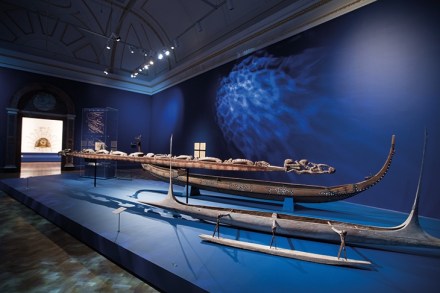
At six in the morning of 20 July 1888, Robert Louis Stevenson first set eyes on a Pacific Island. As the sun rose, the land ‘heaved up in peaks and rising vales’. The colours of the scene ‘ran through fifty modulations in a scale of pearl and rose and olive’, rising into ‘opalescent clouds’. The whole effect was a ‘suffusion of vague hues’ shimmering so that mountain slopes were hard to distinguish from the cloud canopy above. Oceania, the new exhibition at the Royal Academy devoted to the region’s arts and cultures, is almost as beautiful as that dawn landscape, and just about as difficult to make out with any precision. Nonetheless, it is full of the most marvellous things to see.

All shook up

From our UK edition

The polymath writer A.N.Wilson returns to the novel in Aftershocks, working on the template of the 2011 earthquake which devastated Christchurch, New Zealand. He protests that the setting is not New Zealand but, as he admits, there are many recognisable similarities. This is a novel about true love, its agonies, ecstasies, and eventual fulfillment, told in the voice of a young woman, Ingrid Ashe. She is the daughter of the female local radio broadcaster, Cavan Cliffe; and the mother/daughter relationship is almost unhealthily close. Ingrid’s is a lesbian love story in which her passion cannot develop until the earthquake upsets the structure of the city, destroys the cathedral and causes an all-round upheaval in personal relationships.

The art of the impossible

From our UK edition

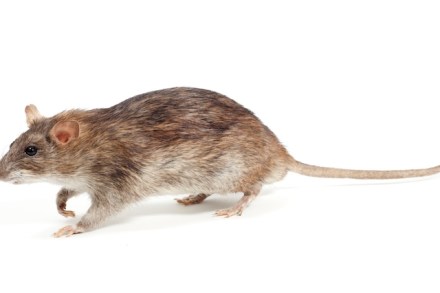
The extermination of every single one of South Georgia’s rats, for the sake of its birds, was confirmed at a press conference in London last week. A summer of searching with dogs and bait two years after the last poison was deployed turned up no sign of a rodent. This achievement is remarkable, not least because it was deemed impossible right up until it was achieved. It was a barmy idea, way out there, crazy, bound to fail. Like lots of other ideas. Maybe there’s a lesson here. The island got infested with rats from whaling ships centuries ago, and they soon exterminated endemic pintails and pipits from the main island, driving the remnant populations of prions and petrels into the rat-free mountains. Only the penguins were rat proof.

Corpses, clues and Kiwis

From our UK edition

Publishing loves a brand. Few authors of fiction create characters who reach this semi-divine status, but when they do, even death cannot part them from their fortunate publishers. Sherlock Holmes, Hercule Poirot, Bertie Wooster and James Bond are among those who have survived their creators’ deaths, thanks to the assistance of living authors. Now Roderick Alleyn, the ineffably posh Scotland Yard detective created by Dame Ngaio Marsh, returns for a posthumous outing with the help of Stella Duffy, herself a distinguished crime writer. It’s an inspired pairing — Duffy, like Marsh, is a New Zealander with a professional interest in the theatre.

Long-haul travel

From our UK edition

For some reason, I decided to go to the other side of the world for Christmas. I may never do it again. Not because I didn’t like Australia (I loved it) but because it takes forever to get there. And spending 23 hours with your knees under your chin on a long-haul flight to the Antipodes will cure you of ever going further than Calais. When you’re flying economy it’s of paramount importance to choose the right airline. I tried four for size: Cathay Pacific, Qantas, Jetstar and Air New Zealand. Cathay Pacific flew me to Hong Kong. The staff were friendly and smart but, alas, the Boeing 777 was neither. After that, Cathay’s business-class lounge, where I waited for my connection and drank all the free champagne, was a welcome comfort.

Hacked off with the haka

From our UK edition

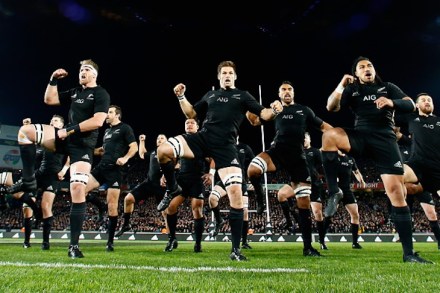
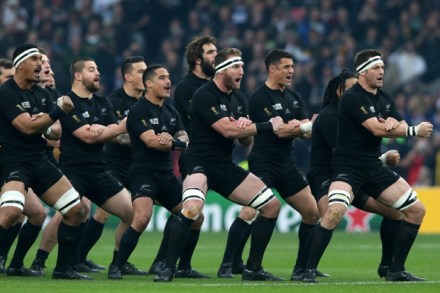
Kingsley Amis said the most depressing words in the English language were ‘Shall we go straight in?’ — meaning no pre-dinner drinks. But for many of us it’s: ‘Tonight is the folklore evening.’ At any holiday resort in the world this signals a bloke with a balalaika and plump ladies in national dress giving it large with some traditional and intermin-able dance. Time to head for the bar. So let’s look at the ‘haka’, the preamble to any All Blacks rugby match, and now more or less any game on the current Lions tour. The Auckland Blues had knocked one up for their Lions game this week. It was called The Power of Many and had stuff about ancestors, challenges and the sea; all the ingredients of the Kiwis’ admirable myth-making.

Letters | 20 April 2017

From our UK edition

Benedictine engagement Sir: Matthew Parris has missed the point (‘Give me the Anglican option’, 15 April). He compares Rod Dreher’s suggestion that modern Christians emulate the Benedictines with the retreat into self-imposed exile of groups like ultra-Orthodox Jews and the Beni Isguen community. The Benedictines did not withdraw from the world. They engaged with the fractured society of the Dark Ages, showing a better way through their schools, almsgiving and prayer. A number of recent books, including Tom Holland’s Millennium, have charted the astonishing role the monasteries played in dragging Europe out of barbarism.

John Key’s real legacy is his lack of blunders

From our UK edition

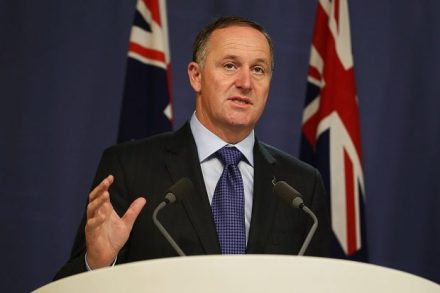
Imagine a Tory Prime Minister stepping down after nearly ten years at the top on his own terms. The budget was back in surplus, troublesome referendum results had been quickly forgotten, and the PM still remained overwhelmingly popular, with his party still sitting on around 50 per cent in the polls. No, it's not the restless dreams of David Cameron, but John Key - New Zealand's soon-to-be ex-PM, who unexpectedly announced his resignation earlier today. Arguably one of the most successful centre-right leaders in the world since Margaret Thatcher, Key has dominated New Zealand politics for the past decade. His National party has held near-majority government, despite a proportional electoral system that was meant to make such a situation impossible.

Apples for our eyes

From our UK edition

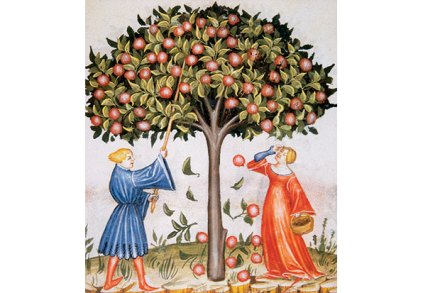
Apple Day, on 21 October, is a newish festival, created in 1990, by the venerable organisation, Common Ground. Intended to be a celebration of the apple, its purpose is also to raise awareness of the importance of apples in landscape, ecology and culture. All over the country there will be many revels where you can taste apple varieties, jellies, chutneys and drinks; try apple-bobbing, take apples from your own garden for identification by experts, buy apple trees and all sorts. These are charming festivities, much better behaved than the ancient cider-makers’ ritual, wassailing.

New Zealand

From our UK edition

On my first night in Christchurch, I woke at 3.32 a.m. to what felt like an explosion. My bed was rocking, and a few things fell off the shelves. After my initial panic, I realised what it was: an earthquake, of course. The next question: what to do? Being an earthquake virgin, I had no idea if this was a big ’un or a small one — so I stayed put. I would listen to what was going on outside, I decided, and if people seemed to be panicking or moving, I’d join them. Fortunately the shaking soon subsided, so I resorted to Google. It was true. On Sunday 28 March, there had been a ‘rather strong’ 4.27 magnitude earthquake just outside town. Welcome to New Zealand. Given where I was, I should have worked out more quickly what was going on.

Two big hitters leave the crease

From our UK edition

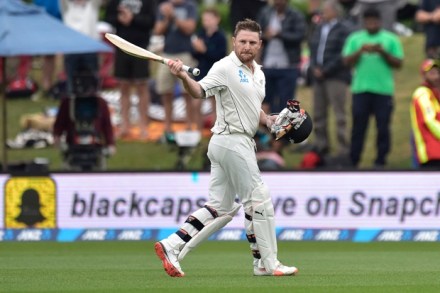
Two great men have just bowed out from their chosen trades and it is bloody sad. The New Zealand cricket captain Brendon McCullum and the journalist Hugh McIlvanney might not seem to have much in common but they both made the world a better, more joyful place. I sat up until the small hours a few of weeks back watching McCullum: it was his last Test, in Christchurch, against the old enemy from across the Tasman Sea, and his side had been put in to bat. McCullum has redefined what it means to be a batsman and for his farewell he wasn’t going to leave anything in the pavilion. He proceeded to score the fastest Test century in history, 54 balls, with jaw-dropping skill, grace and aggression. But his achievement is far greater. His teams played with freedom and sportsmanship.

I’ve discovered a new way to annoy holier-than-thou rugby fans

From our UK edition

Some advice. Don’t watch the rugby world cup final with anyone too politically correct. My friend Tom and I were so busy arguing about the Haka that we missed the first try during the semi-final on Saturday. ‘I love a bit of primitive ritual’ I said, as the men in black became animated wood carvings that would make a missionary quake. ‘Er, I’m not sure you’re allowed to say that.’ ‘Eh?’ ‘I think you’ll find that word’s kind of you know…racist?’ ‘What, primitive?’ ‘Yeah.’ ‘Racist? But there’s white people doing it too.’ ‘Yeah but it’s a Maori thing, so you’re basically calling Maoris primitive.

Young guns

From our UK edition

The Honourable Society of Odd Bottles began proceedings with a report on the activities of our junior branch. These youngsters are not yet eligible to become drinking members, but they are chosen because of their unremitting hostility to vermin and their burgeoning enthusiasm for killing game. Young Charlie, the Nimrod of his generation, has been prodigiously active. It is surprising that there is a single grey squirrel still alive in Somerset. Any rat that comes his way goes no further. He is also mightily effective against rabbits and pigeons, which he enjoys scoffing, after he has skinned or plucked them. Charlie has inherited a .410: the fifth generation of his family to use it. It is a notoriously fickle calibre, the excuse I always use when I miss with one.

Matters of life and death

From our UK edition

‘Bait by Cartier,’ she growls as her priceless diamond bracelet is strapped to a piece of rope and dropped overboard in the hope it might lure a fish on to the line. She’s stuck on a boat with a group of survivors after the freighter she was aboard was hit by a German U-boat during the second world war. She was Tallulah Bankhead, playing Connie, heroine of John Steinbeck’s novel-cum-film Lifeboat, for Mystery Theater, the American radio drama series, first broadcast in 1950 and now replayed on Radio 4 Extra (Sunday). They just don’t make voices like that anymore. It had star quality streaked right through it. That deep husky tone, the raucous laugh, the harsh put-down veering almost at once into a sensual come-on.