New zealand

A reappraisal of James Courage

From our UK edition

James Courage is one of those fine writers who, though he enjoyed considerable success in his lifetime, has now more or less slipped from view. None of the eight novels he published between 1933 and 1961 is in print and most of them are impossible to find secondhand. The same goes for a collection of his short stories published in 1973. He is chiefly remembered for A Way of Love, a bold novel about a homosexual relationship that was published in 1959 and became a minor cause célèbre in New Zealand when it was banned there. Courage was born in New Zealand in 1903, but came to Oxford University in 1922.

New Zealand’s zero Covid strategy is becoming unsustainable

From our UK edition

New Zealand has done remarkably well over the past 18 months at protecting its citizens from the worst of the Covid pandemic – better than almost any other country in the world. Only 26 people have died of Covid in the country, after it has aggressively locked down at the first sign of a case and closed off its borders to the rest of the world. But as we have recently learned in Afghanistan, an exit strategy can easily undermine all your previous achievements. New Zealand is now in a very difficult situation. It is currently facing its first outbreak of the Delta variant, but only a small proportion of its population is immunised. This week the country announced that its latest lockdown would be extended again.

Putting the commie in committee

From our UK edition

Last month an epidemiologist called Professor Michael Baker described the UK government’s decision to free its people from Covid restrictions on 19 July as ‘barbaric’ and an ‘experiment’. Professor Baker lives in the little-known hermit kingdom of New Zealand — a country which, under the guidance of people like himself, has banned almost all foreign travel and imposed long domestic lockdowns. Such is the grip Baker and his friends have on the country that the appearance of just two Covid infections in the entire population caused the nation to go into a hysterical spasm, with much bed-wetting, shrieking and governmental resignations. You are allowed to die of anything in New Zealand, but not Covid.

New Zealand’s worrying battle over transgender rights

From our UK edition

Last year, the equalities minister Liz Truss set aside laws which would have allowed people to self-identity as the legal gender of their choice. For those worried about the effect self-ID could have on women-only spaces, Truss’ move was a welcome relief. But campaigners for women’s rights should not be too complacent. As recent developments across the world in New Zealand show, it only takes a general election to trigger a massive move in policy in a matter of months. Two years ago, the New Zealand campaign group Speak Up for Women thought that self-ID had been taken off the table when Tracey Martin, the New Zealand minister for internal affairs, announced that the Births, Deaths, Marriages, and Relationships Registration Bill was to be deferred.

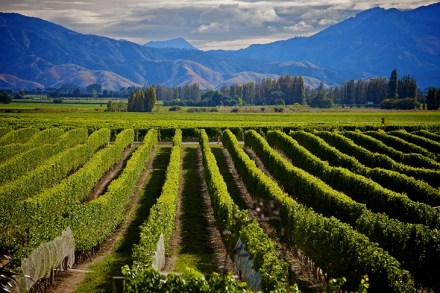
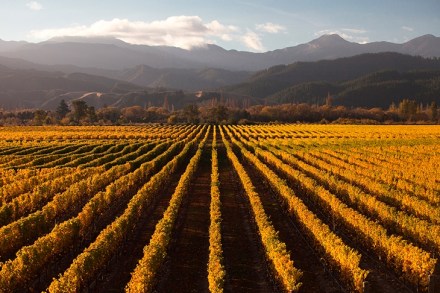
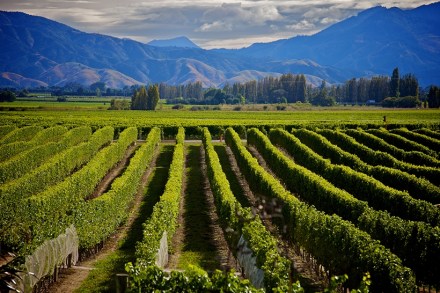
A new take on New Zealand wine

From our UK edition

‘The doors clap to, the pane is bright with showers.’ With ‘summer’ determined to do its worst, there is one obvious question. How were the English able to invent cricket and tennis? Apropos tennis, there is another obvious question. How long will Wimbledon remain mired in sexism? It has now been established beyond peradventure that women are at least as good as men at everything. Anyone who claims that those who were born female — an increasingly irrelevant criterion — are not as strong as men is likely to encounter the wrath of the criminal law. Quite right too: supposed free speech must not be allowed to trump common sense.

Laurel Hubbard is the beginning of the end of women’s sports

From our UK edition

When women’s professional soccer was deemed good enough for our TV screens a couple of years ago, I was watching with a friend and her four-year-old son. He was enthralled by the game, and asked his mother, ‘Are boys allowed to play football as well as girls, mummy?’ This little boy’s comment clearly highlighted the insidious sexism prevalent in all aspects of competitive sport. When it comes to soccer, rugby, weightlifting, darts, you name it, commentating, sports writing, sports photography and so many other operational aspects of competitive sports are dominated by men. Female sports champions can be such important feminist role models for girls. Look at Martina Navratilova, Jessica Ennis-Hill, Nicola Adams and Sian Massey-Ellis.

A novel approach to New Zealand’s wine

From our UK edition

The last Saturday of lockdown — inshallah — and we were discussing literature. Specifically, when does a detective story become a novel? T.S. Eliot edited the World’s Classics edition of The Moonstone and gave a copy to A.E. Housman, with the inscription: ‘The best detective story in English or any other language.’ Surely Eliot was right. The Moonstone and The Woman in White are superb detective fiction. But they are not novels. Poor Wilkie Collins did try to write novels. Nobody read them. Nobody was wise. We more or less agreed. Ian Rankin, Reginald Hill, P.D. James, Dorothy Sayers, James Lee Burke: all regularly cross the frontier into novelism. Perhaps we should adopt the French term: roman policier.

The Australian trade deal is about more than just trade

From our UK edition

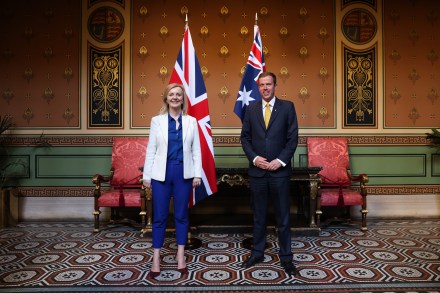
What happens with an Australia trade deal won’t just reveal how serious this country is about free trade but also how committed it is to helping democratic countries stand up to China. China is Australia’s largest trading partner but since Australia called for an independent inquiry into the origins of coronavirus, Australian-Chinese relations have severely deteriorated. Beijing is now trying to use this economic relationship to get Canberra to fall into line.  China has imposed huge tariffs on Australian barley and on wine for the next five years, while technical reasons have been found to bar most Australian timber and beef from the country.

The strangeness of Britain’s BLM mania

From our UK edition

The conviction of Derek Chauvin for the murder of George Floyd makes last summer’s Black Lives Matter mania in British institutions look even stranger. The British Museum, Oxbridge colleges, Sir Keir Starmer, football teams, government departments, Kew Gardens, the National Trust and numerous corporations indulged in various forms of self-abasement. Some ‘took the knee’. At the Ministry of Defence, the permanent secretary, Sir Stephen Lovegrove, broke professional political impartiality by emailing his staff about the ‘deep roots’ of ‘systemic racial inequality’ in Britain, and signing off with a BLM hashtag. He was subsequently promoted to be the UK National Security Adviser.

Has the shine come off Saint Jacinda?

From our UK edition

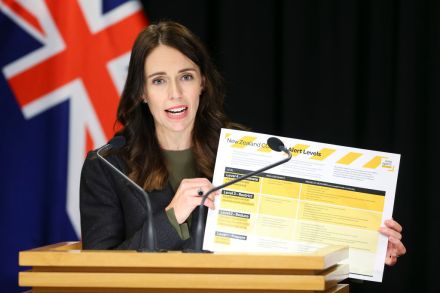
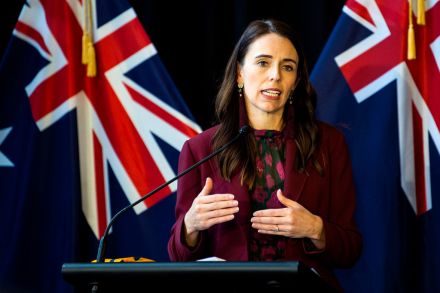
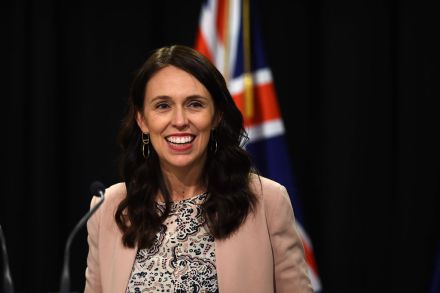
For a short time it seemed as if Jacinda Ardern, the popular premier of New Zealand, could do no wrong in the eyes of the British political establishment. The New Zealand PM was held up as the Platonic ideal of a liberal, centrist leader who had saved her country by locking down during the pandemic. The praise of Ardern reached fever pitch in October last year, when she romped home in the New Zealand elections. Labour MPs gushed over Jacinda’s ‘real leadership’ and suggested that: ‘Jacinda shows what a competent, moderate, progressive, emotionally intelligent, immensely likeable & unifying Labour leader can achieve.’ https://twitter.com/DavidLammy/status/1317528293994803205?

Why is New Zealand afraid of criticising China?

From our UK edition

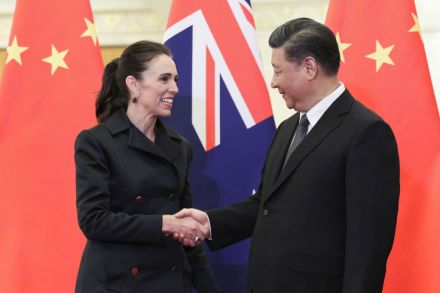
It is becoming harder and harder to ignore China’s aggressive behaviour. As I say in the magazine this week, China wants to pick off its opponents. Only a unified western response can stop this, but all too often that has been lacking. New Zealand was strikingly absent from the statement issued by 14 countries When Beijing turned on Australia for suggesting that there should be an independent inquiry into the origins of the coronavirus, there was a shocking lack of solidarity from New Zealand. Wellington’s trade minister, while negotiating an upgrade to its trade deal with China, suggested Australia should ‘show respect’ to China. New Zealand now exports almost half its meat and wool to China.

Letters: The key to Scotland’s future

From our UK edition

The key to the Union Sir: ‘Love-bombing’ the Scottish electorate with supplemental spending in devolved areas (‘The break-up’, 27 February) is unlikely to prove a decisive tactic in the ongoing battle over Scottish independence. It will never be enough, and the average voter will not distinguish Westminster spend from Holyrood’s. Neither should opposition to an independence referendum be the Scottish Conservative and Unionist party’s primary policy in the upcoming Holyrood election. Falling into the SNP trap of focusing on this issue allows the party to pursue its agenda of confected grievance and division. Secession is the SNP’s preferred battleground, not least because it permits deflection of their record in government.

What Britain could learn from New Zealand about home-schooling

From our UK edition

If ever there was a moment to address the issue of home-schooling, it is now. The pandemic has disrupted teaching, school life and examinations in catastrophic ways. Many children will now never get the education they would have had. But every crisis is an opportunity — and this crisis offers the chance to reform education in radical ways for the better. Britain could learn a lot from New Zealand. Since 1922, the Kiwis have run a state-funded national correspondence school, known now in Maori as Te Aho o Te Kura Pounamu (Te Kura for short). In Western Australia, a similar school has existed since 1918 and is known as the School of Isolated and Distance Education. The Correspondence School/Te Kura approach is not a revolutionary concept.

Why alpha males don’t wear ties

From our UK edition

Claire Robinson, in (where else?) The Guardian, this week, announced that 'the phallic necktie is an outdated symbol of white male rule in New Zealand's parliament': 'The necktie echoes the shape of the codpiece… designed … to emphasise a European nobleman’s importance through his large phallic size. It is arrow shaped and directs the eye of an onlooker down towards a man’s groin.' Blimey. Newly elected Māori Party co-leader, Rawiri Waititi, meanwhile, refused to wear one in Parliament, referring to it as a 'colonial noose'.  Waititi carried the day. Ties are no longer obligatory law-maker apparel in the happy, Covid-free home of the Bungee Jump and Cloudy Bay. The kind of men who do like to assert alpha status no longer use ties.

Why is Jacinda Ardern still so popular?

From our UK edition

Every time I read another excitable media article about New Zealand’s prime minister Jacinda Ardern, I am reminded of an old quip: ‘Viewed from a distance, everything is beautiful.’ That was Publius Cornelius Tacitus (AD 58-120). Were this Roman intellectual and historian alive today, he would make a great New York Times columnist. His tactic was to spin political and historical analogies so they could influence public affairs back home. Tacitus’s Germania, for example, was about framing the Germanic tribes as a noble culture so that his Roman compatriots would recognize their own society as corrupt and decadent in contrast. The only problem was that Tacitus had never crossed the Rhine. That did not matter much: most Romans had not traveled far north either.

Our recent stockpiling is nothing to what ‘preppers’ lay in store

From our UK edition

This book could not have been published at a better time — nor, in a way, at a worse time. Better, because we are now living with the threat of disaster looming over us and society is being radically transformed; worse, because the apocalyptic scenarios Mark O’Connell writes about include such quaint, marginal topics as catastrophic climate change, nuclear devastation and the concern of ‘preppers’. These are the men who build bunkers in the countryside and fill them with enough tins of protein sludge to keep them going through whatever unspecified calamity brings about the end of the rule of law. There’s not a great deal here about a global pandemic. That said, there doesn’t have to be.

The best New Zealand wine I’ve come across

From our UK edition

I was once invited to the Cheltenham races and found the experience underwhelming. Everything was too respectable: not nearly Hibernian enough. I had expected to see Blazes Boylan, Flurry Knox, the Joxer and Christy Mahon, propping each other up in a determined attempt to drink the west of England out of Guinness. The reality was much tamer. But there was one source of amusement. By halfway through the afternoon, undeterred by their skill in dispensing losing tips, a lot of my journalistic colleagues had become equine experts. The previous day, these chaps would not have known the difference between a foal and a fetlock. Yet here they were, insisting that there was not enough stamina in the dam’s bloodline, and so forth. Just as well that they did not run into Flurry Knox.

How common are volcanic eruptions?

From our UK edition

Volcanic eruptions At least six people were killed when White Island, a volcano off New Zealand’s North Island, erupted. How common are volcanic eruptions? — According to the Smithsonian Institution’s Global Volcanism Programme, there are 45 volcanoes around the world in an active state of eruption. — Yasur, on the South Pacific island of Vanuatu, has been in a constant state of eruption since at least 1774. — Santa Maria, in Guatemala, has been erupting continuously since 1922. — In terms of distinct eruptions, Mount Etna on Sicily can claim to be the world’s most active volcano, with 219 known eruptions within the past 10,000 years.

Portrait of the week: Trains stop, a volcano erupts and the nation goes to the polls

From our UK edition

Home The nation went to the polls. Engineering works compounded the misery of passengers on the South Western Railway where the RMT union is holding a strike until the end of the year. Leatherhead was utterly cut off. Hundreds of Greater Anglia services were cancelled when a signals failure turned into problems with rolling stock. After 22 years, Virgin Trains relinquished the franchise to run the West Coast Main Line, which was granted to Avanti West Coast, a partnership between Aberdeen-based firm FirstGroup and Italy’s Trenitalia. All 27,000 chickens on a farm in Suffolk were culled after cases of avian influenza were found.

Is New Zealand really such a tolerant country?

From our UK edition

For years, New Zealand has been talked of as a beacon of liberalism, a country that other democracies including Britain – and, in particular, Trump’s supposedly intolerant America – should try to emulate. This has been even more pronounced since the massacre of Muslim worshippers at two New Zealand mosques by an Australian white supremacist a fortnight ago. In a rare gesture, the world’s tallest building was dramatically lit up last week with a giant image to honour New Zealand prime minister Jacinda Ardern for her leadership following the killings. The Burj Khalifa skyscraper in Dubai beamed out a photo of Ardern embracing a woman at a mosque in Wellington.