Nicholas Sheppard

Nicholas Sheppard is a freelance journalist and fiction author. He lives in Auckland, New Zealand.

Did Maori MPs mean to insult King Charles?

From our UK edition

The co-leaders of New Zealand’s Māori party, Te Pāti Māori, have defended their actions at the swearing-in ceremony at parliament in Wellington on Tuesday. The party's MPs all broke with protocol by standing and giving a whaikorero (formal address) when it was their turn to be sworn in. In their remarks, members of the party swore allegiance to the mokopuna (grandchildren) and said they would exercise their duties in accordance with Te Tiriti o Waitangi (New Zealand’s founding document, the treaty of Waitangi). They each then approached the Clerk of the House to give their affirmations of allegiance to King Charles, a prerequisite to formally becoming an MP.

New Zealand’s coalition goes to war with Jacinda Ardern’s legacy

From our UK edition

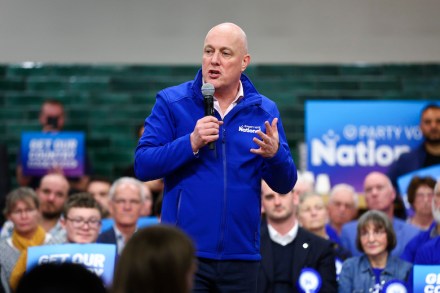
New Zealand finally has a government again. It's been 40 days since Labour was defeated in the country's election, but the centre-right National party, which won the vote, has struggled to form a coalition. At last, it has thrashed out a deal with the libertarian ACT party, and centrist populist New Zealand First. The coalition is good news, at least, for foreigners seeking to live in New Zealand. Earlier this year, the National Party announced a plan to whack foreign buyers with a 15 per cent tax on houses worth over $2 million (£1.6 million). Now that idea has been ditched – a casualty of the coalition agreement. But New Zealand's prime minister Christopher Luxon is cagey on how his government is going to make up for the shortfall.

The worst Noel? Why Kiwis are turning against wealthy foreigners

From our UK edition

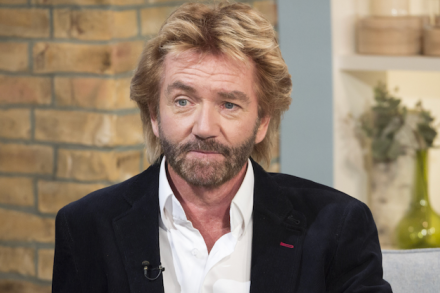
Wealthy foreigners are flocking to New Zealand, but not all Kiwis are happy about their arrival: not least locals who are fed up with their neighbour, Noel Edmonds, of Deal or No Deal and Mr Blobby fame.  Edmonds moved last year with his wife to a small village called Ngātīmoti, in the Tasman region of New Zealand’s South Island. The couple purchased a vineyard and cafe called Dunbar Estates, which they set about adapting into a pleasant English enclave called River Haven, complete with restaurant, general store, and a traditional English pub called the Bugger Inn. The Bugger Inn offers a ‘Dickens Cider’. Edmonds reckons this is ‘Kiwi humour,’ but some locals aren’t so certain. ‘It’s real Benny Hill stuff,’ one said. ‘He’s got this attitude...

How the National party toppled Labour in New Zealand

From our UK edition

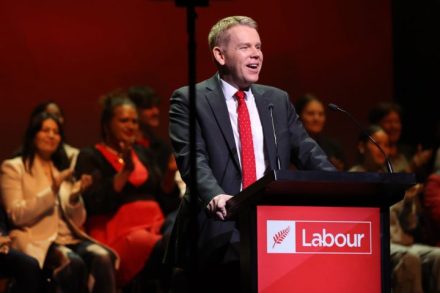
Just three years on from Jacinda Ardern’s phenomenal outright victory, New Zealand’s Labour government has collapsed, slumping to half its vote from 2020. It is on the verge of losing some of its safest seats and languishing behind in most of the Māori electorates. The centre-right National party has won, with Labour prime minister Chris Hipkins calling Christopher Luxon to concede defeat. The National party and its libertarian coalition party, ACT, are in a strong position to form a government, with Luxon, a relative newcomer to politics, becoming the country’s next prime minister. With more than three-quarters of the vote counted, Labour’s vote was a shade higher than 26 per cent – meaning half of the caucus will be out.

There is still everything to play for in New Zealand’s general election

From our UK edition

With two weeks to go before New Zealand’s general election, the contest is so close that many have stopped bothering to make predictions over who will win. And yet, despite such competition, one would be hard-pressed to call the parties’ campaigning lively. The election is being contested by a pair of unprepossessing men named Chris: wonkish, technocratic, affably bland on the stump, they have been crisscrossing the country in a spirit of hokey conviviality. One making cheese rolls, the other dressing up as a pirate; one wedged himself into a tot’s chair to stir goo at a children’s centre, the other drove a tractor ten yards.

New Zealand’s election spells trouble for Hipkins’ Labour party

From our UK edition

New Zealand’s parliament adjourns this week, officially kicking off six weeks of political campaigning ahead of a general election on 14 October. But it seems that Chris Hipkins and his Labour party might find it difficult to maintain their grip on power.  Persistently high food prices at the supermarket, and a string of cabinet mishaps have seen a waning in support for Hipkins’ Labour government. For the first time, he has found himself on a level pegging with Christopher Luxon, the leader of the National party, in the race to become prime minister. Several weeks ago, a poll conducted by pollsters Taxpayers’ Union-Curia, revealed support for the Labour government stood at 27 per cent, while the opposition National and ACT parties commanded 34.

New Zealand mourns after Auckland gun rampage

From our UK edition

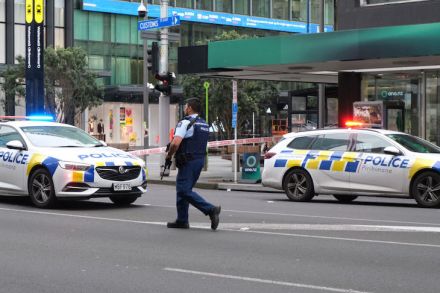
Two people are dead after a gunman armed with a pump-action shotgun stormed a building in Auckland's central business district this morning. The gunman has also died. At least six people are injured, including one police officer who was transported to hospital in a critical condition. The police officer is now stable. The incident occurred hours before the opening of the Fifa Women’s World Cup, which is being co-hosted by New Zealand. The shooter has been identified as 24-year-old Matu Tangi Matua Reid. He was serving a sentence of five months home detention for domestic violence and had approval to travel to the building site as an employee of a subcontractor that had been working on the renovation.

Is New Zealand changing its tune on China?

From our UK edition

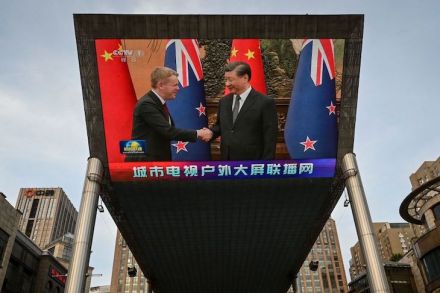
Is New Zealand's prime minister changing his tune on China? Chris Hipkins said this morning that China’s greater assertiveness has led to the Pacific region becoming 'more contested, less predictable, and less secure.' New Zealand is reliant upon China, a country that makes up about a third of its export market. So, when Hipkins, visited Beijing last month, it was hardly a surprise that he avoided saying anything to offend his hosts. But back at home, in a speech to the China Business Summit today, Hipkins felt able to be a little more forthright in his rhetoric; yet this largely served to emphasise a disparity between the language of direct interaction, and that of reflection on principles, in this tricky, ongoing diplomatic balancing act.

Will New Zealand regret kowtowing to China?

From our UK edition

New Zealand is reliant upon China, a country that makes up about a third of its export market. So, when the country's prime minister, Chris Hipkins, visited Beijing this week, it is hardly a surprise that he avoided saying anything to offend his hosts. The Global Times, China's state-run tabloid, said New Zealand's 'proactive' diplomacy and actions with respect to China set 'an example for other western countries'. In reality, that meant toeing the line on controversial issues like human rights, tensions in the South China Sea and China’s expansion into the Pacific. Hipkins would not divulge what he discussed during his 40-minute chat with president Xi, or what was put forward by the Chinese side.

Kiwis are tiring of New Zealand’s blundering prime minister

From our UK edition

It's all going wrong for New Zealand's prime minister Chris Hipkins. Hipkins's laidback, convivial persona and managerial skills were seen as a welcome contrast after the loftier ambition but patchy results of his predecessor, Jacinda Ardern. But a series of political scandals and blunders means Kiwis are rapidly tiring of their leader. The latest trouble involves transport minister Michael Wood, who has been 'stood down' after he failed to declare shares in Auckland airport when he became an MP. Hipkins described Wood’s ownership of the stock while he was regulating the aviation industry as 'not acceptable.' 'I’m not sure that Michael himself even has a really good explanation for that,' the PM said.

New Zealand’s opposition embroiled in AI-attack ad storm

From our UK edition

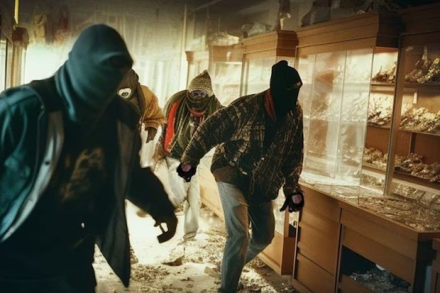
New Zealand’s opposition National party has admitted using artificial intelligence (AI) to generate fake images for its political attack ads. The ads featured AI-generated images of a group of robbers storming a simulated jewellery store, two nurses of Pacific Island descent in a Wes Anderson cinematic aesthetic, and a crime victim gazing solemnly out of a window. Another ad was an AI approximation of a poster for The Fast and the Furious franchise, the cast’s likenesses devolved into generic faces, like something you might see on sweatshirts or lunchboxes in a short-lease tat shop. Questioned on whether the images had been created by AI, National Party leader Christopher Luxon was caught flat-footed.

Is New Zealand that bothered about becoming a republic?

From our UK edition

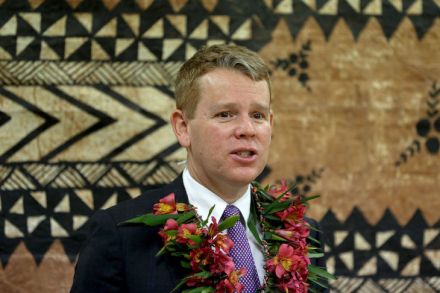
The prime minister of New Zealand, Chris Hipkins, has said he wants his country to end constitutional ties with Britain and become a republic. Speaking just days before he attends the coronation of King Charles, Hipkins said: ‘Ideally, in time, New Zealand will become a fully independent country, will stand on our own two feet in the world, as we by and large do now.’ Hipkins, who replaced Jacinda Ardern as Labour leader in January, told a press conference in Wellington on Monday that while he imagined it would eventually happen, he was not planning any moves for the country to become a republic. ‘I’m on record as being a republican. You know, I think I’ve never made any secret of this. But I’ve also indicated it’s not a priority for me.

Jacinda Ardern’s disappearing act

From our UK edition

Former New Zealand prime minister Jacinda Ardern bade farewell to parliament a few weeks ago. Ardern had resigned as PM in January, saying she no longer had 'enough in the tank' to lead the country. After half-a-decade in charge, and regularly feted on the world stage, Ardern has all but vanished as a ubiquitous figure of the age; but more striking is the extent to which her political legacy has, too. So what has she been up to since? Ardern has been appointed a trustee of a Prince of Wales' environment award, named the Earthshot Prize. The prize was created by Prince William to fund projects that, in a not-unimpressive mission statement, 'aim to save the planet.

The Posie Parker mob has embarassed New Zealand

From our UK edition

New Zealand has, until recently, dwelt in splendid isolation during the culture wars. Kiwis have typically been reluctant to discuss social issues, the raising of which usually causes a kind of social static and brings down the mood. The antipathy, tribalism and performative outrage of identity politics hasn't been much of a problem Down Under. But, in the last few years, things have changed. During the first Covid lockdown, when the country's prime minister Jacinda Ardern was, in the eyes of the global media, an almost ethereal entity visited benevolently upon these shores, the country was united and sincerely committed to leading the way in the response. By the second Covid wave, however, something never seen before here, at least at nothing like a comparable scale, began to develop.

Do we still need the Women’s Prize for Fiction?

From our UK edition

Nine debut books were among the 16 novels to make the cut in this year’s Women’s Prize for Fiction long list, announced this week. But what relevance does a gender-exclusive award retain when women dominate the contemporary world of publishing?  When the Women’s Prize for Fiction was launched in 1996 it was badly needed. Back then, female writers found it hard to get their work published. If they did succeed, their work was, all too often, unappreciated by critics and under-acknowledged. It’s clear that is no longer the case. When it comes to fiction, male authors play second fiddle to their female counterparts Women buy 80 per cent of all novels. At the time of writing, the New York Times top 15 bestseller list features 13 female writers.

Jacinda Ardern’s resignation has saved New Zealand’s Labour party

From our UK edition

Many expected the abrupt resignation of Jacinda Ardern to fatefully deprive New Zealand’s government of its best asset. However, the moderate pragmatism of her successor, Chris Hipkins, may in fact have allowed many Kiwis to give themselves permission to return to Labour. Within a fortnight of taking over, Hipkins has been confronted with a quick succession of civil defence emergencies, with the second, Cyclone Gabrielle, being the most significant weather event in New Zealand so far this century. At least 10,500 people have been displaced by Gabrielle so far, according to officials. The new Prime Minister has none of his predecessor’s star power, although he is widely seen as competent and trustworthy after his time in charge of the Covid-19 effort.

Will Christopher Luxon be New Zealand’s prime minister?

From our UK edition

Following the resignation of Jacinda Ardern, New Zealand’s Labour government will select its new leader, and the country’s next prime minister, in the coming days. There will then be a general election on the 14 October. And with Ardern’s departure the spotlight is already beginning to shine on Christopher Luxon, the head of National, New Zealand’s main opposition party. For some time, National has shuffled through a succession of leaders. In the shadow of Jacinda Ardern’s incandescent profile the party has lacked relevance, especially during the domestic trauma of a mosque shooting, and then international crisis of a pandemic.

Why Jacinda Ardern is stepping down

From our UK edition

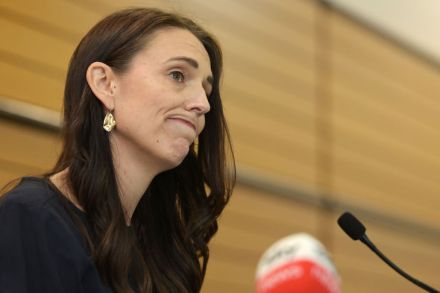
New Zealand Prime Minister Jacinda Ardern will stand down on February 7. In an announcement in Wellington, choking back tears, Ardern said she had hoped to find the energy and heart to continue in the role over summer, ‘but I have not been able to do that’. ‘I am leaving because with such a privileged job comes a big responsibility. The responsibility to know when you are the right person to lead – and also when you’re not.’ A caucus vote will be undertaken on Sunday for a new party leader – and new Prime Minister. New Zealand has an election every three years, and yet, extraordinarily, the last time there was a one-term government was 1972.

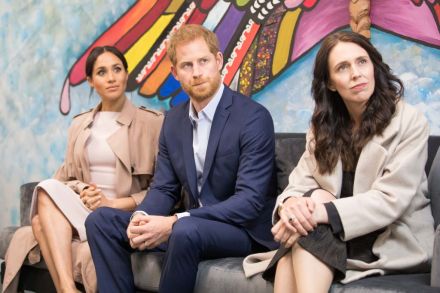
Harry and Meghan have put Jacinda Ardern in an awkward position

From our UK edition

A trailer was released this week for the Duke and Duchess of Sussex’s new Netflix documentary series, Live to Lead, which is inspired by Nelson Mandela. The seven-part series will discuss social and climate change, and feature interviews with world leaders. Harry and Meghan are billed as executive producers and are likely to make an appearance. Had Ardern been given greater clarity, she would likely have turned down any involvement in the Meghan and Harry project In the trailer, among the likes of US Supreme Court Justice Ruth Bader Ginsburg and Greta Thunberg, is New Zealand’s Prime Minister, Jacinda Ardern. In a brief clip she says: ‘As leaders, we have the keys to create a sense of security and a sense of hope.’  She is then shown embracing an activist.

Is this the beginning of the end for Jacinda Ardern?

From our UK edition

Many people envisage Jacinda Ardern’s 2017 electoral victory as a romp, a 1997 Tony Blair-esque sea change of optimism. In reality, in the months leading up to that election Ardern’s Labour party was by no means a sure bet. In a similarly blurred retrospect, Ardern’s first term as PM is thought of as unified and productive. People believe she was always going to coast to re-election before Covid hit. In fact, Ardern’s government may have been in a parlous enough state to lose, before being suddenly resuscitated and given focus with massive public backing in response to the pandemic.   It was the 2020 election, set against the backdrop of Covid-19, that delivered Labour its triumphant majority and the power to govern alone.