New york

The federal-state collisions looming over New York

For New York liberals of a certain age, the term “states’ rights” has long been synonymous with segregation in the South. It’s personified by Alabama governor George Wallace’s “stand in the schoolhouse door,” in June 1963, to prevent desegregation of the state university. Wallace blocked two black students from entering the university auditorium, and the ensuing confrontation between the governor and the Kennedy administration signaled the beginning of the end of the Jim Crow system that followed the Civil War. The governor was partly acting on the not entirely fallacious contention that under the federal system, state prerogative should sometimes supersede federal government edicts, and even rulings by the US Supreme Court.

New York

‘The possibilities of paint are never-ending’: Sir Frank Bowling interviewed

From our UK edition

‘I’m full of excitement waiting for this to dry out,’ Sir Frank Bowling exclaims. We are sitting in his studio, a room in a quiet Victorian yard that survives amid the tower blocks of Elephant and Castle. In front of us a semi-finished canvas – a glorious welter of yellow and orange in diverse modulations – is pinned to the wall. It’s executed in acrylics, a water-based material. Bowling, like Turner – one of his heroes – believes in using buckets of water, sometimes more or less literally. ‘I don’t always use conventional tools to mark the surface,’ he confides. ‘Sometimes marks are made by a brush, sometimes by simply flinging the paint at the canvas.’ Such matters have long fascinated Bowling.

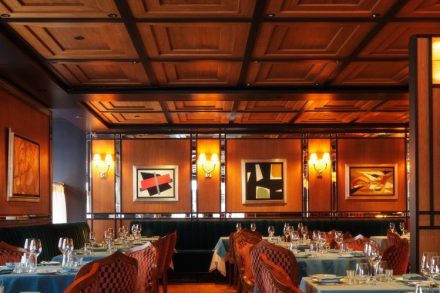
The Caviar Kaspia experience

It’s been almost 100 years since Arcady Fixon, a refugee from the Russian Revolution, opened the doors of Caviar Kaspia on Place de la Madeleine in Paris, and began beguiling his fellow exiles and the crème of Paris society with the exotic flavors of his homeland: shiny black caviar, served with blinis or potatoes, and ice-cold vodka. After being passed down through family hands, Caviar Kaspia is now owned by the charismatic entrepreneur Ramon Mac-Crohon, who has ensured that the place has lost nothing of its prerevolutionary charm: Nicolas II’s seal sits alongside antique porcelain in a display cabinet, and Nicolas Swertschkoff’s Troika, depicting a Russian horse-drawn sledge moving through snow, still hangs in the dining room.

The sexual escapades of Edmund White sound like an improbably sordid Carry On film

From our UK edition

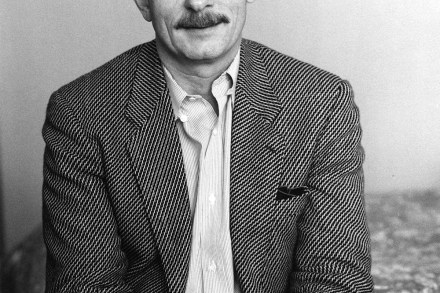
Edmund White grew up in a world where sex, and gay sex in particular, was an unspoken reality. In 1950s Cincinnati, ‘no one “came out” except drag queens and the campy peroxided waiter at the diner’, he writes in the first chapter of The Loves of My Life. That blanket of near-silence doesn’t seem to have inhibited him much. He was sexually precocious from the age of 12, as his autobiographical novel A Boy’s Own Story (1982) first suggested. But it may account for the determined frankness with which he has treated sex in both his fiction and memoirs. For an author who came of age in pre-liberation America, erotic candour has always been a political act, at least in part – never merely profligate.

The donor center is the last bastion of civility

“Braiding Sweetgrass,” she cawed from the other side of the room. “By someone named Robin something. Robin Kimmerer, I think.” The source of this unsolicited book recommendation was Sandra, an eighty-six-year-old musician and Quaker. Since the 1960s — Sandra later told me — she’d donated “probably about three hundred pints” of blood. She was such a prolific giver, that when President Nixon proclaimed the first National Blood Donor Month in 1970 — which still is January — she was interviewed on TV. I met Sandra in early January. We were half-sitting, half-lying foot-to-foot in a donor center on the Upper East Side of Manhattan.

blood
Wong

Veteran journalist Edward Wong on his memoir of food and feud

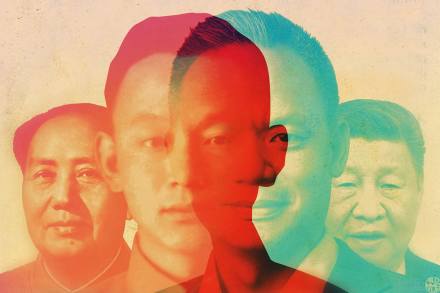
From 2008 to 2016, Edward Wong reported on China for the New York Times, heading up its Beijing bureau. Last year, the veteran journalist, now the Times’s diplomatic correspondent, published his first book: a blend of family memoir, narrative history, political observation and personal reckoning. At the Edge of Empire tracks Wong’s father, Yook Kearn Wong, as he moves from fervent support of the Chinese Communist Party and its ideological goals to disillusionment and disappointment. It is also a book about what makes an empire. Born in Hong Kong before moving to Guangdong Province as a child, after joining the military as a young man Yook Kearn was posted to remote Xinjiang province, in China’s northwest corner.

Red states sue New York for punitive climate change bill

In what could find itself deemed a new “war of Northern Aggression,” West Virginia and twenty-one other states are looking to defend themselves against New York for what they allege are climate-related crimes. A new lawsuit targets New York’s recently passed “Climate Change Superfund Act.” ABC27 reports the law requires polluters “to pay for environmental damage based on how many tons of fossil fuels they emitted during a specific period of time.” States could be on the hook for as much as $75 billion in fines for emissions going back years. At the time of the act’s passage, State Senator Liz Krueger, co-sponsor of the bill, said, “The Climate Change Superfund Act is now law, and New York has fired a shot that will be heard round the world.

climate change

Emil Sands’s unique body of work

Jet lagged, frozen, wrapped in multiple layers against the polar winds of a New York January storm, it was a thrill to walk into a gallery space full of sun-drenched summer scenes. At first glance, these are beautiful paintings of beautiful young people on beaches, but look again and you realize they are a meditation on the fragility of body image and how illusory perfection is. This is a topic Emil Sands is uniquely qualified to portray — more on that later. But first, the paintings: a longer look reveals that the beaches are serving as stage sets and mindscapes for an exploration of vulnerability and exposure — an experience intrinsically tied to the act of sharing space with other near-naked bodies.

emil sands

The strange potency of cheap perfume

From our UK edition

Ah, the scents of one’s youth! What hot, sour teenage kisses and grinding youth club discos would be conjured up for me by one whiff of Aqua Manda or the original Charlie. Adelle Stripe has constructed a memoir around 18 key fragrances, one for each chapter of her life, but true perfume addicts may find ‘the juice’ somewhat lacking. It might just be scented scaffolding, but fortunately the story underneath is captivating. Dune, CK One and the rest do not trigger madeleine-like waves of memory for Stripe; neither is this a paean to the olfactory art. The perfumes crop up casually rather than crucially: her dairy farmer father’s ancient bottle of Brut; her hairdresser mother’s Rive Gauche; a friend’s cloying Angel, which ‘fills every corner of the room like tear gas’.

The next best thing to visiting a really clever friend in New York

From our UK edition

I was on the phone to a friend recently, who asked me what I was reviewing. ‘It’s a book by a lady intellectual,’ I began. ‘Oh my God,’ she said, ‘I hope you don’t put that in your review.’ ‘I’m not that stupid,’ I replied, ‘but it is very important that she’s a woman.’ A self-described radical feminist in the 1960s and 1970s, Vivian Gornick says that that flame has died down a bit now (she was 79 when this book was first published ten years ago). Her perspective in this meandering, delightful memoir-cum-essay is still, obviously, feminine – yet there is a kind of detachment; and from what she says about her past life, and her experiences with men, and with love, there always was, in a way. Hence the ‘odd’ in the title.

The golden days of Greenwich Village

From our UK edition

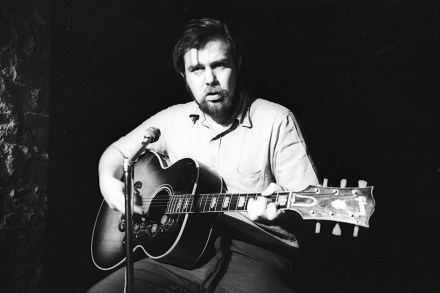
This multitudinous chronicle is not the story of the folk music revival. Rather, it’s not only the story of the folk scene in Greenwich Village from the late 1950s through the early 1980s. Ambitiously, sometimes overwhelmingly, but always fascinatingly, David Browne – a senior editor at Rolling Stone – composes his book of interconnected stories stemming from jazz, blues, folk, folk-rock and all the complementing, competing musical genres that could define what’s been played in the basement nightclubs and coffee houses in this small area of New York City since the early 20th century. He takes his title from the talkin’ blues, the direct ancestor of rap, and he is, like the writers of those blues, a born storyteller.

Splitsville: separatist movements are gaining steam in blue states

Matt McCaw doesn’t want to live anywhere but in Oregon. But during the pandemic he felt like he was living under tyrannical rule imposed by the state’s progressive majority in metro Portland. The school that his six children attended closed for more than a year due to a state mandate — and they received just four hours of online instruction per week. His church was forced to close, and his business selling textbooks suffered because school districts were buying online curricula, not physical books. Mask and vaccine mandates were ubiquitous; McCaw couldn’t even take his wife out to dinner to break the monotony, because all the restaurants were takeout-only. “I thought there would be a huge political backlash against all that,” he says.

separatist

Why Alice Neel remains a vital presence

There is no portrait by Alice Neel quite as radical as her own. The artist was one of the first octogenarian women to exhibit a nude of herself with 1980’s “Self-Portrait.” In the painting, Neel grasps her paintbrush and sits exposed at the edge of a blue-and-white striped armchair. There’s no doubt about it; this is a woman of conviction who demands, “Look at me, in all my senescent glory: my silver hair, wrinkled face, sagging breasts, this is a life lived and here are its marks.” It’s only in the last decade or so that Neel has risen from relative obscurity to be acknowledged as one of the twentieth century’s greatest portraitists.

Neel

Trump calls for America’s New Golden Age at Madison Square Garden

No one with an open mind — you can even scratch the adjective — no sentient sapiens period can have witnessed Donald Trump’s Madison Square Garden rally without a frisson of awe. Even the most tireless Trump supporter must be a little jaded with Trump’s rallies by now. Just as in 2016, they have been building to a crescendo in both size and frequency. And even avid politicos might be forgiven for thinking they had been there, done that.  But Sunday’s rally at Madison Square Garden was something different. Perhaps other rallies were as large. We’re told that the MSG event boasted a capacity crowd of nearly 20,000 with more than 70,000 lined up to view the festivities on screens set up outside.

madison square garden

The stark, frugal world of Piet Mondrian

From our UK edition

In September 1940 the Dutch abstract artist Piet Mondrian arrived in New York, a refugee from war and the London Blitz. He was 68, a well known figure in modern art circles in Europe but as yet little appreciated on the other side of the Atlantic. His visas, his travel and his accommodation had been sorted out for him by well-wishers in Britain and he was welcomed in America by Harry Holtzman, an artist some 40 years his junior. On the evening of his arrival, Holtzman entertained the stiff, fastidious, well-dressed Mondrian to dinner in his apartment and introduced him, via the phonograph, to boogie-woogie. He recalled: Mondrian’s response was immediate, he clapped his hands together with obvious pleasure. He sat in complete absorption to the music, saying, ‘Enormous! Enormous!

‘Democracy’ in New York State

Batavia, New York Election Day in New York just ain’t the same anymore, thanks to nepo numbskulls George W. Bush and Andrew Cuomo. Though I always vote for longshots and losers, radicals and reactionaries, I have such happy memories of early November Tuesdays. Mr. Milward, dressed as Uncle Sam, would tour the polling places of my hometown, benign and reassuring in a way that his model — the autocratic “I Want You!” martinet — was not. When I was a tyke, I trailed my mother as she cast a 1964 ballot for LBJ. The gray-haired election inspectors panicked — “There’s a child in the voting booth!” — but my violation of polling-place etiquette paled in comparison to Landslide Lyndon’s stolen US Senate election of 1948.

Kennedy

And still the colonial memoirs keep coming…

From our UK edition

Since the 1990s there has been a spate of post-colonial memoirs written by white Africans. The best was Rian Malan’s My Traitor’s Heart, a poetic, guilt-stricken Afrikaner confessional published on the eve of Nelson Mandela’s release from prison. Two others of note were by Rhodesian/Zimbabwean writers: Douglas Rogers’s The Last Resort and Alexandra Fuller’s Don’t Let’s Go to the Dogs Tonight. Both were beautifully written, funny and full of original insights. Peter Godwin, another Rhodesian/Zimbabwean, is the most prolific of all, and Exit Wounds is now his third memoir. These writers, all beneficiaries of an excellent British-supervised education system, can really tell a tale.

New York mayor Eric Adams indicted on federal charges

Talk about making history: New York City mayor Eric Adams has been indicted by a federal grand jury, the first sitting NYC mayor to face a federal charge while in post. Adams, who has served as mayor for three years, has been the subject of a federal investigation into whether his campaign was on the receiving end of illegal foreign donations from the Turkish government. New York is currently hosting the annual United Nations General Assembly; Recep Tayyip Erdoğan, Turkey's president, left the city hours before Adams's indictment. The indictment itself remains sealed, with more details expected to be revealed later today. Adams previously served as Brooklyn borough president and was an officer in New York City police forces for two decades.

eric adams

Iris Apfel’s talent to amaze

From our UK edition

This is a book like no other. Part artwork and part compendium of a lifetime’s experience in design, it is meant to be looked at as much as read. Nor is it titled Colourful for nothing: entire pages are in vivid hues of vermilion, lime green, canary yellow, emerald and toffee. On them are displayed illustrations, patterns of fabric and family photographs, interspersed with chunks of prose or aphorisms. In short, it is an expression of its author’s philosophy, threaded through rather disjointedly with the story of her life. Iris Apfel is the only woman I can think of – with the possible exceptions of Diana Vreeland and Helena Rubinstein – who turned extreme plainness into an aspect of personal style.

Absinthe and the casual fling: Ex-Wife, by Ursula Parrott, reviewed

From our UK edition

‘Ex-wives like us illustrate how this freedom for women turned out to be God’s greatest gift to men,’ quips Patricia, the flapper heroine of the American novelist Ursula Parrott’s 1929 bestseller, which, republished nearly a century later, reveals striking contemporary resonances. Both timeless and unmistakably of its time, this candid portrait of marital breakdown, and the life of a girl about town in Jazz Age New York, took the US by storm at a moment when dawning sexual liberties jostled with lingering Victorian values. Parrott married in 1923, before birth control was legal, and had a son in secret, against her husband’s wishes. She left him with her family, until her husband discovered his existence and divorced her.