New york

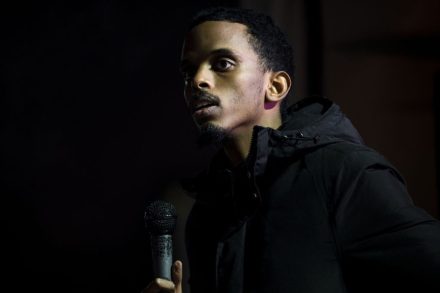
Zohran Mamdani’s radical parents

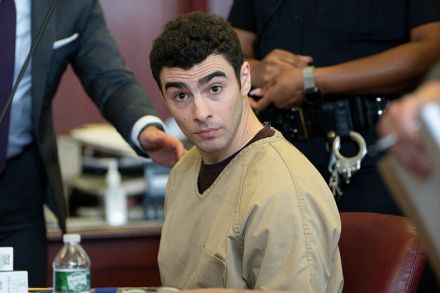
Voters often pay a premium for socialism. It’s the modern-day equivalent of free-range eggs or an electric car. Zohran Mamdani, a self-described “democratic socialist,” embodies that premium. In New York’s Democratic mayoral primary election, he got blown out of the water with lower-income voters – but won overwhelmingly with young, white, college-educated idealists desperate for the revolution. He would be the furthest left mayor New York City has ever seen if elected in November. While his policy prescriptions – city-run grocery stores, higher taxes on the wealthy and a diminished police presence – are radical proposals, it is his deep devotion to socialism that truly defies convention. There is no question that Mamdani loathes the West.

zohran Mamdani

The real scandal of Zohran Mamdani’s college application

While the fact that Zohran Mamdani had identified as black on his Columbia University application stole the headlines, the hack that exposed this information highlighted something much more insidious in the college admissions system.Admitting the accuracy of the leaked data, Mamdani claimed that he was simply trying “to capture the fullness of [his] background” by checking the “Black or African American” box in 2019. New Yorkers raised an eyebrow. But what would have alarmed them more was the revelation buried in the trove of hacked data: that affirmative action is alive and well in America. The leak of Columbia’s admissions data demonstrates that, even after the Supreme Court ruled affirmative action policies unconstitutional in SFFA v.

Mamdani

Wine and good times flow at Spectator party

New York At one point the Promised Land was Texas. That was the gist of the conversation I had with Rachel Cockerell at The Spectator’s first live event in NYC, at NoHo’s Palo Gallery. I interviewed Rachel about her book Melting Point, which explores the Galveston Plan, when 10,000 beleaguered Russian Jews set sail for Galveston, Texas. After the talk, wine flowed as friends mingled with Speccie subscribers and spilled out into a balmy summer’s eve on Bond Street. Everyone seemed to enjoy the party except for those who weren’t there. I read the online comments the next morning: “Thanks for the compilation of pictures of the people I’d most want to avoid,” wrote one keyboard warrior. “Just rooms full of snobby people believing it's chic to dress homeless!

Author Rachel Cockerell and The Spectator’s Orson Fry (Lily Burgess/The Spectator) new york

Zohran Mamdani wouldn’t mock his own faith

Zohran Mamdani is defensive about his faith and has maintained that his culture is “not a costume.” Why then, New Yorkers might wonder, does he not extend this courtesy to others? In December, he shared an Indian dance video about Hanukkah by comedy group the Geeta Brothers who performed behind a menorah, spinning dreidels, while singing Hey Hanukkah. The Punjabi track features lyrics: tera dreidel bara ghummay (your dreidel spins a lot), taazi roti kosher howay (let’s have fresh kosher bread), with a repeated chorus of mombatiyan, which means candles. Mamdani also wished his followers a merry Christmas using a video for the Geeta Brothers’ Jingle Bells track where the group woos a woman.

Zohran Mamdani

Chet Sharma: chef, DJ, PhD

Chet Sharma – physicist, DJ and award-winning chef – only needs to sleep for four hours a night. “I inherited [this gift] from my mother,” shrugs the Londoner when we talk one morning before lunchtime service at his restaurant, BiBi. “She has unlimited energy!” Raised in Berkshire, England, to parents with Indian heritage, Sharma has a master’s degree in clinical and experimental medicine from University College London, as well as a master’s in physics and a PhD in condensed-matter physics from the University of Oxford. It was during those seven years studying that he also moonlighted as a cook and a DJ. “I’d do university in the morning, dinner service at a restaurant [at night], and at 11 p.m.

Zohran Mamdani’s grocery chain will be a crime against New Yorkers

Of all the policies proposed by Zohran Mamdani, the socialist winner of last week’s New York’s Next Top Mayor competition, the idea of city-run grocery stores has proved the most divisive. If you want to reduce prices at halal carts by taking away regulations on street vendors, you’re going to get 80-plus percent approval rating. But state-owned groceries are another story. Modern history is strewn with tales of state-owned grocery disasters.

Zohran Mamdani

The education of Zohran Mamdani

Zohran Kwame Mamdani, having secured the Democratic nomination for New York City mayor, is in the national spotlight. At the age of 33, he ran as a Democratic Socialist having previously held elected office as a New York State Assemblyman. He has no record of significant achievement in other walks of life. He composed and produced rap music, but to no acclaim. The National Association of Scholars (NAS) is a non-profit organization (501(c) 3) that does not endorse political candidates or parties, and in this respect we take no position on Mr. Mamdani’s candidacy. That matter will be decided by the voters of New York City this November. We do, however, take special interest in Mr. Mamdani’s educational background.

Zohran

Zohran Mamdani’s selective scrutiny

Within weeks of launching his campaign to be mayor of New York City, Zohran Mamdani declared that he was also running to be the first South Asian mayor. He began aggressively courting this demographic, which accounts for around five percent of the city’s population, as well as the seizable total Asian population of almost 15 percent. Mamdani reached out to the desi community with the help of the Indian subcontinent’s great unifier, Bollywood. The Hindi film industry that even those who don’t speak the language in South Asia can relate to. He used a 1980 Bollywood song "Meri Umar Ke Naujawano", roughly translating to "my fellow youngsters", to explain the NYC’s ranked choice voting system using popular desi drink, the lassi, as prop.

Zohran Mamdani

Zohran Mamdani’s New York: prostitution, crime and socialism

Zohran Mamdani’s surprise win in the race to be the next mayor of New York City is not just a local upset – it’s the moment the progressive fringe officially took the keys from the Democratic establishment. The 33-year-old socialist unexpectedly seized the most first-choice votes in New York’s Democratic mayoral primary. And if symbolism mattered more than substance, he would already be crowned mayor of America's largest city. For years, the Democratic machine in New York managed to contain its most radical flank with centrist figures like Eric Adams and, before him, Michael Bloomberg. But that firewall has crumbled.

Zohran Mamdani (Getty) intifada

‘Muslim democratic socialist’ Zohran Mamdani wins New York City mayor primary

As I write, the time is 10 p.m. in New York City and the temperature is hovering somewhere around unbearable. It’s a nice respite from the 100 degrees the city hit on Tuesday afternoon, as voters flocked to the polls to cast their ballots in an unusually heated mayoral primary. Polls closed at 9 p.m., and a town famed for its impatience was given the gift of a clear front-runner. Improbably, against all odds, all common wisdom, the vast majority of polls and even the betting markets, the night ended with Zohran Mamdani, the 33-year-old state assemblyman and proud “Muslim democratic socialist” as the Democratic nominee for New York City mayor. “I’m very proud of the campaign that we ran,” Cuomo told his supporters as Mamdani’s lead proved insurmountable.

Mamdani
Zohran

Zohran Mamdani and the millennial soul

Rent controls don’t have a stellar track record but I’m no expert. In any case it’s academic. At 33, New York City’s rent-regulated apartments are mostly beyond the reach of Zohran Mamdani's contemporaries. That Mamdani, a millennial, has made the fate of this property portfolio the central issue of his campaign reveals not so much the radicalism of his generation but rather its retreat into quietism.  Whatever their merits these apartments operate on a semi-feudal system. Tenancies last for decades and are acquired largely via inheritance or the backslap.

America’s next president must study Trump’s golden escalator ride

On June 16, 2015, Donald Trump descended a golden escalator in Trump Tower and into political history. The press corps snickered. The consultant class rolled its eyes. Late-night comedians feasted on the spectacle. Most people thought it was a joke. What they missed – and still miss – is that Trump didn’t invent the anger that powered his campaign. He simply noticed it first. The pundits focused on Trump’s bombast. But voters were focused on something else entirely: someone, finally, was saying out loud what they’d been thinking for years. Take China. In 2015, Trump said, “They’re ripping us off.” It wasn’t elegant. But it was true.

Donald Trump

Figures emerge like ghosts from Antonia Showering’s canvases

Figures emerge like ghosts from Antonia Showering’s canvases, their sketchy lines and expressionistic color palette relaying an atmosphere of deeply personal narrative as much as an emotional message, wordless but with universal resonance. Take 2025's "The Waiting Room" (2025), from her current show, titled In Line, at Timothy Taylor: A woman, resting on a bed in a pool of maroon, has just given birth; her belly appears aglow in a warm yellow as her newborn, outlined in pale purple, rests next to her, umbilical cord still attached. “I wanted to talk about the vulnerability about someone postpartum,” says the artist. The hues she’s employed are bodily, those of flesh, fat, and veins, yet here transcend into a surreal haze of life’s first moments. Antonia Showering, 5L (2024).

Antonia Showering

No one won the New York City mayoral debate

If you tuned in to the first New York City Democratic mayoral primary debate hoping for vision, leadership, even a halfway compelling reason to stay in the city – you were sorely disappointed. What we got instead was two hours of political karaoke: forgettable performances, familiar refrains and not a single candidate who looked remotely prepared to lead America’s largest city out of the hole it’s in. The media crowned former governor Andrew Cuomo the winner, but that says more about the sad state of the field than it does about Cuomo’s abilities. He barely had to try. Like a career politician coasting on name recognition and reflexes, he sleepwalked through the evening while eight other candidates took turns lobbing stale criticisms his way. They all missed.

new york mayor Andrew Cuomo

In ambiguity, Tancredi Di Carcaci finds inspiration

The narratives we tell ourselves about the past are hardly set in stone. It’s in this ambiguity where Tancredi Di Carcaci finds inspiration. Through his practice, the British artist contemplates, and sometimes perpetuates, the blurring of straightforward histories, especially that of art, as traditionally passed down. His sculptures – a mix of ceramic works and assemblages combining cast bronze, ceramic and hunks of marble and stone sourced from Siena, Egypt and elsewhere – have aesthetic and thematic roots spanning the Renaissance, neoclassical revival, Romantic painting and 20th-century modernism.“For me, with art, I don't try and restrict myself.

Palo Gallery

Why cities have lost their appeal

Over the past half century, media and academic sources repeatedly suggested that increasingly dense cities would dominate the future. Places such as London, San Francisco and Chicago would dominate an economy. Today, this assessment seems grossly dated. Even in the pages of the urbanista New York Times there are widespread fears of an “urban doom loop.” But this, too, is a stretch. Great core cities will not go the way of post-imperial Rome, but their role is being recast as the urban frontier shifts increasingly to the periphery. What we are seeing mirrors H.G. Wells’s vision. He predicted that most economic life, and most families, would shift to the suburbs and exurbs.

cities

The dog that haunts Russ Benzin

Batavia, New York Fifty-five years after his Vietnam-era military service ended, Russ Benzin remains haunted. Not, thank God, by memories of the state-sanctioned mass murder that is war, but by a seemingly intractable and feral military dog he came to love. I met Russ years ago in the third-base bleachers at Dwyer Stadium, where we whiled away many summers watching a set of trained canines – the Batavia Muckdogs of the (now defunct or, rather, exterminated) New York-Penn League. In the manner of ballpark friendships, ours developed over the years: from nodding acquaintance to grumbling exchanges (“why the hell didn’t the third-base coach send that guy?”) to friendship.

dog russ benzin

The federal-state collisions looming over New York

For New York liberals of a certain age, the term “states’ rights” has long been synonymous with segregation in the South. It’s personified by Alabama governor George Wallace’s “stand in the schoolhouse door,” in June 1963, to prevent desegregation of the state university. Wallace blocked two black students from entering the university auditorium, and the ensuing confrontation between the governor and the Kennedy administration signaled the beginning of the end of the Jim Crow system that followed the Civil War. The governor was partly acting on the not entirely fallacious contention that under the federal system, state prerogative should sometimes supersede federal government edicts, and even rulings by the US Supreme Court.

New York

The Caviar Kaspia experience

It’s been almost 100 years since Arcady Fixon, a refugee from the Russian Revolution, opened the doors of Caviar Kaspia on Place de la Madeleine in Paris, and began beguiling his fellow exiles and the crème of Paris society with the exotic flavors of his homeland: shiny black caviar, served with blinis or potatoes, and ice-cold vodka. After being passed down through family hands, Caviar Kaspia is now owned by the charismatic entrepreneur Ramon Mac-Crohon, who has ensured that the place has lost nothing of its prerevolutionary charm: Nicolas II’s seal sits alongside antique porcelain in a display cabinet, and Nicolas Swertschkoff’s Troika, depicting a Russian horse-drawn sledge moving through snow, still hangs in the dining room.

The donor center is the last bastion of civility

“Braiding Sweetgrass,” she cawed from the other side of the room. “By someone named Robin something. Robin Kimmerer, I think.” The source of this unsolicited book recommendation was Sandra, an eighty-six-year-old musician and Quaker. Since the 1960s — Sandra later told me — she’d donated “probably about three hundred pints” of blood. She was such a prolific giver, that when President Nixon proclaimed the first National Blood Donor Month in 1970 — which still is January — she was interviewed on TV. I met Sandra in early January. We were half-sitting, half-lying foot-to-foot in a donor center on the Upper East Side of Manhattan.

blood