Netherlands

The small Dutch town that said no to more asylum seekers

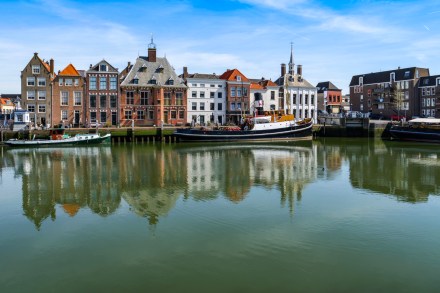
A political crisis is unfolding in the small Dutch town of Maassluis, a former fishing village which sits between Rotterdam’s vast port and industrial complex, the glasshouses of the agribusiness powerhouse known as the Westland, and the historic fishing town of Vlaardingen. Despite what some may claim, it is not a far-right insurgency, just a group of local politicians responding to concerns widely shared by their electorate The natives of Maassluis were once nicknamed "snails." They acquired the name in the 1770s, when the parliament of the Dutch Republic decreed that Psalms should be sung at a faster tempo in church.
dutch

Why the McDonald’s AI commercial flopped

From our US edition

Be afraid, be very afraid. That’s what we’d been told in the advertising and commercial production industry. AI is coming for your job. It’ll be faster than you, more creative than you and certainly more cost-effective than you. Well, if the McDonald’s new – but swiftly deleted – Christmas ad was anything to go by, we haven’t, for the moment, got too much to worry about.    The completely AI ad was produced for the Netherlands but thanks to YouTube, has been been met with a mix of ridicule and revulsion all over the world. Ridicule because its images are so badly rendered and revulsion because those images are also quite creepy and disturbing.  https://www.youtube.com/watch?

Death and glory: the politics of the World Cup

World Cup fever is a strange affliction. It’s more contagious and unavoidable than Covid, and more widespread too: each new World Cup, as Simon Kuper writes, ‘becomes the biggest media event in history’, which ‘occupies the thoughts of billions of people’. It also produces a cluster of sometimes contradictory symptoms, physical as well as mental. Kuper quotes a study that found an increase of 25 per cent in hospital admissions for heart attacks in England on 30 June 1998, when England played Argentina (David Beckham, Michael Owen and all that). Later, he describes the moment when the American journalist Grant Wahl died of an aortic aneurysm in the media stand during the Netherlands vs Argentina match at the Qatar World Cup in 2022.

The Europe of American imaginations no longer exists

From our US edition

Since the United Kingdom left the European Union five years ago, the pair have been in battle to prove who has performed better. But the real story of the past five years is not a stagnant UK falling behind a buoyant EU, but of Britain and Europe being trapped in the same cycle of relative decline. It’s America that has quietly raced ahead of Europe this century. Following the pandemic it has become impossible to ignore the gulf in economic vitality between the US and Europe, the former growing by 16.3 percent per capita since 2008. There are very good reasons for America’s success, or rather, Europe’s decline. The EU and the UK increasingly treat their industries as pieces of heritage which must be preserved against disruptors and foreign competition.

Europe

A ‘Trump tornado’ is about to hit Europe

From our US edition

There is a wind of change blowing through the West. It emanates from Washington DC, where President Donald Trump continues to dash off executive orders; more than fifty by the end of last week, the highest number in a president’s first 100 days in four decades. The liberal mainstream media is rattled. The New York Times magazine ran a piece at the weekend in which it described Trump as "the leading light of a spate of illiberal leaders and parties flourishing in democracies around the world." The paper namechecked some of them: Poland, Holland, India, France, Germany, Italy, Brazil, Hungary and Russia. What unites and motivates these "illiberal" parties is their opposition to what the NYT called "liberal creep," which they regard as a civilizational threat.

Trump

The case against assisted suicide

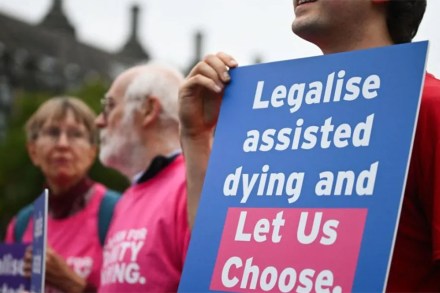
Those in favour of the Terminally Ill Adults (End of Life) Bill insist they’ve addressed critics’ principal concerns and that ‘stringent safeguards’ are in place. But it is impossible to see how this could be the case. If suicide is institutionalised as a form of medical treatment it is inevitable that vulnerable people will feel under pressure to opt for it, and inevitable that the bill will in time be amended and extended. In Canada, denying assisted suicide to people who are not terminally ill has been ruled to be discrimination Under the terms of the existing bill, a terminally ill person given less than six months to live will legally be able to take their own life if sanctioned by two independent doctors and a High Court judge.

London to Amsterdam via Brussels: taking the long way

From our US edition

Brexit, the gift that keeps on giving: from June 14, 2024 to January 2025, a reduced Eurostar service will run between London and Amsterdam. Why? Part-closure of Amsterdam Centraal leaves no space for the extra bureaucracy now necessary. Passengers returning to London will change at Brussels to go through security and passport checks, adding up to almost two hours of extra journey time. Global travel booking platforms such as OMIO have reported a surge in train travel in recent years. Cheaper prices (compared to flying) and environmental concerns are cited as the main drivers. But Eurostar’s capped passenger numbers and indirect routes will surely increase air travel in 2024, literally flying in the face of Dutch sustainability policies.

brussels

Geert Wilders’s win shouldn’t surprise us

From our US edition

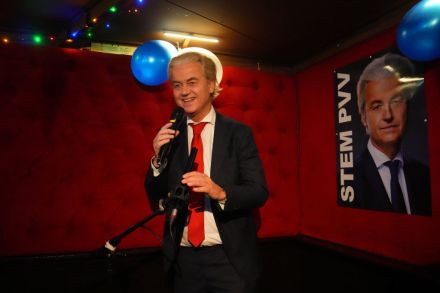
Dutch populist leader Geert Wilders win has shocked Europe’s elites. At this point, one has to wonder why they continue to be surprised when voters absolutely frustrated with bickering and incompetence turn to someone who has never held political power. Wilders’s win is much less of an endorsement of his views than it is yet another rejection of the elites’ business as usual. Voters in the Netherlands have been signaling they want change for many years now. Wilders’s Party for Freedom (PVV in Dutch) led polls until the last days before the 2017 election. It faded when Prime Minister Mark Rutte told Holland’s mostly Muslim immigrants to “act normal or go away”.

Geert Wilders

Forget Amsterdam – spend a weekend in the Hague

I love Amsterdam. I go every year for the galleries, the opera, the beer, the genever, the rijsttaffel, the brown cafés and, well, the fun. I’ve had many a fine time there, sometimes with and sometimes without dear Mrs Ray. It’s a top place.  I was cut to the quick, then, on hearing recently that the good burghers of Amsterdam had asked any British tourists in search of a ‘messy night’ to stay away. Admittedly, this controversial campaign is aimed chiefly at 18- to 35-year-olds on stag parties, rather than senior railcard-holders like me.

Return to The Hague

From our US edition

Much is said, chiefly by Americans used to Amtrak, about continental Europe’s wonderful train system, though just how wonderful depends on where you want to go. On a recent journey from Southampton, where we had disembarked early morning from the Queen Mary, to The Hague where we missed our evening dinner reservations at the Hotel des Indes, I made certain discoveries. One was that The Hague, seat of the Dutch government, home to the king and queen, venue of the World Court and other august institutions of world government, is now off-line: i.e. it is not on the high-speed rail network that links up London, Paris, Brussels and Amsterdam. This seems curious and, in a way, charming.

The Hague

How Amsterdam ceased to be gay heaven

From our US edition

Last month, in preparation for an article about the growing gay backlash against trans ideology, I spoke with Bev Jackson, the co-founder of LGB Alliance, a gay and lesbian activist group that opposes the hijacking of the gay rights movement by transfolk. Bev told me about her background — fifty years in British gay activism, a resident of Amsterdam for four decades — and asked me about mine. I mentioned my 2006 book While Europe Slept, a cri de coeur about the Islamization of Europe. I heard in her voice a degree of disquiet about its topic. Nonetheless, she asked me to participate in the LGB Alliance’s forthcoming annual convention. I accepted, but when I hung up I told my partner: “I’ve been invited to a convention in London.

The worldwide working-class counterrevolution

From our US edition

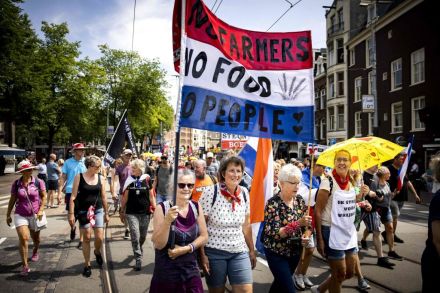
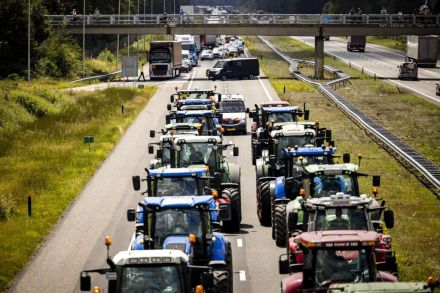
Something is happening across the world right now, something that deserves more attention than it's getting. First, to the Netherlands, where farmers have been protesting, blockading roads with their tractors and staging enormous rallies. The demonstrations have been going on and off since 2019, when the Dutch legislature proposed a crackdown on nitrogen emissions. Nitrogen is heavily emitted by livestock and fertilizer, which means the regulations are hitting Dutch agriculture especially hard. But it wasn't until July that the protests garnered international attention. The Dutch government announced plans in compliance with a court order to cut nitrogen emissions by 50 percent.

Dutch farmers touch off a worldwide revolt

From our US edition

Why are farmers around the world standing in solidarity with a tiny country in northwestern Europe? What’s going on here? Starting in June, 40,000 Dutch farmers took their tractors to the streets to protest their government’s proposal to slash nitrogen emissions. For some farmers, this plan will mean culling 95 percent of their livestock. For others, it will mean going out of business altogether, hoping to sell their land to make ends meet — with the Dutch government as the only buyer. I’m as green as the next guy, but there is a thin line between regulation and tyranny.

Dutch farmers are fighting for freedom

From our US edition

Dutch farmers have had enough of government overreach. And they’re taking to the streets as only farmers can. The government of the Netherlands, in order to fight climate change, recently proposed a 50 percent cut in ammonia and nitrous oxide emissions by 2030 — which will disproportionately impact the agricultural industry. Small farms are thus faced with two choices: shutter entirely or face poverty after culling their livestock. The Dutch government is not sympathetic to these concerns. In their words, “The honest message...is that not all farmers can continue their business.

The Netherlands is growing tired of lockdown restrictions

On Wednesday at De Kleine Komedie, the oldest theatre in Amsterdam, the sound of comics on stage will be interspersed with the snips of scissors. Unable to open as a theatre due to the coronavirus restrictions, the comic actor Diederik Ebbinge is defiantly converting the venue into a hairdressers for the day with customers able to watch live acts while they get their hair cut. Fellow comedian Sanne Wallis De Vries is asking theatres up and down the country to sign up and join their haircut theatre scheme on the same day. In the latest phase of the Dutch lockdown, announced at a press conference on Friday night, from today gyms, shops and contact professions such as hairdressers are allowed to reopen until 5pm each day.

Europe gripped by a fifth wave

How quickly things change. Just a month ago many EU countries were being praised for keeping some Covid restrictions in place, in many cases operating vaccine passport systems. By contrast, Britain was being attacked for removing most Covid restrictions in July. The UK suffering elevated infection rates ever since, leading to predictions that we could be back in lockdown by Christmas. Now, many EU governments are panicking as infection rates soar — and protesters have taken to the streets to oppose new lockdowns and, in the case of Austria, compulsory vaccinations from next February. What is the situation in the worst-affected countries?

Is climate change to blame for Germany’s flooding?

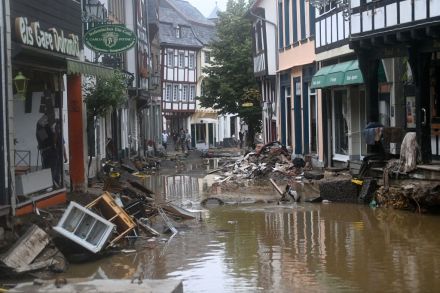
Greta Thunberg has declared the floods in Germany, Belgium and the Netherlands to be the product of man-made climate change, adding ‘We’re at the very beginning of a climate and ecological emergency, and extreme weather events will only become more and more frequent.’ Well, that’s sorted out that one, then. We hardly need Angela Merkel or the Prime Minister of the Netherlands, Mark Rutte, to confirm it for us. Nor, indeed, do we need to hear from Michael Mann – aka Mr Hockey Stick – to tell us that the floods are the living embodiment of what climate scientists have been warning us about for decades.

The shooting of a journalist – and the dark world of Dutch organised crime

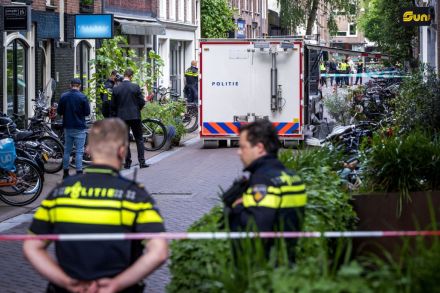
In an attack that has rocked the Netherlands, a leading Dutch crime reporter is fighting for his life in hospital after being shot in broad daylight. Last night, at around 7.30 p.m., the investigative crime journalist Peter R De Vries was shot five times on a busy street in central Amsterdam after leaving a television studio where he was recording a talk-show. The horror on the face of the Amsterdam mayor was visible at a hastily-organised 11 p.m. press conference to discuss the attack, while tributes for De Vries flooded in from everyone from Dutch king Willem-Alexander to caretaker Prime Minister Mark Rutte. Rutte called the shooting ‘an attack on the freedom of the press… appalling for our democracy, justice system and society’.

The international travel ban is cruel and unscientific

From our US edition

A man can cry in public. What can I say, I was raised in a Western-European feminist household in the 1970s. But as a middle-aged guy I did feel deeply uncomfortable the other day with my abundant display of tears. It happened at Schiphol Airport in Holland, holding on tightly to my mother before saying goodbye. She was sobbing just as hard. After the long era of separation we all experienced, I had decided to fly from Los Angeles to Amsterdam on my Dutch passport. Armed with documents proving two Moderna shots and a negative COVID test I felt completely safe to make the trip. The plan was to grab my parents, who are also vaccinated, then fly them home to LA using my American passport. Given their ages and health issues, they would need some help during the trip.

travel ban

The impact of lockdown on education

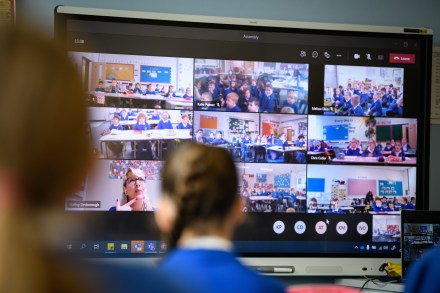
Just how damaging has lockdown been to children’s education? An Oxford University study has tried to quantify it by analysing data from Dutch schoolchildren — who, unlike in Britain where exams were cancelled, took tests shortly before and shortly after the first lockdown last spring. The level of parental education was a big predictor of falling performance If any country’s children had managed to get through lockdown with their education unscathed, suggest the authors, it ought to be those in the Netherlands. There, schools were closed for a relatively short period — eight weeks — and the penetration of broadband in homes is higher than in any other country.