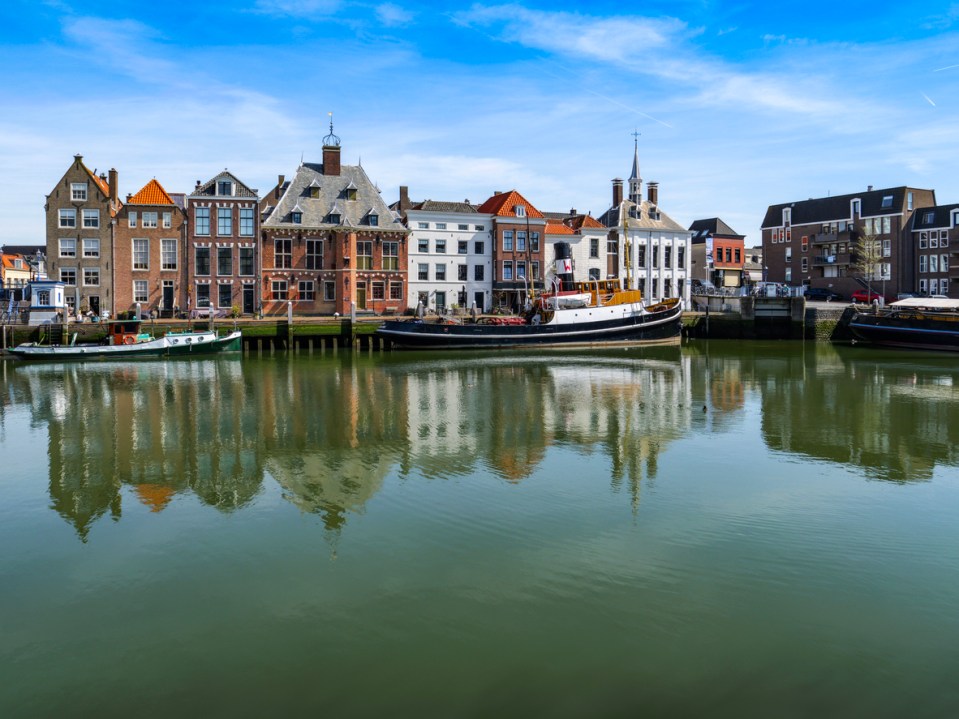
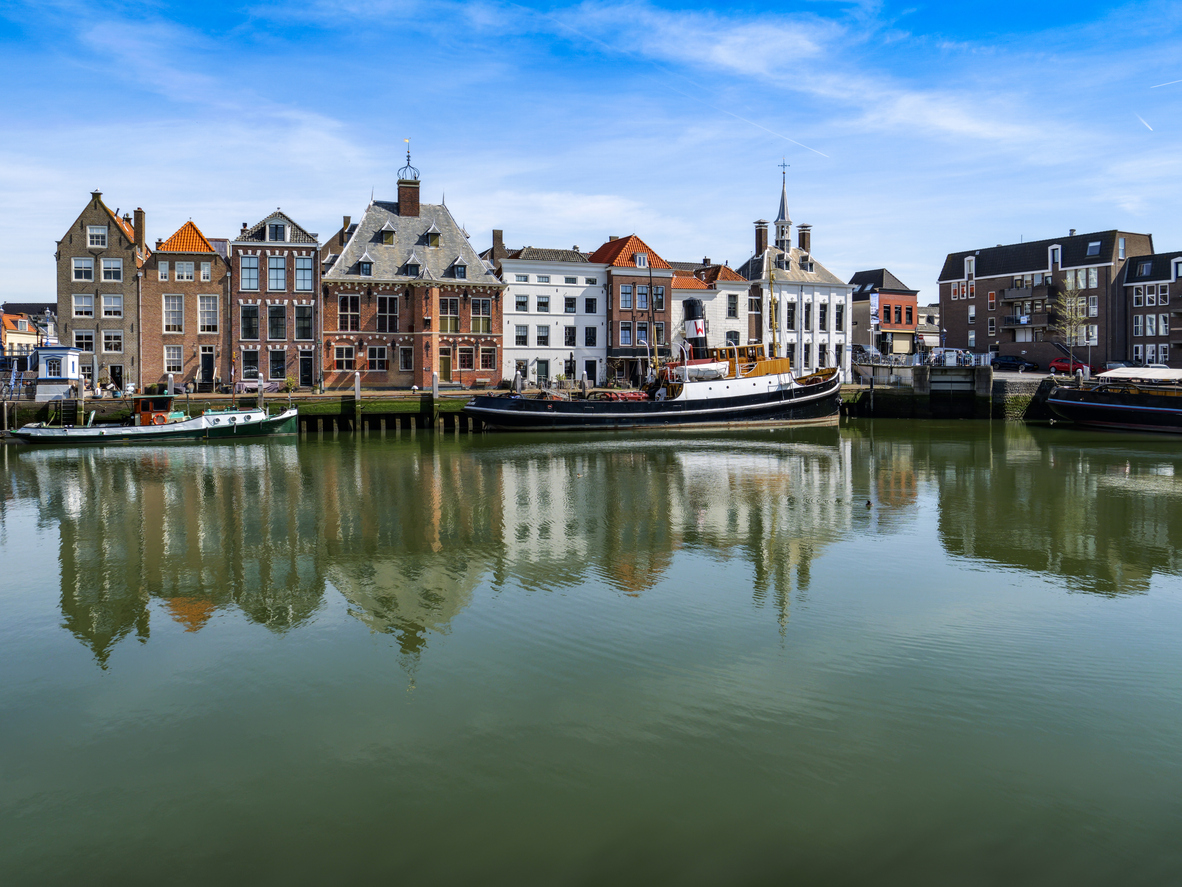
A political crisis is unfolding in the small Dutch town of Maassluis, a former fishing village which sits between Rotterdam’s vast port and industrial complex, the glasshouses of the agribusiness powerhouse known as the Westland, and the historic fishing town of Vlaardingen.
Despite what some may claim, it is not a far-right insurgency, just a group of local politicians responding to concerns widely shared by their electorate
The natives of Maassluis were once nicknamed “snails.” They acquired the name in the 1770s, when the parliament of the Dutch Republic decreed that Psalms should be sung at a faster tempo in church. The citizens of Maassluis and Vlaardingen refused to comply, continuing – like snails – to sing at the slower pace that had been customary for more than two centuries, dating back to the Dutch Revolt against Spanish rule. A minority, reportedly from the local elite, embraced the new rules and began singing more briskly, resulting in chaotic Sunday services in Dutch Reformed churches across the region.
Today, the snails are at it again.
The town’s recently installed municipal executive, comprising the local party Leefbaar Maessluys and the conservative VVD, has produced a coalition program aimed at ending the town’s role in hosting asylum seekers and reducing the impact of large-scale labor migration.
To curb the number of asylum seekers, the coalition have proposed to not renew the licenses of two asylum accommodation sites currently in the town and, beyond that, refusing to host additional asylum seekers under the Spreidingswet, the law designed to distribute asylum seekers awaiting decisions among municipalities across the country.
The executive has found a way of doing so that is both simple and ingenious. More importantly, according to several legal experts, Maassluis would be acting entirely within the law – and in a notably decent manner.

What is the plan? Under the Spreidingswet, every Dutch municipality is required to submit a proposal indicating how many asylum seekers it is prepared to accommodate. Maassluis intends to comply fully with the law and simply propose: zero.
There is, however, a complication. The mayor of Maassluis, a Christian Democrat, has declared that he does not support the plan, calling instead for solidarity with asylum seekers and with other municipalities. Dutch mayors are appointed by central government and have a quasi-state role, particularly in matters of public order and safety. When making his statement, the mayor arranged police protection for his home, although, oddly, no threats have reportedly been made against him.
Since the mayor automatically chairs and represents the municipal executive, the town now finds itself speaking with two voices – or, in keeping with local history, singing two different tunes: one expressing the will of the local electorate, the other reflecting the preferences of the governing coalition in The Hague.
The fortunes of the snails who stubbornly sang their Psalms at the old pace could perhaps tell us how the current standoff will end.
The Psalm Rebellion unfolded against a backdrop of broader decline in the Dutch Republic. The following decade brought mounting instability, not least because of a disastrous Dutch defeat in the Fourth Anglo-Dutch war. The conflict accelerated the retreat of the Republic’s commercial empire while confirming Britain’s emergence as the dominant global maritime and trading power.
Meanwhile – brilliantly chronicled by Simon Schama in his early work Patriots and Liberators: Revolution in the Netherlands, 1780-1813 – the 1780s witnessed the rise of the Patriotten, inspired in part by the American Revolution. They challenged an increasingly detached, incompetent and decadent ruling class, the Regenten. In the end, town after town fell under the control of angry Patriots who, often armed, demanded democratic reform. The revolution was crushed in 1787 by Prussian military intervention. Many leading Patriots fled to Paris, enthusiastically embraced the French Revolution, and returned with the French Revolutionary Army in 1795, establishing the short-lived Batavian Republic under French tutelage. Stadtholder William V and the House of Orange fled to London.
Maassluis and its neighboring towns, meanwhile, continued to cultivate a habit of resisting authority. While the context is not comparable to current events, towns like Vlaardingen and Maassluis gave birth to the Netherlands’ first organized resistance movement against the German occupation, almost immediately after the Dutch surrender in May 1940. After some modest acts of sabotage, inexperience and loose lips proved fatal to the movement: 15 local resistance members – while singing Psalm 43:4 – were summarily executed by German troops in the dunes near The Hague in 1941. Others perished in German camps.
More recently, in 2005, the wider region voted overwhelmingly – and well above the national average – against further European integration in one of the Netherlands’ rare referendums, this time on the proposed European Constitution. Dutch voters inflicted a humiliating defeat on the country’s pro-European political class. The rejection of the Constitution by Dutch and French voters effectively removed the project from the political agenda in Brussels.
Will the new Maassluis coalition be successful? Maybe. Despite what some may claim, it is not a far-right insurgency, just a group of local politicians responding to concerns widely shared by their electorate. Nor is Maassluis alone. Neighboring Vlaardingen this week finally welcomed a new local coalition. The town will abandon plans for a new asylum-seeker center and seek to curb further immigration. Asked about the coalition program, the mayor wisely refrained from offering an opinion, noting that it is for the elected council, not him, to determine the town’s direction. Municipalities elsewhere are exploring similar approaches. Instead of defying the law, they are seeking to use it to their advantage.
The people of Maassluis know when to disagree with the authorities – and do so confidently. So when the snails begin moving in a different direction, The Hague would do well to pay attention. They may move slowly, but they have a habit of sensing which way the tide is turning.






Comments