Arnout Nuijt

Immigration has turned the Netherlands into a tinderbox

From our UK edition

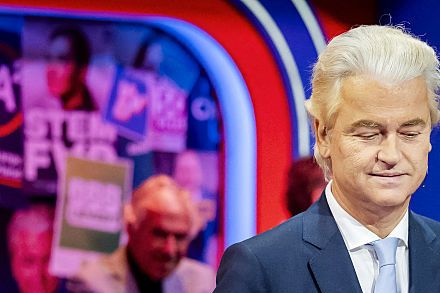
To many Dutch voters, it came as no great surprise. This week, the Senate rejected a package of immigration laws hailed by the outgoing Schoof government as the toughest ever devised. It was not merely the left that sank the proposals. Two members of the government’s coalition – Prime Minister Rob Jetten’s own D66 and the Christian Democrats – voted against. Remarkably, so did party behind the proposals itself: Geert Wilders’s Freedom party. The underlying message, to many, is that it is the public that is the problem, not the failure to curb or manage immigration Wilders withdrew his support after failing to restore some original, stricter provisions, which would have criminalised illegal residence.

Why Belgium is sending in the army to defend its streets

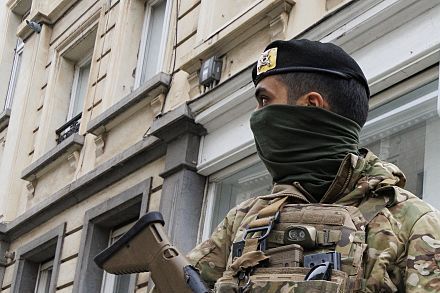
It’s not uncommon to see camouflage on the high street in Belgium. It is a peculiarly Belgian reflex: when the state feels the strain, it reaches for the army. This week, the federal government has done so once more. Soldiers have been deployed to bolster security around Jewish sites and neighbourhoods in Brussels and Antwerp, following a spate of clumsy but troubling attacks across Belgium and the Netherlands. Synagogues have been targeted with arson and a Jewish school struck by an explosion. Mercifully, no one has been injured and the damage has been minor. Yet the intent is clear, and the authorities have been quick to identify the incidents as anti-Semitic acts.

Why did this Brazilian politician black up in parliament?

From our UK edition

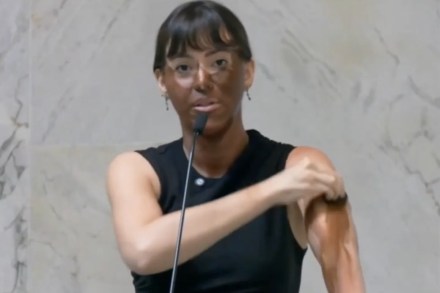
Fabiana Bolsonaro, a member of Brazil’s São Paulo state assembly, last week used makeup to darken her face and arms in what can only be described as a crude attempt at blackface in the middle of a parliamentary session. Her performance appeared to be a doubling down, in distinctly embarrassing fashion, on her earlier insistence that she is of mixed race – parda, in Brazilian-Portuguese. Fabiana’s birth surname is Barroso. She is a white woman, the daughter of the politician Adilson Barroso. Like her father, she belongs to the Liberal party of former President Jair Bolsonaro, whose name she adopted in 2022.

Can centrism survive in the Netherlands?

From our UK edition

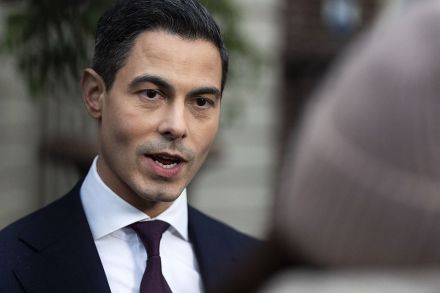
Rob Jetten being sworn as prime minister of the Netherlands would, not long ago, have seemed an exotic proposition. That he does so at the head of the country’s first modern minority government elevates the occasion from unusual to faintly vertiginous. A cordon sanitaire has been drawn not merely around Wilders but around much of the terrain to the right of the VVD True, his party, the centre-left D66, finished first in the general election of 29 October, albeit with just 17 per cent of the vote. Yet the coalition he has assembled with the conservative VVD and the Christian Democratic CDA commands the support of just 43 per cent of the electorate. In parliamentary terms it is a minority; in political terms it is a high-wire act.

The Dutch elections are still a victory for the right

From our UK edition

Early coverage of the Dutch elections has inevitably focused on Geert Wilders – still the bogeyman of the country’s political establishment. Wilders lost seats and saw some of his support drift towards other parties on the right and to the liberal centre of Democrats 66 (D66). His Freedom party and D66 are leading in the polls, with both set to take 26 seats. Yet the real story lies elsewhere: in the spectacular downfall of former EU Commissioner Frans Timmermans, whose brief and ill-fated return to Dutch politics as leader of the Labour party has ended in a shattering defeat. Timmermans was as divisive a figure to the Dutch right as Wilders is to the left.

Will the Dutch send migrants to Uganda?

From our UK edition

Reinette Klever, the former minister for foreign trade and development aid on behalf of Geert Wilders’s Freedom party, navigated her mere 11 months in office with relative ease and minimal controversy. She amiably took part in business missions and state visits, and even managed to deliver on several of the policy shifts promised in the four-party coalition agreement until the government collapsed in June. Among her policy shifts was a substantial reduction in Dutch overseas development across the board. Miraculously, this provoked scarcely a murmur from the left. The number of target countries and aid programmes were slashed to those directly serving Dutch interests, such as on cooperation on migration control and tackling cross-border crime.

The flag wars have come to the Netherlands

From our UK edition

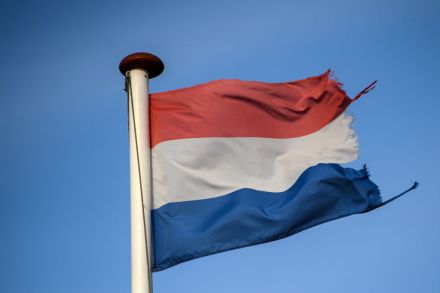
The small community of Uithoorn, just outside Amsterdam, has unexpectedly found itself on the front line of Europe’s flag wars. Late last week, Dutch national flags – in bold red, white and blue – began appearing across the town. Their purpose? Perhaps a spontaneous show of resistance to a planned asylum centre earmarked for the suburb. Or perhaps something more calculated: a shrewd piece of political theatre ahead of the country's elections on 29 October. No one can say for sure. But the response was immediate. With Pavlovian swiftness, the town council began removing flags from public spaces – although they left those flying from private property untouched. The council offered several justifications.

Belgium has joined the battle against the ECHR

From our UK edition

Belgium’s federal Prime Minister, Bart De Wever, is not your average European leader. A conservative intellectual with a sharp tongue and a taste for historical analogy, he is perhaps the only European statesman to cite Edmund Burke more readily than Brussels regulations. A long-serving mayor of Antwerp – one of Europe’s great port cities – and leader of the moderate nationalist New Flemish Alliance (N-VA), De Wever stitched together a national coalition after topping the 2024 federal elections. The alliance includes both centre-right and centre-left parties, drawn from both of Belgium’s major linguistic blocs – no small feat in a country that barely speaks to itself.

The Netherlands has a wolf problem

From our UK edition

Bram and Hubertus are marked for death. Camouflage-clad government marksmen – licensed but anonymous, for security reasons – are hunting them in the sparse woodlands of one of Europe’s most densely populated nations. But it’s proving trickier than expected. The hunters are not alone in the woods. A parallel force – equally camouflaged, well equipped and dedicated if not fanatical – is also out there, a Dutch daily newspaper reports. Animal rights activists and climate crusaders have taken it upon themselves to protect the pair, by any means necessary. A human fatality is only a matter of time Bram and Hubertus are wolves, given cosy, old-fashioned Dutch names to garner sympathy for them. Their crime? Doing what wolves do: killing sheep and threatening humans.

The crime the Netherlands would rather forget

From our UK edition

In the early hours of 20 August, a 17-year-old girl set off on her bicycle, making the journey from central Amsterdam to the nearby village of Abcoude after a carefree evening out. What followed was any parent’s worst nightmare. In distress, the girl dialled emergency services, reporting that she was being chased and assaulted by an unknown man. Police rushed to the scene. The girl, known only to the public as Lisa, was found brutally murdered on a notorious stretch of unlit road near the Amsterdam Arena football stadium.