Naples

The simple flatbread that conquered the world

Pizza is the Italian food that has conquered the world. From Brussels to LA, from Beijing to Buenos Aires, pizzerias are everywhere. But what are the origins of this food, and how did it become so popular? Reading Luca Cesari’sbook made me hungry not only for a thin crust margherita but also to digest the wealth of information about this simple dish. The margherita gets its name from Queen Margherita of Savoy, who, in 1889, on a visit to Naples, summoned Raffaele Esposito, the celebrated pizzaiolo (pizza-maker and hawker) to the palace to try his wares. She so liked the one with tomato, mozzarella and basil (made to represent the colours of the Italian flag) that it was dedicated to her.
The enduring lure of Atlantis

When you picture Atlantis, what do you see? For most people, this mythic city is a classical arcadia sunk beneath the sea – fallen columns, shattered arches and perhaps even an aqueduct. But that is not the place described by Plato, the original source of the Atlantis myth. His version consists of an immense Atlantic island, many millennia older than the Egyptian and Babylonian empires. The popular image of Atlantis was created by Jules Verne in Twenty Thousand Leagues Under the Sea. When that novel’s narrator, Professor Pierre Aronnax, joins Captain Nemo on his underwater exploration, they encounter a ruined city. He notices temples and even ‘the floating outline of a Parthenon’.

A choice of thrillers for end of summer escapism

Publishing has never much distinguished between fame and notoriety, and it’s hardly Charlotte Philby’s fault that her grand-father was the double agent Kim. Still, it seems an odd credential to extol. Philby is a good enough writer to be lauded for her work alone, and her latest book, The End of Summer (Borough Press, £16.99), is spy-free and her best so far. It’s 1985 and Judy McVee is an attractive teenage hustler who leaves her unsympathetic mother in London and moves to New York. There she supports herself by pilfering wallets from men in bars who mistake her friendliness for availability.

How the Aeneid was nearly destroyed

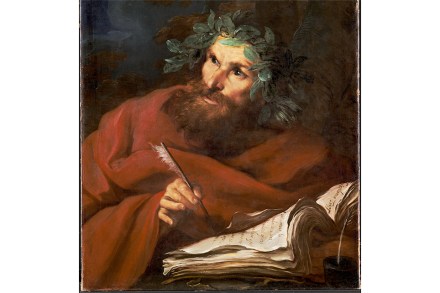
According to legend, Vergil declared of himself ‘Mantua me genuit, Calabri rapuere, tenet nunc Parthenope: cecini pascua, rura, duces.’ (‘Mantua bore me, Calabria took me; now Naples holds me: I sang of pastures, fields, and leaders.’) In her rigorously researched biography, the American classicist Sarah Ruden shows that this is largely true – even if the author of the Aeneid was in fact born 30 miles from Mantua, in a little village called Andes, in 70 BC.  Ruden must necessarily rely on Vergil’s most influential biography, written by Suetonius more a century after his death.

Fighting every inch of the way: the Italian Campaign of 1943

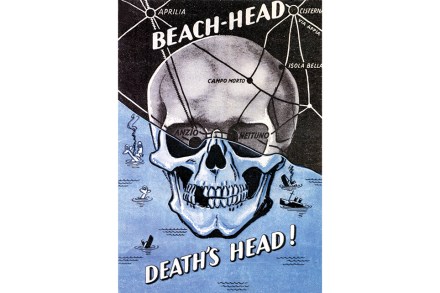
In Whitehall, visible to even the most short-sighted from the gates of Downing Street, stands an outsize statue of Lord Alanbrooke, the strategic adviser to Winston Churchill during the second world war. His job was to help the prime minister see the big picture and concentrate on the decisions that really mattered. This was no easy task. Churchill was both a tricky master and ‘tinkerman’, but Alanbrooke had Ulster blood and knew how to say no. One little village, San Pietro Infine, took more than a week and 1,500 American casualties to capture He also had a remarkable facility for explaining complex strategic problems in simple terms. There is good evidence of this in the BBC archive (and on YouTube) in a television interview he gave in 1957.

Travels in Italy with the teenage Mozart

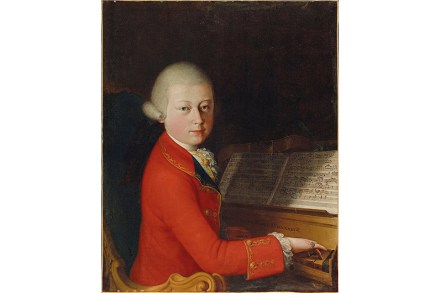
Between the ages of 13 and 17, Mozart made three trips to Italy, spending some two-and- a-half years in ‘the country at the heart of the opera world’. He would never return as an adult. His mature Italian operas – The Marriage of Figaro, Don Giovanni, Così fan tutte, La Clemenza di Tito – can be traced directly back to these formative teenage encounters and experiences in Bologna, Venice, Rome, Florence and Naples. So argues Jane Glover in Mozart in Italy. A follow-up to 2005’s Mozart’s Women, the book is a lively account of journeys which the composer shared (mostly) with his father Leopold.

The ‘historic’ national dishes which turn out to be artful PR exercises

In 1889, Raffaele Esposito, the owner of a pizzeria on the edge of Naples’s Spanish Quarter, delivered three pizzas to Queen Margherita, including one of his own invention with tomatoes, mozzarella and basil, their colours taken together resembling the Tricolore. The Italian queen loved the pizza, and Esposito duly named it after her. In that restaurant today hangs a document from the royal household, dated 1889, declaring the pizzas made by Esposito to be found excellent by the queen. And so was born the Pizza Margherita, a dish now synonymous with Naples. The queen’s seal of approval in the wake of Italian unification, which had proved difficult for Naples, came to represent the embracing by the governing royal family of an impoverished city by way of their cheapest street food.

Has the role of resistance in the second world war been exaggerated?

When in 1941 Winston Churchill famously declared that the newly formed Special Operations Executive, set up to encourage resistance movements, would ‘set Europe ablaze’, neither he nor anyone else could have known the extent of the help the partisans would provide to the liberation of the continent. Nor, indeed, did anyone envisage the fact that not all of them would prove as biddable to Allied wishes as they hoped. As Halik Kochanski shows in her compendious book on the six-year underground war, resisters came in all shapes and sizes, not easily controlled or corralled into categories. She divides her survey into three periods. The first runs from March 1939 and the occupation of Czechoslovakia to the German invasion of Russia in June 1941.

Parallel lives: Violets, by Alex Hyde, reviewed

When Violet wakes up in Birmingham Women’s Hospital at the start of Alex Hyde’s debut novel her first thought is of what has happened to the enamel pail of blood, because she hates the idea of someone else emptying it: ‘Was that what it meant, lifeblood? Placental, uterine. She had seen the blood drop out of her into the pail. It came with the force of an ending.’ A messy business, miscarriage. Across the country in Wales, another Violet is dealing with a different sort of mess. ‘No, still nothing. Violet pulled up her knickers and swilled out the pan. Every time she would check. Every slight feeling of wet.’ But there is no blood, although she usually has her period at the same time as her mother.

Entirely gripping: The Lost Daughter reviewed

The Lost Daughter is an adaptation of the Elena Ferrante novel about motherhood that says, quite ferociously: it’s complicated. And: mothers aren’t necessarily motherly, and can feel ambivalence. You’d think it was unfilmable, particularly as the central character describes herself as someone even she doesn’t understand but, directed by Maggie Gyllenhaal — it’s her directorial debut — and starring Olivia Colman, this film is entirely gripping. No ambivalence on that count. https://www.youtube.com/watch?v=xNq9YOfL0Zs Colman could play a bedside table and somehow bring depth, feeling, an internal landscape It is carried by Colman who is tremendous, and is being tipped as a potential Oscar winner, if that matters.

‘I am not able to answer your question’: an irascible Paolo Sorrentino interviewed

Loving the films of the Italian auteur Paolo Sorrentino, I thought he’d be easy to chat to. But a maestro is a maestro, as I was reminded when I interviewed him in London last week. Masked and communicating through a translator, I semaphored my admiration for his new film The Hand of God, starting with its spectacular opening shot. Like a bird, the camera flies over the sea, then focuses on a vintage car tooling along the promenade, before panning over the city again. But he rejected my praise: ‘It’s not complicated. It’s a normal shot by helicopter.’ He’s right, of course, that his new classic coming-of-age story represents a departure towards simplicity.

Nostalgic, episodic and Joanna Hogg-ish: Hand of God reviewed

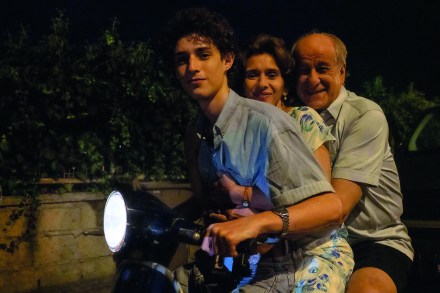
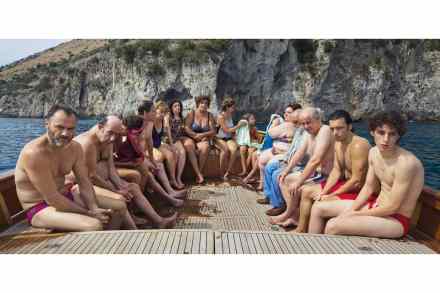
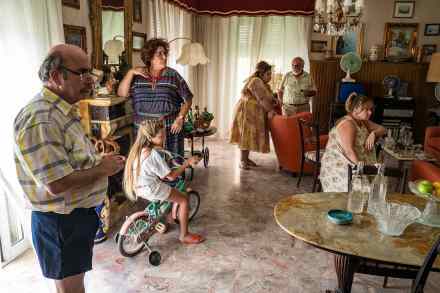
Hand of God is the latest film from Paolo Sorrentino, the Italian filmmaker who won an Oscar with The Great Beauty, made the political thriller Il Divo and, for television, created the wonderfully crazed The Young Pope and The New Pope. (Jude Law, who knew he had it in him? Not I.) But this time it’s personal as it’s about his life as a teenager growing up in 1980s Naples. It’s mostly anecdotal and episodic and quite Joanna Hogg-ish but this isn’t to say it is without event. Midway through there is a pivotal moment, a shocking tragedy, but I don’t wish to say what it is as that would be a spoiler. I knew what it was because I’d read a Venice film festival review which had annoyingly put it in the first paragraph. (Thank you, the Guardian.

Diego Maradona, a god of football

Argentina has announced three days of national mourning after the death of Diego Maradona. Take a second and think about that. Who in Britain, beyond the Queen, might command such nationwide grief? Despite his untimely death, Maradona will never truly die. Gods never do.  Naples is able to marry the divine and the devil like no other city; a rough, tough, crumbling beauty that seats opulence in the midst of teeming poverty. Fitting, then, that it became Maradona’s own home for so long. He arrived to the wild fanfare of 75,000 people when he signed his contract at the Stadio San Paolo in 1984. Maradona cut a mixed figure in the 80s. After starring for Boca Juniors, he arrived at Barcelona in ’82 for a world record fee. He was a rare talent.

A story without redemption: The Lying Life of Adults, by Elena Ferrante, reviewed

‘I don’t at all hate lies,’ Elena Ferrante explained in Frantumaglia, her manifesto for authorial anonymity. ‘I find them useful and I resort to them when necessary to shield my person, feelings, pressures.’ Shortly after writing these words, Ferrante, who refuses all interviews and keeps her identity under wraps, was accused by an investigative journalist called Claudio Gatti of lying to her readers. She had allowed us to assume, Gatti revealed, that her hugely successful Neapolitan quartet — My Brilliant Friend, The Story of a New Name, Those Who Leave and Those Who Stay and The Story of the Lost Child — was autobiographical.

I wish John Chamberlain was still around to crush this hideous toothpaste-blue Ferrari

For three months art lovers have had nothing but screens to look at. As one New York dealer complained to the Art Newspaper in May, ‘Everything is so flat — except for the curve,’ referring to the infection rate. Flatness isn’t such a problem for paintings, which are flat anyway, or for digital media obviously. The art form that has suffered most from the lockdown is sculpture, since no 360˚navigation technology yet invented can replicate the experience of walking around a 3-D object. So it’s fortuitous that Gagosian is unlocking its three London spaces to a trio of new exhibitions of 3-D works, under wraps since March.