Murder

Southern Gothic: the horror story of Alex Murdaugh, paterfamilias and ‘family annihilator’

The central figure of The Family Man, the lawyer Alex Murdaugh (pronounced ‘Murdock’), spends his life getting implicated in so many heinous, melodramatic crimes that he seems cobbled together by a cabal of tabloid and commercial publishers, crime podcasters and providers of big budget cinematic sleaze. Memorably referred to by psychopathologists and public prosecutors as a ‘family annihilator’ (imagine a little bit of Medea, a little bit of the Menendez brothers and a whole lot of Oedipus Rex), he was arrested in 2021 for slaughtering his wife Maggie and their youngest son Paul with the same sort of high-tech military weaponry that he enjoyed wielding around his family compound to hunt hogs, and which visitors often found lying randomly about his home and gardens.

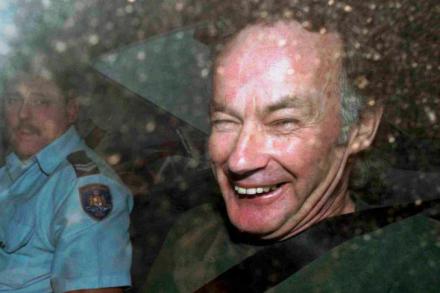
How many people did Australia’s backpacker murderer kill?

Australians are known for world-class performances in many fields. Mostly, our achievements are a source of national pride, but one field of achievement causes us only horror and shame. Our serial killers are some of the most prolific and brutal anywhere. And none are more brutal or prolific than the late, unlamented, Ivan Robert Marko Milat. Milat took his victims into the forest bound, terrified and subjected them to unspeakably sadistic torture The facts of Milat’s known killing spree are gruesome and horrific. In the late 1980s and early 1990s, Milat turned the Belanglo State Forest, a bushland reserve off the main highway to Melbourne, and 80 miles from Sydney, into his personal killing field.

backpacker

Henry Nowak and the politics of deflection

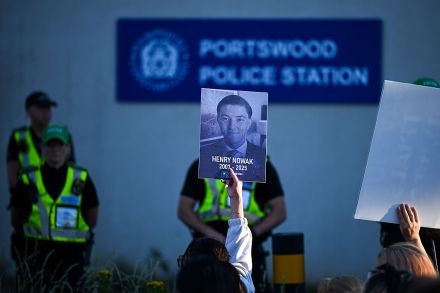
While Britain is still reeling from the horrific murder of 18-year-old student Henry Nowak, an astonishing article has appeared in El País, Spain’s largest national newspaper. Rather than focus on the failures of the police officers, or the institutional bias within the force, the headline steers its readers away from the case and towards the outlet’s own obsessions. The headline translates as "Farage’s far right stirs up hatred in the UK after a young man is stabbed to death by a Sikh man." As Alejo Schapire (an Argentine journalist based in France) has pointed out, this is the first and only article produced by El País on the subject of the Nowak killing. Instead of an image of the victim, the newspaper has opted for a photograph of Nigel Farage.

henry nowak

The lessons from Henry Nowak’s murder

From our UK edition

I wonder how many readers have ever heard of the name Kriss Donald? The young Glaswegian was just 15 years old in 2004 when he was kidnapped by a local gang of Pakistani men. The group selected him because he was white and they had some beef with a group of white men with whom Donald had no connection at all. After driving around for hours, the gang – led by one Imran Shahid – stabbed Donald repeatedly before dousing his body in petrol and setting him alight. I also wonder how many readers have heard of the name Tony Timpa? The white, unarmed Texan was 32 in 2016 when he suffered some sort of mental breakdown in public. Instead of assisting him, police arrived at the scene and restrained him in such a way that he died.

No place is safe: The Brittle Age, by Donatella di Pietrantonio, reviewed

From our UK edition

This slim, unsettling novel opens with Lucia trying to navigate the ‘mess’ of her daughter Amanda’s return home to their apartment near Pescara, in Italy’s Abruzzo. Pieces of torn bread, a heaped-up blanket and other strange ‘traces’ are indications of Amanda’s emotional disarray after hastily leaving Milan on the eve of lockdown. But she’d already abandoned her university studies by the time she’d been violently mugged. Lucia attempts to achieve the difficult balance of caring for, but not suffocating, her daughter, resigning herself to Amanda’s ‘unpredictable comings and goings’ while leaving her ‘something nourishing in the fridge in case she skips breakfast’. But she has already spectacularly misjudged this.

Does a propensity for crime depend on one’s DNA?

From our UK edition

This book begins strangely. Kathryn Paige Harden and her man Travis go off into the Texas desert to take some LSD in the hope that it will provide a ‘hard serotonergic reboot’. They have not so far had sex, but Travis has plans. ‘You’ll come back with your third eye,’ he says, ‘and then we’ll fuck. You’ll be glad we waited.’ At this point you may be tempted to hurl the book across the room. The self-centredness is oppressive. But persist. It rapidly becomes a very powerful read. Harden is a psychologist and behavioural geneticist, and the primary theme of Original Sin is the way in which science raises questions about morality and the law. For example, is a psychotic man who murders his wife less guilty than a sane man who does so with a clear head?

They shoot horses: Boyhood, by David Keenan, reviewed

David Keenan’s seventh novel is quite the ride, but its plot is not always easy to disentangle. The author has said that its title is his favourite word, and the book’s clearest narrative thread concerns the abduction of a young boy outside a Glasgow football ground in 1979. The boy’s older brother, Aaron, is subsequently guided by an angel called the Precious Gift. Aaron meets the guardian angel during a run for charity in 1986, on the last day of his boyhood, or so he thought, because he could never imagine doing a sponsored run again after that, because he got into literature and smoking pot straight afterwards.

‘Evil visited that day and we don’t know why’ – Dunblane 30 years on

From our UK edition

Shortly after 9.30 a.m. on 13 March 1996, a man walked into the gymnasium at Dunblane Primary School, near Stirling, Scotland. He was armed with two 9mm Browning self-loading pistols, two .357 Smith & Wesson revolvers and 743 rounds of ammunition. Within three or four minutes, he’d fired 105 rounds, resulting in the deaths of a teacher, Gwen Mayor, and 16 children. A further three teaching staff and 14 children were injured. He then took his own life. It could have been a great deal worse.  There was a suspicion that he intended to kill most of the school’s 600 pupils but that he’d arrived a few minutes late for assembly, by which time most of the children had dispersed to their classrooms.

The gentrification of British crime novels

From our UK edition

Eighty years ago this month, in February 1946, the left-wing Tribune magazine published George Orwell’s essay ‘The Decline of the English Murder’ in which the writer identified a certain class of crime as most appealing to the tabloid-reading British public – and contrasted the ‘cosiness’ of this type of early 20th-century domestic murder with the brutal sadism of killings committed in Britain during the second world war.  Two years previously, in 1944, while war still raged, in another essay entitled ‘Raffles and Miss Blandish’, Orwell specifically contrasted the ‘hard-boiled’ school of crime fiction with the gentlemanly Raffles stories of E.W. Hornung, featuring a well-mannered upper-crust jewel thief.

Horror in Victorian Hampstead: Mrs Pearcey, by Lottie Moggach, reviewed

From our UK edition

Our appetite for true crime is nothing new. The Victorians devoured it and, as Lottie Moggach’s fourth novel shows, they were as gawking and prone to erroneous judgments as any crowd on social media. Mrs Pearcey is about two women in 1890s London: sparky young Hannah Teale, engaged to a rising journalist on the Star and living with her widowed mother in Camden Square; and impoverished Mary Pearcey, who lodges in a Hampstead boarding house and is accused of the grotesque murder of a woman and her baby. It was a celebrated case in its day, coming soon after the Ripper murders, and it is now revived in Moggach’s vivid, immersive imagination. Part of the novel’s attraction lies in its setting in and around Camden Town.

The turbulent life of the Marquis de Morès – the 19th-century aristocrat turned populist thug

From our UK edition

The Marquis de Morès (1858-96) was a man of many abilities, but balancing a chequebook was not one of them. Bested (savaged, frankly) by the Chicago meat-packing lobby and frustrated in his attempt to build a railroad across Indochina, the soldier, duelist and self-styled ‘economist’ returned to his native France in 1886, caused havoc and invented fascism (if we allow the Italian historian Sergio Luzzatto to have his way) – only to meet his nemesis much closer to home.

The key to Midsomer Murders’ enduring appeal

From our UK edition

If dramas like Adolescence are the rough televisual equivalent of whoever won the latest Turner Prize, then Midsomer Murders (ITV1) is David Hockney. The first category embodies the kind of worthy, tormented, agenda-pushing stuff we’re supposed to like; the second represents the sort of thing we actually like: undemanding, unpretentious, easy on the eye and brain. The deaths serve as a plot device and as a source of macabre comedy but are most definitely not there to cause you any emotional distress Even though Midsomer Murders has been going since 1997, I only saw my first full episode this week.

Glamour and intrigue: The Silver Book, by Olivia Laing, reviewed

From our UK edition

Olivia Laing has had a productive couple of years. The Silver Book arrives hot on the heels of The Garden Against Time, a memoir-cum-environmentalist treatise published in 2024. It is a novel of stunning imaginative power that was apparently written in just three months. Set in 1975, during the making of two great works of Italian cinema, Federico Fellini’s Casanova and Pier Paolo Pasolini’s Salò, it is suffused with the glamour and intrigue of these filmmakers’ worlds. It offers a fictional retelling of the events that led up to Pasolini’s murder – a crime that remains unsolved – on 2 November.

RIP Rob Reiner

The death of the director and actor Rob Reiner in violent and unexplained circumstances is one of the most horrific and surprising stories to have emerged from Hollywood in living memory. One of the reasons why its elites live in areas such as Reiner’s exclusive neighborhood of Brentwood in California is precisely so that they will not be subject to the possibility of random violence in a way that less wealthy Americans face daily. Yet if news reports are to be believed, Reiner and his wife Michele were the victims of intrafamilial strife: a situation that all the gated walls and security cameras in the world could not ameliorate.

trump derangement

Has Donald Trump succumbed to Trump Derangement Syndrome? 

The director Rob Reiner and his wife Michelle were found dead in their Los Angeles home yesterday. The couple were discovered with their throats slit open; a knife was found nearby on the premises and their son Nick is being held as a suspect. The nation has been stunned by the brutal circumstances of the Reiners' deaths – though the requisite level of empathy is apparently yet to reach 1600 Pennsylvania Avenue.

Songs of murder, rape and desertion

From our UK edition

A century ago, the Orkney poet George Mackay Brown was settling into his first term at Stromness Academy. His schooldays were to prove a dismal grind, but English lessons brought moments of magic. He was especially intrigued by poems – ballads, mostly – signed simply ‘Anon’. The name of the poet was lost – and perhaps there hadn’t been just one but a host of craftsmen in the making of each of these wonders. They were the creation of a tribe, the inheritance of a community, songs ‘seraphically free/ Of taint of personality’. Today, as publishers bust themselves to promote the cult of individual authors, it’s a thrilling, liberating notion.

Charlie Kirk saw himself as holding back a revolution

Charlie Kirk was, from an incredibly young age, the sort of person willing to try things that seemed impossible. Last night, in his remembrance of meeting Charlie for the first time, my Fox colleague Guy Benson realized that he was probably one of the first conservative speakers Kirk had invited to share ideas to students in Illinois – at the ripe age of around sixteen.

charlie kirk

Who’s deceiving whom?: The Art of the Lie, by Laura Shepherd-Robinson, reviewed

From our UK edition

In this age of lies and delusions, the trickster may seem to be a peculiarly modern creature, but he or she is almost as old as literature itself. Long before phishing or fake news, stories about cunning foxes, Loki, Anansi the Spider-Man and Odysseus brought delight; Puck, Tom Ripley and Sarah Waters’s fingersmith Sue Trinder are some of their descendants. Encountering such a figure is always a joy, and in Laura Shepherd-Robinson’s latest novel, The Art of a Lie, there are two. Hannah Cole is a shopkeeper in 18th-century London, struggling to keep her confectionary business open. Her husband Jonas has been murdered, and we soon learn that not only is the celebrated author and magistrate Henry Fielding investigating Mr Cole’s death but that Hannah is, in fact, his killer.

Bloodbath at West Chapple farm

From our UK edition

Fifty years ago, the blasted bodies of three unmarried siblings, members of the Luxton family, were discovered at a Devon dairy farm, set in a lush stretch between the ‘lavender haze’ of Exmoor and Dartmoor. The youngest member of the family, Alan, was 55. He lay in his pyjamas and work boots on the cobbles in the farmyard. Robbie, 65, with cuts to his face, and Frances, 68, clad in a nightgown rucked up to her waist, were found together in the garden. All the doors to the primitive thatched family farmhouse were locked from inside. The ‘tragic trio’, as they were described by the tabloid press, were the last of an ancient line who had farmed at West Chapple, Winkleigh. Each of the victims had their heads blown off.

Amanda Knox’s new memoir asks what lies next

The question at the heart of Amanda Knox’s latest memoir Free: My Search For Meaning is a simple one: what are the life prospects for an exoneree? It follows 2013’s Waiting to be Heard, which detailed the Seattle student’s imprisonment in Italy before and after a wrongful murder conviction, and her fight for justice. For anyone who was asleep under a boulder at the time, Knox is the gauche American student who became the target of a media firestorm following the brutal murder of her British roommate Meredith Kercher in Perugia, Italy, in 2007. She was convicted of the crime alongside her boyfriend Raffaele Sollecito in 2009 and freed on appeal in 2011. (Kercher’s actual murderer, Rudy Guede, was convicted in a fast-track trial in 2008, and released in 2021.

amanda knox