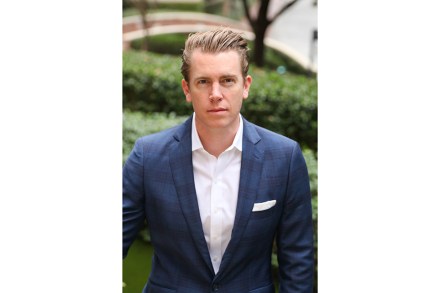
Andrew Rosenheim

Tradecraft secrets: a choice of crime fiction

From our UK edition

If it takes one to know one, this may explain why spy fiction is enjoying such a renaissance, since among the best new titles are those written by former intelligence operatives. I.S. Berry and David McCloskey are both former CIA officers who happily acknowledge how much their novels rely on their past careers. Equally impressive is the work of ex-MI6 officer James Wolff, whose use of a pseudonym puts him at a comparative disadvantage when it comes to promoting his books, but whose Spies and Other Gods (Baskerville, £20) places him in the top tier of today’s spy writers. A young ex-academic, Aphra McQueen, is sent by a parliamentary oversight committee to investigate a whistleblower’s complaint about MI6.

Cosy crime for Christmas: a choice of thrillers

From our UK edition

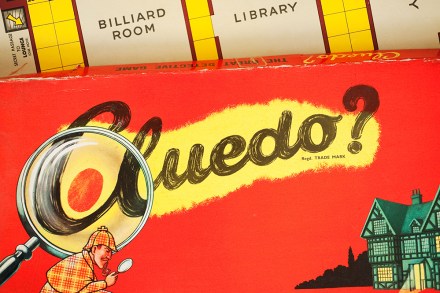
Christmas is prime time for cosy crime and the excellent thriller writer Nicola Upson offers a short, pleasing contribution with The Christmas Clue (Faber, £10). As in her longer novels, where she uses the real-life figure of Josephine Tey as her heroine, here she fronts a couple – Anthony and Elva Pratt – who also existed, and who invented the classic boardgame Cluedo. It is 1943, and the Pratts decide to return to the resort hotel, Tudor Close, where they used to work, Anthony as the house pianist and the two together as creators of whodunnit entertainments for the guests. The idea is that it should be a respite from Anthony’s war work at an engineering factory.

Nick Boles, James Ball, Andrew Rosenheim, Arabella Byrne & Rory Sutherland

From our UK edition

27 min listen

On this week’s Spectator Out Loud: Nick Boles says that Ukraine must stand as a fortress of European freedom; James Ball reviews If Anyone Builds It, Everyone Dies: The Case Against Superintelligent AI, by Eliezer Yudowsky and Nate Sores; Andrew Rosenheim examines the treasure trove of John Le Carre’s papers at the Bodleian; Arabella Byrne provides her notes on skip-diving; and, in the battle of the sexes, Rory Sutherland says the thing to fear is not feminisation, but emasculation. Produced and presented by Patrick Gibbons.

A remarkable insight into Le Carré’s working methods

From our UK edition

When Richard Ovenden of the Bodleian Library wrote to John le Carré asking if the writer would leave it his papers, he got more than he could ever have bargained for. Le Carré not only responded with enthusiasm, explaining that ‘Oxford was Smiley’s spiritual home, as it is mine’, but also sent along 85 boxes of neatly arranged papers and memorabilia. After le Carré’s death in 2020 came a second larger tranche; the total archive consisted of more than 1,200 boxes. This was a writer who threw nothing out. Selected fruits of this vast haul can be seen in a new and impressive exhibition in the Bodleian’s Weston Library (formerly the New Bodleian).

A summer of suspense: recent crime fiction

From our UK edition

Time was when historical fiction conjured images of ruff collars and doublets, with characters saying ‘Prithee Sir’ a lot. Nowadays, the range of featured period settings has expanded unrecognisably, though a new favourite has emerged – the second world war, where Nazis stand in for nefarious noblemen. The Darkest Winter by Carlo Lucarelli, translated by Joseph Farrell (Open Borders Press, £18.99), is one such addition, though an unusual one. It is set in Bologna in 1944, the vicious period after Italy’s first surrender, Mussolini’s capture and daring escape, and the invasion by Nazi troops to counter the Allies’ advance from the south.

A searching question: Heartwood, by Amity Gaige, reviewed

From our UK edition

The Appalachian Trail is America’s secular version of the Camino de Santiago but more than twice as long. In Amity Gaige’s Heartwood, Valerie Gillis is a 42-year-old nurse and experienced trail-walker who nonetheless vanishes one day in the northern stretch, in Maine, the wildest of the New England states. Heading the search for her is Beverly Miller, a senior game warden, who stands out among her colleagues because she is 6ft, female and not a native Mainer. As the days go by, and despite the impressive number of volunteers looking for Gillis, the chances of finding her alive diminish. Miller, a veteran of similar searches, has to continue to motivate her teams, even as her own appraisal of the situation grows gloomy.

Dangerous games of cat and mouse: a choice of crime fiction

From our UK edition

Psychosis and thriller writing are never friends. Even when told from the psychotic’s point of view, madness is always hard to portray since it involves a form of chaos irreconcilable with the resolutions we find in any thriller worth its salt. Havoc (The Borough Press, £16.99), by the American writer Christopher Bollen, is a remarkable exception, with the added bonus of being brilliantly written. Maggie Burkhardt is an 81-year-old widow who has spent the six years since her husband’s death living in a succession of resort hotels. We now find her installed in the grandly named but slightly shabby Royal Karnak Hotel in Luxor.

A mole in the CIA: The Seventh Floor, by David McCloskey, reviewed

From our UK edition

David McCloskey, whose Damascus Station was a brilliant debut, has followed it in quick succession with a Russian-based story, Moscow X, and now The Seventh Floor. The pace of all three books is matched by the speed with which they have been produced; and for all The Seventh Floor’s strengths,the haste is beginning to show. Like the earlier two thrillers, it starts with a bang – or rather a crunch, when a Russian spy, called home peremptorily from Greece by his superiors, bites into a disguised cyanide capsule before the State security apparatus can question him. Almost simultaneously, another Russian spook, named Golikov, has a clandestine meeting in Singapore with Sam Joseph, a CIA officer known to us from Moscow X.

Rebels and whistleblowers: a choice of recent crime fiction

From our UK edition

No one joins the CIA for the money, which might explain the spate of thrillers now emerging from former officers. The latest addition, The Peacock and the Sparrow (No Exit Press, £7.99) by I. S. Berry, comes festooned with praise from other CIA officers turned authors. Set in Bahrain during the Arab Spring, the novel is told in the first person by Shane Collins, a veteran CIA officer nearing the end of his tour there. Divorced, estranged from his son and engaged in a desultory affair with the wife of a colleague, Collins is weary. As his source Rashid declares: ‘This is your problem. You have no expectations... You are like this air. Empty.’ Rashid is one of the leaders of the increasingly restive dissidents in Bahrain, whose corrupt king lives distanced from his subjects.

Small-town mysteries: A Case of Matricide, by Graeme MacRae Burnet, reviewed

From our UK edition

The gifted writer Graeme Macrae Burnet makes a mockery of the genres publishers impose on credulous readers. The author of two ostensibly literary novels (both longlisted for the Booker prize), Burnet has also written a trilogy of self-declared thrillers. Yet the concluding volume, A Case of Matricide, demonstrates literary talent of the highest order. It features the same protagonist as in the two earlier volumes – Inspector Georges Gorski, chef de police in Saint-Louis, a provincial French town near the Swiss border. Divorced from his wealthy wife, whose father is the corrupt and powerful mayor of Saint-Louis, Gorski lives rather sadly with his mother, who suffers from increasing dementia.

A choice of thrillers for end of summer escapism

From our UK edition

Publishing has never much distinguished between fame and notoriety, and it’s hardly Charlotte Philby’s fault that her grand-father was the double agent Kim. Still, it seems an odd credential to extol. Philby is a good enough writer to be lauded for her work alone, and her latest book, The End of Summer (Borough Press, £16.99), is spy-free and her best so far. It’s 1985 and Judy McVee is an attractive teenage hustler who leaves her unsympathetic mother in London and moves to New York. There she supports herself by pilfering wallets from men in bars who mistake her friendliness for availability.

A haunting apparition: Bonehead, by Mo Hayder, reviewed

From our UK edition

It is well established that women are happy to read novels written by men but that male readers rarely extend a reciprocal courtesy. The late Mo Hayder is a case in point, since despite the extraordinary sales of the novels she wrote before her premature death in 2021, her fan base remains overwhelmingly female. It may be that the extreme violence often found in her books (‘lurid’ would not be unfair) strikes men as a trespass on what has traditionally been a male preserve. Whatever the reason, male reviewers tended to shy away – I know that, since I was one of them. Yet just ten pages into Bonehead, her posthumously published novel, I found myself completely drawn into Hayder’s story and the haunted creepy world it depicts.

An Oxford spy ring is finally uncovered

From our UK edition

Oxford and Cambridge have many rivalries, but espionage has always been a one-sided contest between the two. Burgess, Maclean, Philby, Blunt and Cairncross were all Cambridge men. If this were put in Boat Race terms, Cambridge would have rowed halfway to Hammersmith Bridge before the dark blues had their blades in the water. Charles Beaumont’s excellent A Spy Alone (Canelo, £9.99) tries to redress the imbalance with its depiction of a richly imagined Oxford-based spy ring. His protagonist, Simon Sharman, is a former agent turned private security consultant. An Oxford man, he is approached when a Russian oligarch decides to donate some of his millions to the university. Sharman is tasked with investigating just how dirty the money on offer is.

The chase looms large in the best new thrillers

From our UK edition

The ‘chase’ thriller is the fallback choice of writers looking for an easy way to make the pages turn. The Continental Affair (Bedford Square, £16.99) shows a gifted writer embracing the more obvious traits of these novels, while adding some innovative twists of her own. The story is set during the Algerian war that led to independence; its co-protagonist Henri is a former Algerian gendarme, of French and Spanish descent, who deserts when he is made to interrogate a childhood friend. Henri takes refuge in Grenada among his late mother’s family – countless cousins, and all of them crooks. As they get to know Henri, the cousins decide to give him a task which is also a test: he’s sent to collect a package left by a woman in a courtyard.

Espionage dominates the best recent crime fiction

From our UK edition

The best espionage novels cater to our fantasies while still persuading us of the authenticity of their worlds. Of the titles published this year, two stand out in the field, and each author understands that, in fiction, veracity is not the same as authenticity. In Hemingway’s words: ‘All good novels have one thing in common. They are truer than if they had really happened.’ An extended chase, beginning in Siberia, is a kind of Russian version of The Thirty-Nine Steps White Fox (Bantam, £18.99) is the concluding volume of a trilogy of thrillers by Owen Matthews, one of the best of many western writers on Russia. It can happily be read on its own, though it is sufficiently gripping to send readers back to the earlier two books.

A gruesome discovery: Death Under a Little Sky, by Stig Abell, reviewed

From our UK edition

The journalist Stig Abell has such a versatile CV – moving from the Sun to editorship of the TLS and then to his present morning slot on Times Radio – that it’s no surprise he has dipped a toe into the crime-writing waters where so many semi-celebrities increasingly swim. What may be surprising, given the rigours of the genre, is how well he’s done it. Death Under a Little Sky sits on the cusp of cosy crime. Jake Jackson is a police detective in London whose life changes when an oddball uncle dies, leaving him a large house deep in a nameless part of England, complete with acreage and a lake. The legacy coincides with the end of Jackson’s marriage and comes with enough cash to allow him to resign from his job.

The latest crime fiction: women provide their own take on sexual violence 

From our UK edition

Having long escaped their relegation to the softer margins of the thriller genre, women writers have provided their own take on grimmer themes, including the sexual violence that has become such a staple of crime writing today. In The Eye of the Beholder by Margie Orford (Canongate, £16.99), Cora Berger is a South African painter who moved to London after her parents were killed in a car accident. Outwardly formidable, she has a penchant for creepy, dominating men, and finds herself under the spell of a wealthy art collector named Fournier, who has a cabin tucked away deep in the Canadian wilderness. We are also introduced to Angel, a much younger woman who has a violent history – the result of horrendous sexual exploitation at the hands of her stepfather.

Cosy crime flourishes in the pick of the summer’s thrillers

From our UK edition

Cosy crime was once the literary world’s guilty secret, a refuge for any reader seeking entirely unchallenging entertainment – like an Escoffier chef with a private penchant for Mars Bars. It has always proved a great getaway in tough times, which helps explain the extravagant success of Richard Osman’s novels. Murder Before Evensong by the Reverend Richard Coles (Orion, £16.99) follows on Osman’s heels, with the advantage of it being both a more interesting story and a better writer telling it. It begins with an array of clichés, a feature of the cosy genre. Daniel Clement is a man of the cloth, tending the rural flock of a small village whose church’s living is in the hands of the local estate’s predictably irascible squire.

The real Norfolk: Stewkey Blues, by D.J. Taylor, reviewed

From our UK edition

D.J. Taylor is a Norfolk native who, un-usually, has stayed put. These stories, written during the pandemic, are all set in that county, though the author is largely uninterested in its more fashionable acreage – the strip of coast so popular with Sunday supplements and London owners of second homes. He writes instead about the ‘other’ Norfolk, which is comparatively unmonied, flat as a map, and barely gets a look-in from the SUVs speeding north. Most of these stories feature men, often young men, though in ‘New Facts Emerge’ a harried City businesswoman finds her Christmas plans imperilled by the obstructions of a sexist superior. She finally snaps when the colleague’s soullessness and the grind of the commute from Diss push her past breaking point.

Character is king in the latest crime fiction

From our UK edition

Thriller writers are hard pressed to stand out in what’s become a very crowded field. As a result, from Cardiff to Kansas we meet every conceivable kind of detective: if one walks with a telltale limp, another has no legs at all. Even the requirements of diversity can’t disguise the desperation of the search for distinctive heroes, or how variety itself has become a convention. Simon Mason’s A Killing in November (Quercus, £14.99) begins with more than a nod to thriller traditions. It’s set in the fictional Oxford college of St Barnabas, with a grumpy provost wooing a corrupt Middle Eastern potentate, a college servant with a hidden agenda and, naturally, an unknown woman found strangled in the provost’s office.