Multiculturalism

Ireland is embarrassed by St. Patrick’s Day

Some readers may remember a particularly infamous episode of The Simpsons which saw the town of Springfield descend into anarchy during their annual St. Patrick’s Day parade. As the crowds thronged Main Street, a drunken brawl erupted, prompting a shocked TV newsreader to declare: "What you are seeing is a total disregard for the things St. Patrick stood for. All this drinking, violence and destruction of property. Are these the things we think of when we think of the Irish?" Inevitably, this year’s St. Patrick’s festivals around the country are no longer a celebration of Saint Patrick and Irish traditions At the time, that episode was far more controversial with Irish Americans than people who actually lived in Ireland, who thought it was hilarious.


Should Prince Andrew be exiled? And how multiculturalism failed in Birmingham

45 min listen

This week on Quite right!: the slow-motion disgrace of Prince Andrew. As Virginia Giuffre’s new book reignites the Epstein scandal, Michael and Maddie ask: how much longer can the monarchy carry its most toxic member? Or should the Duke of York be stripped of his titles and sent into exile? Then to Birmingham, where sectarian politics, bin strikes and football collide. After Israeli fans were barred from attending a Europa League match, Michael and Maddie debate how Britain’s second city became a byword for failed multiculturalism. Has the country finally started telling the truth about integration – or just found new ways to divide itself? Finally, the British Museum’s attempt to out-glamour the Met Gala.

A multicultural microcosm: Brooklyn Crime Novel, by Jonathan Lethem, reviewed

Would readers approaching this novel (although novel might not be precisely the right word) without any indication as to the authorship recognise it as the work of Jonathan Lethem? It doesn’t have kangaroo gangsters packing heat, or sentient miniature black holes, or marine drills converted into nuclear-powered limos. It is not set on an alien planet, or in a parallel universe, or inside a simulated game. There are a few hints. It is set in Brooklyn and has a vaguely geeky feel to it; but tonally it seems very different to Motherless Brooklyn or The Fortress of Solitude. Instead of vernal exuberance there is autumnal wistfulness, but certainly not sentimentality.

You can never escape the suburbs

From our US edition

Had you told me when I quit drinking that one decade into sobriety I’d be a suburban Texas mom, I probably would have kept drinking. A friend and I were recently talking and I said, “I don’t know, a part of me feels like I’m giving up, moving to the suburbs.” She laughed and said, “That’s what the suburbs are — surrender.” The suburbs in all their sameness and picket-fenced perfection represented a life I never wanted — with their Live, Laugh, Love Etsy signs and swingers. They weren’t for eccentric artists or messed-up comedians. They were for sorority girls and women who loved game nights and crafts and the Bible and botox parties.

suburbs

The liberal arts are worth defending against ‘multiculturalists’

From our US edition

It’s the end of August — which means the kids are heading back to school. Time, then, to think about the quality and content of the education most young Americans are receiving. What to ponder? Well, we award more bachelor’s degrees in “parks, recreation, leisure, and fitness studies” than in English. And what students learn in their liberal arts courses is less the intellectual and civilizational inheritance of the West than a cruel mimicry that preferences “multiculturalism” and “critical thinking.

parental rights

Why the Tories are more diverse than Labour

‘The candidates fighting to replace Boris Johnson as Conservative party leader and Britain’s prime minister reflect the country’s rich diversity,’ the England-hating New York Times put it earlier this week, through gritted teeth, ‘with six having recent ancestors hailing from outside Europe.’  It might seem initially curious that it’s the Conservatives who are so ethnically diverse. In British politics the realignment over Brexit caused identity to replace economics as the crunch issue, so that the gap between Labour and Tory voters on the issues of immigration and diversity has significantly grown, even if immigration’s salience has declined and remains low.

Sounds of the suburbs

In After the Vote, her talk for this week’s special edition of A Point of View (Radio 4) on the subject of Brexit, the philosopher (and former Reith lecturer) Onora O’Neill suggested that the media have played a large part in creating our current crisis. All branches of it failed ‘to communicate with the public an accurate and honest account’, she argued. The BBC, she said, ‘provided coverage but failed to challenge unfair or dubious claims’ by either side, adding that ‘democracy does not work if such claims are not properly challenged’. This for her is the true nature of ‘the democratic deficit’ — lack of information, of informed debate, of proper checks.

How I became Hispanic

From our US edition

Several years ago I applied for a teaching position in an American university. In response I received a lot of forms to fill out, including one that required me to identify my ‘ethnicity or race’. I hate to tell this to those of my liberal friends who relish historical analogies from 1930s Europe, but when I noted how black Americans were classified in the form —‘You are defined as Black even if only one of your parents was an African American’—the Nuremberg Race Laws came to mind. When I look at myself in the mirror, I see, even with a summer tan, a very white man. So I assumed it would be a waste of time to fill in the part about race on the form the university had sent me.

hispanic

When migrants come, their culture does too

From our US edition

The challenge of integrating immigrants from the non-western world is not new to Europe. But a large influx of new migrants over the last decade, and a significant increase in harassment and sexual assault against women across multiple European countries, make it one that Europe can no longer avoid addressing. This story has its origins in the decades of economic recovery after World War Two, when many European countries faced a growing worker shortage for industry work. ‘Guest worker’ programs were created, notably in Germany, on the assumption that such workers would return home. But many workers preferred to stay in Europe and pursued family reunification. Jobs and welfare entitlements made Germany preferable to Turkey, France preferable to Algeria.

migrants

High life | 28 March 2019

New York   This place feels funny, a bit like Beirut, where Christians, Jews, Muslims, Druze and encamped Palestinians live together but separately, with one or two million Syrian refugees completing the mix. Over here the once-ruling Wasps are now irrelevant, having moved to their country clubs in the suburbs. The Chinese are creeping up, having bought more real estate in Manhattan alone than Islamic State has lost in Syria and Iraq. (I now get nuisance telephone calls in Chinese.) On the bottom of the ladder are the Hispanics and the African-Americans, the former doing all the heavy lifting in the construction business, the latter, sadly, being the majority in city jails. The Koreans are more or less hunky-dory, working 25 hours per day and then some.

Camille Paglia: ‘Hillary wants Trump to win again’

From our US edition

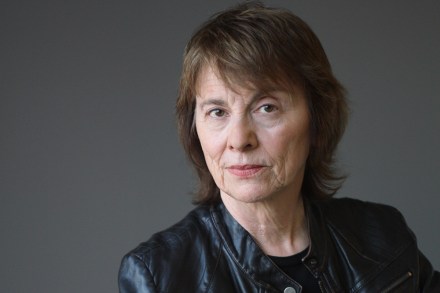
Camille Paglia is one of the most interesting and explosive thinkers of our time. She transgresses academic boundaries and blows up media forms. She’s brilliant on politics, art, literature, philosophy, and the culture wars. She’s also very keen on the email Q and A format for interviews. So, after reading her new collection of essays, Provocations, Spectator USA sent her some questions. You’ve been a sharp political prognosticator over the years. So can I start by asking for a prediction. What will happen in 2020 in America? Will Hillary Clinton run again? If the economy continues strong, Trump will be reelected. The Democrats (my party) have been in chaos since the 2016 election and have no coherent message except Trump hatred.

camille paglia

High life | 5 January 2017

Gstaad  New Year’s Eve was a Rhapsody in Blue, with a clarinet glissando that promised joys to come, and the Gershwin downbeat not registering until 6 a.m. The hangover was, of course, Karamazovian, but who the hell cares. I am finally solid again, and even the flu I caught on the trip over is on its last legs, lingering and as annoying as EU regulations, but no longer to be taken seriously. I had lots of close friends for dinner, but the new chalet was packed by the time I began slurring. Mind you, it’s during dreamlike moments such as those between midnight and dawn that wisdom strikes: there is something very wrong with people’s values around these parts.

A radical mistake

In the early 1990s, after the shock of the 1989 fatwa against Salman Rushdie, I began to do some research among those who condemned him, and learned that a strange thing was happening among young British Muslim men and women. I first wrote about this strange thing in my novel The Black Album, which concerns a young man who comes to London from the provinces to study and finds himself caught between the sex-and-ecstasy-stimulated hedonism of the late 1980s and the nascent fundamentalist movement. At the end of the novel the Asian kids — as they were called then — burn The Satanic Verses and attack a bookshop. I followed this up with a story published in the New Yorker, ‘My Son The Fanatic’.

When the fear of racism trumps everything else

Do you remember Alan Kurdi, the poor, drowned three-year-old whose photograph provoked a wave of sympathy for migrants almost exactly a year ago? Social media lit up with outrage — something must be done! — as millions shared the picture back and forth. A Facebook share is a pretty easy way of caring, but even so it was uplifting: we in the West mind about all children, not just our own. Our fellow feeling extends to fellows worldwide. So where then is the great Facebook uprising over the news that there’s been not a single successful prosecution in this country for female genital mutilation (FGM) though it’s been illegal since 1985?

High life | 11 August 2016

Gstaad   ‘He flies through the air with the greatest of ease, that daring young man on the flying trapeze.’ As everyone knows, life’s unfair, but this is ridiculous. An American daredevil falls out of an aeroplane at 25,000 feet without a parachute and manages to land on a postage-stamp-size net without a scratch. The poor little Greek boy falls off a balcony ten to 15 feet high, lands on gravel and breaks many bones in his body. Being encased in plaster is similar to living under a strict dictatorship, North Korea, for example. There’s no crime, no muggings, but as far as doing what comes naturally, fuggetaboutit. Self-doubt and cultural pessimism are twinned to physical immobility and pain.

An elegy for Oldham

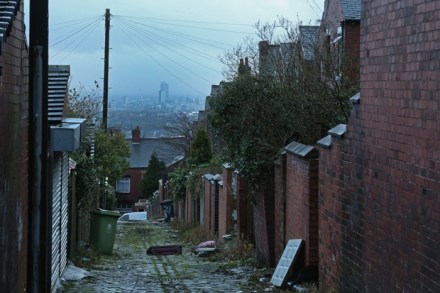
My home town of Oldham is the sort of place people imagine when they think of ‘The North’. It has mill chimneys, redbrick terraced streets and a rain-swept football ground (the third highest in the country) where supporters of the perpetually struggling Oldham Athletic queue for hot Vimto or a bag of black peas. Oldham is now the most deprived town in England, according to the Office for National Statistics. Crime and unemployment are high; investment, wages and prospects generally are pitifully low. Boarded-up shops and dilapidated factories tell a sorry tale of economic woe. It wasn’t always like this. My family’s home, in the leafy suburb of Werneth, was in one of many large houses built around 1900 for the managers of the local textile mills.

Word processing

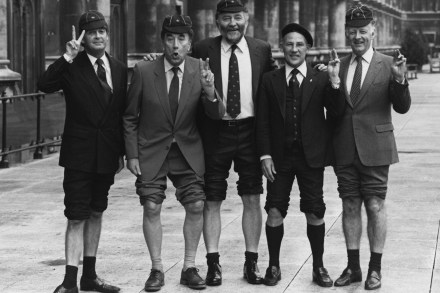
‘Comedy is like music,’ said Edwin Apps, one of the characters in Wednesday afternoon’s Radio 4 play, All Mouth and Trousers (directed by David Blount). ‘The words are the notes and they have to be in exactly the right place. And every line has to pull its weight, add something to the situation.’ Apps was one half of the writing partnership who created that most unlikely of TV hits in the supposedly swinging Sixties, All Gas and Gaiters, set in the cathedral close of St Oggs and featuring a laughably inept quartet of Anglican clerics.

An inconvenient truth | 14 April 2016

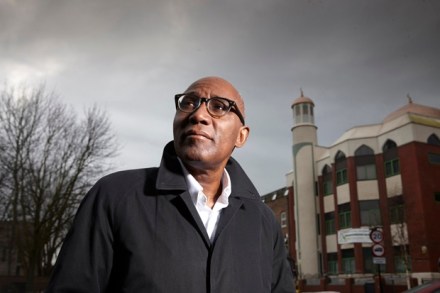
‘Our findings will shock many people,’ promised Trevor Phillips at the beginning of What British Muslims Really Think (Channel 4, Wednesday). But the depressing thing is that I doubt they will, actually. I think the general British public have known for some time what Phillips’s documentary professed to find surprising: that large numbers of Muslims don’t want to integrate, that their views aren’t remotely enlightened, and that more than a few of them sympathise with terrorism. It’s only the establishment elite that has ever pretended otherwise. As former head of the Equality and Human Rights Commission, Phillips was very much part of that elite. He commissioned the 1997 Runnymede report that popularised the word ‘Islamophobia’.

The rise and fall of Sicily

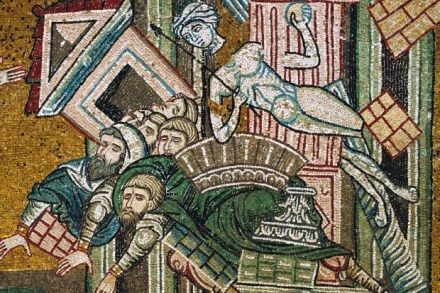
A few weeks ago, I looked out on the Cathedral of Monreale from the platform on which once stood the throne of William II, King of Sicily. From there nearly two acres of richly coloured mosaics were visible, glittering with gold. In the apse behind was the majestic figure of Christ Pantocrator — that is, almighty. The walls of the aisles and nave were lined with scenes from the Bible. In another panel, just above, Christ himself crowned King William. It was a prospect of the greatest opulence and sophistication stretching in every direction from this regal vantage point. The mosaics are in the manner of Byzantium, and probably executed by Greek artists, but the architectural plan and inlaid floors are derived from medieval Italy.

Christmas Notebook | 10 December 2015

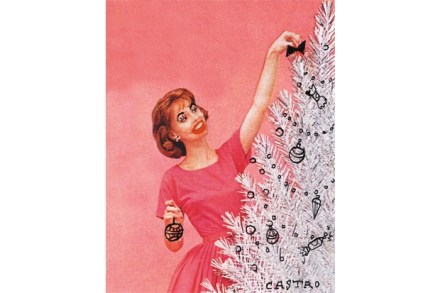
As I strolled through the aisles in a large department store, I almost choked when I read a large display that blared: ‘Don’t forget to treat your pussy at Christmas…’ with relief I read the rest of the ad: ‘…and your bow-wow too!’ Beneath the dubious banner lay a massive display of beautifully wrapped chew toys, scratching posts and all manner of treats and playthings. That’s when I realised this entire Christmas practice has gone truly bonkers. Every 6 January I breathe a sigh of relief as I take down and store the enormous number of Christmas decorations with which I festoon my house. ‘Never again!’ I say to Percy, ‘Let’s go away next Christmas.