Mozart

Fresh, original Mozart

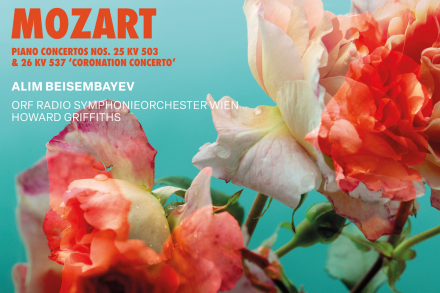
It’s spring in Vienna; well, OK, it’s early summer but it’s a gray day when Mozart doesn’t make you feel younger and I reckon this new release from Alim Beisembayev will do just that. In a world of infinite entertainment possibilities, Beisembayev has done the hard bit – the choosing – for you. Here we have two late piano concertos (Mozart wrote them between the ages of 30 and 32, as his own solo career wound down) charged with a grandeur, a playfulness and an endless smiling compassion that will come as a glorious corrective to anyone whose last experience of Mozart involved bodily fluids and confectionery in Sky’s hellish remake of Amadeus.

mozart

Fresh, original Mozart

Grade: A It’s spring in Vienna; well, OK, it’s early summer but it’s a grey day when Mozart doesn’t make you feel younger and I reckon this new release from Alim Beisembayev will do just that. In a world of infinite entertainment possibilities, Beisembayev has done the hard bit – the choosing – for you. Here we have two late piano concertos (Mozart wrote them between the ages of 30 and 32, as his own solo career wound down) charged with a grandeur, a playfulness and an endless smiling compassion that will come as a glorious corrective to anyone whose last experience of Mozart involved bodily fluids and confectionery in Sky’s hellish remake of Amadeus.

The Arts Council’s awful vision for the future of opera

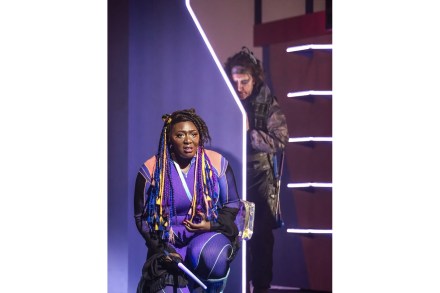
English National Opera’s first production created in Manchester is Angel’s Bone, a one-act opera by Du Yun and the librettist Royce Vavrek. It was premiered in 2016 in New York and subsequently won the Pulitzer Prize, but we shouldn’t hold that against it. Musically, at least, it’s certainly more interesting than recent US imports like Jeanine Tesori’s Blue – worthy, subminimalist Yankslop addressing the fashionable issues of the day. (It’s funny how the classical music world imagines that the way to reach British audiences in 2026 is to program stuff that was relevant to Americans in 2016.) It was a pretty horrible experience nonetheless. Daytime TV-fixated suburbanites Mr. and Mrs. X.E.

opera

Is this the missing link between Bach and Haydn?

Grade: B ‘Is that Haydn or Mozart? One can’t always be sure,’ remarks Kenneth Clark in the 18th-century episode of Civilisation, and there’s the British intelligentsia’s relationship with music, right there. Imagine saying that about any other art form, and still passing as a connoisseur. ‘Rembrandt or Poussin? Not much in it, really.’ ‘Michelangelo or Raphael? I can’t honestly tell.’ Don’t be like Kenneth. Brush up on your 18th-century idioms, and rediscover the qualities that make Mozart and Haydn so great – with regular dips into the also-rans of the classical era.

‘I didn’t expect to love Wagner’

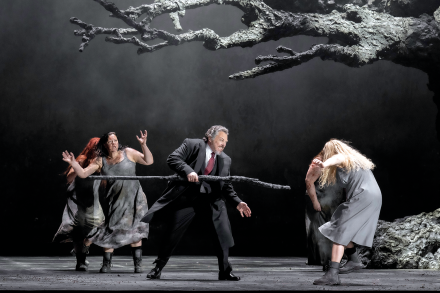
By the end of Siegfried, the third opera in Wagner’s Der Ring des Nibelungen, the king of the gods is in freefall. In the first opera, Das Rheingold, Wotan is a confident protagonist; a world-builder. In Die Walküre, we’ve seen him discover the limits of power, and felt his heart break. Now, in Siegfried, he’s a haunted figure; the solitary Wanderer, searching the world for answers that his all-powerful wisdom can no longer supply. He confronts the young hero Siegfried, and his law-giving spear shatters on the sword of a reckless, clueless boy. ‘All he can say is, “Go, then.

The joy of composers’ graves

I called on Hugo Wolf the other week, and he didn’t look too great. He wouldn’t, of course; he died in a mental asylum in 1903 after suicide attempts, professional disappointment and the slow poison of tertiary syphilis. His face gazes glumly out from his monument in Vienna: above him, a single laurel branch, beneath him an eternal flame. But at least he’s not alone. A muscular youth, semi-ripped, looks away at one side. And on the other, a naked couple clinch in a passionate embrace. Talk about rubbing it in. It’s not that I make a habit of hanging around composers’ graves, you understand. But somewhere along the way I seem to have notched up an awful lot of these posthumous courtesy calls. With the big beasts – Beethoven, Mahler and co.

Alfred Brendel was peerless – but he wasn’t universally loved

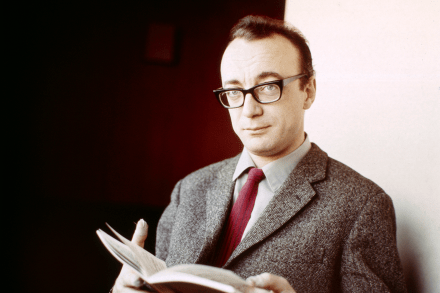
In middle age Alfred Brendel looked disconcertingly like Eric Morecambe – but, unlike the comedian in his legendary encounter with André Previn, he played all the right notes in the right order. OK, so perhaps I’m selling the maestro a bit short: I do think Brendel, who died on 17 June at the age of 94, was a peerless interpreter of the Austro-German repertoire, and for a time in the 1970s had a better claim than any other pianist to ‘own’ the Beethoven and late Schubert piano sonatas. But some of the media tributes have been embarrassingly uncritical, implying that Brendel was universally loved. He wasn’t, and he didn’t want to be.

The Book Club: John Suchet

42 min listen

My guest in this week’s Book Club podcast is John Suchet whose new book In Search of Beethoven: A Personal Journey describes his lifelong passion for the composer. He tells me how the ‘Eroica’ was his soundtrack to the Lebanese Civil War, about the mysteries of Beethoven’s love-life and deafness, why he had reluctantly to accept that Beethoven was ‘ugly and half-mad’; and how even in the course of writing the book, new scholarship upended his assumptions about events in the composer’s life (from his meeting with Mozart to the circumstances of his death).

The most exhilarating ‘authentic’ Mozart I’ve ever heard

Grade: A+ Yet another double bill of Mozart’s Piano Concertos 20 and 23! There’s an online database of 185 recordings of the first of these, the brooding K466 in D minor, and the classically perfect K488 in A major isn’t far behind. Can there really be anything new to say about either of them? The answer is yes, and in virtually every bar. Olga Pashchenko, a Russian-born pianist based in the Netherlands, here directs the top-flight period ensemble Il Gardellino in her second album of Mozart concertos. She’s playing a fortepiano, but don’t let that put you off: it’s a sweet-toned instrument whose soft action helps Pashchenko deliver cheeky ornaments at lightning speed. And cheeky is definitely the word.

An exhilarating debut: Peltokoski’s Mozart Symphonies reviewed

Grade: A- Here’s an oddly structured album of Mozart’s symphonies 35, 40 and 36 from the world’s most fashionable young Finnish conductor – and, no, it isn’t Klaus Makela, the 28-year-old maestro of the Oslo Philharmonic and Orchestre de Paris who’s taking over in Amsterdam and Chicago. It’s Tarmo Peltokoski, 24, who hasn’t yet had to cope with iffy reviews hinting that he’s been overpromoted. Peltokoski is cute, clever and scarily self-assured. He’s already music director of the Latvian National Symphony Orchestra and is about to hold the same position in Toulouse. He’s principal guest conductor of the Rotterdam Philharmonic and also the Deutsche Kammerphilharmonie Bremen, the Mercedes-Benz of chamber orchestras.

Meet the man who says improvisation is the key to Mozart

In August 1993, the pianist Robert Levin sat down in Walthamstow Assembly Rooms with the conductor Christopher Hogwood and the Academy of Ancient Music (AAM) to record the complete piano concertos of Wolfgang Amadeus Mozart. Mozart was big – the bicentenary celebrations of 1991 had made a global impact. And Hogwood and the AAM were big too. After their groundbreaking period-instrument Mozart symphony cycle a decade earlier, the 27 piano concertos seemed like a wholly achievable ambition. What could go wrong? ‘For Mozart’s contemporaries, what surpassed even his virtuosity was his ability to improvise’ Only, as it turned out, the entire classical record industry. The project was meant to take a decade but in 2000 the record label, Decca, lost its nerve and pulled the plug.

Simply not as good as Mozart’s: RCM’s Don Giovanni Tenorio reviewed

In Bernard Shaw’s Man and Superman, Don Giovanni finds himself in hell, chatting to the sentient Statue that dragged him to his doom. ‘It sounds rather flat without my trombones,’ admits the Statue, conceding that once you remove the genius of Mozart from the mix, you’re left with a trite (if titillating) morality tale. You could draw the same conclusion from the opera Don Giovanni Tenorio, by Giuseppe Gazzaniga (1743-1818), and if you haven’t heard of him you might wonder why not. Institutional racism? Patriarchal hegemony? Not this time. Gazzaniga was a Neapolitan composer of perfectly adequate operas that simply aren’t as good as Mozart’s. Anyway, Don Giovanni Tenorio made an amusing end-of-term show at the Royal College of Music.

Was Vera Brittain really this insufferable? Buxton Festival’s The Land of Might-Have-Been reviewed

‘Ring out your bells for me, ivory keys! Weave out your spell for me, orchestra please!’ It’s lush stuff, the music of Ivor Novello, and when the Buxton International Festival announced a new musical ‘built around’ his songs, the heart took flight. Novello is one of those fringe passions that are, one suspects, a lot less marginal than fashion might suggest. If his great hit operettas of the 1930s and 1940s – The Dancing Years, King’s Rhapsody and the rest – really are unrevivable (and the jury is still out on that), a sympathetic, newly constructed showcase for his finest material in the manner of the Gershwin reboot Crazy For You might be the next best thing.

Wikipedia does more justice to this fascinating story than this film: Chevalier reviewed

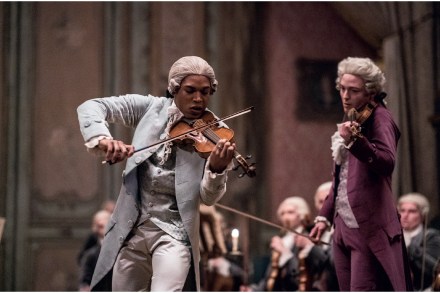
Chevalier is a biopic of Joseph Bologne, Chevalier de Saint-Georges, whom you’ve probably never heard of, as I hadn’t. He was an 18th-century French-African virtuoso violinist and composer who wowed everyone in his day – in 1779, John Adams, then the American ambassador to France, called him ‘the most accomplished Man in Europe’ – but was erased from history and is only lately being rediscovered. Fascinating, you would think, and he was fascinating. Even a cursory look at his Wikipedia entry is thrilling. But this is not a fascinating or thrilling film. It is handsomely mounted yet strangely bland and strikes too many false notes. I was going to say it’s as if Disney had made it but then remembered: this is Disney.

WNO sinks an unsinkable opera: The Magic Flute, at Birmingham Hippodrome, reviewed

As stage directions go, the The Magic Flute opens with a zinger. ‘Tamino enters from the right wearing a splendid Japanese hunting costume.’ That’s right, a Japanese hunting costume. What does that even look like? More to the point, what would a Viennese theatrical costume designer in 1791 have thought it looked like? Surviving evidence suggests that the answer was ‘nothing on Earth’, which is handy because it gives subsequent interpreters a huge amount of licence. Schikaneder’s rag-bag libretto has its quirks and non sequiturs, but it’s an astonishingly robust piece of theatre. I’ve seen The Magic Flute done as panto, as manga, as gothic fantasy and as 1970s British sci-fi. As long as a director preserves the essentials, it’s basically indestructible.

The history of music – at breakneck speed

From Ladybird’s The Story of Music (a dinky 50 pages, generously illustrated) to Richard Taruskin’s five-volume epic The Oxford History of Western Music, the history of classical music has been sliced and stretched in print to fit every possible length, format and agenda. Andrew Gant’s Five Straight Lines joins the cluster of works jostling and elbowing at the midpoint of these extremes. The Oxford-based academic (whose previous books on carols and hymns have introduced us to a genial, approachable narrator, with a welcome glint in his eye), shouts no provocative argument or USP from his cover, makes no novel claims for his survey. This is, quite simply, a narrative of music from the beginning to the now.

Reprehensible – but fun: Orpheus Chamber Orchestra’s Complete DG Recordings reviewed

 Grade: B It must have been an interesting day in the Orpheus Chamber Orchestra’s press office when Blair Tindall’s memoir Mozart in the Jungle hit the bookshops in 2005. ‘He sat in the desk chair, pushed aside the first oboe part of Rossini’s Italian Girl in Algiers and tapped a pile of cocaine on the glass’ runs a typical anecdote. Even in 2005, it wasn’t really what anyone expected to hear from a former member of Orpheus — a youthful, conductor-less New York outfit who used to pose for album covers dressed in spotless white.

In defence of the earworm

That strain again… it’s the morning after the concert and one tune is still there, playing in the head upon waking, running around and around on an unbreakable loop over breakfast. I’ve never liked the term ‘earworm’. It suggests an alien parasite, an aural violation, when in fact some part of the musical brain is clearly in love with this scrap of melody, and getting a microgram of a dopamine hit every time it presses ‘repeat’. It’s consensual, even pleasurable. Why fight it? There’s an Arthur C. Clarke story about a scientist obsessed by the finale of Sibelius’s Second Symphony.

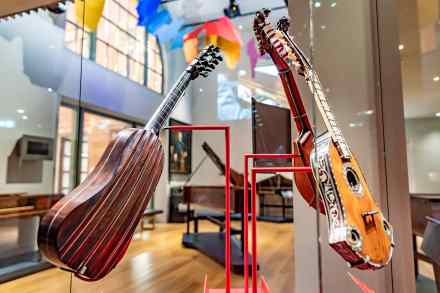
Small but perfectly formed: the Royal College of Music Museum reopening reviewed

Haydn is looking well — in fact, he’s positively glowing. The dignified pose; the modest, intelligent smile: it’s only when you squint closely at the portrait that Thomas Hardy painted in London in 1791 that you clock the full peachy-pink smoothness of his complexion. It’s curious, because Haydn suffered disfiguring smallpox as a child, and a contemporary waxwork bust in Vienna is cratered like a moon in a periwig. Hardy’s portrait is a promotional image, commissioned by the music publisher John Bland. This is the Georgian equivalent of a celebrity headshot: a photoshopped, endlessly-reproduceable selling tool, so potent that it’s still being used to shift recordings 230 years later. Well, of course it is.

Hit every auditory G-spot simultaneously: CBSO/Hough/Gardner concert reviewed

Rejoice: live music is back. Or at least, live music with a live audience, which, as Sir Simon Rattle admitted, addressing the masked and socially distanced crowd immediately before the LSO’s first full-scale public performance for 14 months, is kind of the whole point. Yes, he said, they’d streamed online concerts from the Barbican, but the silence of emptiness is a very different proposition from the silence of a hall containing 1,000 human beings. He’s right, of course. Those 14 months have tested to destruction the notion that digital platforms can offer the same sort of emotional nourishment. Once again, then — rejoice! And nobody mention the Indian variant.