Motoring

‘An Essex boy at heart’: VW Golf GTI reviewed

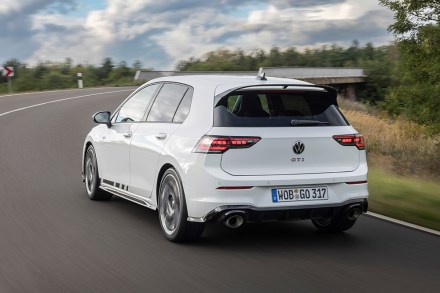
I have been waiting for the VW Golf GTI, because the boy – it would be a stretch to call him a man – I liked in 1991 had one. He used to drive me round Regent’s Park in his Golf GTI, and although he went to St Paul’s Boys School and was a religious Jew, I thought this made him seem dangerous. I knew nothing. Behind the ambivalent smile his secret was this: he really cared about maths. My sister has a Golf now. The Golf is the bestselling European car of all time. Globally, only the Toyota Corolla (compact) and the Ford F-Series (truck) beat it: 37 million Golfs have been sold since 1974, which is the equivalent of every single person in Poland owning one, including the babies. It’s 52, as I am: the defining car of Generation X’s good fortune and hope.

A BMW has no soul – but does that matter?

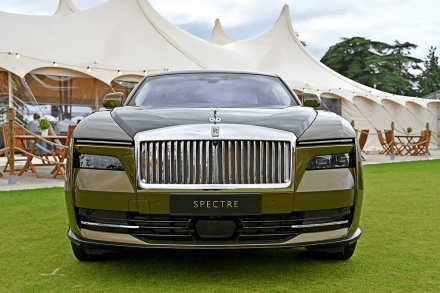
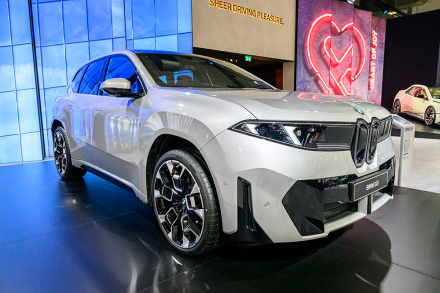
It’s the way of good cars that, on driving one, you begin to embody it: to become it. In a hot hatch I am young and lovely and never was a nerd. (I will get to the platonic ideal of the nerd’s car. I fear it is a Honda Jazz.) In a Rolls-Royce I am laconic unless I am driving, in which case I am a wreck. In an electric BMW (Bayerische Motoren Werke) iX3 I am functional, the woman I never was. I own my own company, though I don’t know what it does. I am not fat, I am not weird and I am ‘good at men’, whatever that means. You might laugh at BMW for its solemnity and self-possession – for its very Germanness – but your laughter is hollow. Britain, increasingly a country of cracked and self-destructive romantics, has no such functional marque and has never sought one.

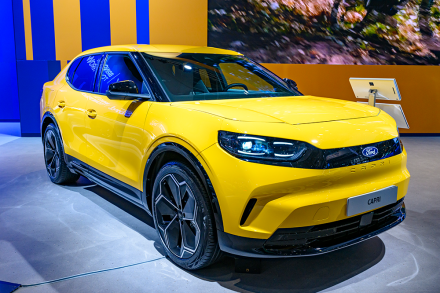
Has the Ford Capri gone woke?

The Ford Capri is a paradigm of self-deception, but cars are men’s mirrors, and they want to be deceived by them. Thanks to The Professionals (1977-83), in which Bodie and Doyle of Criminal Intelligence drove a silver Capri and a gold Capri, almost two million were sold. Even the police used them, which is absurd. They only had two doors. Even so, I’d like to see a villain stuffed into a fastback coupé, ideally through the window. I like the old Capri because there was something jaded and stubborn about it: a weary postwar British sex appeal. It was our version of the Ford Mustang, produced from 1969 to 1986.

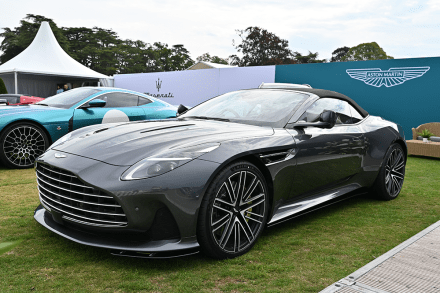
There is no car more beautiful than an Aston Martin

The oddities at the Penzance Rotary Club Classic Car & Bike Show included a golden thing that looked like the affair baby of an Alfa Romeo roadster and a Silver Ghost; a three-wheel Messerschmitt Cabin Scooter with the nerve to call itself a cabriolet and a picnic basket on the back, presumably for your body parts after it kills you. But the most beautiful car was the Aston Martin: a Vantage sports car. It is always an Aston Martin unless an understated Ferrari is lurking. Then it is still, probably, an Aston Martin. The time when a 1960 Alfa Romeo Giulietta was normal has gone, along with the optimism that made it The Vantage is as gorgeous as the new Aston Martin DB12 S, which I drove in France in May.

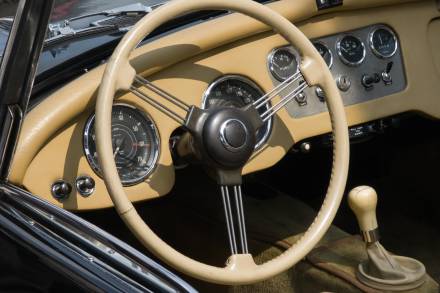
Why the death of the manual car matters

There was a time when any travel involved engaging in a delicate, tactile negotiation with the material world. To step into a motor car (or climb aboard a railway carriage or board a steamer) was not merely about changing your location but a chance to operate a complex mechanical instrument.   Car drivers listened to the rising baritone of the engine, felt the precise vibration of the engine revs and – with a smooth, practised movement – slotted the gearstick into place. It was a sensory dialogue – a minor act of humanity and engineering combined to delightfully punctuate any journey.

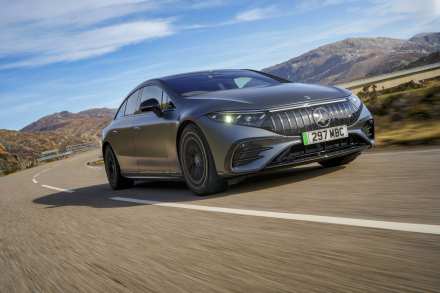
The electric Mercedes with a range to die for

As a pubescent teenager back in the late 1970s, I was delighted to once find a discarded copy of The Sun newspaper on a tube train, handily folded back to reveal page three. Having admired Miranda from Epping my eyes shifted to the report of a court case in which a retired brigadier had been stopped on the M1 motorway for driving his sporty Rover 3500S at a reckless 102 mph. His defence?

Why the characterful Ford Bronco is staging a comeback

The best part of a decade elapsed between Land Rover's unveiling of the 'DC100' concept at the 2011 Frankfurt Motor Show and the first 'New Defenders' hitting the road two years ago just as Covid struck – prompting suggestions that the beefy SUV had arrived 'just in time for Armageddon'. During the interim, thousands of column inches and hours of video were dedicated to predicting what the production version might look like, how it would perform and debating whether or not it could ever truly match the rough-and-ready utilitarian charm of the time-served original.

The death of old bangers

The old banger is a vanishing breed. And it's not because all drivers want new cars. On the contrary, not everyone wants to pay out monthly for a fast-depreciating asset. Many drivers would rather opt for a cheap, serviceable car in its dotage. Although I write about cars for a living, and shiny new ones sometimes cross my path, cars I’ve actually owned have mostly come from the bargain basement, including a venerable Toyota which lasted for three years and 50,000 miles that someone gave to me because they wanted it removed from their drive. I saved vast sums of money and had fun in the process. Today, such cars are virtually non-existent and demand for them has never been greater.

The affordable SUV that gets mistaken for a Bentley

Readers of a certain age might remember when some car marques were the butt of relentless derogatory jokes. Czech brand Skoda – which has since been brought up-market under VW ownership – was an especially popular victim (Q: 'What do you call a Skoda with a sunroof?' A. 'A skip..') as were Lada (Q. 'How do you avoid a speeding ticket?' A. 'Buy a Lada') and Malaysia's Proton (Q: 'How do you double the value of a Proton?' A. 'Just add petrol.'). But even makers of famously good, solid, reliable cars can be coy about their original brand names when they decide to up their game by trying to penetrate the luxury market – which is why Toyota created Lexus, Nissan invented Infiniti, Honda coined 'Acura' and, more than 100 years ago, Ford adopted the Lincoln nameplate.

In defence of road rage

A friend told me recently that the only time she and her husband get passionate these days is when they are yelling abuse at each other across the cup-holders of their Renault Hybrid. He complains that she drives like an anxious old lady while she's convinced he's an entitled prat behind the wheel. During every mangled gear change, every junction missed, every failed three-point turn each reminds the other of his or her imbecility. It's all displacement of course – these disproportionate attacks are never really about whether one of you forgot to indicate. Outside the confines of their hybrid, the couple in question live a life of quiet, seething resentment just like the rest of us.

The truth about electric cars

EVs have been easy to poke fun at over the years. Comedian Chris McCausland has a popular stand-up sketch about how Jaguar spent four years developing a space age noise for its electric i-Pace, only to silence it because people were looking skywards when they heard one coming towards them. And yet, despite their futuristic novelty, society has actually adjusted remarkably quickly to the advent of electric cars; they are fast becoming commonplace on British roads. Last year the Government’s EHVS home charging point grant scheme, which ends on 21 March, helped fund almost 61,480 charging units, and last November just under 19 per cent of Britain’s new car market was taken by electric models. These vehicles are no longer niche.

The Audi e-tron GT: stylish enough to tempt Prince William

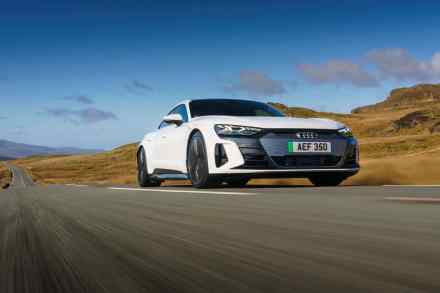
2030 is the deadline: the end of petrol cars in Britain. Because nothing lasts forever. 'This may be the last petrol car that I design,' said a British marque designer, sketching lines on a napkin wistfully. I threw the napkin in a trunk in the attic for memorial. I have become addicted to petrol cars in these last years because they are so conventionally masculine: driving them feels like theft, and it is mind-altering. If you don’t agree, drive an Aston Martin DB11 round a small bend. It will change you. I could write about the unspoken, unconscious joy of polluting – if you trash a planet it won’t forget you – but, like me, you are probably here for the car. So, electric. So far, I have only driven a Tesla model X.

Most-read 2021: Why I regret buying an electric car

We're closing the year by republishing our ten most popular articles in 2021. Here's number two: Jonathan Miller writing in April about the woes of owning a battery-powered vehicle.  I bought an electric car and wish I hadn’t. It seemed a good idea at the time, albeit a costly way of proclaiming my environmental virtuousness. The car cost €44,000, less a €6,000 subsidy courtesy of French taxpayers, the overwhelming majority poorer than me. Fellow villagers are driving those 20-year-old diesel vans that look like garden sheds on wheels. I order the car in May 2018. It’s promised in April 2019. ‘No later,’ promises the salesman at the local Hyundai dealer. April comes and goes. No car. I phone the dealership. No explanation.

The Mazda MX–5: proof that sports cars can be affordable

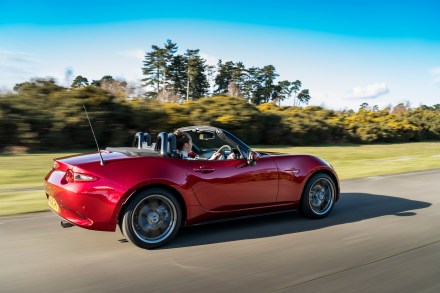
The British have a long-standing reputation for coming up with great ideas, executing them quite well – and then leaving others to really run with them. Such is the history behind what is officially the best-selling two-seat convertible sports car of all time, the evergreen MX-5 made by Japanese marque Mazda. The story goes that the MX-5 was born out of a conversation held 45 years ago between Mazda's former head of research and development Gai Arai and US automotive journalist Bob Hall. The latter had been bemoaning the impending demise of the simple, open-top sports car after it had been threatened with extinction during the late '60s due to US safety legislation on sales of conventional convertibles.

Which countries have the highest energy bills?

Seeds of change The Chelsea Flower Show opened in autumn for the first time, delayed thanks to the pandemic. The show has been cancelled before due to the world wars — during the second world war the site was used for an anti-aircraft gun emplacement. But it wasn’t always held in Chelsea. It began as the Royal Horticultural Society show in Chiswick, held from 1827 onwards. It moved to Kensington Gardens in 1861 when rival flower shows were attracting visitors away. In 1888 it moved to Temple Gardens, between Fleet Street and the Thames. It was first held in Chelsea — in a single marquee — in 1913. Highly charged Energy prices spiked. Which countries have the most expensive electricity for domestic customers (US cents per kWh)?

What it’s like to drive the new Mini Electric

Most electric cars no longer look peculiar, and the battery powered Mini is a good example of this. Go back a decade and electric cars were either tiny city vehicles with crude, shed like bodies or bigger and a bit weird. The original Nissan Leaf had the contours of a giant child’s shoe. The current, less outre one looks like a Micra after a heavy lunch. Before Tesla made electric cars desirable, motor manufacturers didn’t see them as commercial propositions, and paid lip service with prototypes that were about as appealing as a thorn twig scourge. Now the legislative and commercial landscape has changed, and the rush is on to turn electric cars into every day consumer durables.

In praise of the Ford Escort

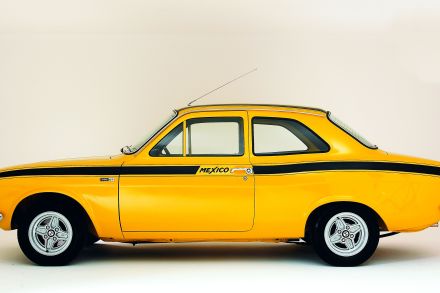
It’s safe to say that the Ford Escort does not enjoy a straightforward place in the British national consciousness. And it’s not a position, furthermore, that is simplified in any way by being reminded that the Prince of Wales actually bought one of them for Lady Diana Spencer as an engagement present in 1981. I challenge you to think of a less romantic engagement gift – albeit the car did have a frog mascot on the bonnet – for a bride-to-be, especially one due to be joined in holy matrimony to the heir to the throne. (God alone knows what Meghan Markle would have said if Prince Harry had turned up with a Vauxhall Astra to celebrate their engagement.

The curious appeal of old Land Rovers

When the Duke and Duchess of Cambridge arrived at Holyrood House to watch a drive-in screening of the Disney film Cruella with NHS staff last month, the Daily Telegraph reported that the couple 'paid tribute to the late Duke of Edinburgh' by travelling in one of his 'beloved' Land Rovers - which, as any Landy fan will tell you, was a long wheelbase station wagon in Bronze Green with glass 'alpine lights' in the roof and, unusually, a colour-co-ordinated hard top and bumper.Judging by the royal couple's un-dishevelled appearance - he in a dark two-piece, white shirt, no tie; she in a belted, ankle-length coat of muted blue tartan with military style buttons - they hadn't travelled far and nor, I imagine, would they have wanted to.

Can the Porsche Taycan convince me to go electric?

How far the world of electric vehicles has come in just a decade. Back in 2011, the most prevalent 'EV' to be found on the streets of London was probably a G-Wiz, the Indian-built microcar that was so light, small and slow that it was officially deemed not to be a car at all, but 'a heavy quadricycle.' But the 2012 launch of Tesla's Model S proved that battery power wasn't just for speed-fearing tree-huggers whose idea of excitement was to potter to the shops at 15mph in what was widely regarded as one of the least attractive automobiles ever made. No - electric cars could be fast, fun, glamorous and covetable.

What the Formula E ‘catastrophe’ teaches us about electric cars

I didn’t make it down to Valencia, Spain, for the weekend Formula E electric car grand prix. Long trips are more or less out of the question now in my Kona electric car, since Hyundai crippled the range of the battery pack to stop the car from bursting into flames. Not that I missed much. On the first day five teams were disqualified for having consumed too much energy, three cars came to a stop on the track, and others limped to the finish as best they could. Formula E superstar Jean-Éric Vergne completed the last lap at an average speed of just under 20 mph. Slower than my horse. On Sunday, the Grande Finale, most of those who had finally qualified ran out of battery charge without finishing.