Motoring

The curious appeal of old Land Rovers

When the Duke and Duchess of Cambridge arrived at Holyrood House to watch a drive-in screening of the Disney film Cruella with NHS staff last month, the Daily Telegraph reported that the couple 'paid tribute to the late Duke of Edinburgh' by travelling in one of his 'beloved' Land Rovers - which, as any Landy fan will tell you, was a long wheelbase station wagon in Bronze Green with glass 'alpine lights' in the roof and, unusually, a colour-co-ordinated hard top and bumper.Judging by the royal couple's un-dishevelled appearance - he in a dark two-piece, white shirt, no tie; she in a belted, ankle-length coat of muted blue tartan with military style buttons - they hadn't travelled far and nor, I imagine, would they have wanted to.

Can the Porsche Taycan convince me to go electric?

How far the world of electric vehicles has come in just a decade. Back in 2011, the most prevalent 'EV' to be found on the streets of London was probably a G-Wiz, the Indian-built microcar that was so light, small and slow that it was officially deemed not to be a car at all, but 'a heavy quadricycle.' But the 2012 launch of Tesla's Model S proved that battery power wasn't just for speed-fearing tree-huggers whose idea of excitement was to potter to the shops at 15mph in what was widely regarded as one of the least attractive automobiles ever made. No - electric cars could be fast, fun, glamorous and covetable.

What the Formula E ‘catastrophe’ teaches us about electric cars

I didn’t make it down to Valencia, Spain, for the weekend Formula E electric car grand prix. Long trips are more or less out of the question now in my Kona electric car, since Hyundai crippled the range of the battery pack to stop the car from bursting into flames. Not that I missed much. On the first day five teams were disqualified for having consumed too much energy, three cars came to a stop on the track, and others limped to the finish as best they could. Formula E superstar Jean-Éric Vergne completed the last lap at an average speed of just under 20 mph. Slower than my horse. On Sunday, the Grande Finale, most of those who had finally qualified ran out of battery charge without finishing.

The strange allure of off-road vehicles

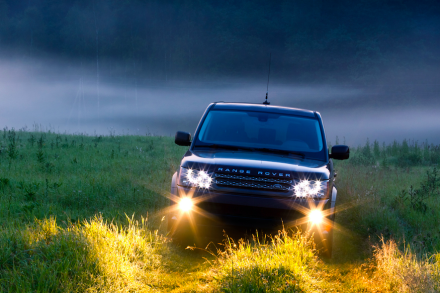
The Duke of Edinburgh was carried to his tomb in a modified Land Rover, and this is apt. He walked away from a highspeed collision in Norfolk a few years ago because – and probably only because - he was driving a Land Rover Freelander. The Land Rover, which was intially the off-road Rover, is the original British SUV. It is beloved by farmers, who need them, and dukes, who like them because they are both grand and useful, a metaphor in metal – at least from their perspective - for feudalism itself. Few cars are as evocative of an ancient chariot, or as versatile: motorways do not daunt them, and nor do potholes.

Why I regret buying an electric car

I bought an electric car and wish I hadn’t. It seemed a good idea at the time, albeit a costly way of proclaiming my environmental virtuousness. The car cost €44,000, less a €6,000 subsidy courtesy of French taxpayers, the overwhelming majority poorer than me. Fellow villagers are driving those 20-year-old diesel vans that look like garden sheds on wheels. I order the car in May 2018. It’s promised in April 2019. ‘No later,’ promises the salesman at the local Hyundai dealer. April comes and goes. No car. I phone the dealership. No explanation. The car finally arrives two months late, with no effort by Hyundai to apologise. But I Iove it. It’s quiet, quick and with the back seats down, practical with plenty of room for the dogs.

The enduring appeal of the Vespa

On April 23, 1946, Enrico Piaggio filed a patent with the Ministry of Industry and Commerce for 'a motorcycle of a rational complexity of organs and elements combined with a frame with mudguards and a casing covering the whole mechanical part'.In less formal terms, the machine in question was called a Vespa - and this year the marque celebrates an impressive 75 years of unbroken production with close to 20 million having been sold around the world across a range of at least 50 variations on the theme.All can be traced back to the day Piaggio came up with the idea of saving his father Rinaldo's bombed-out aero factories from demolition by converting them into production lines which would churn-out cheap transport for the masses.

Could a classic car save you money?

It's often said that classic cars are one of the best investments around, with some models outstripping the profits to be had in property, art and even gold. The problem is, it's not really true. Yes, if you were smart enough to buy, for example, a McLaren F1 for £2m a decade ago then you could cash it in today for a tidy profit of at least £8m, and if you happened to snap-up a Ferrari 250GTO in the late 1990s for what might then seemed like an astronomical $7m, it could now be worth something approaching seven times as much.Other blue chip collectable classics have also performed exceptionally well, such as the Porsche 911 2.

The cars of the future

From our US edition

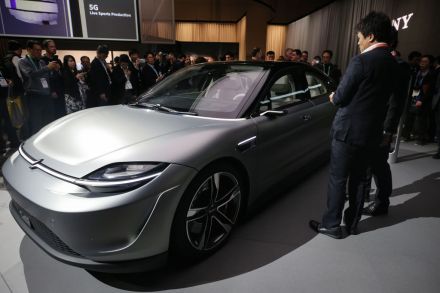
A revolution is under way that will fundamentally change the way humans relate to their cars, so that the vehicle more closely resembles the living room with all the stress of driving removed and all the possibilities of distracting entertainment.Cars will soon become an extension of movie theater, concert venue and 3D videogame as the full potential of 5G communication is unleashed, along with a business imperative of advertisers wishing to monetize the opportunity of drivers being a captive audience for hours at a time.A taste of the future was glimpsed at the Consumer Electronics Show in Las Vegas earlier this month.

cars