Middle east

Will Turkey intervene in Iran?

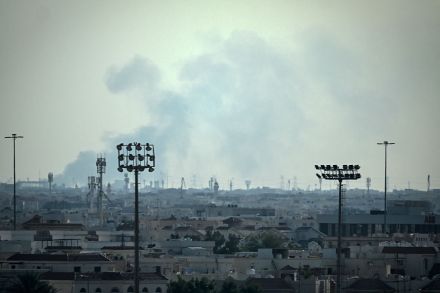
With the exception so far of a single missile intercepted over Turkish airspace and a strike on an Azeri-controlled territory near the Iranian border, Tehran has so far declined to mess with the Turks, and for good reasons. Turkey is a member of NATO and attacking it would trigger Article 5 mutual defense measures. And it is NATO’s leading member, the United States, which is attacking Iran in the first place. A more serious restraining factor is Turkey’s own large and highly effective army – and its proven willingness to use it against weakened neighbors. Over recent decades Ankara hasn’t hesitated to send troops and launch bombing raids into both Syria and Iraq, occupying border regions when it decides that Turkey’s internal security is threatened.

Is this Starmer’s finest hour?

From our UK edition

A friend met Mary Wilson on the Isles of Scilly, where she and her husband, Harold, had a home. She confided in him that Harold, now in the grip of senile dementia, was slipping away from her; and she felt the lonelier because in the eyes of the world his achievements as prime minister were slipping away as well. My friend rehearsed with her the list: the Open University, etc. Then he added this: there is a kind of achievement in high office which by its very nature is unlikely to burn brightly in the world’s imagination after a leader has gone, but is no less luminous for being forgotten. I mean (he said) declining to do something foolish. On behalf of our country (he said), your husband politely declined Washington’s invitation to join the Vietnam war.

Iranian attacks aren’t worrying Washington

Many commentators are already claiming that the war with Iran is “spiraling out of control.” I try not to be uncharitable: I am a Catholic, after all, and the Church tells me it is a sin. But if I were tempted, I should say that the only thing spiraling out of control is cliché. You could argue that drone attacks are a sign that Iran’s ballistic and cruise missiles aren’t actually proving that effective Iran said it would hit out wildly if it were attacked. It also made clear that direct attacks on the leadership of the Islamic Republic would be treated as an existential threat.

Is this Trump’s Sarajevo moment?

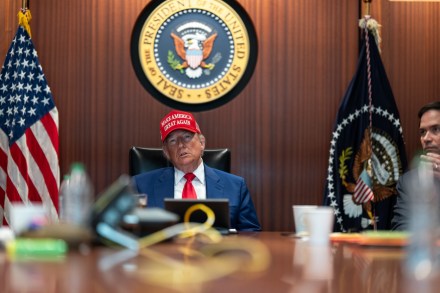
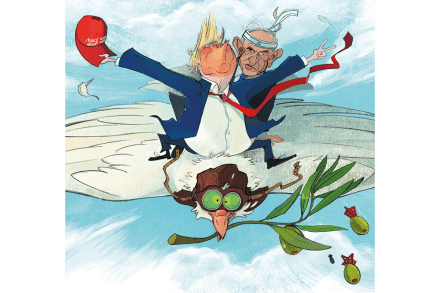
Here we go again. Switch out Saddam Hussein for the Ayatollah Khamenei and Ahmed Chalabi for Reza Pahlavi and you have a fresh war for regime change in the Middle East, this time with Israel as America’s sidekick. With Operation Epic Fury, the American and Israeli bombing of Iran and push for regime change, the self-proclaimed “President of Peace” runs the risk not only of triggering wider upheaval in the Middle East, but also globally. Is this a new Sarajevo moment? With Trump’s own generals having warned him that attacking Iran could be a debacle, he may have torched his own presidency Unlike George W. Bush in 2003, who worked to bolster domestic and international support for attacking Iraq, Donald Trump has disdained the slightest effort to justify his war publicly.

Will Trump ‘totally obliterate’ Iran’s nuclear program – again?

Donald Trump spent much of the second half of last year boasting about the total and utter success of his military strikes on Iran. “As you know,” he said in August, “we took out the nuclear capability of Iran, and to use the term that people try to dispute without any knowledge, it was obliterated.” Iran’s nuclear program, he assured the world, had been set back by “decades.” Yet yesterday, just six months on, there he was again – meeting Israel’s Benjamin Netanyahu once more to discuss the urgent need to prevent Iran from developing a nuclear weapon.

The radical networks that hijacked the 1970s

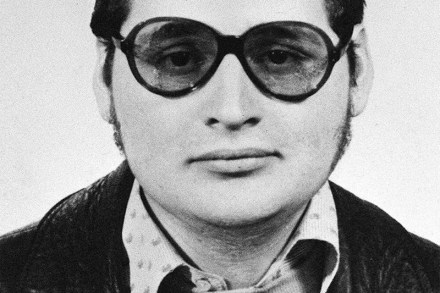
Airplane hijacking, like the mode of transport itself, became common in the 1960s. A practice largely confined to the United States, it was invariably a means for ordinary criminals to extort ransom money or flee to Cuba. In 1968, the hijacking of an El Al flight by the left-wing Popular Front for the Liberation of Palestine revealed the political utility of the act: in exchange for the safe return of its plane and passengers, Israel released 16 Arabs from its prisons. Encouraged by this outcome, the PFLP launched a spate of similar operations. One such mission, the hijacking of a TWA flight in 1969, revealed that prisoner exchanges and ransoms weren’t the only upside of this new tactic.

Iran’s cheerleaders are on borrowed time

From our UK edition

Predictions ageing poorly is an occupational hazard for journalists and commentators. But few have gone as sour as those made by Roger Cooper in this magazine, in February 1979, days after the last Shah of Iran had fled. In a piece titled ‘Is Khomeini the leader for Iran?’, Cooper speculated that ‘the prospect… of an Iranian Islamic republic… must surely be more alluring to all but the most stubborn defenders of an ancient regime’. The Ayatollah, he suggested, offered Iranians ‘the chance to resume their true national and cultural identity’. No suggestion was made of imminent death squads, mass imprisonments or looming theocratic repression and economic hardship.  Cooper can be forgiven for failing to realise just how miserable the Islamic Republic would be.

Iran’s useful idiots: British complicity in Tehran’s terror

From our UK edition

It is still unclear what will happen next in Iran. I fervently hope the current protests will cause the tyrants of Tehran to fall. It would be ideal if they were replaced by an order that allowed the population of 90 million to choose who governs them and build a country that reflects joy, hope and modernity rather than Ali Khamenei’s brutal Islamist fever dream. I also know how unlikely that is. Revolutions tend to produce disorder and repression, not order and freedom. After the failure of the Constitutional Revolution in 1911, there was a decade of chaos, fragmentation and insurgency in Iran until Reza Khan seized power and founded the Pahlavi dynasty.

Unrest is spreading across Iran

"If they shut down the internet, you know it’s serious," said a well-informed observer of Iran to me yesterday morning. The internet blackout came yesterday afternoon – along with over a million Iranians marching in streets across the country. Strikes are continuing in bazaars and the cries for the end of the Islamic Republic are becoming more brazen. A video was sent to me before the blackout from Iran’s upscale northern suburbs, home to the sons and daughters of the regime elites, in which the cries of "death to the dictator" could be heard loud and clear. "We are excited," was the caption to the video. And this morning there came unconfirmed reports that the National Bank of Iran had implemented a ban on people withdrawing cash, a potentially huge moment in events.

Will Israel bring back the death penalty for terrorists?

For years, there was a broad consensus in Israel that there was no benefit to reintroducing the death penalty. But now, Prime Minister Benjamin Netanyahu’s government is reportedly considering supporting a bill which would bring back capital punishment for convicted terrorists. The bill, which has passed its first reading in the Knesset, would introduce the death penalty for those who murder Jews – specifically, Palestinian terrorists. It would not apply to Jews who commit acts of terrorism and murder Palestinians. And it would not apply if Israeli Arabs, who are full citizens, are murdered. The bill is being promoted by Itamar Ben-Gvir, the minister of national security, who in 2007 was convicted of incitement to racism for chanting “Death to Arabs.

Why Trump and Israel differ on Turkey’s involvement in Gaza

As the Gaza ceasefire struggles into its second month, a significant difference between the position of Israel and that of its chief ally, the United States, on the way forward is emerging. This difference reflects broader gaps in perception in Jerusalem and Washington regarding the nature and motivations of the current forces engaged in the Middle East. The subject of that difference is Turkey.  The Turks have expressed a desire to play a role in the “international stabilization force” (ISF), which, according to President Donald Trump’s 20-point plan, is supposed to take over ground security control of Gaza from the IDF (and Hamas) in the framework of the plan’s implementation.

turkey gaza

The jihadist I knew: my life as al-Sharaa’s prisoner

As Washington rolls out the red carpet today for the former al-Qaeda chieftain and now Syrian president, Ahmed al-Sharaa, Syria’s minorities continue to live in terror. An army of destruction, half Mad Max, half Lollapalooza is rolling through the desert somewhere south of the country’s capital, Damascus. Who has ordered these militants into action? No one knows. What do they want? It isn’t clear. But, as a former prisoner of al-Sharaa’s band of jihadists, I can’t say I’m surprised by what is unfolding in Syria. Whatever else might be said about the old regime of Bashar al-Assad, no one was ever in doubt as to who was in charge.

The Israel-Lebanon ceasefire is in danger of shattering

It’s been almost a year since Israel and Hezbollah, the Lebanese militia that arguably held more power in Lebanon than the government itself, signed a ceasefire to end a ferocious two-month long war. The deal couldn’t have come at a better time; thousands of Israeli air and artillery strikes had pulverized southern Lebanon, Hezbollah’s traditional base of operations, leading to a displacement crisis and killing close to 4,000 Lebanese. Whole swaths of northern Israel had been vacated due to Hezbollah missile attacks, forcing the Israeli government of Prime Minister Benjamin Netanyahu to spend money on tens of thousands of civilians bunking in hotel rooms. But the agreement is wearing thin. The ceasefire is really a ceasefire in name only. Will it hold?

lebanon

How Israel won the war – and lost the PR battle

Regardless of the ultimate outcome of the Gaza peace deal brokered by Donald Trump, the past two years have seen Israel achieve an unprecedented litany of military accomplishments in the Middle East. The level of damage done to Hamas, Hezbollah and the Houthis is difficult to comprehend. The end of the Assad regime and, with American support, the demolition of the Iranian nuclear program – setting it back years at the least – were steps that many once thought impossible. Israel has emerged from the post-October 7 period unquestionably stronger in every way except one: its support around the globe, particularly among the youngest voices in the West.

Israel

You want a peace of me?

President Trump prevented World War Three yesterday, or so he claimed multiple times. “No one wants World War Three,” he said. Fact check: true. Trump and many of the world’s finest leaders gathered behind a large, tacky but also touching sign that read “Peace 2025.” Italy’s Giorgia Meloni also attended the summit. Trump called her “beautiful,” saying that in the US calling a woman beautiful could mean the “end of your political career.” Fact check: true. “I’ll take my chances,” Trump said. Cockburn enjoyed the day’s festivities, which featured enough comic moments to fill a season of The Office.

peace

Give the Nobel to Jared

On a season eight episode of The Simpsons, newscaster Kent Brockman interviews a man who’s woken up from a 23-year-long coma, and lets him know that Sonny Bono is now a Congressman and Cher has won an Oscar. The man dies soon after. If someone were to wake up from a coma today to find out that Donald Trump, who 23 years ago was hosting The Apprentice, is now the leading candidate for the Nobel Peace Prize, it would have a similar result.  But who else deserves the award? If you can give Peace Prizes to Al Gore and Barack Obama for basically being Cool Liberal Guys Who Aren’t Dick Cheney, you can give one to Donald Trump. Look at who’s nominated him: Benjamin Netanyahu, the government of Pakistan, The Israeli Hostages Family Forum.

Kushner

Whisper it quietly, peace in the Middle East?

From our UK edition

15 min listen

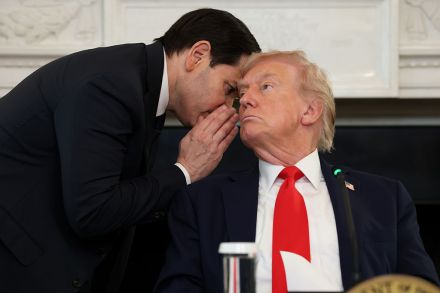
Donald Trump says Israel and Hamas have agreed to the first phase of his Gaza peace plan. During an extraordinary round table on the Antifa organisation last night, the US President was interrupted by Marco Rubio and given a hand-written message. He told those assembled at the White House: ‘I was just given a note by the Secretary of State saying that we’re very close to a deal in the Middle East, and they’ll need me pretty quickly.’ Details of the deal, including the finalised list of prisoners Hamas wants freed as part of an exchange, remain unclear. But the first part of the deal could be set in motion as soon as today once the Israeli government approves the plan at around 2 p.m. local time. Is he heading for a Nobel Peace Prize?

Has Trump won peace – or a pause? 

Donald Trump is on a roll. He not only wrangled Israeli prime minister Benjamin Netanyahu into submission, but also the terrorist organization Hamas, which has apparently agreed to release all remaining hostages. The war in Gaza, which has claimed the lives of at least 67,000 Palestinians, looks to be coming to an end. On Thursday evening, Trump took a victory lap as Israel and Hamas, who have been negotiating in Egypt, assented to the first phase of his 20-point peace plan. “I am very proud to announce that Israel and Hamas have both signed off on the first Phase of our Peace Plan.

Israel and Iran come full circle

On September 28, the UN again imposed wide-ranging economic sanctions on Iran. Earlier in the summer, European powers had notified the UN Security Council of their intention to trigger the snapback mechanism within the original nuclear deal, the JCPOA, citing Iranian non-compliance with the terms of the original deal – specifically, the eye-watering percentages to which Iran is enriching uranium. And without a new resolution being agreed upon, the same sanctions that crippled the Iranian economy from 2013 to 2015, effectively dragging Tehran to the table in the first place, will have a devastating effect on ordinary Iranians who will see the value of their currency plummet and the price of daily goods skyrocket.

Iran
October 7

Has Israel won?

The deliberate slaughter of Israeli Jews on October 7, 2023, was the most consequential event in the modern Middle East. It sent powerful reverberations across the region and well beyond it to the United States, the UK, Europe and Russia. Those tremors, like the war begun by the massacre, continue to this day. On that fateful day, Hamas terrorists left Gaza, crossed into Israel in a carefully-planned attack, designed to kill as many Jews as possible and take others captive for negotiating leverage. The terrorists attacked young, unarmed concert-goers at an Israeli music festival and the residents of a nearby town. The attack killed 1,195 innocents. Approximately 250 more were taken hostage, dragged back to Gaza and held for ransom by their kidnappers.