Margaret thatcher

Arresting the West’s crisis of confidence

What’s the most important geo-political event of this century? Most people would say 9/11. The Foreign Secretary believes that it is the Arab Spring. But in The Times today (£), Emma Duncan makes a persuasive case for it being the collapse of Lehman Brothers. Duncan argues that Lehman Brothers’ fall has three claims to be an epoch-making event. The first is its contribution to the financial crisis and subsequent economic stagnation. The second is the way that it has catalysed China’s economic rise vis-à-vis the US, with China now predicted to become the world’s largest economy within this decade.

Inflation rises yet again

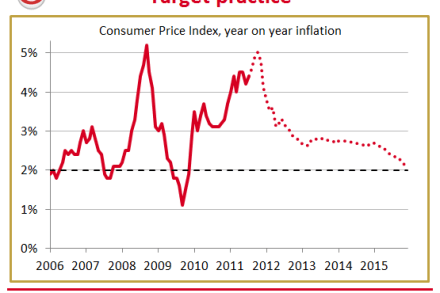
"Inflation destroys nations and societies as surely as invading nations do. Inflation is the parent of unemployment. It is the unseen robber of those who have saved. No policy which puts at risk the defeat of inflation - however great the short-term attraction - can be justified". That was Margaret Thatcher, speaking in 1980 when inflation was much higher but British politicians actually cared about it. You won't even hear the Governor of the Bank of England denounce today's figures: CPI at 4.4 per cent and the traditional measure of inflation, RPI, at 5.0 per cent. It is seen as just another statistic. The government has also chosen to announce that rail fares will be rising by 8 per cent. George Osborne is in charge of getting inflation right.

Cameron lands Supercop as police acrimony mounts

Internationally renowned policeman Bill Bratton has agreed to advise the government on how to defeat gang culture. Bratton’s role is not official, but he will arrive for duty in the autumn nonetheless. The former LA police chief has already offered a diagnosis of Britain’s problems. In an interview with the Telegraph, he says that hoodlums have been “emboldened” by timid policing and lenient sentencing. Quite what this means for Ken Clarke’s justice policy, supported by the Liberal Democrats, remains to be seen. But the indications are that the government will bolster its law and order policies. Doubtless a wry smile will have broken across the face of Andy Coulson, who warned that it would be so from the outset.

Breaking strikes

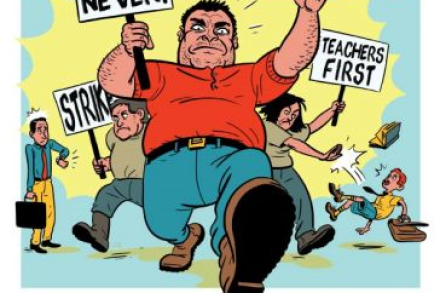
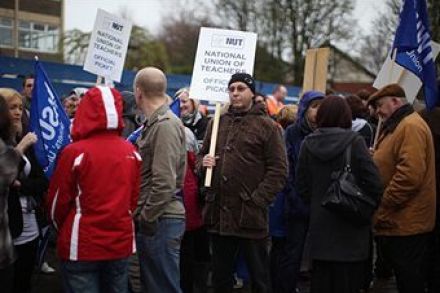
Shortly before Michael Gove organised a strike for journalists in Dundee, I crossed a school picket line with my mum, a teacher at my local school (Nairn Academy). She was a member of a teaching union, the PAT, that didn't believe in strikes, so when the school closed the two of us went in. It was a perfectly friendly affair: my teachers (and her colleagues) were at the gate, with no one else around. One of her colleagues handed her a leaflet and we went on inside. We never discussed politics at home, and I still have no idea what my mum thought about Thatcher (it was 1985). But then, she and thousands of teachers like her took the basic view that kids should not be dragged into disputes between adults.

Bring on the strikes

An old boss of mine once said to me: when you start a new assignment, seek out a fight — and win it. The same advice should be given to incoming Prime Ministers. U-turns, as Mrs Thatcher knew, just create demand for more U-turns. If the government is willing to revise its NHS plans, then why not reopen the Defence Review, or alter the pledge to spend 0.7 of our national income on overseas aid (or at least abandon the questionable idea of legislating for it)? But seeking out and winning battles, while avoiding too many retreats, is not enough. To be great, a Prime Minister needs good enemies. Mrs Thatcher had great enemies in Michael Foot and Neil Kinnock. Tony Blair did too.

Thatcher snubs Palin?

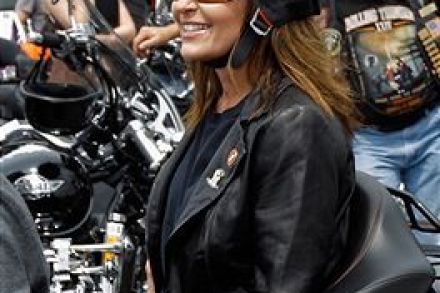
Sarah Palin will be in town soon and she hopes to meet Mrs Thatcher. She told the Sunday Times: “I am going to Sudan in July and hope to stop in England on the way. I am just hoping Mrs Thatcher is well enough to see me as I so admire her.” However, it seems that the admiration is not mutual. The Guardian’s Wintour and Watt blog reports an old ally of the Lady’s saying: “Lady Thatcher will not be seeing Sarah Palin. That would be belittling for Margaret. Sarah Palin is nuts. “Margaret is focusing on Ronald Reagan and will attend the unveiling of the statue (in Grosvenor Square). That is her level.

From the archives: Nick Clegg and Margaret Thatcher

Here's a game of Spot the Difference for you. Compare Nick Clegg's comments today — "…there are some very strong memories of what life was like under Thatcherism in the 1980s, and somehow a fear that that's what we're returning to…" — with the latest shot from The Spectator archives: Can Nick Clegg sing the blues? Fraser Nelson, The Spectator, 13 March 2010 Nick Clegg’s office already has a Downing Street feel to it. Since becoming leader of the Liberal Democrats, he has had it redecorated so that portraits of old party leaders hang on the staircase up to his room, as portraits of former prime minsters do in No. 10. It starts plausibly enough, with portraits of Palmerston, Gladstone and Asquith.

Cameron and Clegg pay tribute to their elders

As you've no doubt deduced from the cover image on the left-hand side of this page, the latest Spectator is out today — and it's a soaraway double issue for Easter. By way of peddling it to CoffeeHousers (buy it here, etc.), I thought I'd mention one article among many. It's a celebratory list of some of the country's "most inspiring and influential over-80s," and it includes tributes to them from some rather notable under-80-year-olds. So we have Matt Ridley on David Attenborough, Alex Salmond on Sean Connery, Ian Rankin on P.D James, and plenty more besides. Anyway, there are two entries that CoffeeHousers might care to see in particular, so I've pasted them below: David Cameron on Margaret Thatcher, and Nick Clegg on Shirley Williams.

Lawson: don’t do it George

Lord Lawson has given George Osborne’s Budget an A-minus. Writing in today’s Times (£), the former chancellor said that his successor ‘got the big questions right’ by sticking to deficit reduction and assisting hard-pressed taxpayers where he could. The only blemish was the carbon price floor for the energy sector, which Lawson describes as ‘nothing less than an anti-growth strategy’.  Also, Lawson warns Osborne against uniting income tax and national insurance. Unsurprisingly, Mrs Thatcher’s great reforming chancellor looked into this measure and is convinced that it is a non-starter. ‘This superficially attractive reform, which is by no means a new idea, was known in the Treasury in my time as NICIT.

The Limits of British Influence

To be fair to Gary Gibbon, he's not the only member of the lobby to have lost the plot when it comes to David Cameron, Libya and Washington. Ben Brogan has a sadly-fatuous piece today asking "Does Anyone in Washington Listen to David Cameron?" He writes: Robert Gates was far from flattering when he dismissed the PM’s initial no-fly suggestion as ‘loose talk’. The Coalition made a virtue of putting the US-UK relationship on a more low-key footing. There was to be none of the cosyness of Blair-Bush or the neediness of Brown-Obama. But Britain’s post-war strategic interest relied in part on its position as the one ally with the clout to influence the White House. At some point Mr Cameron will have to explain if that has changed.

Theresa May’s unenviable challenge

Many political careers have met a torturous end in the Home Office. And this morning, Theresa May began her struggle. She is taking on the "last great unreformed public service" and the opposition is formidable; so much so that the official opposition barely get a look in. The Peelers are marching on Downing Street. The Police Federation has declared itself ‘fed up’ with cuts – a perfunctory warning to the government. Vice Chairman Simon Reed indicated that the Federation feels the government is abrogating its duty of care to those who serve, a dextrous line forged by those opposed to personnel cuts to the armed forces.

Cuddly Ken comes out snarling, and sneering

Another Saturday, another interview with Ken Clarke. This time, the bruised bruiser has been talking to the FT and the remarkable thing is that he has managed to say nothing. Not a sausage. Colleagues were not insulted, Middle England escaped unscathed and the European Court of Human Rights wasn’t even mentioned.  But Clarke conveys his determination to fight. He defends his prison reforms and community sentences, to which the right has now applied the grave term ‘misconceived’. Clarke retorts: ‘We are trying to take 23 per cent out of the budget. I don’t recall any government that’s ever tried to make any spending reductions on law and order – let alone 23 per cent.

Miliband’s compliment to Thatcher

Ed Miliband’s speech today contained an interesting compliment to Margaret Thatcher. He said that the challenge for Labour now was to ‘change the common sense of the age’ as the Tories had done in the 1970s. Miliband’s argument is that Labour need to articulate an entirely new political economy. As he put it,’ we can’t build economic efficiency or social justice simply in the way we have tried before.’ What I find interesting about Miliband is that he trying to move the centre ground from opposition, something than no one has done successfully since Thatcher. Both Blair and Cameron moved towards it in opposition and only tried to shift it in government.

Leaked embassy cable: what the Americans thought of Thatcher

Forget the children of Thatcher, here's what the Americans were saying about the Iron Lady herself when she became Tory party leader. The source is a confidential cable from the American Embassy in London to the US State Department, dated 16 February 1975, and referenced in Claire Berlinski's book There is No Alternative: Subject: Margaret Thatcher: Some First Impressions 1. We understand Department is providing Secretary with biographic data on Margaret Thatcher prior to his meeting with her February 18, Here are our initial impressions of Britain's newest political star. 2. Margaret Thatcher has blazed into national prominence almost literally from out of nowhere.

Nothing Miliband says can rain on Mr Confident’s parade

Back from Zurich, where he’s been helping FIFA determine the winner of the world’s greatest bribery festival, Cameron was in hearty form at PMQs today. He faced Ed Miliband who looks increasingly like the life and soul of the funeral. His party is riding high in the polls – but only when he’s away. As soon as he pops his head back around the door a groan of misery goes up and his rating collapses. Earlier this week the OBR gave an upbeat assessment of the economy so Ed sent his bad-news beavers to sift through it for signs of toxicity. They couldn’t find much. Jobless totals are to rise. But only a bit. The economy will grow reluctantly. But not that reluctantly. We’re faring worse than some of our rivals, and better than others.

Flight’s loose tongue

Has Howard Flight just done a Keith Joseph? The latter’s run for Tory leader ended when he made a speech about poor people breeding.  As David said earlier, plain speaking can have its problems. But Flight’s danger is in being mistranslated. He sought to make a simple point: that many working families can't afford to expand their families, while the state provides a substantial cash incentive for those on benefits to do so. But his use of the word “breeding” sounds like he’s into eugenics, and the language – talking about the poor – sounds dodgier still. Given his struggle with foot-in-mouth disease, it’s surprising that Cameron ennobled him.  But still, his quote is a far cry from what Joseph said in Edgbaston.

A royal wedding bounce?

Slap all kinds of health warnings on this, but – in view of speculation that the Wills and Kate nuptials might work in the coalition's favour – I thought CoffeeHousers might like to see what happened to the the Tory government's poll rating in 1981, around when Prince Charles married Diana. So here's a graph I've put together from Ipsos MORI's figures. The dotted line represents the date of the wedding: PoliticsHome suggests that the "royal wedding worked wonders for Thatcher" – but, on the basis of the above, I'm not so sure. It's worth nothing, though, that the Tories surged ahead of Labour as soon as the Falklands War flared up in 1982. By June 1982, Thatcher's party were 27 points ahead of their rivals. P.S.

Ed Miliband has had a good week – only 200 to go

No one would begrudge Ed Miliband the plaudits for his fine first performance at PMQs. He has made a good start and seemed to take David Cameron by surprise. The Labour leader has a small, under-resourced team, which has been devoted much of the last week to preparing him for the task of his first confrontation with the Prime MInister. This is simply not sustainable. The weekly duel, terrifying though it may be, cannot come to dominate his thinking - however good he comes to be at it, He should always bear in mind the figure of William Hague, whose Labour mirror-image he risks becoming.  It has become a tiresome platitude, reinforced by New Labour rhetoric, that political parties must occupy the political centre ground in order to win elections in the UK.

Privatization revisited

The similarities between now and the early years of the Thatcher government can easily be overplayed. Yes, there are parallels: a public sector grown fat on government profligacy, unions leaders stirring up resentment, and a government unsure about quite how radical it wants to be. But there are clear differences too: the political dynamics, the industrial landscape, and, indeed, the magnitude of the fiscal crisis. Nevertheless, there is at least one successful Thatcher-era policy that is desperately due a comeback: privatisation. It won’t have escaped many CoffeeHousers’ notice that, despite the tough talk on the deficit, the government is still borrowing almost £20m per hour.