Lockdown

What’s the logic behind local lockdowns?

One in seven Britons is now under increased lockdown restrictions, after a return of measures in the north-east added an additional two million people to the list. Those in Northumberland, Newcastle, Sunderland, North and South Tyneside, Gateshead and County Durham will not be able to mix with other households (outside of support bubbles) from midnight, while restaurants, bars and pubs will be subject to a 10 p.m. curfew. Health Secretary Matt Hancock announced the latest lockdown measures in the House of Commons this morning, citing a rise of Covid-19 cases in the area. Despite more than ten million people in the UK now being subject to some level of increased restrictions, the official metrics for deciding whether an area will be put into lockdown has not been published.
The chilling treatment of Piers Corbyn

If you were looking for the archetype of a crank it would be Piers Corbyn. Rather like his long-forgotten younger brother, he has an unfortunate habit of consorting with people who hold very unpleasant views. So it was no surprise that the anti-lockdown demonstration he organised last Saturday was attended by a motley crowd, with enough misfits and weirdos to satisfy the most exacting Downing Street recruitment process. Among the attendees was David Icke, who believes the Royal Family are shape-shifting lizards and the Rothschilds are responsible for spreading coronavirus. They are not particularly easy people to like.

Nancy Pelosi’s bad hair day

From our US edition

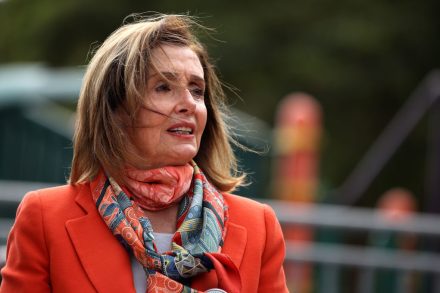
Does Nancy Pelosi’s unfortunate trip to a hair salon have any news value? Or is it much a hairdo about nothing? Compared to the big stories of the day, it hardly matters. The country faces violent disorder, we’re unsure who will become our next president and millions of people are trying to get back to work and school. To paraphrase Humphrey Bogart, 'It doesn't take much to see that the problems of one person getting a shampoo and blow-out don’t amount to a hill of beans in this crazy world.' But even in this crazy world, Pelosi’s misstep deserves some attention because it so perfectly encapsulates a larger, more troubling problem. Insiders like Pelosi are allowed to play by a different set of rules than the rest of us.

nancy pelosi hair

The best leader we never had

I spent Monday afternoon with The Wake Up Call, a new book by John Micklethwait and Adrian Wooldridge that lambasts the West for its grotesque mismanagement of the coronavirus crisis. Despite an upbeat chapter towards the end, in which they dust off the standard menu of reforms, it makes depressing reading. They contrast the cack-handed response of the authorities in countries like America, Britain and Italy with those of China, Singapore and South Korea and conclude that, absent a political miracle, the world will soon resemble the 17th century again, with Europe beset by war and corruption and Asia in the ascendant. There’s a good deal in the book to disagree with.

The Covid trap: will society ever open up again?

The great pandemic of 2020 has led to an extraordinary expansion of government power. Countries rushed to close their borders and half of the world’s population were forced into some sort of curfew. Millions of companies, from micropubs to mega corporations, were prohibited from carrying on business. In supposedly free and liberal societies, peaceful strollers and joggers were tracked by drones and stopped by policemen asking for their papers. It’s all in the name of defeating coronavirus; all temporary, we’re told. But it’s time to ask, just how temporary? As Milton Friedman used to warn: ‘Nothing is so permanent as a temporary government programme.’ Measures that seemed unthinkable a few months ago have been implemented in haste and without debate.

A newsletter from the Society for the Elimination of Risk

From our US edition

Fall NewsletterOur Director, Eustace Stockstill, introduces the Fall issue.Dear fellow Soterians,I have tremendous news to share with you. Our membership drive during the last six months has been successful beyond our most imprudent hopes! Even now we can hardly believe it. The number of our members has increased by a power of seven! That’s a power, not a multiplier: we have doubled our membership seven times since March!I’m sure old members will remember the hurtful article a year ago in the Daily Gaslighter that dismissed us as cranks, mocking us as nothing but a tiny group of English eccentrics. Now we are having the laugh on them! Now we have 10 times more members than they have subscribers, and our influence is growing daily.

soterians

Make America Normal Again

From our US edition

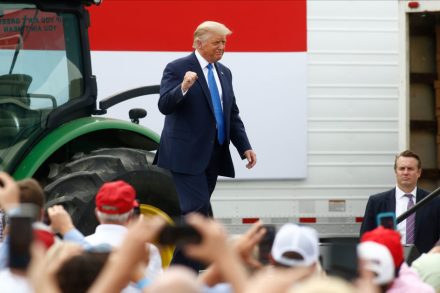
To win in November, Trump should seek inspiration from President Alexander Lukashenko, the 65-year-old autocrat who has ruled Belarus since 1994. He trounced his liberal opponent in the presidential election in August with 80 percent of the vote. I’m not suggesting Trump emulate Lukashenko’s methods. Among other things, the man dubbed ‘Europe’s last dictator’ disqualified his three main political opponents at the beginning of the race, imprisoning two of them. He has never won an election with less than 75 percent of the vote, although none have been found to be free and fair by the Organization for Security and Cooperation in Europe (OSCE), an election monitoring body.

make america normal again

Inflated exam grades let the government ignore its own failures

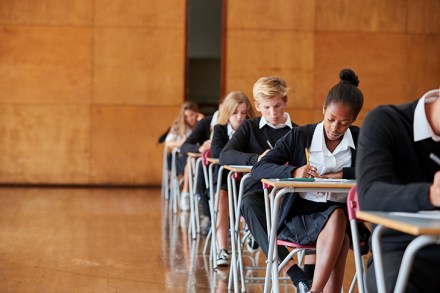
It was obvious that closing schools would hit the poorest hardest, inflicting permanent damage and deepening inequality. While many private schools and the best state schools maintained a full timetable of lessons throughout lockdown, a study by UCL in June found that 2.3 million pupils — one in five of the total — did virtually no schoolwork at all during the weeks of lockdown. The official response has been to turn a blind eye, and imagine that the damage can be covered up by simply awarding decent exam results. This year’s students are right to protest about the injustice of the system. From the moment the decision was taken to cancel exams, rather than carry out exams with social distancing, this year’s mess was guaranteed.

I’ve started a dating site for lockdown sceptics

I started a dating site last Sunday. Not words I ever thought I’d write, but I’ve become a kind of den mother to a large group of people who believe the risk of coronavirus has been exaggerated, and it dawned on me that this could be a useful service for them. The idea is that if you’re a Covid realist you don’t want to go out with a hysteric who thinks the lockdown is being eased too quickly and frets about a ‘second wave’. You probably wouldn’t even be able to arrange a first date, let alone manage a kiss at the end of the evening. What you need is a ‘safe space’ where you can meet potential partners who share similar views. It all began in April when I started a blog called Lockdown Sceptics.

In the race to recovery, Britain is losing

At the start of lockdown, the government was obsessed with how other countries were dealing with the Covid crisis. In No. 10 press conferences, Britain’s daily death toll was shown next to numbers from the rest of the world, putting our handling of the virus into perspective. But when our death toll jumped, the government claimed the calculations were too different to compare and dropped the graph. A few weeks ago, the Office for National Statistics picked up where the government had left off, revealing that England had the highest number of excess deaths in Europe, while Scotland, Wales and Northern Ireland were in the top eight. The UK had lost the first leg of the Covid race. Now it looks set to lose the second: the race to recovery.

What we can learn from Sweden

It is a particular pleasure to be returning to the columns of The Spectator, more than half a century after I became editor. The paper has been part of my life for a very long time. When I was at school, more than 70 years ago, we were all told to read Harold Nicolson’s column every week, to learn the art of essay-writing. I like to think that it was still a good paper in my time, but it is a much better one now. Fraser Nelson and his team are doing an excellent job. Our lives remain dominated by the plague, aka Covid-19. The government’s handling of it — admittedly a difficult task — has not been brilliant, but no worse than the performance of its scientific and medical advisory group (no acronym has ever been less apt than Sage).

Economies run on confidence – the government mustn’t undermine it

Throughout the past few months the government has appeared to face an unenviable choice between saving lives and saving livelihoods. Nevertheless, a fortnight ago the path seemed clear. The numbers of Covid infections were falling, but the economic news was dire — hence Boris Johnson was engaged in a drive to reopen the economy as quickly as he could without prompting objections from his scientific advisers. Now things feel rather different. Economic figures from recent days have surprised on the upside: the CBI’s figures for retail sales in July show a sharp V-shaped recovery. Sales of cars and houses were running ahead of last year — during July at least. At the same time, though, the outlook on Covid-19 has darkened.

If the office is ‘too dangerous’, why is everyone jetting off on holiday?

The whole of Surrey and south-west London seem to have gone abroad on holiday so I’ve got my sanity back. All the people who were working from home because they couldn’t risk Covid-19 but who had to go out walking and cycling in the countryside all day long have simply vanished. Anecdotal evidence suggests that many of the Covid-phobics have got on planes and enthusiastically breathed as much re--circulated air as it takes to get them to a villa by the sea. The cyclists and the runners and the ramblers with backpacks with cooking pots sticking out of the top have all evidently decided they didn’t need to bother me any more by trespassing through my horses’ field, and have gone somewhere they really wanted to be. That was half the problem.

London in limbo: can the capital survive this crisis?

We should worry about what is happening to London. Our capital is, after all, the country’s economic powerhouse. It accounts for just under a quarter of Britain’s GDP. In fact, three of its now most deserted locations — the City, the West End and Canary Wharf — account collectively for an eighth of the nation’s output. There is a danger that short-term damage to London’s economy could become permanent unless the right steps are taken. This was supposed to be the week when things would start returning to some sort of normality, as the government encouraged more people to go back to the office. Yet uncertainty prevails.

Is our test-and-trace system ready to stop a second spike?

We are going to hear a lot about Test, Trace and Isolate (TTI) in coming weeks, as we approach autumn and fears of a second wave of Covid-19 grow. Now we have moved away from national lockdown but do not yet have a vaccine, the test-and-trace system is our main bulwark against a resurgence of the disease. But how good a defence is it? A study published in the Lancet Child and Adolescent Health this week suggests there is a huge amount at stake.

Why should anyone be forced to shield?

The best way (and with politicians sometimes the only way) to know whether people are aware they’ve made a mistake is seldom to put that question point-blank. A reflexive ‘oh no I didn’t’ kicks in. Do you honestly think, for example, that government ministers are privately confident that as Covid-19 swept the country, hospitals were right to send elderly patients back untested to care homes, even with the limitations to our knowledge at the time? Of course not. But something stupid about British politics appears to constrain them from saying so. Possibly, before trying to persuade us, they have persuaded themselves they were justified; and we all do this to some degree.

Has Sweden been vindicated?

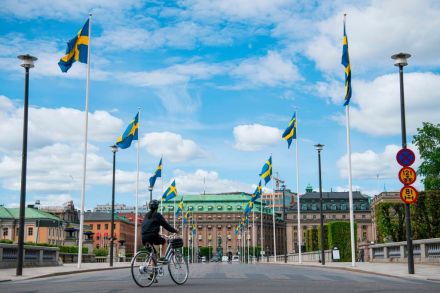
Sweden has released growth figures for the second quarter – a contraction of 8.6 per cent – and two narratives are circulating. The first is that the Swedish experiment has failed spectacularly, resulting in both a higher death toll than its Scandinavian counterparts as well as a collapsed economy. The second is that Sweden has been vindicated, taking a much less severe economic hit than the EU’s average and in a better position to recover as well. Which is the fairer assessment? Sweden has indeed taken an economic beating despite never instigating a full lockdown.

Boris Johnson: why we’re putting the brakes on

Two weeks ago, I updated you from this podium on the progress we had made as a country against coronavirus. And in many ways that progress continues: the number of patients admitted to hospitals is still falling, and now stands at just over 100 each day; in April there were more than 3,000 coronavirus patients in mechanical ventilation beds, but now the latest figure is 87; the number of deaths continues to fall. That is obviously encouraging But I have also consistently warned that this virus could come back and that we would not hesitate to take swift and decisive action as required. I am afraid that in parts of Asia and Latin America the virus is now gathering pace, and our European friends are also struggling to keep the virus under control.

You can’t sing in church but you can get a tattoo

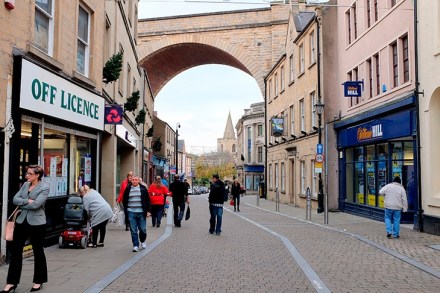
From my seat in the greasy spoon café I looked out on a typical English row of shops on a typical English street in a typical English village turned suburb. It was a rundown block consisting of a betting shop, a hairdresser, a charity shop, a chemist, an off-licence, a tattoo parlour and, right at the end, a ‘wellbeing’ clinic, which I took to be a place selling methods to undo all the damage done in the other places. We had driven to this suburb just off the M3 to help a friend who is trying to sell his collection of classic cars. The builder boyfriend is a dab hand with motors, so he offered to help our friend do the pricing. We stopped at a café for a bite to eat before getting to the lock-up, and our friend treated us to lunch for our trouble.