Leonardo da vinci

How mastering friction transformed humanity

The fundamental purpose of science is to view the world from a different perspective. In the age of modern science, however, in which each academic discipline represents a world in itself, this is hard to remember. The field of ‘tribology’ would appear to be a perfect example. But such opacity is merely a front for the study of friction. And, according to Jennifer R. Vail, friction is ‘the unsung hero of the material world’. Why? Because ‘the way we experience the world, whether through greater efficiency, flight or space exploration, has been shaped by our understanding of friction’. Indeed, ‘our relationship with friction dates back to one of humanity’s greatest discoveries: fire’. How’s that?


Why was the 19th century so full of bigots and weirdos? 

Da Vinci’s Laundry is based on an art world rumour. In 2017, Leonardo’s ‘Salvator Mundi’ sold at Christie’s for $450 million but some experts claimed that the attribution was inaccurate. Could the world’s costliest artwork be a fake? Writer, Keelan Kember, considers the provenance of a fictional Leonardo owned by a thuggish oligarch, Boris, who claims to have bought the masterpiece at a flea market. He invites two posh British experts, Christopher and Milly, to authenticate the painting and when Christopher questions its origins he earns Boris’s instant displeasure. Boris threatens to toss Christopher from the roof of his luxury mansion. Enter a brash American, named Tony, who wants to buy the Leonardo on behalf of a rich Saudi clan.

The Da Vinci world of known unknowns

When Leonardo da Vinci’s ‘Salvator Mundi’ was sold in 2017 for $450 million it caused a sensation. Dismissed as an anonymous ‘wreck’ just 12 years before, it had become the single most expensive artwork ever to come to auction. Newspapers – goggle-eyed at the price – hailed the discovery of a ‘lost’ Leonardo. The Louvre wanted to make it the centrepiece of a major exhibition. There was even talk of showing it alongside the Mona Lisa. It seemed almost too good to be true. And it was. Doubts were soon raised about the painting’s attribution. Amid a storm of controversy, it was quietly whisked away to a secret location. It hasn’t been seen since. The ‘Salvator Mundi’ is in many ways a parable of our obsession with Leonardo.

The Olympic Games have been really bizarre

From our US edition

I am typically a huge Olympics fan because I am very big into national pride and love to shamelessly root for the USA. Gymnastics, swimming, volleyball, soccer, or even canoeing, judo and fencing — don’t care, will watch. Unfortunately, this year’s Summer Olympic Games in Paris, France were immediately marred by the obvious mockery of the Christian faith during the opening ceremony. There was a drag show version of Leonardo Da Vinci’s depiction of Jesus Christ’s Last Supper with his apostles prior to his crucifixion (plus, separately, a faceless rider on a pale horse and a queer ménage à trois).

Portrait of the artist and mother

On reaching the end of Hettie Judah’s Acts of Creation, I felt somewhat overwhelmed. At 272 pages, the book isn’t particularly large, but the time span it covers, from prehistoric goddess figures to Laure Prouvost’s 2021 cyborg-octopus installation ‘MOOTHERR’, is enormous. The trajectories, practices and obsessions of the artists discussed range far and wide. Written to coincide with a touring exhibition of the same name, this ambitious book is more of a survey – a highly illustrated, annotated and well-researched one – than a traditional narrative. Judah’s energetic text displays the hunger of someone after a fast who can’t decide where to start at the buffet.

Always carry a little book with you, and preserve it with great care, said Leonardo da Vinci

In 1299, Amatino Manucci, a Florentine helping to run a merchant’s business in Provence, kept at least seven ledgers and notebooks, each serving a specific purpose. One covered the firm’s trade in wool and cloth, another in wheat, barley and other victuals, and so on. It wasn’t just figures Manucci worked with. It was also financial concepts, quite advanced by the standards of that time: accounting entities and periods, profit and depreciation – notions that heralded the invention of accounting as we know it. ‘If you’ve ever tapped numbers into an Excel grid,’ Roland Allen writes in his engaging popular history, ‘you have Manucci and his contemporaries to thank – or blame.

Why the Royal Academy is wrong to consider selling their precious Michelangelo

How much does a Michelangelo cost? It is, as they say, a good question, meaning: nobody really knows. The reason for this odd state of affairs is that almost none of them have ever been bought and sold on the open market, which is how the prices of most things are established. It’s hard to think of many examples of his sculptures being traded in that way over the past 500 years. Strangely, the main exception is the ‘Taddei Tondo’, otherwise known as ‘Virgin and Child with the Infant St John’, which, reportedly, some members of the Royal Academy are suggesting the RA should sell. If that were to happen, which I very much hope it does not, we might learn the answer to the conundrum. Probably it would be a very large sum indeed.

Know better

From our US edition

We live at a time of universal polymathy. We don’t know everything, but there’s not much difficulty in being able to discover any given truth. But it’s also worth remembering just how hard it used to be to find things out. Thirty years ago if you wanted to research it meant a trip to the public library — and perhaps filling out a form for an inter-library loan. Or you could try your luck in a bookshop, new or secondhand. The whole process took a long time, and most people stayed within their professional competence or enthusiasm, frankly admitting to ignorance outside those limits. It was the age of the specialist, memorably captured by Michael Frayn in Donkeys’ Years and the character of Kenneth Snell.

polymath

The genuine polymath is still one in a million

We live at a time of universal polymathy. We don’t know everything, but there’s not much difficulty in being able to discover any given truth. But it’s worth remembering just how hard it used to be to find things out. Thirty years ago if you wanted to research off your own bat it meant a trip to the public library — and perhaps filling out a form for an inter-library loan. Or you could try your luck in a bookshop, new or secondhand. The whole process took a long time, and most people stayed within their professional competence or enthusiasm, frankly admitting to ignorance outside those limits. It was the age of the specialist, memorably captured by Michael Frayn in Donkeys’ Years and the character of Kenneth Snell: Take me, for instance.

The Renaissance in 50 shades of grey

The Mediterranean-centred era spanning a century or so either side of 1492 is filled to the brim with stories. There was the discovery of the Americas by a bold Genoese navigator; power struggles between wealthy Italian families, waged through conspiracies, poisonings and stabbings; a radical Dominican monk who managed to impose near-theocratic rule on a republican city before being burned at the stake; the advent of humanism and, subsequently, of a modern, power-focused theory of politics; and the maturing of the visual arts to a new level of sophistication, realism and emotional power. Such stories make up a significant part of the cultural inheritance of the West.

Leonardo da Virtual

From our US edition

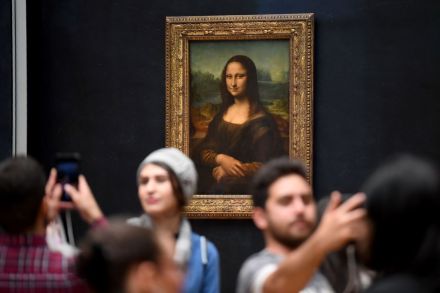
This article is in The Spectator’s December 2019 US edition. Subscribe here. The first time ever I saw her face, she was smiling. I knew her face before I saw it, but I cannot remember when I first knew it, because I had always seen it. But when I first saw her in the flesh, I couldn’t really see her at all. She was behind thick glass and a waist-high wall, and a crowd of people 20-deep were pushing toward her, shouting and pointing and taking photographs. She was still smiling, but as I forced my way out of the crowd, I felt as though the smile no longer expressed the mysterious inner mood of a high-born Florentine sitting in a loggia, but the bemused contempt of a woman sitting in the stocks for the entertainment of the mob.

mona lisa leonardo

Leonardo in Paris

From our US edition

ParisThe Louvre’s Leonardo da Vinci is the latest Renaissance master in a procession of epic anniversary retrospectives — after 2017’s hugely popular Michelangelo: Divine Draftsman and Designer at the Metropolitan Museum of Art in New York City, before next year’s inevitably popular marking of the cinquecentenary of the death of Raphael at the National Gallery in London. This year, with Leonardo’s posterity passing the same necroversary, the Louvre is augmenting its five Leonardo oils –– more than any other museum, thanks to the light fingers of legendary art critic Napoleon Bonaparte –– with a further six loans.

leonardo

Secrets of the maestro

From our US edition

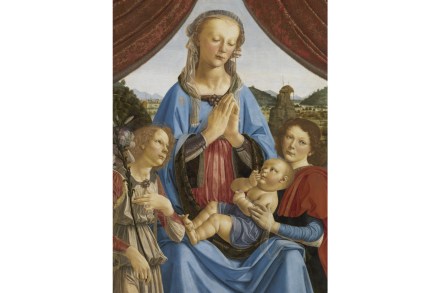
This article is in The Spectator’s October 2019 US edition. Subscribe here. At last, some justice for the ‘teacher of Leonardo da Vinci’. Verrocchio: Sculptor and Painter of Renaissance Florence, now at the National Gallery of Art in Washington, DC, reveals that this master was more than a mere footnote to his famous apprentice. Born around 1435 into the artistic boomtown that was Florence under the Medici, Andrea del Verrocchio may, in fact, have been the original Renaissance man. The greatest artists of the Florentine Renaissance took root in his studio and grew out of his mentorship: not just Leonardo, who stayed with him for over a decade, but also Pietro Perugino, Lorenzo di Credi and, most probably, Domenico Ghirlandaio and Sandro Botticelli too.