Language

Big changes in little words

I managed to grab the TLS last week before my husband stuffed it in his overcoat pocket and lost it at his club. It had a very enjoyable review by Sir Brian Vickers of the Cambridge edition of Ben Jonson. I understood much of it and agreed with most. A point I applauded was the need to annotate not only rare words but also deceptively simple words with a different meaning in Jonson’s day. They include ill, perfect, action, subtlety, free and accident. So, when Thomas More wrote of the ‘sottle suggestion of vice’, he did not mean a fine-tuned or even imperceptible suggestion, but one that was deceitful. Since Jonson named one of his characters Subtle, it is an important word to understand aright.


Tony Blair’s cultural revolution has won, at least in the Conservative Party

As Rod pointed out the other day, Arthur Scargill’s purchase of his council flat illustrated the triumph of Thatcherism over its opponents; like any winning ideology it created the conditions for its followers to flourish and increase in number, and so securing the revolution. That’s one of many things that Tony Blair had in common with the Conservative leader; New Labour created the conditions, through an expanded and often highly-politicised public sector, for Blairites to flourish and therefore for Blairism to triumph, not just at the ballot box but culturally too.

Where did ‘No justice, no peace’ come from?

The chant No justice, no peace by supporters of Mark Duggan, the drug gangster shot dead by police in 2011, sounded more like a threat than a prediction. No one knows the originator of the slogan, but that is not surprising. It is a commonplace of the struggle. In 2011, for example, a pair of artists called Mikkel Floher and Rasmus Nielsen put on an exhibition called No Justice No Peace at a gallery in Frederiksberg, Denmark. The artists are ‘united by a common sense of injustice and indignation’. They should meet my husband. No justice, no peace has been around since the 1970s among the chanting classes. Some contributors to a moderately intelligent blog called Language Log said that No justice, no peace reminded them of notices in the form: No drinking. No dogs.

Dot Wordsworth: How online shopping is changing English

How do you play the lottery? The National Lottery website has a handy guide. Step No. 1 is: ‘Go into a store.’ But in my experience, lottery tickets are sold mostly in shops, along with confectionery and tobacco. You can, it is true, get them in Sainsbury’s, but I wouldn’t call that a store either, but a supermarket. Yet 2014 looks like the year of a fight to the death between shop and store. Store is making aggressive gains through the phrase in store. It is the opposite of online (which has now become one word, not only as an attributive adjective (‘online gambling’) but also adverbially (‘he began to gamble online’). Tesco now sees itself as having three ways of shopping: in store, online or mobile.

The 10 most annoying phrases of 2013

Sifting through the heaps of discarded language and redundant memes expended in the last twelve months, it’s clear that they don’t make ‘em like they used to. Ah, for the days when clichés were built to last! Twitter now rolls out disposable buzz phrases like a chopstick factory, and all we can do is get a bit angry and forget about them. This is not to say that Neology is dead. This year gave us ‘Twerking’, which I rather like - provided it remains confined to inverted commas rather than let loose in my kitchen. Another 2013 winner is ‘Chumley’ – shorthand for laddish berks with aristocratic pretentions and red trousers. It’s useful, it’s funny and it genuinely identifies something previously unformulated as a word.

Immigration is about culture as well as politics

Must say, I felt a bit defensive when I looked at the tables of origin for immigrants to Britain for the decades to 2011, helpfully set out in  The Daily Mail. The real gist of the thing was the numbers – an increase from just under 2 million in the decade to 1951 to 7.5 million in the decade to 2011. But what was riveting was the immigrants’ countries of origin. For most of the time, the Irish led the field, with about half a million a year arriving in the course of each decade, give or take 100,000. In the last decade though, we were knocked right off our perch. At the top was India from which almost 700,000 people came during the ten years to 2011, followed by nearly 600,000 Poles and nearly half a million from Pakistan.

Dot Wordsworth: Is M&S really ‘Magic & Sparkle’?

‘Believe in Magic & Sparkle,’ says the Marks & Spencer television Christmas advertisement. The phrase is meant to suggest the shop, but it seems rather distant to me, either verbally or associatively (the shops, being lit by fluorescent tubes, are staring rather than sparkly). The popular name is Marks and Sparks, but merely as a rhyme. There is already an outfit called Believe in Magic. ‘Believe in Magic is a charity,’ its website says, ‘that spreads magic to the lives of seriously and terminally ill children.’ It takes them on outings for a treat. There is little chance of Believe in Magic being confused with Marks & Spencer. There is also some stuff called Ibuleve, a gel for the relief of muscular and rheumatic pain, strains and sprains.

#Onyourmarks! What is the formal name for the hashtag? 

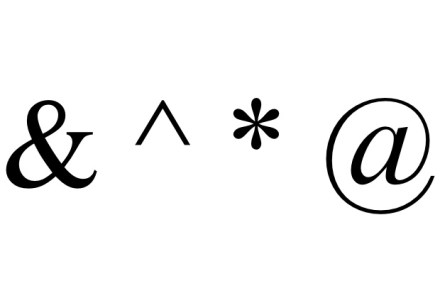
One day there simply won’t be any strange byways of the English language left to write quirky little books about. Happily that day hasn’t arrived yet. Keith Houston’s Shady Characters (Particular Books, £16.99, Spectator Bookshop, £13.99, Tel: 08430 600033)) ventures into the previously untrodden territory of punctuation marks, and not the obvious ones either. Full stops and commas are as nothing to him. Semi-colons are scarcely worth his attention. No, he’s in pursuit of asterisks and daggers, hyphens and ampersands. Why is a hash sign (#) formally called an octothorpe? (No one is quite sure.) Why didn’t the interrobang (‽) take off? (It did, in the 1960s, but it crash-landed soon after.

Why do we cringe at the term ‘third class’?

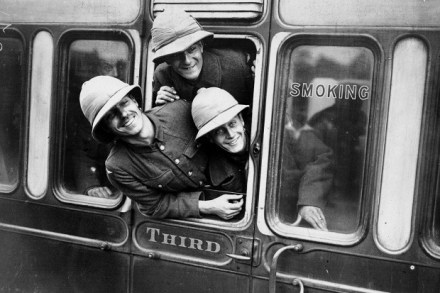
Alas, it looks like the return to third class travel won't happen. The papers had got terrifically excited about what seemed like a rolling back of 56 years, when British Rail finally ditched its working class fare. The story was on the back of the privatisation of the East Coast Line from Aberdeen to London, for which it seemed at least one of the bidders had envisaged another tier of fares, though it appears the Department of Transport has been thinking along the same lines for the last year. But of course it wouldn't have happened, a return to third class tickets. At least, not described in that dramatically honest and comprehensible way.

Dot Wordsworth’s week in words: Did William Empson have the first clue what ‘bare ruined choirs’ meant?

I am shocked to find that William Empson, famous for his technique of close reading, was no good at reading at all. A paragraph of his in Seven Types of Ambiguity, concerning one line in Sonnet 73 by Shakespeare, is called a great example of literary criticism. In the London Review of Books, Jonathan Raban wrote recently about how Empson’s book made him ‘learn to read all over again’ in 1961. As for this paragraph, he had been ‘ravished by its intelligence and simplicity’. The line is ‘Bare ruined choirs, where late the sweet birds sang’. ‘Of course!’ the young Raban exclaimed after reading Empson’s remarks.

Why is ‘feminism’ such a dirty word?

A few years back I did one of those online debates on the Times website, the subject being why feminism had fallen out of favour. Within about 60 seconds four people had used the phrase ‘gender is a social construct’ and, well, I sort of switched off at that point. It’s strange that the F-word is now so unpopular that even David Cameron, a man with a desperately keen ear for metro-liberal opinion, refused to identify as such last week. When asked by Red magazine, he said: ‘I don’t know what I’d call myself... it’s up to others to attach labels. But I believe men and women should be treated equally.

Dot Wordsworth: We’ve been self-whipping since 1672

Isabel Hardman of this parish explained after last week’s government defeat that a deluded theory among the party leadership had held that Tory backbenchers were now self-whipping. When she aired this opinion on Radio 4, Michael White of the Guardian did a Frankie Howerd-style, ‘Ooh, Missus!’ routine. Surprisingly, self-whipping is no neologism. The satirical Nonconformist clergyman Robert Wild, in a poem on Charles II’s declaration of indulgence in 1672, refers to the ‘self-whippings, of the Popish Priests’. He meant the use of the discipline for ascetic motives. This was equally frowned upon by the Quaker poet John Greenleaf Whittier.

Foresworn: Jonathan Lethem, Kenneth Tynan, and the unpredictable progress of swearing

For a few days last week, it seemed that Jonathan Lethem had achieved something unique: he had become the first person to use a particular four-letter word - the one beginning with F - in the New York Times. (Sensitive readers should be warned that I will stop using euphemisms after this sentence.) 'I’m delighted,' he told Salon's Laura Miller, who spotted the transgression in an editor's note to the paper's glossy style magazine. 'If I’d had the foresight to make it one of my life’s aspirations, I’d have done so. Instead it lands as dumb luck. My UK friend Dan Fox pointed out that it puts me with John Cleese, the first person to say "shit" on the BBC.' Almost.

Letters: GPs reply to J. Merion Thomas

Some doctors write Sir: Professor Meirion Thomas (‘Dangerous medicine’, 17 August) may be an excellent surgeon but he is uninformed about the nature of GPs’ work. For many older consultants in the NHS, it will have been decades since they last spent any time in a GP setting, if they have at all. He fails to realise that 95 per cent of the work of diagnosing, treating and caring for patients takes place within general practice. Common illnesses range from depression, to diabetes, asthma and hypertension, as well as many others. Dr Meirion Thomas’s idea that nurse specialists are the answer betrays his lack of understanding that most patients present to GP as a complex mix of interrelated symptoms and other factors.

After ‘literally’, is it time to start a Neighbourhood Watch for the OED?

There was outrage last week when it was found that the Oxford English Dictionary had listed one sense of literally as ‘virtually, as good as’ — in other words, the reverse of its established meaning. Pedants were literally up in arms (in the new sense). The funniest thing was that the offending entry in the OED had been inserted in 2011, and the pedants hadn’t noticed for a couple of years. So I thought I ought to see what else the dictionary-makers had been doing on the quiet. I started with hopefully. This word is much deplored when used to mean ‘it is to be hoped’. In that sense, it applies to the whole sentence, and is thus known as a sentence-adverb.

Mind your language: Frack vs frag

‘Frankly, my dear, I don’t give a frack,’ replied my husband unwittily when I asked how he’d feel if shale gas was discovered at the bottom of our garden. But he did illustrate why the word has proved so good for campaigners. Someone at Balcombe had painted a sign saying: ‘Frack off.’ The word enables the debate. Quibbling about hydraulic fracturing would hardly have had the same impact. In this way, fracking serves the same purpose as did bonking in the 1980s, when it purported to supply a non-moralistic term for the act. I am not sure the illusion lasted, for the parallel case of bunga bunga in Italy soon enough suggested dirty old men. However, fracking positively benefits from its taboo associations.

Mind your language: The springs before the Arab Spring

Two hundred and forty-years ago next Tuesday, Thomas Gray was buried in his mother’s grave in Stoke Poges churchyard. In his ‘Ode on a Distant Prospect of Eton College’ (published 1747), he had written of gales (presumably lesser ones, scarcely registering 8 on the Beaufort scale) that seemed ‘redolent of joy and youth’ and able ‘to breathe a second spring’. The phrase second spring was picked up by John Henry Newman, in 1852, to describe the re-establishment of the English Catholic hierarchy under Cardinal Wiseman. This was ‘a national commotion, almost without parallel, more violent than has happened here for centuries’, he declared.

Mind your language: Who says there’s a ‘correct name’ for the penis?

In a very rum letter to the Daily Telegraph, the Mother’s Union of all people joined with some other bodies to demand that ‘primary schools should teach the correct names for genitalia’. What can they mean? A confederate of the Mother’s Union in this campaign, the Sex Education Forum, says that by the age of seven, children should name ‘external genitalia’. From examples supplied, it seems to want us all to speak Latin. It’s as if we should no longer say womb but uterus, not skull but cranium, not big toe but hallux. By using Latin names for genitalia, the campaigners hope to avoid ‘perpetuating shame’. I wonder whether they haven’t got hold of the wrong end of the stick.

Mind your language: How the Dreamliner got its name

‘Planes don’t run off batteries,’ declared my husband, his finger unerringly on the pulse of technology as ever. I had merely mentioned that two Dreamliner aircraft had earlier this year seen fire and smoke emerging from their batteries. The batteries do not make them fly, but are used for lights and brakes when the engines are not into operation. Another Dreamliner caught fire at Heathrow last week, when no one was aboard. The name Dreamliner for the Boeing 787 was settled upon in 2003 by public competition. Alternative proposals were eLiner, Global Cruiser and Stratoclimber. Those who voted for a name were put into a sweepstake, won by Ross Coogan, of Auburn, Washington. He already had some experience of naming, for his 12-year-old daughter was call Kelsea.