Labour

Why the Unite election matters

Next Thursday, the voters of Batley and Spen will go to their polling stations ostensibly to pick their next MP — but at the same time, could decide the ultimate fate of Keir Starmer. If Labour lose the by-election, his leadership will face a whole new level of trouble. Yet despite the importance of this contest, there is another one that is about to properly kick-off that is even more key to Labour’s future — the race to become the next general secretary of Unite. The current general secretary of the largest trade union in Great Britain, Len McCluskey, is rightfully infamous.

Keir Starmer is alienating both sides in the Brexit debate

What is it with Labour and Brexit? An issue that during Theresa May’s premiership looked like it could rip the Conservative party apart has instead made them electorally invincible – and caused huge problems for the Labour party.  For that reason, Keir Starmer tends to avoid the topic these days, seeking to show that he and his party have 'moved on'. But some days, he can’t help himself. Yesterday was one of those days. Speaking about the Northern Ireland protocol on the radio, Starmer said: 'We do need to remind the Prime Minister that he signed on the dotted line: this is what he negotiated. If he’s saying it doesn’t work he should look in the mirror and say, well, did I sign something then that wasn’t very sensible?...

How Starmer can beat Boris

How should Keir Starmer deal with a problem like Boris Johnson? Despite the Prime Minister's mistakes in the handling of the pandemic – and a string of embarrassing stories about his private life and finances – Boris seems unassailable. Johnson is seen as best suited to be Prime Minister by 40 per cent of voters compared to just 23 per cent for Starmer; most surveys give the Tories a double digit lead over Labour. Party leaders receive much unsolicited and often useless advice. Starmer is not alone in that. Over the years, Sun Tzu’s The Art of War has been scoured for helpful aphorisms, while Machiavelli’s The Prince is still seen as a repository of sage advice. But relevance – and obscurity – are often a problem with such sources.

Ed Miliband’s Brexit ‘embrace’ isn’t fooling anyone

Ed Miliband gave an interview this week in which he decided it would be a good idea to bring up the topic of Brexit. The interviewer spotted an opportunity and asked Miliband if he had ‘embraced’ our departure from the EU. ‘You’ve got to embrace it because that argument is over,’ was the former Labour leader’s response. That one sentence was a perfect demonstration of the way Labour’s top figures keep getting Brexit wrong, and continue to fail to understand why the issue hurts them as it did in Hartlepool a month ago. Labour now have two basic ways to go on Brexit. One is to become the soft anti-Brexit party they were before the last election – and that a lot of voters still see them as, deep down.

Labour is in last chance saloon

If they have any sense – a proposition I will test later – officials from Labour, the Liberal Democrats and Plaid Cymru will be beginning meetings to work out a pact for the 2023/24 election. If they do not agree to a joint programme, there’s a good chance that Conservatives will be in power until a sizeable portion of this article’s readership is dead. The next redrawing of constituency boundaries in 2023 is almost certain to favour the Conservatives, adding ten seats to the already unhittable target of 123 constituencies Labour needs to win to govern on its own. There’s a possibility that Scotland could be independent by the end of the decade, and that ought to terrify anyone who wants to stop the rest of the country becoming a one-party Tory state.

Has Starmer just saved his leadership?

The Labour leader is in trouble. His party has been cast adrift from its moorings in the working-class and is languishing in opposition. He has tried to drag Labour towards electability, but so far, his only reward has been members’ hostility and plots for his removal. If his Conservative counterpart, safe in No. 10, is hardly impressive, the voters seem to like him much more: 48 per cent see the Labour leader as simply ‘boring’ and many aren’t even sure what he stands for. This is not a pen portrait of Keir Starmer. It is, instead, a description of George Jones, David Hare’s fictional Labour leader, and the protagonist of his 1993 play The Absence of War.

Ikea Starmer: Labour’s wooden leader

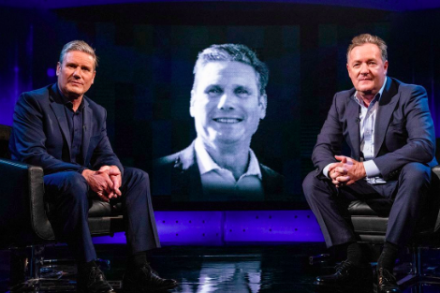
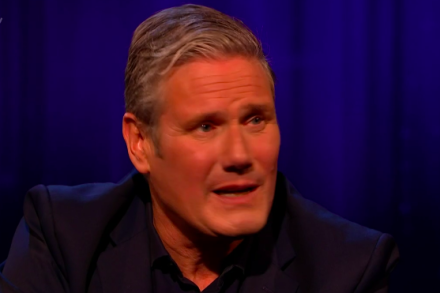
This was perhaps the most heavily-trailed Kleenex moment in recent TV history. The advance clips of Sir Keir Starmer’s interview with Piers Morgan suggested that the Labour leader would well up on-screen as he recalled his parents’ deaths and the fate of a family pet that was killed in a shed fire. We’re accustomed to seeing our leaders in tears. Mrs Thatcher wept after delivering her farewell address outside No. 10 in November 1990. She held it together for the speech itself but cracked up when she walked away from the microphone and towards her official car. Photos of her inside the vehicle showed her biting her jaw while her eyes brimmed over with emotion. 'Tears in the back seat,’ ran the Daily Mirror headline.

Keir Starmer’s interview gamble pays off

One of the biggest challenges for any leader of the opposition is getting noticed. Doing that requires taking some risks and Keir Starmer’s sit down with Piers Morgan was a bit of a risk – politicians can get caught out in these more personal formats. Starmer did well, though. He didn’t fall into any Nick Clegg style traps; navigating the sex and drugs questions with relative ease. He talked movingly about his mother, and how she coped with her long illness. His relationship with his own father clearly wasn’t easy, Starmer said the only time his father ever said he was proud of him was when he passed the 11-plus, and it was touching to hear him talk about how he tries to parent his own kids differently.

Watch: Keir Starmer refuses to deny taking drugs at university

Keir Starmer's appearance on Piers Morgan's 'Life Stories' is a sign of desperation. The Labour leader knows he must do something about the dire situation his party is in, following the disastrous defeat at the Hartlepool by-election. One of the big criticisms levelled at Starmer is that he lacks charisma. His decision to agree to be interviewed by Morgan is an attempt to do something about that, by showing people the 'real' Starmer. Unfortunately, though, it seems there are some things that remain off limits, not least what Starmer the student got up to during his time at Leeds university.  https://www.youtube.com/watch?v=hfyfBX1IlT0 Morgan quizzed Starmer at least ten times on whether the Labour leader had ever dabbled in anything stronger than alcohol.

‘There is no alternative’: Why Boris will keep winning

Those of us who generally wish this Government well and consider Boris Johnson a preferable holder of the office of prime minister to any likely alternative are facing a new accusation this weekend. The vast brigade of pinko pundits who have predicted Johnson’s downfall on numerous occasions only to be proved wrong each time, have changed tack. They now mostly acknowledge that rows over prorogations or pelmets – or even this week’s Dominic Cummings spectacular – are likely to have only a very limited impact upon public opinion. But they shake their heads sadly at us and tell us this is not the point. Rather, what actually matters is that we are in the grip of a morally deficient PM who is not up to the job and that ought to worry us greatly.

An electoral pact would be disastrous for Labour

How do you tell a politician who has just been punched in the face by the electorate that something is looming that will cause him a bigger and far longer-lasting headache? Keir Starmer probably already has an inkling about the next tortuous twist facing his Labour leadership: mounting pressure to open talks with the leaders of other left-of-centre parties about forming an electoral pact. The weekend’s latest opinion poll by YouGov set out the nightmare trap into which the left in general and the Labour party in particular has fallen. The party ratings were as follows: Conservatives 46, Labour 28, Greens 8, Lib Dems 8, SNP 5, Reform UK 2, Plaid Cymru 1.

Why is this Labour MP attacking police for enforcing the law?

The most outlandish political joke of the moment is the idea that the Labour party believes in strong border controls. Keir Starmer gave it a run out in PMQs yesterday, berating Boris Johnson by observing:  'Our borders have been wide open pretty much throughout the pandemic.' Yvette Cooper, chair of the Home Affairs select committee, has also been unleashing her trademark owlish looks of disapproval at ministers over an alleged lack of stringency in Covid-related immigration measures. During the Queen’s Speech debate she complained:  'For months on end there were no public health border measures in place at all.

Starmer’s flip-flopping came back to haunt him at PMQs

Prime Minister's Questions today wasn't a particularly easy session for either man taking the main exchanges. For Boris Johnson, it was a struggle to answer what Sir Keir Starmer referred to as a 'simple question that goes to the heart of this issue': if it's not advisable for people to travel to amber list countries unless absolutely necessary, is it now easier for them to do so?  Johnson repeatedly stressed that the government has been clear on travel restrictions, quarantine measures and penalties for failing to observe these rules. But a simple rule in politics is that if you're having to insist you've been clear, then your messages are as clear as mud.

Andy Burnham is Labour’s king over the water

There are few things so perilous for an under-performing opposition leader as the emergence of a 'king over the water'. This is typically someone who is a member of the same party with an impressive track record but who isn’t currently in the Commons and is therefore not subject to the patronage wielded by the leader. As the leader flails, the king over the water is deemed to have acquired miraculous powers. Each new poll recording the leader’s unpopularity launches a thousand new daydreams among party members fondly imagining how the king over the water would reshape things in ways they yearn for. Keir Starmer is now faced with just such an entity in the shape of the Manchester Metro Mayor Andy Burnham, the biggest Labour winner in the recent elections.

The shamelessness of Andy Burnham

Of all the people who should carry the can for Jeremy Corbyn becoming leader of the Labour party, Andy Burnham doesn’t get his fair share of the stick. It was, after all, Burnham’s fear of being the most left-wing candidate in the 2015 leadership contest that led to Corbyn being 'loaned' enough MPs' votes to get Dear Jeremy on the ballot. Despite this fact, Burnham felt no shame in saying in an interview this weekend that, ‘I still think life would have been different if I had won in 2015’, as if he hadn’t been his own worst enemy in denying that victory from taking place.

Is it time for Keir Starmer to forget about uniting his party?

Campaigning to become Labour leader last year, Keir Starmer said Harold Wilson was his favourite party leader of the last fifty years because he had unified the party. This was hardly a coincidence as putting an end to ‘factionalism’ was then one of Starmer’s main promises to Labour members. Subsequently Starmer has name checked Wilson in various speeches, especially noting his predecessor’s electoral success – and repeating his 1962 claim that Labour was ‘a moral crusade or it is nothing.’ From these references, Wilson who died in 1995 emerges (and so, presumably was the intention, also Starmer) as a man of principle and an election winner: what’s not to like?

Labour are deluding themselves about Boris’s ‘vaccine bounce’

That vast battalion of pinko pundits who confidently expected Boris Johnson to get a drubbing in last week’s elections has already reached a consensus on why it is that he did so well and Keir Starmer so badly. To summarise: the Prime Minister is a lucky general who benefited from a 'vaccine bounce'. He will fall straight back down to earth once this current crisis is over. The electorate will soon start concentrating on what really matters, like the cost of his curtains. In the long list of reasons why Labour keeps losing, its tendency to underestimate and misunderstand its opponents should figure large. Because the truth of the matter is that Johnson has not 'got lucky'.

Can Labour survive the next election?

Keir Starmer is having a torrid time. Today brings another poll showing his personal approval rating falling. The Labour leader is now down to a net score of minus 22. But Starmer's leadership, or lack of it, is far from being Labour’s biggest problem.  The party’s fundamental issue is that its old electoral coalition has fallen apart in recent years; the 2014 Scottish referendum and the 2016 Brexit referendum detached large sections of the party’s traditional base from it. Starmer’s problem is that the constituent parts of the traditional Labour coalition are moving ever further apart. Many of his metropolitan voters regard Brexity provincials with disdain.

Keir Starmer and the ‘Pasokification’ of Labour

As the Greek debt crisis took hold in the wake of the financial crash, there was one big political casualty. The main centre-left party PASOK — which had dominated Greek politics since the early eighties — collapsed, going from a comfortable 43.9 per cent of the vote to 13.2 per cent in 2012. A decade on, the party has failed to recover – and the grim news for Keir Starmer's Labour party is that it faces its own version of Pasokification, one where the fall is slow rather than spectacular, and in which the left could find itself trapped. It might be hard to imagine British politics without the Labour party, but then again take a look at what has unfolded across Europe in recent years: the story of PASOK's implosion has replicated itself across the continent.

Respect for Rayner is growing after Starmer’s failed sacking

The resignation of Carolyn Harris as Sir Keir Starmer's parliamentary private secretary (more here from Steerpike) shows that the peace between Angela Rayner and the Labour leader is very much on Rayner's terms. Harris is reported to have left the job after being accused of spreading baseless rumours about the deputy leader's private life. There have been furious briefings from both sides over the past few days but Rayner has not had to sack anyone from her side, showing she has ended up with more power than Starmer. A number of her frontbench colleagues are also seriously impressed by the way in which she negotiated her new lengthy job title over the weekend, saying it showed how in control of things she was compared to Starmer.