Labour

No election? Don’t bet on it

From our UK edition

When Dwight D. Eisenhower had to decide whether to launch the D-Day armada he kept a close eye on the weather. Pick the wrong moment and the entire cause of winning the war would have been set back and the lives of 135,000 soldiers imperilled. The supreme allied commander, head of a fractious coalition riven by egos and infighting (you see where I’m going here), had plenty of expert advice, as is made clear in David Haig’s play Pressure. The British meteorologist, James Stagg, warned that the original date for D-Day, 5 June 1944, would be storm-ridden, but saw a window of opportunity the next day. The American meteorologist Irving P. Krick was more gung-ho and urged Eisenhower not to postpone. Ultimately, the decision was Eisenhower’s alone.

Burnham cannot solve Labour’s Gaza problem

From our UK edition

Prime Ministers usually wait until they have been in office a little while before issuing apologies. Andy Burnham made one before he even got to Downing Street – about Gaza. But whatever he’s planning, it won’t be enough to solve Labour’s Gaza problem. After his by-election campaign, Burnham called Gaza ‘a scar on our collective conscience’ and posted a video on X saying Labour’s initial response to Israel’s actions there had caused ‘huge’ hurt. ‘We got it wrong and I am sorry for that.’ The apology did demonstrate the sure political touch that has propelled him to No. 10. It was in stark contrast to flat-footed remarks by Keir Starmer before he took office – retracted a week later – in which he said Israel had the right to cut off food and power to Gaza.

Andy Burnham is a joke

From our UK edition

Can I shock you? I like Andy Burnham. Not in a gay way. More that, when he comes on the TV, I don’t throw a sock at him. As hard as I try, I can’t bring myself to hate our new Prime Minister. He seems a nice bloke, a committed family man, sincere in his desire to house the homeless, bring the country together, and promote fewer bad things and more good things. I also like the Smiths, cricket, and pubs; if we went for a pint, we’d probably get along. Yet premiers are not judged by their fondness for Scampi Fries. More’s the pity; them's the breaks. An algorithmic parody of what a Northern Prime Minister should be like - Andy Capp with the nuclear code But I do struggle to take Burnham seriously.

Labour politicians make the pilgrimage to St Andy

From our UK edition

Warm wine, small talk and curling canapés have long defined the Westminster summer scene. But regime change has added a certain frisson to the party circuit this year. As many of Labour’s finest toasted America’s semiquincentennial at the US ambassador’s house last week, the hostility radiating from Keir Starmer’s No. 10 team was unmistakable. ‘I’ve had them shooting daggers at me all night,’ complained one rebel MP, amid toasts to the revolution. ‘It’s over guys, you lost.’ As fireworks exploded overhead, another added: ‘The king is dead, long live the king.’ The Prime Minister’s decision to step down, paving the way for Andy Burnham’s coronation, has spared his party plenty of pyrotechnics.

Beware Andy Burnham’s ‘devolution revolution’

From our UK edition

Andy Burnham is a lucky politician. And Nigel Farage has just given him another piece of surprising good fortune. The Reform leader’s decision to call a by-election so his voters can express their preference for him over a comedian in a dustbin is more than just a narcissistic farce: it is a blessing for Project Burnham. Just as attention should be focused on a man with neither a mandate nor a manifesto for running the nation, Westminster’s gaze is directed once more to the dreary beachfronts of Jaywick and Frinton. Burnham’s unscrutinised, unelected, unready administration moves closer to power while Reform achieves a feat hitherto thought impossible: becoming even more of a vehicle for the ego of its leader.

Burnham’s worryingly vague vision for Britain

Once again the question occurs: ‘Why do they want it?’ Keir Starmer held a very important role in the legal profession before entering parliament, but for some reason he desperately wanted to be even more political. As soon as he became an MP it was plain that he was so keen to get the top job that he was even willing to go through the Jeremy Corbyn period – immiserating his reputation and presumably himself by spending years having to pretend that Corbyn was a suitable candidate for prime minister. Serving in Corbyn’s shadow cabinet was not something that any decent person would do – leading some of us to conclude either that Starmer was not a decent person or that he had such a surfeit of ambition it didn’t matter because it was a means to an end.

Can Reform see off the threat from Restore?

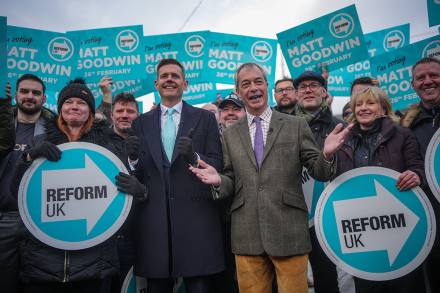
Nigel Farage has always prided himself on being able to see off any threat from his right flank. But now a new force has emerged in the form of his ex-colleague Rupert Lowe. When the two Reform MPs fell out 15 months ago, friends shared memes of Farage’s past fallen rivals ascending to heaven. “Come and join us, Rupert!” they exhorted. Instead, Lowe fought back, setting up his own party, Restore Britain. In the Makerfield by-election on June 18, one poll puts Restore on 7 percent – enough to stop Reform and hand the seat to Labour’s Andy Burnham. Restore’s strategy is simple: use Farage’s playbook against him. Like Farage, Lowe has put his faith in social media, building up a noisy following that can then be turned into a campaigning force.

restore

If you think your bills are bad now, just wait

Forgive the doom-mongering, but the US, and especially the UK, may be dangerously on course for a sovereign debt crisis. Yet debt and deficits play a surprisingly minimal role in our countries’ politics. Overspending on borrowed money hardly featured in either nation’s elections of 2024. A Labour MP hoping for Andy Burnham to challenge Keir Starmer for her party’s leadership recently told Times Radio that investors would see the UK as “the best place to be” if only the government pursued “progressive policies that do speak to our communities.” She added darkly, “The markets will have to get into line” – which was like brandishing a saber at the heavens and threatening that the weather “will have to get into line”... or else!

debt bills

A lot can happen in Makerfield this weekend

From our UK edition

It’s been another bizarre week in Westminster, with Sir Keir Starmer going about business as if everything is completely normal while a shadow leadership race to replace him ramps up in the background. But the absurdity of left-wing turmoil hit its peak yesterday when Andy Burnham officially launched his campaign to win the Makerfield by-election and take over as PM. In the car park of a sports and social club in Ashton-in-Makerfield, the Greater Manchester mayor was flanked by a cadre of MPs from Labour’s more left-leaning flank, including the Corbynista Rebecca Long-Bailey, Barry Gardiner and Charlotte Nichols. Liverpool City Region mayor Steve Rotheram was there. And so, too, was Jonathan Reynolds, the chief whip and man in charge of upholding loyalty to the Prime Minister.

‘Being a Labour mayor in Manchester is playing politics on easy mode’: Is Andy Burnham up to the job of PM?

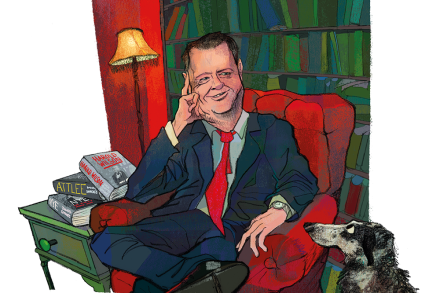
When the Labour party football team played a group of journalists at Loftus Road two years ago the hacks won 4-1. The politicians’ solitary goal came from a late penalty. When the referee pointed to the spot, the centre-forward stepped up, elbowing well-known names like Ed Balls, David Miliband and Sadiq Khan out of the way in his rush to grab the glory. There was a notable absentee that day. ‘Keir [Starmer] had been due to play, but he didn’t turn up,’ a witness recalls. ‘If he had been there, he’d probably have grabbed the ball and there might have been a tussle.’ Instead, Andy Burnham said: ‘This is mine,’ and calmly slotted it into the corner. ‘It was a perfect penalty.

Labour must be honest with voters about the coming crisis

From our UK edition

So far, Labour has staged a contested leadership election in government only once – 50 years ago, in 1976. The New Economics Foundation once declared 1976 to be post-war Britain’s happiest year, judging by income equality and public spending. Cosseted by memories of a hot summer of space hoppers and Swap Shop, the left-wing thinktank brushed over strikes, stagflation and Britain going – to use the obligatory phrase – cap in hand to the International Monetary Fund (IMF). Compared with Labour’s current phoney war, that election was enviably swift. Harold Wilson resigned on 16 March; three rounds of voting by Labour MPs later, and James Callaghan entered Downing Street on 5 April.

My late husband’s insatiable appetite for ‘sticky willies’

From our UK edition

Labour’s just deserts Sir: Last week’s leader hit the nail on the head (‘Desperate retreat’, 16 May). You have to wonder what is in the minds of the Labour party and specifically its potential new leaders Burnham, Rayner and Streeting. Their failure to read the room is what gave them the kicking they got at the local elections. Now they’re all expressing a wish to rejoin the EU, although Burnham will not apparently be campaigning on the issue in the forthcoming by-election. I bet he won’t! To bring an anti-Brexit, pro-EU agenda to an area dominated by Reform would be political suicide. Furthermore, if I were a constituent of Makerfield, I’d feel mightily annoyed that my vote was being used as a stepping stone in one person’s political career.

Is Al Carns rich enough for the Romans?

From our UK edition

Some Labour MPs are demanding that Colonel Alistair Carns, a former Royal Marine who served in the military for 24 years and was awarded the Military Cross for his service in Afghanistan, become leader of the party. The Romans would have approved, but might have felt he was not quite rich enough. Rome fought its rivals for control over the only resources anyone had: land and its products and people. The more territory a state controlled, the more powerful it would be. Those doing the fighting were led by the phenomenally wealthy landowners who, combining political authority with military command, controlled the Senate. Success in the field of battle virtually guaranteed an influential political career.

Apart from Mandelson, who is Labour’s biggest freebie lover?

From our UK edition

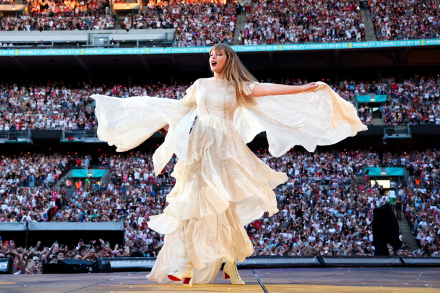
Keir Starmer is Labour’s king of freebies. He promised to clean up politics, but has accepted more free stuff than all his party’s leaders since 1997 combined: more than £100,000 in tickets, accommodation and clothing. In 2024, the Prime Minister said it was ‘right to repay’ the cost of some freebies, and stumped up for six Taylor Swift tickets, four tickets to the races and some clothes for his wife (total value: £6,000). Where Starmer has led, his MPs have followed – including those who now might hope to succeed him. Eleven other Labour MPs (and Ed Davey) accepted Taylor Swift tickets courtesy of football clubs and music companies. Seven cabinet members took money from Lord Alli. Few have not watched a football match from complimentary box seats.

‘It’ll be a photo finish’: inside the Gorton and Denton by-election

From our UK edition

British by-elections are often prolonged affairs, dragging on for months. Yet in the Manchester seat of Gorton and Denton – once home to Myra Hindley and the Gallagher brothers – campaigners are on a frantic dash to canvas the 82,000 voters before polling day on 26 February. ‘It is a proper three-horse race,’ says one. ‘And it’s coming down to a photo finish.’ Gorton has been red since the days of Ramsay MacDonald – but now a WhatsApp scandal threatens to end Labour’s hegemony. Andrew Gwynne, the departing MP, has quit over a series of lewd messages. Manchester mayor Andy Burnham, blocked from standing to replace him, has instead become the spectre of this contest.

The black hole myth & the brain drain conundrum

From our UK edition

16 min listen

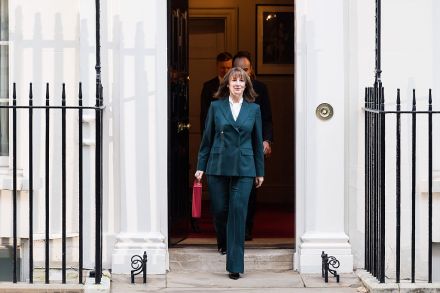
With Budget week finally at an end, certain mysteries remain. Chief among them is why the Chancellor decided to give an emergency speech preparing the public for a rise in income tax. On 4 November, Rachel Reeves summoned journalists to Downing Street early in the morning to warn that ‘the productivity performance we inherited is weaker than previously thought’. She then refused to rule out hiking income tax rates – sending a clear signal to markets that rises were coming. Nine days later, however, the Treasury let it be known via the FT that income tax increases would not be needed after all.

Nick Thomas-Symonds: ‘The Brexit architects essentially ran away’

From our UK edition

With his owlish expression and affable manner, Nick Thomas-Symonds looks more like the academic that he was, rather than the political bomb disposal expert he has become. Brexit is the greatest political issue for a generation, yet Keir Starmer has chosen to put this softly spoken Welshman in charge of defusing it. The Cabinet Office minister, responsible for post-Brexit negotiations with the EU, is following in the footsteps of Olly Robbins and David Frost, but his lack of public notoriety says much about how things have changed as we approach the tenth anniversary next year of the vote to Leave.

Labour’s war on heritage

From our UK edition

Britain’s heritage is slowly going up in smoke. Medlock Mill was Manchester’s oldest standing textile mill until it burnt down in June. It joins Grade I-listed Woolton Hall – destroyed by a catastrophic fire in August. But it’s not just the buildings that are under threat, but the entire system designed to protect them. Prior to the disaster, the architect Stephen Hodder had proposed gutting the mill and converting it into a 37-storey block of student flats. A coalition of concerned citizens and conservation charities fought for a stay of execution by applying for the mill to be listed. After reviewing new archaeological evidence, Historic England concurred and recommended it for Grade II.

Pain is inevitable for Rachel Reeves

From our UK edition

A year ago, the Chancellor called her £38 billion tax rise a ‘one-and-done’ move. Now she looks set to rinse and repeat, with reports that a 2p increase in income tax is on the table. According to The Times, she has informed the Office for Budget Responsibility that a rise in personal taxation is one of the ‘major measures’ she will announce. This is the strongest signal yet that she will break Labour's manifesto pledge not to increase income tax rates. What does this mean for the Chancellor, and taxpayers? Elsewhere, David Lammy suffered a disastrous Deputy Prime Minister's Questions after dodging questions on whether there had been another prisoner let out by mistake.

Starmer has bought himself time. Can he use it wisely?

From our UK edition

The Labour conference in Liverpool was a curiously upbeat affair. Much of the good spirit came from schadenfreude at the misadventures of Andy Burnham. The Mayor of Greater Manchester scuttled out of Liverpool just before Keir Starmer’s speech, having united the party in mutual contempt at his posturing in recent days. ‘A fucking clown’ was the verdict of an ex-cabinet minister. ‘He did an Eric Heffer,’ remarked one Labour official – a reference to the cantankerous Liverpool MP who stormed out of Neil Kinnock’s conference speech 40 years ago. ‘It was the worst coup attempt since South Korea,’ says a former aide. Burnham, however, is merely a symptom, not a cause of Labour’s woes. Serious rivals are unlikely to telegraph their ambitions quite so blatantly.