

British by-elections are often prolonged affairs, dragging on for months. Yet in the Manchester seat of Gorton and Denton – once home to Myra Hindley and the Gallagher brothers – campaigners are on a frantic dash to canvas the 82,000 voters before polling day on 26 February. ‘It is a proper three-horse race,’ says one. ‘And it’s coming down to a photo finish.’
Gorton has been red since the days of Ramsay MacDonald – but now a WhatsApp scandal threatens to end Labour’s hegemony. Andrew Gwynne, the departing MP, has quit over a series of lewd messages. Manchester mayor Andy Burnham, blocked from standing to replace him, has instead become the spectre of this contest. It is his name mentioned approvingly in focus groups; his face on local Labour literature, alongside the official candidate, Angeliki Stogia.
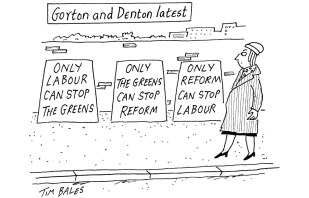
Burnham’s absence has left a gap the Greens want to fill. This is Zack Polanski’s first electoral test since becoming leader in September and activists boast that membership has doubled. Leaflets cry: ‘Stop Reform, send Starmer a message, make hope normal again.’ Numbers are being traded between the parties like Top Trumps. The Greens claim to have sent out 561 activists last Saturday; Labour promises 1,000 this weekend. ‘It is the biggest north-western campaign day in history,’ says one Labour organiser.
The battle for the right might be the big story in politics at the moment but the conflict on the left is no less brutal. Labour’s digital blitz will intensify in the coming days as the party critiques Green policies on issues like defence. ‘I don’t think there is anyone I hate more in politics than Polanski,’ says a pro-Starmer MP. Countering the positivity of the Green brand is a challenge for Labour campaigners. ‘It’s like kicking a puppy,’ groans one. In Australia, the Labor party took several cycles to work out how best to attack the Greens. The same might be true for Labour here.
Polanski’s party has forged new alliances and is backed by the Muslim vote. Mosques and community organisers are being targeted to help buttress the Greens’ infrastructure; one in three voters here are Muslim. Green candidate Hannah Spencer is a 34-year-old plumber whose four greyhounds dominate campaign HQ. But rivals feel the Greens missed a trick. ‘They needed a raving Gaza lunatic,’ says one.
Both Labour and the Greens want to frame this as a binary contest: vote for us to stop Reform. Yet this slugfest risks becoming a stalemate. ‘A lot of voters on the left seem stuck in tactical paralysis: they’re desperate to keep Reform out but don’t know which party is the safer bet,’ says pollster Louis O’Geran of More in Common. ‘Even this early on, voters are already seeing competing claims from Labour and the Greens on Facebook, each presenting themselves as the tactical choice to stop Reform.’
‘It is a proper three-horse race,’ says one campaigner. ‘And it’s coming down to a photo finish’
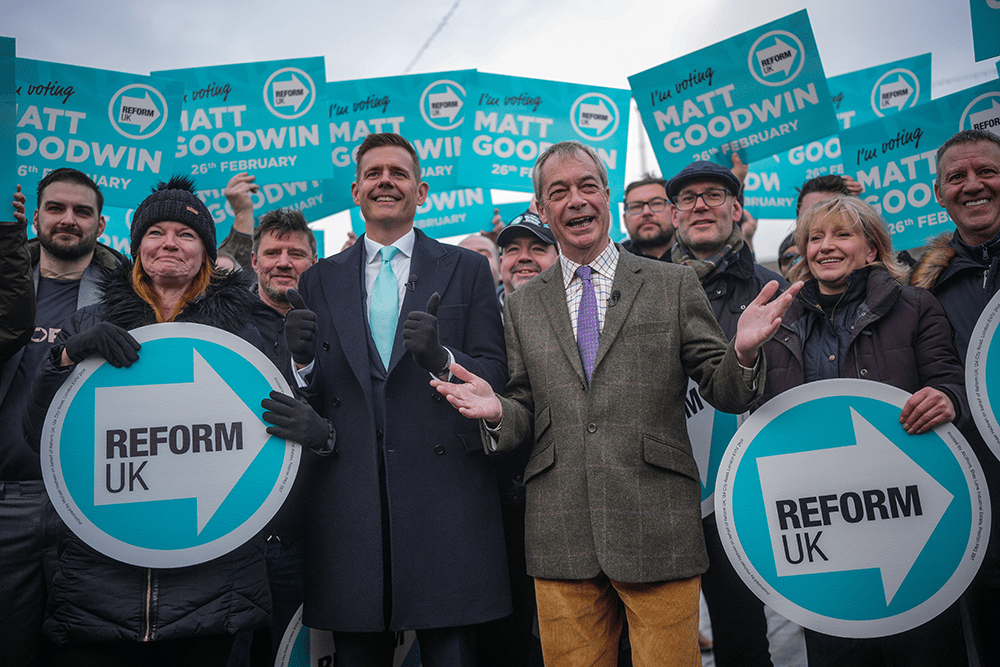
A split vote is indeed the best hope for Nigel Farage’s party. Reform’s candidate is Matt Goodwin, the academic turned GB News presenter, whose political journey has sparked much press commentary. ‘They’re trying to pathologise me for changing my views,’ says Goodwin. ‘It’s as if people struggle with the notion that you might actually believe what you’re saying, that I’m fully all in ideologically, philosophically.’
For Goodwin, who spent a decade following the rise of Farage’s political ventures, the Greens look vulnerable. ‘I think the Greens are being massively exaggerated by the hype around Polanski,’ he says. ‘It reminds me of the early days of Ukip with Nigel [as leader], where actually, when you pull back the curtain and look behind it, there wasn’t much there. But there was a charismatic guy in the front.’
Goodwin cites his selection as proof of Reform’s maturity as a distinct political force. ‘I’ve said at the outset, I don’t want former Conservatives anywhere near this. There is another wing to Reform.’ He argues: ‘If we become a Tory tribute act, the whole thing will never fulfil its potential. If we are genuinely seen as [the party where] everybody is coming from across the spectrum to save this country, that’s the difference between a 30 per cent party and a 40 per cent party. And I really do think it can be a 40 per cent party.’
Demographics and the lack of any Tory voting tradition here mean 30 per cent is more likely than the 39 per cent Reform won in the Runcorn by-election last May. The four-man team from that triumph has been reconvened, with a simple campaign app and a revamped ‘war book’ following the defeat in Caerphilly. The newly launched ‘Students for Reform’ will this weekend target the university vote. ‘Our canvassers are younger than my car,’ jokes one veteran.
A subplot will be what happens on the fringes: Advance UK, the right-wing party run by Farage’s former deputy Ben Habib, is running a candidate and could help deny Reform victory. Should that happen, a potential backlash from Habib’s online supporters ‘could kill them off’, mutters one Reformer.
The Tories meanwhile face losing their deposit at an English by-election for the first time since 1983. ‘Reform should win Gorton and Denton easily given Labour’s unpopularity and the anti-politics mood,’ says one Tory strategist. But Kemi Badenoch’s party is determined to make a noise and raise questions about Reform’s record on ethics, especially so in the wake of the Peter Mandelson scandal. ‘We’re about to spend a week in territory in which Farage is not entirely comfortable,’ claims one aide.
For some within government, there is a central irony to this contest. Burnham has been blocked from standing – yet it is his brand of Manchester Labour that the party is relying on for victory. In the People’s History Museum, five miles from Gorton, is the workers’ jacket which Burnham wore when he lambasted Boris Johnson’s lockdown restrictions in October 2020. For some within the Labour family, he is the physical embodiment of the distinctive feel of Manchester Labour: self-assertive and community-orientated.
Across the country, Labour’s sea barriers are crumbling – but in Gorton and Denton campaigners argue that they are higher than nearly anywhere else. The neighbouring seats are held by Lucy Powell and Angela Rayner; the party dominates local councils. If they lose this seat – or worse, come third – Labour MPs’ attention will turn to another race instead: that to succeed Keir Starmer.
Listen to Coffee House Shots with James Heale from Gorton and Denton:
EVENT: Spectator Writers’ Dinner with Lionel Shriver, Wednesday 25 February, 7 for 7.30pm BOOK NOW





Comments