Labour party

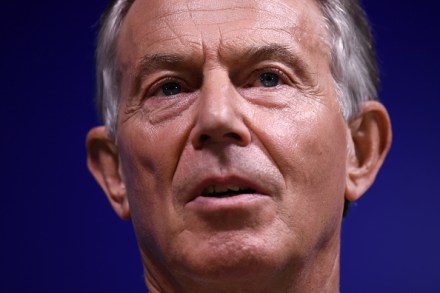
Tony Blair is the messianic Remainer here to save us from ourselves

Here they come, Tony Blair and his tragic chattering-class army. The former PM, whose rictus grin and glottal stops still haunt the nation’s dreams (well, mine anyway), is on the march with his pleb-allergic mates in business and the media. Blair and the Twitterati, linking arms, united in their horror at the incalculable stupidity of northerners and Welsh people and Essex men and women and other Brexiteers, their aim as clear as it is foul. They’re here to save us from ourselves. ‘Tony Blair is trying to save Britain from itself’, as one report put it. Excuse me while I pop an anti-nausea pill. Yes, Blair, the political version of Michael Myers, the nutter in the Halloween movies who just cannot be slain, is back. Again.

This election will be won or lost on the suburban battleground

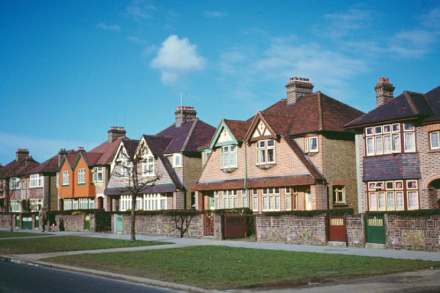
In Westminster, all the general election chatter is about Brexit. Will Tory Remainers turn Lib Dem? Will Labour leavers desert Jeremy Corbyn? As polling day draws near, however, the Europe obsession must recede. Politicians may not be able to look past last year’s referendum, but voters will have moved on. MPs will find that, as before, the great issue of our time will be just one of many on the doorsteps. This summer’s battleground won’t be Brussels. It will be suburbia. Domestic matters will decide whether Theresa May returns to Downing Street with a fat majority, and no one is more domesticated than the average suburbanite. We are intensely local. We want good local schools and good local hospitals — we don’t like grand projects like HS2.

Theresa May’s great gamble

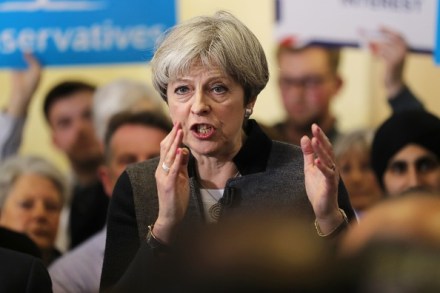
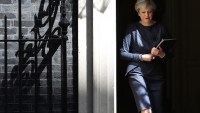
Theresa May has long been clear about what sets her apart from other politicians: she doesn’t play political games. When she launched her bid for the top job last year, she was clear that — unlike her rivals — she hadn’t succumbed to the temptations of Westminster. She told us that she didn’t drink in the bars or gossip over lunch. She invited the TV cameras into her first Cabinet meeting as Prime Minister to record her telling ministers that ‘politics is not a game’. The danger for May in calling an election three years ahead of schedule is that it looks a lot like game-playing. Has a 20-point poll lead proved too much of a temptation, even for this vicar’s daughter?

Expect the unexpected in Theresa May’s pointless poll

A general election is called and in a matter of hours a neutral and unbiased BBC presenter has likened our Prime Minister to Recep Tayyip Erdogan. Governments rise and governments fall, but some things stay just as they always were. It was Eddie Mair on Radio 4’s PM programme who made the comparison, while interviewing the Home Secretary, Amber Rudd. In fairness to Mair, he had been alluding to Theresa May’s apparent wish to create ‘unity’ within Westminster, a truly stupid statement within an address which sometimes made no semantic sense and sounded, to my ears, petulant and arrogant. Then along came the opinion pollsters to tell us exactly what will happen on 8 June — except they declined to be too explicit.

Len McCluskey’s victory finally gives Corbyn something to smile about

Len McCluskey has been re-elected as General Secretary of Unite. It was something of a messy fight: his rival Gerard Coyne was suspended yesterday - we still don’t know why - and the contest was much narrower than had been expected, with McCluskey winning by just 5,000 votes. The dismal turnout of 12 per cent also suggests that many of those eligible to vote were put off by the parochial rows at the heart of this contest. McCluskey accused a ‘cabal’ of Labour figures, who he described as ‘skilled masters of the darks arts’ of trying to use the election to oust Corbyn. While Coyne suggested that the general secretary of Unite shouldn’t be ‘the puppet master of the leader of the Labour party’, in a thinly-disguised dig at his rival.

Theresa May doesn’t trust enough people for a power ‘circle’. A triangle, maybe

The fact that nothing leaked about Mrs May’s snap election tells you much of what you need to know about her. It shows how iron is her discipline and how close her inner circle (so close, in fact, that it is a triangle rather than a circle). It suggests that she takes neither her cabinet nor her party into her confidence. It shows that if she wins the general election, her control of her administration will be much tighter than that of Margaret Thatcher (which was surprisingly loose) and even than that of David Cameron (which was surprisingly tight). Finally, it shows that if she loses, or gets a result no better than the present parliamentary arithmetic, she will find herself friendless.

Len McCluskey’s hollow victory

Len McCluskey has seen off a challenge to be elected to a third term at the helm of Unite. And what a seeing off it was. When the votes starting to come in, and reportedly showed the top two contenders neck-and-neck, McCluskey’s rival was promptly suspended. Gerard Coyne was stripped of his duties as West Midlands regional secretary - although it’s not clear what he’s supposed to have done wrong or who his accusers are. Coyne has been a thorn in the side of the McCluskey hierarchy for some time. The Guardian points out that he was given a written warning in 2016. His offence? Speaking at an event hosted by moderate Labour MPs Chuka Umunna and Tristram Hunt.  His challenge certainly was not welcomed.

What the papers say: Jeremy Corbyn does pose a threat to the Tories

Theresa May is riding high in the polls and there’s much talk of a Tory landslide - but that doesn’t mean the Government should rest on its laurels, says the Daily Telegraph. It’s vital, the paper says, that the PM does her best to ‘create a sense of urgency among the voters’; ‘They have to understand the dangers of not coming out to support her,’ the paper adds. Of course, some might laugh at the prospect of Corbyn making it to Number 10 - yet it’s just that sense of ‘impossibility’ that the Labour leader ‘hopes to exploit’.

Listen: Dawn Butler’s car-crash interview – ‘this election is Theresa May trying to rig democracy!’

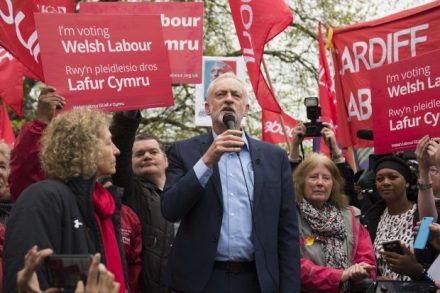
Oh dear. Today Jeremy Corbyn kicked off Labour's general election campaign with a speech on his party's vision for a fairer society -- complaining that the current system was rigged. However, confusion over whether Labour would consider holding a second referendum, if elected, distracted from the message. Now Dawn Butler has dealt the party another blow with a disastrous interview on Radio 4's PM. The Labour MP appeared to be having a bad day as she blustered through the interview with Eddie Mair -- claiming this election was May's attempt at rigging democracy: 'Labour will make this country fairer and that's how they will overturn a rigged system. This election is Theresa May trying to rig democracy.

The Spectator Podcast: Election special

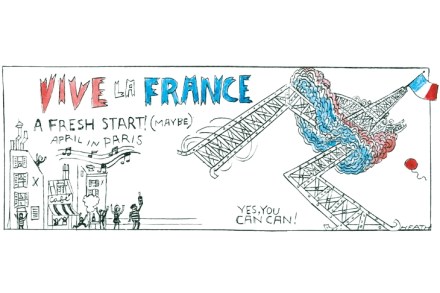
On this week's episode, we discuss the two European nations that are are heading for the polls in the next couple of months. First, we look at Theresa May's shock decision to hold a snap election, and then we cross the channel to consider the French election as they get set to whittle the field down to just two. With British news set to be dominated until June 8th by election fever (yet again), there was no place to start this week but with the fallout from the Prime Minister's stunning U-turn on an early election. It's a gamble, James Forsyth says in his cover piece this week, but with a portentially enormous pay off. James joins the podcast along with Bobby Duffy from Ipsos MORI and Richard Angell director of Progress.

Revealed: Labour party’s ‘wellbeing day’ scrapped as staff told to cancel holidays

Theresa May's decision to hold a snap election in June has scuppered many MPs' holiday plans -- and one politician's honeymoon. But now word reaches Steerpike that it will also have a negative effect on the Labour Party's general wellbeing. Yes, in what is perhaps the greatest tragedy of the snap election yet -- the Labour party's 'Wellbeing Day' has been called off. Announced on 11 April and scheduled for 10 May, there was palpable excitement among Labour staff over the event which promised to help Labour brains 'bounce back from adversity' and 'steer calmly through the challenges' ahead. Attendees were promised treats such as the 'smoothie bike' and 10-minute massages: Sadly, this is no more.

Did Douglas Carswell try – and fail – to rejoin the Tory fold?

Douglas Carswell has just announced that he will not stand for re-election as the MP for Clacton. The independent MP, who quit Ukip last month, said that he was planning 'to move on to other things' and was looking 'forward to being able to read newspapers without appearing in them'. In a statement on his website, Carswell said: 'As I promised in my maiden speech, I have done everything possible to ensure we got, and won, a referendum to leave the European Union - even changing parties and triggering a by election to help nudge things along. Last summer, we won that referendum. Britain is going to become a sovereign country again. I have decided that I will not now be seeking re-election.

Jeremy Corbyn launches Labour’s General Election campaign, full transcript

The dividing lines in this election could not be clearer from the outset. It is the Conservatives, the party of privilege and the richest, versus the Labour Party, the party that is standing up for working people to improve the lives of all. It is the establishment versus the people and it is our historic duty to make sure that the people prevail. A duty for all of us here today, the duty of every Labour MP, a duty for our half a million members - including the 2,500 who have joined in the last 24 hours. Much of the media and establishment are saying that this election is a foregone conclusion. They think there are rules in politics, which if you don’t follow by doffing your cap to powerful people, accepting that things can’t really change, then you can’t win.

Labour’s General Election plan is already coming unstuck

What does it mean to be rich? That’s the question already getting the Labour party into a tangle as it struggles to get its act together ahead of the snap general election. Yesterday, John McDonnell said a Labour government would send a higher tax bill the way of all workers earning over £70,000. The shadow chancellor said simply that those earning more than that amount were ‘rich’ and should ‘pay their way more’. A straightforward policy, you might think. But today, it seems, there is already confusion in the ranks.

The exodus of Labour MPs is underway

Who'd be a Labour MP? Despite the best efforts of the Parliamentary Labour Party, Corbyn is going nowhere and, if the polls are to be believed, he's leading Labour to electoral oblivion. A general election landslide is on the cards for the Tories, with some estimates suggesting the Government could boost its majority by more than 100 seats come June 8th. Much of this surge will it seems, inevitably, come at the expense of Labour MPs. And for some, the prospect of a snap election has led to them calling time on their Parliamentary careers. Here is the full list of the Labour MPs doing just that: Gisela Stuart, who represents Labour in Birmingham Edgbaston, said she was ending her 20 year spell in the Commons ahead of the snap election.

What I expect from this pointless election

A general election is called and in a matter of hours a neutral and unbiased BBC presenter has likened our Prime Minister to Recep Tayyip Erdogan. Governments rise and governments fall, but some things stay just as they always were. It was Eddie Mair on Radio 4’s PM programme who made the comparison, while interviewing the Home Secretary, Amber Rudd. In fairness to Mair, he had been alluding to Theresa May’s apparent wish to create ‘unity’ within Westminster, a truly stupid statement within an address which sometimes made no semantic sense and sounded, to my ears, petulant and arrogant. Then along came the opinion pollsters to tell us exactly what will happen on 8 June — except they declined to be too explicit.

Labour is starting its hardest election campaign woefully unprepared

The opposition parties about whom Theresa May complained in her speech launching the snap election are grinding into action. Their size and resources seem to be inversely proportionate to how prepared they are: the Lib Dems say they have already selected around 400 candidates to contest seats, while Labour hasn't selected any candidates in seats it doesn't hold. The party is contacting its 2015 candidates to see if they might stand again so it might mount reasonably well-informed campaigns in key seats (or formerly key seats: a campaign with an ounce of wisdom would have to name seats it already holds as 'key seats' while accepting that many of its sitting MPs will just be washed away).

Jeremy Corbyn is already anticipating his political extinction

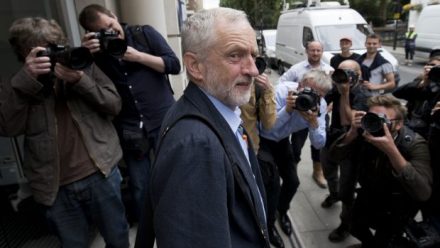
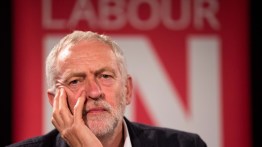
Just seven weeks till Jezza-geddon. The Labour leader seemed to anticipate his political extinction with a dead-sheep performance at PMQs. Poor Corbo. He’s never shaken off the air of Speakers’ Corner. He belongs outdoors, with a step-ladder and a bull-horn, ranting away at tourists and pigeons. Today he was faced with a carefully drilled Tory militia eager to demonstrate their unity. It was impressive but dispiriting as well. Every preferment-seeker and red-box wannabe on the backbenches had been ordered to lace their query to the PM with extravagant praise of Tory economic genius. Up they popped, in wearying succession, the pliable Pippas, the malleable Marys, the robotic Richards, the pushover Pauls. It wasn’t a debate. It was a flash-mob of Duracell Bunnies.

If Labour is decimated, Corbyn and his comrades will be delighted

In the early hours of 9 June 2017, Jeremy Corbyn conceded defeat. For the luckless political journalists forced to cover the Labour campaign this was a rare moment. The leader of the opposition had avoided the press and public. Now, as Labour was going down to its worst defeat since 1935, Corbyn was at last prepared to take questions. But not before he had made one of the most graceless concession speeches in British political history. He offered no apologies to the scores of Labour MPs who had lost their seats or the millions of voters who needed an alternative to conservatism. He accepted no responsibility. On the contrary, the passive-aggressive Labour leader was as close to jubilation as anyone had seen him. His eyes shone. His voice rang with an unearned self-confidence.