Labour party

PMQs live blog | 7 April 2010

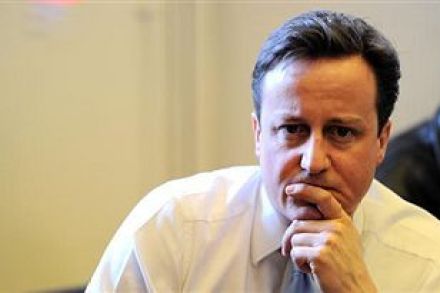
Stay tuned for live coverage of PMQs. 1200: We're about to start.  Brown is flanked by Harriet Harman and Jim Murphy.  Douglas Alexander, Alistair Darling and Alan Johnson are also on the front bench.  The heavy hitters are out in force... 1201: And here we go, for what could be Brown's last ever PMQs as Prime Minister.  He starts, as usual, with condolences for fallen soldiers. 1202: The first question is as plantlike as they come: will Brown take £6 billion "out of the economy"?  Brown spins the usual dividing line about investing in frontline services, adding that the Tories would risk a "double dip" recession.  Hm. 1204: Massive cheer from the Tory benches as Cameron stands up.

The scene is set for a bust-up

PMQs today is going to be the last time that Gordon Brown and David Cameron face-off against each other before the debates. Both men will be keen to score pyschological points against the other and to send their troops off in good heart. This means that PMQs will be an even noisier affair than usual. But both leaders will have to remember that if they behave in the debates as they do in PMQs it would be a disaster for them. The aggressive, shouty nature of PMQs would not translate well to the debates. One thing to watch today is what Nick Clegg does. He’s racheting up the rhetoric again, repeating his claim that the other two parties are corrupt.

British jobs for British workers…

Did you know that there are fewer British-born workers in the private sector than there were in 1997? I'd be surprised if so: these official figures are not released. The Spectator managed to get them, on request from the Office of National Statistics. We use the figures in tomorrow's magazine, but I thought they deserves a little more prominence here. See the graph above, which shines a new light on the boasts Gordon Brown has been making. He said his Glasgow speech last month that: "If we had said twelve years ago there would be, even after a global recession, 2.5 million more jobs than in 1997 nobody would have believed us.

Inauthenticity, meet skewer

We're not even one day into the election campaign proper, and already the internet is fulfilling its role as the Exposer-in-Chief of spin, deceits and slip-ups aplenty.  I direct you towards Guido's post on Brown's – ahem – impromptu support at St Pancras station earlier.  Or Left Foot Forward's account of the omissions from Cameron's list of The Great Ignored.  Or Sam Coates's tweets about the #stagemanagedelection.  And there's plenty more where they came from. In a campaign where inauthenticity is going to get skewered at every turn, politicians clearly need to go about things differently.  But there are all too many signs that they're stuck in the old, familiar grooves of elections past.

A burnt out case

Freeing Manchester United from the Glazers is not what I envisaged when Ed Miliband promised ‘a radical manifesto’. But the Guardian reports that a fourth Labour government will legislate so that football fans can buy their beloved clubs. Clearly Brown's granite is plastic to the touch. I’ll reserve judgement until the manifestos are published, but, as Alex notes, the feeling is that New Labour's zeal is exhausted. Budget initiatives on stamp duty and the retirement age originated in Tory press releases and the Queen’s Speech regurgitated policies dating back to the 2007-08 sitting. I suspect the manifesto will offer the same gristle. We should be thankful for small mercies because so few bills have made it onto the statute book.

The Tunnel Ridge Fault election

At times the chasm between Britain’s political parties is as great as the San Andreas Fault. Sometimes the difference is more like a small rift, a matter of tone not policy. In this year’s election, the difference between the parties is somewhere in between, like the lesser-known Tunnel Ridge Fault in Eastern California. In part, the appearance of only minor differences may explain why the polls are showing such different things; some predict that Labour will hang on to power, others that the Tories will be able to win.

Behind enemy lines

Well, well Gordon Brown has started his election campaign in a constituency that is notionally a Tory seat. Rochester and Strood is being fought for the first time at this election but the invaluable UK Polling Report tells us that the Tories would have just won this seat in 2005. I suspect that Brown has headed to Kent on the first day of the campaign in an attempt to show that Labour haven’t written off the south east despite coming fifth there in the European elections and that Labour is still a national party. David Cameron is off to Birmingham and Yorkshire and the shadow Cabinbet are fanning out across the country in an attempt to hit every TV region in Great Britain, evidence that for all the talk of this being the first internet election TV remains the dominant medium.

The parties tussle for media attention

Westminster today is dominated by the sound of helicopters hovering over head, waiting for Brown to set off from Downing Street to the Palace. This morning is the last time that Brown will have the full political advantage of his office, the ability to set the news agenda. The Tories are attempting to step on this by scheduling their campaign launch for bang in the middle of the time when Brown is expected to be at the Palace requesting a dissolution of parliament. I suspect that we are in for a game of media chicken with Brown trying to rush back to Downing Street and announce that the election is called so that the broadcasters cut away from the Cameron event. One surprise today is that Labour put up Lord Kinnock for the 8.10 slot on the Today Programme.

Now’s the time

If there's anything we don't already know about today, then I'm struggling to find it.  The election will be declared for 6th May.  Brown will make a pitch which bears close resemblance to his interview in the Mirror today: "We have come so far. Do we want to throw this all away?"  Cameron will say that the Tories are fighting this election for the "Great Ignored".  Clegg will claim that the Lib Dems represent "real fairness and real change".  A hundred news helicopters will buzz around Westminster.  A thousand blog-posts (including this one) will have headlines to the effect of "And so it begins...".

Labour’s Manifesto: The Shortest Abdication Note in History?

And so it begins. At last. The phoney war is over and now the grapeshot will be flying thick and fast. There will be casualties aplenty, decency, honesty and your patience amongst 'em. I'm sticking to my view, which is neither especially daring nor unconventional, that the Conservatives will win and finish with a majority of 30 or so seats. Sticking, I say, even though obviously I reserve the right to change my mind several times between now and polling day. For ages now - or at least it feels like ages - I've been arguing that whatever doubts one may reasonably have about Cameron the Tories appear to have passed the important test of Not Seeming Grotesquely Ill-Prepared for Government.

The true cost of Brown’s debt binge

When Alistair Daring admitted last week that there would indeed be job losses arising from the proposed National Insurance hike, it would have struck Gordon Brown and Ed Balls like root canal surgery. This blows wide open the main part of Brown's election deceit: asking the public to look at the advantages of the borrowing, and not contemplate the flip side to the debt coin. Not to ask where the repayments will come from, or the impact of those repayments on the jobs of the future. No wonder Darling is today being made to claim the opposite. The grim truth is that every job "protected" now, due to debt, will be more than balanced out by money taken away from the economy in the form of the interest needed to serve that debt.

Brown helps Cameron to define his Big Idea

Gordon Brown has walked straight into George Osborne’s trap. After bleating that the national insurance tax cut is unaffordable, he has decided to make this a massive election dividing line – claiming that this teeny (1 percent of state spending) tax cut somehow poses a mortal danger to an economic recovery.  Please, God, let him keep on this message through the campaign. “The Tories are proposing to cut your taxes and make you better off – stop this lunacy, and vote Labour”. But Alastair Darling has taken it further, with a significant piece of language on the radio this morning. The Tory tax cut, he says, is “taking money out of the economy” at a vulnerable time. As he said at 7.

Two steps forward for the Tories, one step backwards for the Lib Dems

Last week, the Tories strengthened their tax-cutting credentials with a smart policy on national insurance.  I'm sure you didn't miss it.  But one part of the recent Tory resurgence is, to my mind, being underplayed: they now have a much stronger message on government waste.  After all, the NI policy is being funded by cutting waste.  And then there was that spoof website which pulled the limelight onto Labour's wasted spending.  And then there are the interviews in which Tory frontbenchers – such as William Hague today – say stuff like: "If there’s waste in government spending, which the Labour Government says there is, we should be saving the waste, not saying we’ll go on wasting it for several more years.

Labour didn’t think this one through…<br />

There's me thinking that Labour wouldn't go negative with their latest poster, created via an online competition among their supporters.  I mean, surely they wouldn't want to undermine their whizzy, positive, digital energy by picking a design which didn't present an equally positive Labour vision.  But, oh, how they did.  Here's the winning design: Now, there are two immediate problems with this poster.  The first being that I'd always thought the character Cameron is meant to be playing – DCI Gene Hunt – is actually quite popular with the public, despite his rough and less-then-edifying edges.  Indeed, he even topped a recent poll as "Britain's favourite TV hero".

“The only good Tory is a dead Tory”

Earlier this week, Coffee House pointed out that the Labour Party National Executive Committee's decision to exclude local candidates from the Stoke Central candidate short-list might cause trouble. And, lo, trouble it has caused. Similarly unimpressed by the state of Labour democracy, Stoke Labour member Gary Elsby has decided to stand independently and passionately annouced his candidature on the BBC World at One programme today. He has already garnered the support of my colleague Toby Young. Elsby later stated: "By taking this decision I feel that I am doing something positive for all the unpaid Labour Party volunteers who could be the next victims of those paid enforcers of the NEC hit squad.

Why we shouldn’t confuse poverty with inequality

The power of ideas is vastly underrated in British politics. It has become fashionable to dismiss them as "ideology" and declare oneself in favour of "what works".  But the idea of what works is, of course, driven by concepts. As Keynes put it: "Practical men, who believe themselves to be quite exempt from any intellectual influence, are usually the slave of some defunct economist."   I write this because ConHome has just run a piece by Max Wind-Cowie saying, "Equality should not be a dirty word for the Conservatives". I do admire the way Demos, seeing Labour on the way out, is trying to inject as much of its agenda as possible into the Conservative party. But "equality" is, alas, a trap.

A bad news day for Labour, as the Tories get positive

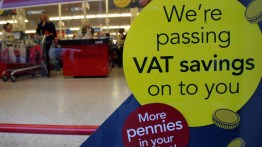
Oh dear.  Today's frontpages form the most eclectic set of damaging headlines for Labour for quite some time.  On the front of the Mail and the Times: allegations that the government – specifically, Ed Balls – "interfered" with a report on the Baby P tragedy.  On the Independent: a claim that Brown "misled" the public over waiving VAT on a charity single for Haiti.  And on the Telegraph: news that more business leaders have backed the Tories' national insurance policy.  Even the Guardian wades in with the headline: "Labour and business fall out". Of these, the first story is potentially the biggest scandal.  But it's the latter two which more immediately threaten to alter the political mood music.

The High Court saves Labour’s bacon, for the moment

Commuters won’t be alone in celebrating tonight. The High Court’s award of an injunction against the RMT’s planned Strike Action will have champagne corks popping in Downing Street. The Union movement’s sudden renaissance is both embarrassing and dangerous for the government. First, it has shifted the election spotlight back onto Labour. Before the BA strike, the Tories were driftwood – powerless to determine the direction in which they were headed. Unite’s political and social prominence exacerbated tensions within the Labour party, with divisions between New and quintessentially Old Labour becoming more stark. As Ed Howcker wrote last night, the next line in the prelude to internecine war is being written in Stoke.

The Tories’ campaign is sharpening up

As declaration day (the rather pompus name that news organisations have come up with for the moment when Gordon Brown actually calls the election) draws nearer, the Tory campaign is sharpening up. This morning’s operation on National Insurance was impressive, enabling the party to get a second set of headlines out of its plan to stop Labour’s National Insurance rise. The letter from 23 business leaders supporting the Tory position worked on several levels. First, it got the Tories’ tax cut back on the top of the news agenda along with its clear message: seven out of ten workers will be better off under the Conservatives. Second, it strengthened the Tory case that the risk to the economy is to increase the tax on jobs not cutting government waste.