Labour party

A reassuringly dull budget

This was a surprisingly subdued Budget, and for that Alistair Darling is to be commended. He must have resisted all manner of pressure from Brown to put in pre-election pyrotechnics. But the budget was what it should be: a punctuation mark on the sentence of the national economy. That sentence says “our finances are going to hell,” and the Budget’s high point is that we are doing so fractionally slower than we were expecting to last November. Personally, I forgive Darling all the partisan stuff in his speech – this is a pre-election Budget after all. There is no act of wanton vandalism, like the 50p tax. Stamp duty on

Darling’s phoney Budget doesn’t change anything

Was that a Budget sufficient to the fiscal nightmare that we face?  Well, I think we all could have answered that question before Alistair Darling stood up at the dispatch box, but now we can at least be sure: no, it wasn’t.  The government’s overall spending plans remain roughly the same as they were in the PBR, there aren’t many tax increases to raise much money for the Treasury, and we’re meant to be all excited that borrowing is £11bn lower this year than previously forecast – at £167bn.  It’s a shame that Darling increased alcohol duty, or we’d all be be out celebrating that particular success, I’m sure. If

All quiet on the Westminster front

If there’s one thing distinguishing this morning, then it’s just how placid everything feels.  The clouds are moving sluggishly across the sky; there’s little excitement about the measures expected in the Budget; and there are no stories about rifts between the Prime Minister and the Chancellor.  Indeed, Downing St insiders tell the FT that relations between Gordon Brown and Alistair Darling have been “pretty good” in the run up to the Budget, because both are “broadly agreed on the strategy of halving the deficit in four years while backing growth initiatives.” Many are taking this as a sign that Darling and Peter Mandelson have won out in their efforts to

Does America Point to a Future for the British Left?

I have had the pleasure of meeting two major figures of the American intellectual left over the past two weeks: Washington Post columnist EJ Dionne and Michael Kazin, co-editor of Dissent magazine. I’m sure there are as many differences as similarities in the politics of these two men, but what struck me about meeting them was how complacent and flabby we have become in Britain with our progressive politics. The relative strength of the Labour Party and the trade unions make us believe our radical traditions are safe here. But last night’s Dispatches made me realise just how fragile a principled left-wing politics has become.  It is as well not

Two things to bear in mind tomorrow

If, as expected, Alistair Darling reduces his borrowing forecasts tomorrow, it’s worth keeping two particular points in mind: 1) This government has always tended to underestimate its borrowing levels.  Ok, so you might argue that the government couldn’t have foreseen that public sector net borrowing would rise to £178 billion in 2009/10 when it predicted £38 billion in Budget 2008.  A recession has bitten, banks have collapsed, since then – that kind of thing.  But Brown & Co. certainly have a track record when it comes to underestimating borrowing totals.  In Budget 1999, they thought that borrowing would be at £3 billion in 2002-03 – it turned out to be

Alistair Darling needs to tell us that frontline services will be affected by cuts

The credibility of the Chancellor’s Budget tomorrow depends on the policy changes that he announces for the public sector.  It won’t be enough for him just to announce a series of public spending totals that decline gracefully in the years to come.  Within some broad limits, anyone can do that.  What counts is whether he backs it up with practical ideas to target the big government costs, which lie in two places – benefits and the public sector workforce. In retrospect, the general election has fallen at the wrong time for the UK public finances.  Since early last year, the prospect of an early election has allowed the Government to

The Budget is a bigger opportunity for the Tories than for Labour

Last night’s Dispatches programme was a concentrated double blow for Labour.  Not only did the limelight burn more unflatteringly on their party, but it has also undermined their careful Budget operation.  For the next few days, at least, it’s possible that broken politics may trump the broken economy in the public mind.  And Alistair Darling is going to have a difficult, if not impossible, task in bridging that chasm of “distrust and disbelief” with his prescriptions tomorrow. It doesn’t help the Chancellor’s cause that, by most accounts, we’re going to get an unconvincing and unspectacular Budget – some spin about lower borrowing forecasts; none of the tax rises that Peter

Byers, Hewitt and Hoon suspended from the Labour party…

…according to the Beeb just now.  And if you watched tonight’s Dispatches programme, you’ll know exactly why. Nick Robinson comments that the “Labour leadership” will delight in “taking revenge” on three figures who have ruffled Brown’s feathers on multiple occasions – so it continues to look like backbiting and politicking will take priority over geniune reform.  A grubby Parliament just got considerably grubbier.

Four politicians singing the same tune…

Cabbies have a reputation for telling tall tales, but Stephen Byers could be in a league of his own. Lords Adonis and Mandelson have stated, categorically, that Byers is lying: he did not alter government policy. If so, why on earth did he liken himself to (though I would use a more lurid epithet) a ‘cab for hire’? This affair is being obscured by thickening smoke. Each new answer poses further questions. Mandelson’s outright denial contrasts with yesterday’s amnesia. The Sunday Times quoted Mandelson as having “no recollection” of a conversation which Byers alleges took place. There is subtle difference between denying something happened and being unable to recall it.

Another shaming day for Westminster

There was something particularly depressing about Harriet Harman’s statement to the House today on this lobbying scandal. The MPs involved have damned themselves more effectively than anybody else could and so the anger of the Commons lacked bite. Though, it was noticeable that the personal attacks on those involved tended to come from their own side not the opposition benches; proof that for many this is another episode in the long running battle for the soul of the Labour party. David Heath, the Lib Dem shadow leader of the House, made probably the best speech. He wanted to know why the House was always reacting to these problems rather than

Both Labour and the Tories need to get stuck into Vince

The public remains infatuated with Vince Cable. A Politics Home poll reveals that 31 percent want Cable to be chancellor. It’s a crushing endorsement: Don’t Know is his nearest rival on 24 percent, followed by Ken Clarke on 16 percent. Cable’s reputation rests on his sagacious airs and an apparent contempt for party politics. His eminence is baffling. Fleet-footed fox-trotter he may be; economic guru he is not. Andrew Neil’s interview shattered Cable’s invincibility. The Sage of Twickenham admitted to changing his mind over the HBOS Lloyds merger and his constantly shifting position on cuts was exposed. Add to that the ill-thought out Mansions Tax and Cable begins to look

Introducing the Nelson tax

In the News of the World today, I propose a new tax on the rich: specifically, on ex-ministers who go on to earn a crust advising companies how to avoid the regulations with which they have saddled the British economy. I proposed this before the news broke about Byers and Hewitt etc, but their appalling story makes it all the more pertinent. The Nelson tax should be above the top rate, and imposed on any activity such as giving speeches to the Chinese, lobbying, consultancy, etc. – anything which trades from contacts or reputation built up while serving the taxpayer. It would not be levied on activities which the ex-minister

Osborne steps up his game

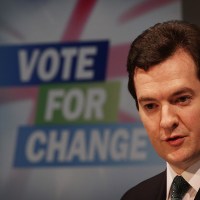
George Osborne must have changed breakfast cereals, or something, because he’s suddenly a different man.  After the Tories muddied their economic message to the point of abstraction a few weeks ago, there’s now a new clarity and directness about the shadow chancellor’s languange.  Exhibit A was his article in the FT last week.  And Exhibit B comes in the form of his article for the Sunday Telegraph today. It sets out five deceptions that we can expect from the Budget this week, and are all punchy and persuasive in equal measures.  But it’s the first which, as I said on Friday, is the most important: “The Chancellor might be so

Dirty money and dirtier politics

Busted.  Yep, that’s the word which first sprung to mind when I read the Sunday Times’s expose of MPs and their dirty lobbying work.  Hoon, Hewitt, Byers – they’re all revealed as providing influence and access for cash, and a lot of cash at that.  But it’s Byers who comes out of it the worst.  You can read his story here, but suffice to say that it involves boasts about successfully lobbying ministers to change policy, and about parading Tony Blair in front of his clients.  He even describes himself as “a bit like a sort of cab for hire”.  I imagine he’ll pick up fewer fares now. Our democracy

Pot, kettle, black

George Boateng, Alan Milburn and Andrew Smith have written a letter to George Osborne, calling him to task over the contradictions in his policy. ‘It is not clear to us whether these mixed messages are a deliberate attempt to obscure your plans or a symptom of a confused approach to policy but either way the public deserves better.’ Fair enough. Osborne’s policy has become more concrete in recent weeks, but much remains still to do. Peversely, I think they’ve given too much detail, and have been found out because they haven’t seen the nation’s books.The reduction in the amount of cuts that are planned is a case in point. But

Ed Miliband’s new investment vs cuts battleground

Ed Miliband certainly isn’t one for holding back, is he?  In an interview with today’s Guardian he discusses what we might expect from the Labour manifesto, and there’s some pretty noteworthy stuff in there: a People’s Bank based around the network of Post Offices; an increase in the minimum wage; a reduction in the voting age to 16; things like that. But, as Sunder Katwala suggests over at Next Left, the most eye-catching passage is when Miliband discusses Free School Meals for all: “The manifesto could well include a pledge to provide free school meals for all children, Miliband says. ‘I think a lot of people would like free school

Tony Judt’s Manifesto for the Left

Anyone who cares about political debate should read the essay by the historian Tony Judt in today’s Guardian. It is an astonishing piece of work which argues for a renewal of social democracy in response to the failure of the New Labour experiment (which Judt considers as evidence of the redundancy of the philosophy of Thatcherism so willingly embraced by Blair and Brown). You may quibble with the detail — Judt remains over-sentimental about the public sector — but it is a challenge to received wisdom in all strands of dominant contemporary political discourse.  He captures what many of the liberal left feel here: “It’s difficult to feel optimistic about

Why Cameron must never say “deficit”.

Listening to BBC news, it’s striking how they are still using Labour’s politically-charged vocabulary. When the universities are kicking off about their budgets being cut, the BBC newsreaders are told to talk about “investment” in higher education, rather than spending. Why, though? An “investment” would be to put £1 billion of taxpayers’ money into an Emerging Markets fund, and hope it grows. Giving it to universities – many of which serve neither students nor society – is not an investment. But using the word “investment” is Labour code for “good spending”. There is one particularly frequent example if this: the BBC regularly confuse the words “deficit” and “debt” – a