Labour party

Counting the cost of Labour’s national insurance hike

Insightful work from the FT's Chris Giles, who has dug out a couple of academic articles - including one co-authored, in 2007, by George Osborne's current chief of staff, Rupert Harrison - to work out how many jobs Labour's national insurance rise might cost the economy.  The results?  Well, according to Giles, one says that 23,000 jobs will be lost, and the other comes up with 22,000. Neither of these are figures that Labour will want to crow about.  But, as Giles points out, they are below the "57,000 jobs in small and medium-sized businesses alone" that the Conservatives predict in their manifesto.

Brown will fear the foreign policy debate most of all

The Tories’ Invitation to join the Government was never going to dwell on defence. (You can listen to the brief chapter on defence here.)  But that doesn’t mean defence isn’t an election issue. It is, and it's one that the Tories will win. Brown’s defence record is abysmal even by his standards. Former service chiefs have described how Brown ‘guillotined’ defence budgets whilst fighting two wars, and field commanders in Afghanistan have made constant reference to equipment shortages. These accusations were corroborated by facts that Brown then tried to distort before a public inquiry. That’s not all.

Voting blues

One of the key questions in any election is turnout: whose voters will turn up and whose won’t. People are clearly disappointed in the political class - on a scale from 0 to 10, trust in politicians and parties is hovering around 3 points - but does it mean that they will stay at home, spoil their ballots or opt for fringe parties and single-issue candidates? What about the talk of a hung parliament ? Will it make voters believe that their vote counts - and so bring them to the polling stations -- or make them stay at home, giving up on the idea that any change is possible? In the last three elections turnout was low, relatively speaking: 59 percent of the electorate voted in 2001 and 61 percent went to the polls in 2005.

The Tories invite you to join government

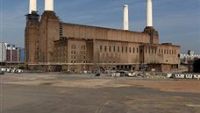
Battersea Power Station was the site of one of the Tories' most effective publicity stunts of recent months – and it will be the venue for their manifesto launch tomorrow.  Details are already emerging about the document (ConHome has a good summary here), which sounds as though it won't contain much, if anything, that we haven't heard before.  As with Labour earlier, this approach risks an indifferent response from the media and the public.  But at least the Tories have clearer flagship policies to broadcast – the national insurance cut among them. While the manifesto may not contain any new policy, it sounds as though the Tories have gone to town on it presentationally.

Labour’s nuclear no-show

Today, President Barack Obama hosts leaders from 46 countries for a two-day nuclear security summit that will focus on how to better safeguard weapons materials, both old and new, and to keep them out of the hands of terrorists. Labour’s manifesto was also launched today. What do the two things have in common? Not a lot, really. But they could have had a lot in common – if the Labour government had been willing to be bold. Here's how. As preparation for the summit, the US signed a new treaty with Russia last week to reduce the nuclear stockpiles of both nations, and the Obama administration issued a revised nuclear arms strategy intended to reinforce the nation's nuclear deterrent.

What Brown really offers Britain…

Labour's manifesto cover has been the cause of much merriment online - creating what the Americans call "subvertisments". ConservativeHome has already lined up some spoofs. We asked Carla Millar, who has done quite a bit of work for The Spectator, to do a version with a mushroom cloud of debt in the middle and the family shielding their eyes. This is the result.

Adam Boulton’s damning verdict

We've already collected some of the general blogosphere response to Labour's manifesto launch, but this addendum is worth making separately.  In a post describing the hostility of the Labour crowd towards the gathered media, Adam Boulton writes (with my highlights): "The crowd, including some cabinet ministers, booed and shouted at questions they didn’t like. Nick Robinson, the BBC’s political editor, had his question interrupted by jeering and Graham Wilson of the Sun was booed just for identifying his newspaper. Labour did not behave like that in the last three elections when the Sun backed them. Gordon Brown was happy to join in this confrontational mood. It was the most substantive aspect of the manifesto event.

Brown’s thin air manifesto

"You got that, Britain? We. Are. The. Future. Future, future, future. The Tories are the past. We are the Future. The future that is fair for all. We are that future. For all."  And so, more or less, went Gordon Brown's pitch to the nation at Labour's manifesto launch.  Except it lasted a good hour and a quarter.  And it involved a eye-wateringly fuzzy screen behind Brown's head.  And a needless introduction from Harriet Harman.  So if you managed to tune into it all, then well done: your enthusiasm for politics knows no bounds. But Labour's problems today weren't so much presentational as political.  After thirteen years in power, Brown was always going to struggle to convincingly sell this "future" shtick.

Labour manifesto launch: live blog

1240: And Brown rounds proceedings off by saying "future" a few times.  Did you manage to stay awake?  Never mind - I did, so that you wouldn't have to.  My immediate thoughts below, of course.  But I've given the actual manifesto a quick read-through as I've been typing - and will report back shortly.  That's it for this live blog.  Thanks for tuning in, and all that. 1237: Brown says that "we are the party of everyone on middle or modest incomes in this country".  Hm - try telling that to everyone who lost out from the 10p tax debacle. 1235: This is dragging on.  The Tories should be taking lessons from this event - things need to be clearer and more direct.

Will Labour’s manifesto mean the end of VAT attacks on the Tories?

You know it's the day you've all been waiting for, CoffeeHousers – the day of Labour's manifesto launch.  Last Thursday, Douglas Alexander described the document as a "progressive programme worthy of these testing times".  So, well, it must be good, mustn't it? Problem is, this manifesto risks going the same way as the Budget.  So much of it has been so heavily trailed, that there's a danger we've already heard it all – and that it will be met with weary indifference by the media and the public alike.

Dirtier tactics

I think we all expected this election campaign to be fought a few inches below the belt.  But, as Iain Dale and Dizzy say, Labour's tactic of mailing scaremongering leaflets to cancer sufferers is some new kind of low.  I mean, just imagine how it would feel to receive, as a cancer patient or an immediate family member, a leaflet which politicises the problem to the point of suggesting that your care would be jeapordised by voting for another party.  And then imagine how it would feel if you have been specifically targeted because of your connections with the illness, as seems to have been the case here.  Well, it defies belief that this is how the party of government is going about "restoring trust in our broken politics," or whatever they say.

An ICM marginals poll points to a hung parliament

The News of the World has its expensive and much-awaited ICM poll of the marginals tomorrow. There is some good news for Cameron, and some not-so-good news. First: 66 percent of voters in the marginals agree with the message "it's time for change". Bad news: a surprisingly large number think that Nick Clegg represents that change. A Lib Dem surge means that Tory swing is just 6 percent in the marginals, versus 5 percent nationally. Where is the Lord Ashcroft magic? In James's political column this week, he says the Tories had been so confident about the marginals that they reckon they need a 5-point lead nationally to win, rather than the 8-point lead previously assumed. The News of the World/ICM poll challenges that narrative.

The case for voting Conservative

Why vote for Cameron? The reasons for voting against Gordon Brown are so numerous that the positive pro-Tory reasons for voting are often lost. This week's Spectator gives you all the ammo you need to win around wavering friends, colleagues and family. We have restricted ourselves to the ten most compelling points. I summarise them below: 1. School reform. In itself, it's enough reason to vote Tory. Gove has specifically promise that within four years of a Tory government everyone will have an independent school offering to educate their kid for free. This should have been a 1981 Tory proposal, but Keith Joseph lost a battle with the civil service (after he recruited a young Cambridge graduate named Oliver Letwin to help him fight it). 2.

How Labour and the Lib Dems are attacking the Tories’ marriage tax break

This morning, we've already seen the two primary attacks which will be used against the marriage tax break outlined by George Osborne in the Times today.  The first came courtesy of Vince Cable, who said it represents a "derisory" sum of £3 a week for those who benefit from it.  And the second was from Ed Balls – who else? – who labelled the policy as "discriminatory," because it doesn't cover every married person, and nor does it account for couples who split.  Or as he rather suggestively put it: "if your husband beats you up and leaves you you get no support." One thing worth noting is how the Tories' opponents aren't majoring on a fiscal irresponsibility angle, as they've been trying to with the national insurance cut.

The role of the state

Tony Judt is a vivacious and controversial historian. He is Jewish but has turned against Israel. He is a thinker of the Left who has ended up in the USA. And now he has been struck down with a grievous illness, a virulent form of motor neurone disease which has left him paralysed from the neck down. As a result he has composed his latest book in his head and then dictated it to an aide, using the classic memory device of setting the text in different rooms of an elaborate building. This elegant essay is the result. Judt’s illness has left him determined to restate his belief in what he calls social democracy. It is above all aimed at the younger generation. He fears that, because of the dominance of neo-liberalism, they have lost an appreciation of the good that the state can do.

What Makes a Labour Candidate Unsuitable?

Stuart McLennan, Labour's candidate for Moray, has resigned over his Twitter stupidity and quite right too. What a repellent individual. And how obvious he made the fact by tweeting his every last small-minded thought. So what of Battersea MP's Martin Linton's outburst warning about the "tentacles" of Israel that were buying the election? As I report in today's Jewish Chronicle, the Board of Deputies of British Jews has asked the Labour Party to consider Linton's suitability as a candidate. Linton has since apologised for the tentacles comments, but not for the suggestion that the Israel lobby has  undue influence on British politics.

Turns Out David Lammy Has Every Right To Be Seething

Although it does not really make any difference to my original argument (which was about political quick thinking rather than the origins of the thought), it does seem that David Lammy has every right to be irritated that the idea of civic national service ended up as Tory rather than Labour policy. He first wrote on the subject for Prospect in April 2006 in a web article called Close Encounters. He returned to the subject just over two years later in the New Statesman after a conversation with me about a horrific sexual attack carried out his constituency. He raised it again at last year's Labour Party conference. He then then took a certain amount of stick for his support for a Demos pamphlet on the subject at Christmas.

Tories remain on the front foot over national insurance

A copy of a letter that George Osborne sent to Alistair Darling today: Alistair Darling The Labour Party 39 Victoria Street London   SW1H 0HA 9 April 2010 Dear Alistair, In the course of today, the Labour Party’s economic policy has collapsed in a heap of contradictions. In the morning, you attacked our efficiency plans on the grounds that they would reduce public sector headcount – but by lunchtime your own Treasury Minister, Stephen Timms, admitted that your own spending plans meant that “there will be some job losses” (The Daily Politics, BBC 2, 9 April 2010).