Labour party

George Galloway is an MP again

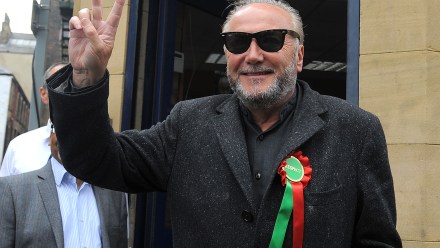
‘This represents the Bradford Spring!’ said George Galloway after triumphing in the Bradford West by-election last night. So, let's get this straight: comparing his victory in one of the many fair elections held in this country each year to the dangerous and fragile struggle for democracy across the Arab world? Yep, that's right — and it leaves a nasty, bitter tang in the air. But we shouldn't be one bit surprised. Bluster, exaggeration and provocation are, after all, what Galloway does best. And now he will be able to do these things in Parliament for the first time since May 2010, when he was deposed from the Bethnal Green seat.

Byrne for Birmingham?

Ed Miliband's shadow cabinet could soon lack a Liam Byrne. The shadow work and pensions secretary is expected to announce his intention to run for the position of Mayor of Birmingham — and he'd quit his frontbench job to do so. There is, of course, one significant ‘if’ hanging over his candidacy: it would depend on Birmingham voting in favour of having an elected mayor in their referendum on 3 May. But given the polls so far, it's all looking quite likely. If Byrne does go, it would leave more than just a single role for Miliband to fill. He is not just the shadow work and pensions secretary, but also the man in charge of Labour's ongoing, interminable policy review.

Davis takes the opportunity to strike

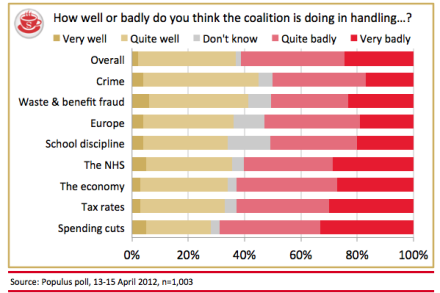
The fuel tanker strike is fast turning into a critical moment. The government, which has surprisingly few friends in the media, desperately needs something to move the story on from pasties and the politics of class. Cameron, also, has problems with his own side. On the World at One today David Davis, deliberately, hit Cameron where it hurts. He accused the Cabinet of looking like “they’re in a completely different world". One thing that the post-Budget opinion polls have shown is just how shallow support for the coalition is: there’s still no sense of who Cameron’s people are. But I suspect that if this strike is beaten, then the Tories will tick back up in the polls and it will be Ed Miliband who is facing questions about party donors.

Choice — easy to talk about, a slog to deliver

The birth of the White Paper on public service reform was a tortuous business — but, now it's been out for several months, the government is keen to make the most of it. David Cameron is launching an ‘updated’ version today, with a few new proposals contained therein. He also has an article in the Telegraph outlining those ideas, including the one that seems to be getting the most attention: draft legislation to give people a ‘right to choose’ their public services. It feels like both an important and potentially inconsequential moment all at once. Enshrining choice in the laws of this land is a powerful symbol that people shouldn't have the state's idea of ‘good’ foisted upon them.

The politics of pasties

The row over the so-called pasty tax is a proxy. It is really a row about whether David Cameron and George Osborne get what it is like to worry about the family budget each week.   In truth, I suspect that they don’t. But I think the same probably goes for Ed Miliband, Nick Clegg and the vast majority of journalists. Most of the politics of class in Westminster, as opposed to the country, is the narcissism of small difference.   The best thing the coalition could do now is hold its nerve. The Budget did reveal that support for it is shallow. But, as one leading pollster said to me yesterday, if they handle the tanker strike right, they’ll be ahead again by May — the next time anyone is voting in an actual election.

Your guide to Osborne’s fiscal rules

George Osborne's two fiscal rules have been around since his very first Budget, delivered almost two years ago, so they're hardly news. But they do underpin much of what he's done since, including last week's statement, so they're also worth knowing about. Fraser touched on ome of the detail in a post last weekend, but here's a supplementary guide for CoffeeHousers: 1) The deficit rule. This is the one that seems to cause the most confusion, perhaps because it has often been simplified — wrongly — as something like ‘eliminate the deficit by the end of this Parliament’. Fact is, the ‘end of this Parliament’ doesn't come into it.

Another five-point ‘pledge card’ from Labour

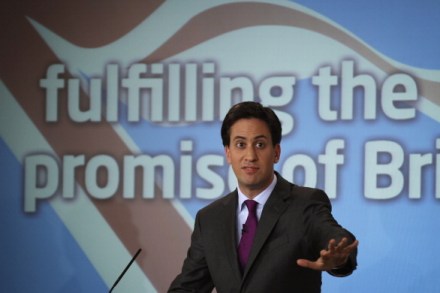
There is no PMQs today, so Ed Miliband is filling the time as gainfully as he can with a speech bashing the Tories. Unsurprisingly, he's making rather a lot of last week's Budget — particularly the 50p tax cut and the frozen personal allowance for pensioners — as well as of Peter Cruddas's recent indiscretions. And so David Cameron will be described as ‘out of touch’ and all that. But there is something else with today's speech: a prop, in the form of a five-point ‘pledge card’. I don't think we've had one of these from Labour for a couple of years now, although they do tend to reserve them for general election campaigns. Miliband's will focus on helping, in his own words, ‘squeezed middle families in these tough times’.

Lansley has won, in a way

At two thirty this afternoon, the Deputy Speaker announced to the House of Commons that the Queen had granted Royal Assent to the Health and Social Care Act. It seemed fitting that the House was debating assisted suicide at the time. The agonies of watching this cursed legislation twitch and stumble its way onto the statute book were enough to make anyone with half a concern for well-ordered public policy start Googling the names of Swiss exit clinics. Albeit there would have been the risk that Number 10 had already paid for Andrew Lansley's ticket to join you there. Suddenly, though, the politics of health are very different. Mr Lansley, for all the opprobrium he has borne, has his Parliamentary mandate. He has won.

The government’s keen to avoid the petrol chaos of 2000

So, once again, we face the prospect of disruption at the pumps, as tanker drivers have voted for strike action over their terms of employment. According to the union Unite, their demands are 'industry minimum standards and industry wide bargaining on pensions, terms and conditions, training and health and safety'. In all, around 2,000 drivers at seven fuel distribution companies voted, with 61 per cent of them in favour. A majority approved strike action at five of the seven firms, while at DHL and Suckling drivers rejected it. The government is, naturally, keen to avoid such a disruptive strike and has been quick to condemn it. Energy Secretary Ed Davey told the Today programme this morning that 'This strike is completely unnecessary. It should not go ahead.

The Tories’ perception problem

Introducing Ed Miliband, Labour's best hope since Tony Blair. Oh, I'm kidding, of course — but it's still striking that, this morning, Labour have their biggest lead in a ComRes poll for seven years. And the size of the lead? Ten points, but it could be even bigger. The Peter Cruddas revelations fell right in the middle of ComRes's polling. Apparently, those interviews conducted after Sunday had Labour with a 17-point lead. Of course, you can slap every caveat across this that you like: we're still ages away from the election; one poll does not make a trend; the 17-point figure is based on a subset of a subset of people; and so on. But this ComRes poll, and a few others out today, will still jangle nerves and fray tempers along Downing Street.

Osborne, the Master Strategist

According to John Rentoul, the combination of the budget and Cam Dine With Me* has shunted Labour into a ten point lead in the opinion polls. Tuesday's Independent/ComRes poll puts Labour on 43% (+3) and the Tories - as you may have worked out by now - on 33% (-4). How to spin this? 1. It's only one poll. 2. The poll that counts is the general election. 3. Better to take the hit on 50p and Granny-raiding now, not later. 4. This is a verdict on the coalition, not Labour. Voters will change their views when they must think about Ed Miliband. 5. Who cares? Each of these points has some merit. Nevertheless, I'm not sure they will do.

Labour’s baggage stops it from gaining the upper hand

It now seems as if Downing Street is moving towards releasing a list of Chequers guests. This is belated recognition of the fact that their best hope of getting beyond this story is to get everything out there. But as Francis Maude’s feisty performance in the Commons demonstrated, the Tories are not short of mud to throw at Labour. The combination of Labour’s reliance on the Unions and the Ecclestone affair means that it is hard for Labour to get on the front foot. Indeed, Tory sources are claiming that when they approached Labour to see if they would support changes to the Sunday Trading laws for the Olympics, Labour told them to talk to USDAW, the shopworkers’ union, as their position would be key to the party’s.

How will the Lib Dems respond?

The key thing to watch for during Francis Maude’s statement is the Lib Dem reaction. At the moment, the Tories can rebut Labour’s criticisms of them by pointing to both union funding and the Ecclestone affair. But if their coalition partners start turning up the volume on this story, then the Tories are in a far more difficult position. What will drive the Lib Dems is their desire to get a deal on party funding. The Lib Dems are very keen to reduce the advantages that the Torties and Labour have on this front and this scandal presents the perfect opportunity to press for a restrictive cap on donations and more state funding for political parties.

Cameron u-turns on donor secrecy — but what now?

One distinct feature of the ‘cash for access’ row is that we've seen it all before. And not just the glutinous mix of politics and money, but also the debate over what should be done to fix it. Last November, Sir Christopher Kelly, chair of the Committee on Standards in Public Life, released a report into the funding of political parties that featured many of the options we're hearing today. It landed on 24 recommendations, of which one stood out: ‘the only safe way to remove big money from party funding is to put a cap on donations, set at £10,000’. But to prevent a subsequent shortfall in parties' funds, it also proposed that state funding be increased to the tune of an extra £23 million.

The problem for Cameron is his proximity to the problem

The happiest news for David Cameron this morning is that the ‘cash for access’ story hasn't quite made it onto every front page. But that's it, really, so far as the glad tidings are concerned. All the rest is poison for No.10. The Prime Minister is now fighting off calls — including from his own MPs — to release the names of those donors who enjoyed dinner at his Downing Street flat. Labour are, of course, pressing for him to go further than an internal party inquiry, and launch an independent investigation instead. Today's furore is not going to simmer down after a few days, or even after a few weeks. In several respects, all this is trickier for Cameron than, say, the expenses scandal.

Ken’s identity crisis

Jonathan Freedland’s column in The Guardian today, explaining why he can’t vote for Ken Livingstone, is a remarkably direct piece of journalism. Freedland states that he ‘can no longer do what I and others did in 2008, putting to one side the statements, insults and gestures that had offended me, my fellow Jews and — one hopes — every Londoner who abhors prejudice’. Now, as Paul Goodman argues, we shouldn’t overstate the importance of a traditionally Labour supporting Guardian columnist coming out against Ken Livingstone. But Freedland’s reasons for doing so are ones that, I suspect, will resonate with a significant section of opinion. The issue with Livingstone is that his politics are sectional.

Spending will become more significant as 2015 approaches

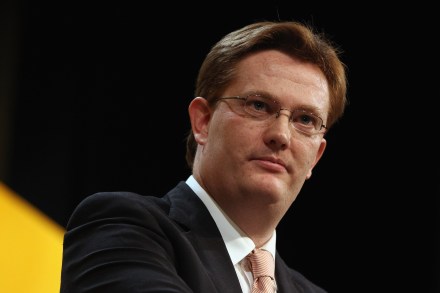
Four days after George Osborne signed its death warrant, there is still life in the 50p rate yet. The two main political interviews in today's papers — Ed Miliband in the Telegraph, Danny Alexander in the Times (£) — both focus heavily on the top rate's impending demise. The Labour leader, of course, is continuing to ask whether David Cameron and George Osborne will themselves benefit from the move to 45p, without actually managing to commit his party to a policy. The Chief Secretary to the Treasury is left defending a 45p rate, and does so by borrowing a recent Lib Dem slogan for the coalition as a whole: ‘This is a Budget for the millions, not the millionaires.

Balls goes on the attack against 45p

Ed Balls committed Labour to voting against the reduction in the 50p rate at his post-Budget briefing. But he wouldn’t say whether or not Labour would pledge to restore it in their manifesto; sticking to the classic opposition line that all decisions on tax will be made in the manifesto and not before. Balls, though, was on typically pugilistic form; few politicians relish a scrap as much as he does. The Labour leadership clearly view the abolition of the 50p rate as a major political opening for them. Balls went out of his way to attack the HMRC report that Osborne used to justify the move. He mockingly declared that he’d ‘never seen a government document with a Laffer curve in it before.’ This 50p fight is a classic Labour / Tory struggle.

A quiet PMQs, ahead of today’s main event

It started like a bit of good old political knockabout. PMQs opened with a planted question from Mark Menzies (Con, Fylde) asking the PM about Britain’s sick-note culture. Cameron, looking suitably grave, declared that the fake-sniffle problem afflicts even senior management. Ed Miliband, he told us, had recently claimed he was too ill to attend a rally called by health workers. Three hours later he was seen heartily cheering at a football match having been driven to the ground in a Rolls Royce. ‘What was it,’ asked Cameron, ‘that first attracted the Labour leader to the multimillionaire owner of Hull football club?’ This prompted howls and jeers from every part of the house. Ed Miliband ignored them.