Labour party

Ed gets another kicking

Who let Ed Miliband out again? You’d have thought that Labour HQ would have learnt from the #AskEdM debacle but apparently not. Ed popped up on Radio 5 Live today following his Made in Britain speech to answer questions from voters. It’s hard to work out whether the callers were CCHQ staffers in disguise or ordinary members of the public, thanks to the extreme vitriol thrown at Ed. He had little of interest to say on the EU (he wouldn't have signed the treaty), child benefit (he can't promise to reverse the cuts) and Labour’s attitude towards business (he's pro-, apparently). Instead, the callers took the opportunity to attack him personally. As Dot Commons reports:  'They ranged from the biting...

Dinosaur Labour Is Back

Considering the audience to which it was aimed, I suppose one could say that Johann Lamont's first leaders' speech to the Scottish Labour party conference was a success. Expectations for Ms Lamont were not quite at Obama-levels. I suspect Labour types will have been pleased by it. Which means, naturally, it should terrify everyone else. It was, naturally, a Unionist speech largely because it reminded one that Scottish Labour would be a powerful force in an independent Scotland and, by god, that's enough to make one wary of the entire enterprise. England and Wales and Northern Ireland offer some protection, minimising the amount of damage Labour can do in Scotland.

Devo disunity

The trouble with the Unionist cause is that it's so disunited. Douglas Alexander's speech in Scotland today may appear to bring Labour in line with the Tories and Lib Dems by hinting at greater powers for Scotland in future, but the truth is that it's just another piece of string in an increasingly tangled mess. And so we have Alexander saying that ‘we must be open minded on how we can improve devolution’s powers, including fiscal powers,’ while, we're told, he's also ‘cautious… about fiscal measures that undermine the stability of the block grant system used to fund the three devolved governments in Edinburgh, Cardiff and Belfast.

The conflict over 50p has escalated once again

Just like fuel duty, George Osborne can't shake off the fury and discontent over the 50p tax rate. This morning, in a letter to the Telegraph, 537 bosses of small-to-medium-size businesses have called on the Chancellor to drop the rate. ‘The tax, which is in effect a 58p tax after national insurance is taken into account,’ they note, ‘puts wealth creators like us in a very awkward position.’   Usually, it's easy to be both sceptical and dismissive of these mass-signed letters. They tend to be party political constructs, such that another group of ‘experts’ will soon reply to profess the opposite. But this one is different, and could help cast the whole battle over 50p in a fresh light.

Miliband can count on the NHS in PMQs, but not much else

Today’s main PMQs drama came after the session itself had ended. Julie Hilling, a Labour MP who Cameron had said was ‘sponsored’ by the union whose leader threatened to disrupt the Olympics last night, said in a point of order that she was not ‘sponsored’ by Unite. The Labour benches were in full flow, jeering at Cameron as he was leaving the chamber. Cameron then returned to the despatch box and pointed out that she had declared a donation from Unite to her constituency Labour party in the register of members’ interests. I suspect that this row about the meaning of the word sponsorship will rumble on. Labour hate the charge while the Tories think it is politically potent.

McCluskey versus the Olympics

The declaration by Len McCluskey, the leader of Unite, that public sector unions should consider disrupting the Olympics is going to re-ignite the whole debate about union power. McCluskey tells Andrew Sparrow that ‘The attacks that are being launched on public sector workers at the moment are so deep and ideological that the idea the world should arrive in London and have these wonderful Olympic Games as though everything is nice and rosy in the garden is unthinkable.’ McCluskey’s ill-considered threat is a headache for Labour. Unite is Labour’s largest donor and the Tories are already calling on Miliband to denounce him. I suspect that the Boris campaign will be making the same demand of Ken Livingstone soon.

The coalition for a Boris victory

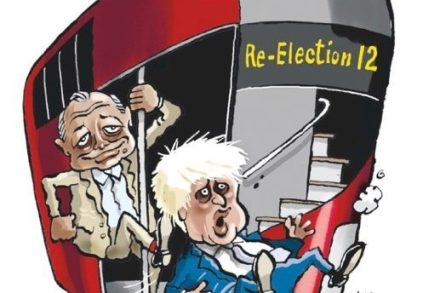
When David Cameron addressed Tory MPs on Friday, he told them that the London Mayoral elections were ‘the binary moment of 2012’. He argued that if Labour lost in London, one of their traditional strongholds, it would be a disaster for Ed Miliband. In the Cameron narrative, a Boris victory in May would mean that the Labour leader would remain under pressure and continue to be the subject of regular attacks in the press. Interestingly, there are Liberal Democrats close to Nick Clegg who share this analysis. Their worry is that a Livingstone victory combined with bad local election results for Lib Dem could turn the deputy Prime Minister back into the party leader under pressure.

Rumble in the Commons

From the Sun: ‘A LABOUR MP was arrested late last night for assault after allegedly headbutting a Tory rival in a House of Commons bar. Witnesses allege Eric Joyce, 51, launched an unprovoked attack on Stuart Andrew, 40. It is claimed Joyce, MP for Falkirk, had to be held back by several Labour colleagues. A source said: “Stuart was given a Glasgow kiss.”’ Read the full report here. UPDATE: Joyce has been suspended by the Labour Party. The Standard's Joe Murphy has a particularly detailed account of it all here.

Miliband snipes, Cameron deflects, Bercow bobs

Let’s be honest. I shouldn’t say this but I can’t help it. I’m fed up. The NHS reform process has been dragging on for months, and still there’s no end in sight. Ed Miliband brought it up at PMQs for the third week running. The position remains the same. Miliband loves it. Cameron lives with it. The PM claimed that 8,200 GP practices are now practising his reforms and the Labour leader replied with a list of professional bodies — nurses, doctors, midwives, radiologists — who oppose them. And that’s exactly the trouble, for me, at least. If the issue were a race-horse some crazy campaigner would plunge beneath its thundering hooves. But it’s not. It’s a set of abbreviations.

Murphy launches Labour’s defence review

Remember when Jim Murphy spoke about defence cuts last month? It was not only a smart refinement of Labour's fiscal position, but also a preview for the defence review that they're conducting as an alternative to the government's SDSR. Well, that review was officially launched this morning, and I was in the audience on reporting duty. Here's a quartet of quick observations that I bashed out on my phone: 1) Cuts, cuts, cuts. There was, it is true, a greater emphasis on the ‘constrained fiscal circumstances’ in Murphy's opening remarks than there is the consultation paper that Labour released today. But that emphasis was still striking in itself.

Osborne accidentally makes the case for more savings

Rhetoric aside, what’s the difference between left and right in British politics? You won’t catch either party quantifying it, because the answer embarrasses both. The ever-cautious George Osborne is cutting just 0.6 percentage points a year more from government departments than Labour planned to (see table, above). The great joke is that the difference between the two parties is actually within the margin of error. Government is a gargantuan machine that just can’t be controlled to that degree of precision: a billion quid is, to Whitehall, a rounding error.   Today’s public finances have demonstrated that.

Miliband guarantees a return to Brown’s Big Idea for the NHS

It would be so much easier for Ed Miliband to attract headlines if he could shout in Andrew Lansley's face. As it is, the Labour leader has had to make do with giving a speech today attacking the NHS reforms. Within the parameters of what he might say, it's an okay effort. The predictable lines about ‘creeping privatisation’ are leavened by the admission that ‘the question is not reform or no reform. It is what type of reform.’ And he adds, by way of a cross-party sweetener, that he would ‘get round the table’ with David Cameron to discuss ‘the future of the NHS’. But the substance of the speech, rather than its rhetoric, is a little more questionable.

If Cameron doesn’t talk about greater powers for England, Labour will

Action over Scotland is certainly producing a reaction in England. It's not what you'd call an ‘equal and opposite reaction’ yet, but it's there — and it's crystallised by Tim Montgomerie's article for the Guardian this morning. I'd recommend that you read it in full, but Tim's basic point is that David Cameron could score a ‘triple crown of political victories’ by moving towards a more federal UK: ‘By offering to extend Scottish devolution he can be the Conservative leader who saves the union. By promising to balance Scottish devolution with a commitment to new arrangements for the government of England, he can radically improve his own party's electoral prospects.

The tax debate at the heart of the Budget

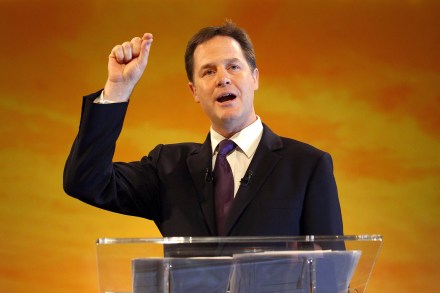
The run-up to last year’s Budget was all about fuel duty. This year it’ll be all about direct taxes. The Lib Dems are determined to put their manifesto pledge of raising the income tax personal allowance to £10,000 front and centre. They already managed to turn this promise into government policy in the Coalition Agreement, and last year’s Budget announced that the threshold would rise to £8,105 in April this year. But Nick Clegg’s made clear that he wants to go ‘further and faster’ on this. The Conservative response at the Treasury – according to today’s Telegraph – is simple: ‘how are they going to pay for it?

Balls the tax-cutter?

‘Balls urges tax cuts’, we’re told. Has he had a Damascene moment? Has the borrowed penny dropped? Nope, this is his longstanding and cynical campaign to cut VAT. Under the Labour years, when Balls was encouraging Brown to adopt a ‘scorched earth’ policy to the public finances, he urged against raising VAT to 20 per cent as Alistair Darling wanted. Not because he didn’t think it was necessary, but because he knew that if Darling didn’t do it, Osborne would. So VAT could be an election campaign tool, and then a stick with which to beat the wicked Tories (and the Lib Dems, who dropped the ‘VAT bombshell’ that they warned of). There is also politics: Tories prefer taxing consumption to taxing income.

Miliband’s NHS pledge

Ah, there he is! With the coalition — and David Cameron — dominating the political news on every day of this half-term week, Ed Miliband has finally caused a ripple in the national consciousness. He's appearing before nurses in Bolton today to make a pledge: ‘Before he became Prime Minister, David Cameron concealed his plans for creeping privatisation of our National Health Service. So people didn’t get a vote on these plans at the last election. But I give you my word that if he goes ahead, they will be a defining issue at the next.’ Put aside the rhetoric about ‘creeping privatisation’ (which would surely make Tony Blair shudder), and it's understandable why Miliband is stressing this point.

The Lib Dems prepare their strategy for future coalitions

Contain your excitement, CoffeeHousers: the Lib Dems are debating whether to change their ‘constitution’ so that their members have a greater say over future coalition negotiations. The amendment has been put forward Tim Farron and Norman Lamb, and proposes that, in the event of coalition talks, the party's ‘negotiating team’ should have to consult with a ‘reference group consisting of not more than nine people appointed equally by…’ blah, blah, blah. In fact, you can just read the whole thing on page 41 of this document. The Lib Dems will be voting on it at their Spring Conference next month.

Alex Salmond, Supply-Sider?

Today's Chat With Dave is all very well and good but Alex Salmond's speech to the LSE last night was just as significant. Much of the wrangling about Scottish independence has, for respectable reasons, concentrated on matters of process leaving the substance of what an independent Scotland might actually be like for another day. This too is reasonable since so much is speculative at this stage and, in any case, one should not necessarily presume that the SNP would dominate post-independence politics. Nevertheless, it is useful to have an idea of what Alex Salmond considers important. What he emphasises now is the best available guide to what might be emphasised in a best-case scenario in the future.