Labour party

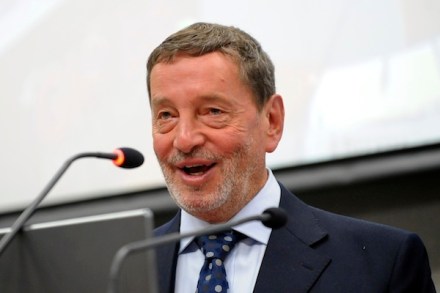
David Blunkett: Give me a job

listen to ‘Blunkett on Miliband’ on Audioboo David Blunkett gave an odd interview on the Today programme this morning. It rather mirrored the problem with Labour: he clearly knew what he really thought, but wasn't sure whether he should say all of it, so ended up letting really interesting little snippets out in dribs and drabs in between chunks of praise for the current state of the party. So his position on whether the current Labour leadership should think a break with New Labour is a good thing was a combination of acknowledging that the party does need to move on, and reminding anyone who really does want to move on that New Labour was pretty darn good at winning elections.

Briefing: Advice today for Ed Miliband

Certain Labour types like to argue that this summer season of discontent for Ed Miliband is just a media mirage, made up mostly of journalists talking to each other. That might have a grain of truth: the corridors of Parliament are dusty and echoey at this time of year, and the only people found wandering them are bewildered lobby hacks and bored policemen. But the problem is that all this talk of the problems facing Ed Miliband has offered an opportunity for those in Labour party who think there is a problem to come out of the woodwork. And that there are more and more big names coming out - rather than the slightly worried backbenchers who started the grumbling - is the real problem. This summer has been an opportunity for nerves about the party's prospects to come to the fore.

What would Frank Field do for Labour?

The latest tranche of advice for Ed Miliband contains pleas for the Labour leader to think the unthinkable and hire Frank Field as his welfare adviser to how that Labour was 'serious' about reforming the welfare system. This would represent quite a change of direction for the party, and would be what commentators like to call a 'bold move', partly because Field is known to be quite difficult to work with, while also offering an expert understanding of benefits and poverty. I interviewed Field for Coffee House in May, and it's worth revisiting some of his remarks now for an indication of what a Labour welfare policy would look like if he were in charge: 1.

The quiet Miliband wants to turn up the volume

Ed Miliband has already managed to steal a big pile of clothing from the Tories by pinching the One Nation tagline for his own party. But this weekend Chuka Umunna offered the beleaguered Labour leader another Tory tag that he might not be quite so keen on. Trying to defend the party, the Shadow Business Secretary said: 'The Shadow Cabinet and the leader of the Labour party are doing a huge amount already to sell Labour to the electorate which is why we've won back almost 2,000 councillors since Ed Miliband became leader of the party and of course as we move to the general election we will be turning up the volume even louder than it has already been in order to ensure that we form a majority at the next general election.' Oh dear.

Watson interview piles pressure on Labour to publish Falkirk report

Decca Aitkenhead has a history of producing revelatory August interviews that make tricky reading for the Labour leadership. Her 2008 interview with Alistair Darling involved the journalist following him around during the August recess and unleashed the 'forces of hell' against the then Chancellor when it was published. Her interview with Tom Watson in today's Guardian fits in with that tradition. Watson argues that there is no case for Unite to answer over Falkirk: Watson thinks on all three counts his party got it wrong. "I thought it was silly to report the allegations to the police, bordering on wasting police time." The whole affair, he insists, is "a storm in a teacup", since neither Murphy nor Unite did anything wrong.

How the Tories planned to spend this summer behaving like an opposition party

Unless you're as optimistic as Jon Ashworth, it's pretty clear that messaging-wise, Labour have had a pretty bad summer. There are many reasons for this that many wise people have examined in quite some detail and at quite some length, but one of the major strategic errors is that the party appears to have made entirely the wrong assumption about what the Tories had planned for recess. Labour was clearly just lying in wait for more mistakes and bad news to come crawling out of the woodwork over the holidays. But they'd reckoned without the months of careful planning that the Conservatives had put into this slower season.

Labour’s uninspiring response to A Level results

During silly season, bored journalists often entertain themselves by reading rather than deleting the slew of pointless press releases that land in their inboxes. Today's winner was going to be a pitch that opened with the dangerous phrase 'Good Morning, I hope you are well?' (always a sign the PR is sending this release to a very long list of hacks they've never spoken to) went on to suggest a story about grooming and beauty tips for Coffee House. But then Labour's press office sent through a  release full of such wisdom and careful crafting that it could only have gone through several committees and possibly even PLP votes to perfect.

Jim Naughtie tells Sunny Hundal to ‘shut up’

Listeners to the Today programme were treated to some comedy this morning, when noted Ed Miliband fan-boy Sunny Hundal tried to claim that Labour’s summer of discontent is part of a grand plan. Hundal was supposed to be countering the view that Ed is not doing enough to get to Downing Street, but ended up conceding the point live on air — and not before gentle Jim Naughtie spoke for the nation by telling the spluttering Hundal to 'shut up'. The laughter on the face of fellow guest Jenni Russell says it all. Mr Steerpike feels sorry for little Ed. With friends like Sunny...

Why the happy Tories can’t relax after Labour’s bad summer

Last December, after one of the most brutal PMQs this Parliament has seen, David Cameron was walking through the corridors of the Palace of Westminster to address a 1922 Committee meeting. Ed Miliband had subjected the Prime Minister to a real savaging, and Labour backbenchers had loyally joined in, raising a constituent's suicide and describing Cameron's government as ‘grandeur for the few, the workhouse for the many'. It had been a bleak session. Heading for Committee Room 14, the Prime Minister bumped into a junior minister, who was keen to reassure him that everything would come out in the wash. He told Cameron that 'they can go for the emotional attack, and we can always come back at them with statistics'.

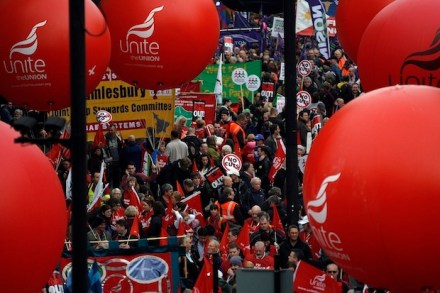
Party donations highlight risk to Labour of union link reform

The Electoral Commission's latest release on donations to political parties in the second quarter of 2013 are quite handy for the Tories. Firstly, there's the caveat that no party really benefits from discussing funding because everyone ends up looking a little bit grubby, and because the only thing grubbier and more unattractive to voters would be full state funding of political parties, then this will always be a grubby-looking business. So of course there are donations from big business to the Conservative party (although the biggest individual donor to the Tories was in fact a woman who wanted to donate money to the 'government of the day' in her will, which meant her legacy was divided between the two Coalition parties).

Ignore Labour’s rage against the machines

Two months ago I walked into the railway station at Biarritz. Without thinking I headed to the ticket machine on the concourse, pressed the small Union Jack on the touchscreen, and thirty seconds later had my ticket in my hand. Very simple and stress free, which is unsurprising as modern ticket machines are beacons of sanity for the international traveller. I remember the palaver at the Polish Railways ticket counter at Wrocław in 2006, when I was saved by a local in the queue behind me who could translate ‘could I have a single to Poznan for the early morning train tomorrow, and do I have to buy a supplementary ticket for my bicycle?’ Give me a machine every time.

Cheery silly season puts Tories on even keel

Even if Help to Buy is contributing to a bubble rather than the sensible restructuring of the economy that politicians promised before they started trying to scale that particular mountain, there are still reasons to be cheerful about the economy for the Tories this morning, on top of the delight offered yesterday by Chris Bryant's antics. The Guardian's ICM poll finds today that the Conservatives' approval rating on economic competence has risen to 40 per cent from 28 per cent in June. Labour has only crept up five points in comparison, from 19 per cent to 24 per cent. There are clearly all sorts of reasons why the party shouldn't be hanging out the bunting for 2015 just yet (Paul Goodman has a good post on this here).

Is Lord Adonis the right man to lead Labour’s Growth Review?

One of the things we know about Labour’s policies is that the Adonis Growth Review is meant to produce a fair few of them. Launched by Ed Miliband last month, the former head of Tony Blair’s Policy Unit’s review is meant to publicly report in spring 2014. When Miliband announced this review, he praised Adonis’s work in reforming public services in the last government. But this positive view of Adonis’ work does not seem to be shared by all the shadow cabinet. In his Guardian interview on Saturday, Andy Burnham said ‘I wasn't cheerleading for academies.’ Academies were, of course, an Adonis initiative.

VIDEO: Chris Bryant tries to defuse row with a fat woman joke

Following this morning’s car crash radio interview, this is how Chris Bryant tried to win over the audience at the start of his speech on immigration to the IPPR... Come back Les Dawson, all is forgiven. PS: The full speech is here. The Telegraph's Matt Holehouse has compared the pre-briefing and the delivered speech. As expected, the sections about Tesco and Next have been substantially rewritten. Yet to no avail; the damage has been done. Will Bryant survive Ed Miliband's reshuffle?

Why Ed Miliband is being so quiet this summer

Labour’s failure to fill the summer news vacuum has now become a news story in itself. Ed Miliband comes back from holiday to find the Sunday papers full of stories about Labour grumbling, shadow Cabinet reshuffles and the like. But there’ll be no dramatic return by Miliband. There are no plans for big set piece speeches or a whistle-stop tour of Britain. One reason why Miliband himself has been so quiet this summer is that conference is already dominating his, and his team’s, thoughts. As I say in the Mail on Sunday today, they view conference as crucial to their efforts to persuade the country that Miliband is Prime Ministerial. It’ll be at this conference that they’ll begin to roll out the policies on which Labour intends to fight the next election.

Jeremy Hunt’s tough talk on the NHS doesn’t address the toughest question of all: what is the purpose of modern medicine?

Jeremy Hunt’s quiet demeanour is deceptive. The Health Secretary has a bit of what my late grandfather called ‘iron in the soul’ – a measure of self-confidence, calculation and the determination not to let the bastards get you down. ‘Iron in the soul’ came in handy during the Burma campaign in the Second World War. And I imagine that it’s vital if one is to prosper as Secretary of State for Health. Hunt was sent to the Department of Health last year in order to clean up the political mess left by Andrew Lansley. Hunt’s tenure has been beset by scandals beyond his or his predecessor's control – from Mid Staffs to A&E, with numerous others in between (about which Jane Kelly wrote so vividly in the Spectator a few weeks ago).

Ed Miliband is caught in Andy Burnham’s crossfire

Andy Burnham, the shadow health secretary, has given an interview to the Guardian which has excited the Tories. Tory chairman Grant Shapps has said: 'This shows that even senior members of Labour's top team think Ed Miliband doesn't have what it takes to stand up for hardworking people.' It’s a familiar refrain; but for once the spin rings fairly true. Here’s the crucial passage from Decca Aitkenhead’s piece: '...when I ask if he's worried by how long Labour is taking to come out with a set of flagship policies that explain what they stand for, he agrees. "Definitely. I think there's definitely a need to shout louder, and speak in a way that captures how people are thinking and feeling. There's definitely a need to put our cards on the table.

The time has come for Ed Miliband to act

Tom Watson might be preparing to fly half round the world to continue his fight against Rupert Murdoch. But Ed Miliband has still not named a replacement for Watson as Labour’s campaign coordinator. It was thought that the contest for this role was between Michael Dugher, who was part of Watson’s team and is the choice of the Labour machine, and Douglas Alexander, the shadow Foreign Secretary, who ran Labour’s 2010 general election campaign and David Miliband’s leadership bid. Vernon Coaker, who is in line for promotion from the Northern Ireland brief in the coming reshuffle, was also considered a contender. But Patrick Wintour reports that two new names have entered the frame: Rachel Reeves, the shadow Chief Secretary, and Owen Smith, who covers the Welsh brief.

5 lessons for David Miliband to learn in New York

I have the impression that David Miliband’s valedictory essay in the latest issue of the New Statesman contains some really corking ideas; but I can’t see them through the words. David Miliband’s tragedy is not that he lost to his brother. It’s that he can’t express himself in plain English. He has five things to work on in New York: 1). Stop using conspicuously odd vocabulary: ‘Presidential elections are different from parliamentary systems, but there is read-across nonetheless.’ ‘Read-across’…? The only thing to be said for that word is that it distracts from the platitude at the beginning of the sentence: ‘Presidential elections are different from parliamentary systems’. Well blow me. 2).