Labour party

Ed Miliband: Cameron wants to write trade union members off

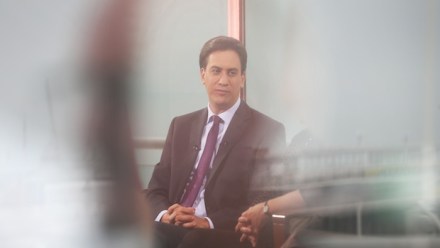
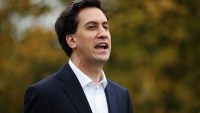
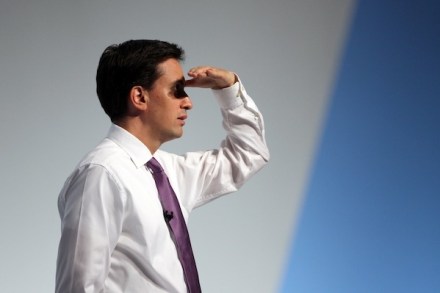
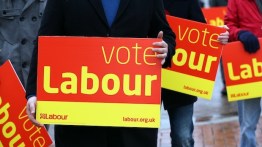
Ed Miliband thought he'd delivered the speech of his life at last year's Labour conference. But though it knocked the socks off everyone in the conference hall, it wasn't enough: the Labour leader is having to deliver to one but two speeches to save himself this autumn. Today he will try to sell his union reforms to the Trades Union Congress conference in Bournemouth, and in a fortnight he will give another important party conference speech. The Labour leader wants to frame his reforms as having a purpose that all parties should want: bringing politicians back into contact with ordinary people. He will try to contrast what he plans to do with the Conservative party: 'We have a Prime Minister who writes you and your members off.

The malign influence of trade union extends beyond the takeover of Labour

Money passes hands. Allegations are made. A would-be MP is suspended, only to be pardoned once evidence is mysteriously withdrawn. Such is the murky world of Labour’s relationship with the trade unions. Since the revelations of vote rigging in the Falkirk candidate selection the Westminster bubble has become obsessed by a number of questions. How much funding does Labour get from trade unions? (too much), what exactly did they get in return? (Ed Miliband) and will Red Ed will be able to stand up to paymasters? (he won’t). As Ed Miliband travels to Bournemouth the unseemly brawl of student politics are being writ large in one of the UK’s largest political parties.

Ed Miliband’s zero hours gesture to the trade unions

Ed Miliband and Harriet Harman are keen to encourage unity at the TUC conference this week, while giving the impression they are determined to forge ahead with reforming the union link to the Labour party. Harman's speech to the TUC dinner will include a call for unity and an attempt to explain the need for the reforms. She will say: 'Ours is a deep-rooted and historic link but it is a relationship which has never been set in stone and is always changing. But, the thing that has endured is that our unity is the bulwark against reaction and the only hope for progress. 'I am proud of the link between the Labour party and the trade unions. I do not want it weakened. Nor does Ed. We want to see it strengthened and deepened. That is what is at the heart of our plans for party reform.

Miliband has to win the fight that he’s started

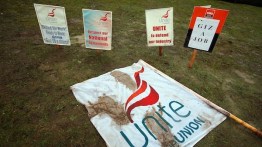
When Ed Miliband was booed at the TUC in 2011, there was quiet delight among many of his closest aides. They thought that this jeering would help put some distance between Miliband and the unions and show that he wasn’t their puppet despite the role they had played in his election. But this year, the booing that Miliband is expected to receive will matter far more. Miliband is now engaged in a defining struggle with the union machine over his party reforms. As I say in the Mail on Sunday today, if he doesn’t get them through, then he’ll be a busted flush as a leader. Unite being cleared by the Labour party of wrongdoing over the Falkirk selection shows just how much of a fight Ed Miliband has on his hand.

The coalition’s new case for HS2

The coalition government is preparing a new case for HS2. Concerned that public and political support for the project is slipping away, there’ll be a major effort to renew enthusiasm for it. In this new case, there’ll be far less emphasis on speed and far more emphasis on how HS2 is needed because the existing railway lines are full up. This marks a recognition inside government that the savings on the journey time to Birmingham, which are less than half an hour, are too small to act as a public justification for the project. Expect to see this new argument reflected in the Transport Secretary Patrick McLoughlin’s speech on Wednesday. I suspect that HS2 will retain the support of all three front benches in this parliament.

Labour clears Unite and Karie Murphy of wrongdoing in Falkirk row

After going all out over the Falkirk selection row, Labour rather quietly issued a statement this afternoon conceding that neither Unite's candidate Karie Murphy, nor constituency party chair Stephen Deans, nor the union itself were guilty of any wrongdoing. The party's statement said: 'The Labour Party began an internal process to examine the controversy surrounding the selection of a parliamentary candidate for Falkirk. At each step Labour’s general secretary and NEC have acted quickly to protect the interest of the party. 'Since Labour began its internal process key evidence has been withdrawn and further evidence provided by individuals concerned. Karie Murphy and Steve Deans, who were suspended, will now be reinstated as they have not been guilty of any wrongdoing.

Tom Watson: the Labour man with a plan

Ed Miliband needs to reassure his backbenchers that he does indeed have a good plan after the GMB union announced it was cutting its affiliation funds to the party by 90 per cent. But someone else already has a plan: and it looks strangely like one that will cause the Labour leader a bit of grief. Tom Watson has this morning written a blog in which he suggests that ending the link between the party and the unions 'is a very serious development that threatens a pillar of our democracy that has endured for over one hundred years'.  He writes: 'Over the next year we have been asked to consider a change to the constitution of the Labour party, though no detailed proposals have been revealed.

GMB funding blow for Labour shows need for a clear plan from Miliband

Has Labour got a plan? If it does, the GMB doesn't like it, announcing this morning that it will cut its affiliation funds from £1.2 million to £150,000, effective from january 2014. The cut is to reflect the number of the union's members who it estimates would choose to affiliate to the Labour party under the new reforms announced by Ed Miliband. In a statement this morning, the union said: 'GMB CEC expressed considerable regret about the apparent lack of understanding the proposal mooted by Ed Miliband will have on the collective nature of trade union engagement with the Labour Party.

No-one has any plans for a second vote on Syria, part II

Today's Foreign Office Questions was a far classier affair than yesterday's rather snippy session with Philip Hammond on Defence. William Hague chose not to tell Labour that they had no authority when talking about Syria, instead choosing to focus on the humanitarian situation that Britain can still do something about. His first answer was as follows: 'The United Nations has announced that there are now 2 million Syrian refugees in the region. The United Kingdom is already the second largest donor, supporting more than 900,000 Syrians, and we will do more. The president of the Syrian National Coalition will visit London on Thursday, when we will discuss further support to save lives, promote political dialogue in Syria, and advance the holding of a second Geneva conference.

Philip Hammond: No 2nd Syria vote ‘unless the circumstances change very significantly’

Defence Questions this afternoon was, as you might expect, a rather chippy affair. It seemed that whenever Philip Hammond rose to answer a question, he answered it by reminding the Labour MP asking it of their party's decision to oppose the government's motion on Syria. Nowhere was this more the case than in the Defence Secretary's exchange with Jim Murphy, where both men set out some interesting wriggle room in their party positions on a second vote.

George Osborne: There’ll be no second Commons vote on Syria

There’ll be no second parliamentary vote on Syria, George Osborne stressed this morning. There had been speculation that following President Obama’s decision to go to Congress before using military force, meaning that strikes won’t happen before the week of the 9th of September, there could be a second parliamentary vote on UK military involvement. But Osborne scotched that idea on the Andrew Marr show this morning. listen to ‘Osborne - No second Syria vote’ on Audioboo Obama’s decision, though, has eased the political pressure on David Cameron.

The PM is preparing for another coalition. His colleagues have other plans

Conservatives have been returning to their Westminster offices this week to find the wind behind them. Something suddenly seems to be going right: there’s good news on the economy, jobs and immigration and Labour seems to be in gentle meltdown. The idea of an outright majority in a 2015 election suddenly seems a lot more plausible. Which is why ministers and advisers are so dismayed at reports last week that David Cameron was planning for a second coalition after 2015. Just when a Tory election victory seemed possible, the Prime Minister has been mulling over a change in party rules so that MPs could vote on a new coalition agreement.

Labour frontbencher resigns over Syria

Labour MP Jim Fitzpatrick has tonight resigned from his party's frontbench over the Syria vote, his party confirmed. The shadow transport minister told the Commons this evening that he felt his party's amendment was still too open to military intervention. He said: 'I have problems - for the honourable gentleman's information - both with the Government motion and the Opposition amendment. I do not believe either is ultimately able to achieve the honourable ends that both sides of this house are trying to achieve. I'm opposed to military intervention in Syria, full stop. And to be honest with myself, and to be consistent on both questions, I will be voting in the 'no' lobby against the Government motion and against the Opposition amendment.

Ed Miliband’s problem is he’s trying to keep his options open on Syria

Ed Miliband’s scepticism about striking Syria puts him more in line with public opinion than David Cameron. On top of this, he’s had the better of the political manoeuvrings these past few days — forcing the Prime Minister to pull back from a straight parliamentary vote on military action. So, why then did his speech today fall so flat? Part of the problem is the nature of the Commons chamber. Tory MPs heckled and intervened on him effectively, rather throwing him off his stride. But the more fundamental problem is that Miliband is trying to keep his options open. Miliband’s opening was a strong argument against any British intervention in Syria. But then Miliband went on to say that he might back intervention at a future date.

Advice for Ed Miliband, part 567

There is now so much advice coming in for Ed Miliband that it needs classifying. There's the Miliband-must-behave-like-this advice from all and sundry: he should talk more about the economy, talk less about the economy, shout a lot about things, talk more about policy, complain more about this and that and so on. The advice is so diverse that Miliband would end up looking like Francis Henshall in One Man, Two Guvnors if he tried to fulfil it all. But there's a second species of advice, which is on what big policy issue Miliband should back or oppose, partly out of principle and partly to make life very difficult for the Coalition.

Is Ed Miliband a) hopeless, b) on course to become Prime Minister or c) both?

I have never quite understood Ed Miliband's appeal. He always reminds me of Cuthbert Cringeworthy from The Bash Street Kids. I find it hard to imagine him becoming Prime Minister. Something just feels wrong about that. I'm not alone in wondering about this. Brian Wilson, the former energy minister, wrote yesterday that Miliband still has a kind of credibility problem. People just don't think he's quite ready for the top job. They may not be able to say exactly why they're unimpressed by Miliband; they just know they are. Not so fast my friend, responds John McTernan today. Ignore all the chattering and blethering about Labour's slide in the polls and focus on the core picture: Miliband is still likely to be leader of the largest party after the next election. Everything is fine.

Welfare failures that are costing us dear

I'm told there's a joke that does the round in Whitehall, that to err is human, but if you really want to foul things up you need Iain Duncan Smith. I'm afraid a casual glance at DWP's delivery record explains why. On every single one of DWP's five big reforms things are going badly wrong. The human cost of this colossal bodge job is impossible to calculate. But the fiscal cost could be as high as £1.4 billion. Let's start with reform of disability benefits. A vital reform that needs tremendous care. The test itself needs fast and fundamental reform (my speech on the subject is here). But the government's contractor, Atos is running rings around the Government. Anyone taking the test is eight times more likely to end up in a tribunal than in a job.

Labour’s over-fussing problem

Opposition is underrated. You can spend your whole time pointing at Expensive Things and complaining that the Government Should Do Something about their cost, and grumbling about other things you don't like either, like a mother-in-law wearing a party rosette. What's not to like about being a professional complainer? The problem is that at some point you have to stop just pointing at things and complaining about them, and instead actually give a sense of what you would do instead. And if you've been too fussy to begin with, you end up disappointing people who thought you really were going to do something about everything you complained about to begin with. The Tories know this, and so are having a little bit of fun today with Liam Byrne's welfare speech.

Liam Byrne’s pitch to keep hold of his job

It can hardly be a coincidence that one of the few Labour figures to bother giving a speech on policy in the middle of Tumbleweed Time is a shadow minister who looks increasingly likely to get the chop. Liam Byrne's speech today was partly his attempt to get a good last-minute appraisal from the media and Labour party itself before Ed Miliband embarks on his autumn reshuffle, and partly an attempt to lift the party itself out of the doldrums by talking about what Labour would really do. While Labour clearly needs to move on from lying in wait for the government to muck up now that green shoots are poking up all over the place, Byrne suspects there is more to be gained from waiting for a few disasters on his patch.

Mili no mates

If David Blunkett fancies being a kindly older mentor for the current Labour shadow cabinet, perhaps he could start by getting them all on television a little more, if only to say how great they think Ed Miliband is as party leader. As the summer has worn on and the Labour leader's troubles have thickened like a sauce, the shadow cabinet seems to have evaporated, according to this analysis of the last time any of them pitched up on the airwaves: · Maria Eagle appeared on BBC News (13 August 2013) · Caroline Flint appeared on Daybreak (9 August 2013). · Owen Smith appeared on the Today Programme (7 August 2013) · Sadiq Khan appeared on The World at One (1 August 2013) and the Andrew Marr Show (28 July 2013).