Kwasi kwarteng

Dominic Cummings understands Singapore. The Tories still don’t

I’ve read Kwasi Kwarteng’s surprisingly positive review of my book, Crack-Up Capitalism. Although it was unexpected to see someone from the libertarian corner being so enthusiastic about what is clearly a critical book, the experience was not new. After my previous book, Globalists: The End of Empire and the Birth of Neoliberalism, was published in 2018, I was startled to find Deirdre McCloskey, a leading classical liberal historian, praising the book as a manual for ‘keeping a liberalism which has made us rich and free.’ Globalists explained how neoliberals wanted to keep decision-making from democratic electorates. I took McCloskey’s praise as a validation of my core thesis.

Why Liz Truss had to go

From our US edition

London, England Nobody in British politics really thought things could get worse than last night. Conservative MP Charles Walker told the BBC that the day was a "pitiful reflection" of the party; he added that there was "no coming back from it." Seasoned political editors described Wednesday as the most catastrophic day of their careers. The government victory on fracking — with 326 votes opposing the Labour motion to 230 backing it — was tarnished by claims of intimidation and bullying in the House of Commons. The home secretary, Suella Braverman was fired for sending official documents from her personal phone, something which is likely now a relief for her. Two other figures were said to have quit, but remained in their posts when questioned twelve hours later.

liz truss

Liz Truss and the art of rhetoric

Liz Truss was spot-on in arguing that the only way in which a state can flourish is by combining low taxes with economic growth. But she failed to persuade her audience that she knew how this could be achieved. If only Dr Kwarteng, a classicist, had drawn her attention to Aristotle’s Art of Rhetoric (4th century bc), the first full analysis of the means of persuasion, the day and her career would have been saved. First, Aristotle defined two general types of persuasive proof. One he called ‘artistic’, because it depended upon human ingenuity, the other ‘non-artistic’, because it derived from pre-existing evidence, e.g. witness statements, written contracts, etc.

The lady vanishes: the Truss agenda is dead

‘Governments don’t control markets,’ the new Chancellor, Jeremy Hunt, likes to say. But there are times when markets control governments. The market, or the fear of how the market might react, is now the driving force in British politics. It explains the dramatic developments of the past week and will determine the new Prime Minister’s fate. Last month’s ‘mini-Budget’ was doomed because it required that the government borrow £70 billion more than had been planned. This money would have to be raised in the gilts market, and Liz Truss and Kwasi Kwarteng assumed that the markets would be happy to continue to lend so much at such low rates. But they missed the fact that attitudes were changing.

Why Truss picked Hunt for Chancellor

A day is a long time in politics. Just this morning, a No. 10 source told the BBC the Prime Minister believed Kwasi Kwarteng was doing 'an excellent job' as chancellor and the pair were 'in lockstep.’ Only just a few hours on, Liz Truss has sacked her close ally and friend in a bid to salvage her premiership. Now, Truss has appointed Jeremy Hunt to replace Kwarteng. It’s not even 2 p.m. The view in Downing Street is that Hunt is ultimately a low-tax Tory As soon as rumours started to circulate that Hunt was the preferred pick, there were raised eyebrows among Tory MPs. Nadhim Zahawi and Sajid Javid both backed Truss in the leadership contest and were therefore seen as more obvious choices.

royal

Which royal is attempting to pull a sibling affair chapter from their new tell-all?

From our US edition

Candace Owens fallout at the Daily Wire Cockburn’s spies have heard that the Candace Owens's recent antics have internally divided her colleagues at the Daily Wire. Some found her defense of her buddy Kanye West's antisemitic comments gross, but Jeremy Boreing, the company's CEO, is said to have a soft spot for Candace — and is circling the wagons. In case you missed it: Candace came to Kanye’s defense after he tweeted that he was going to "go death con 3 on Jewish people." Owens claimed that, "If you are an honest person, you did not think this tweet was antisemitic.” That’s right reader: it’s your fault for interpreting it all wrong. Cockburn also hears that the Wire's use of NDAs is keeping disgruntled former staffers quiet.

Truss says no to spending cuts. Here’s the caveat

The mini-Budget was a spending spree. The ‘medium-term fiscal plan’ was meant to explain the funding. But what exactly is going to be in it?  Liz Truss and Kwasi Kwarteng were thought to have (finally) come to terms with the need to address the need for some restraint, after their mini-Budget led to market chaos which is yet to settle. Their fiscal statement – in other words, how they would fund their tax cuts – was moved forward by almost a month, to 31 October. Its contents were thought to include some major spending cuts, in a bid to convince markets that fiscal discipline still guides the Tory party.

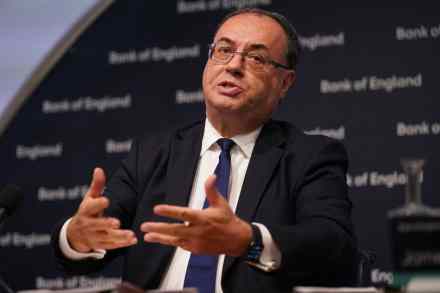
The Bank of England’s governor issues a stark warning

Speculation has been growing that the Bank of England might announce an extension of its emergency gilt-buying programme which is set to end on Friday. Despite the Treasury moving forward its ‘medium-term fiscal plan’ announcements from November to the end of this month, gilt yields have been rising yet again this week in the lead-up to the end of the scheme. It seemed likely that the Bank’s gilt-buying programme might be extended for another two weeks as a result, in order to buy time before the Chancellor Kwasi Kwarteng’s announcement on 31 October. But tonight Andrew Bailey put that speculation to bed.

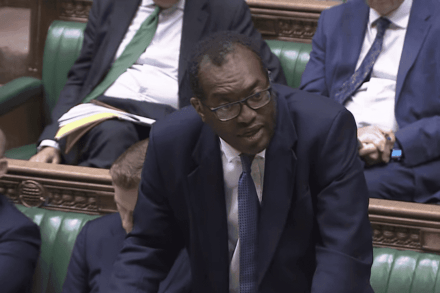
Kwasi Kwarteng’s easy ride

Tory MPs were in an anxious mood as they returned to the Commons this afternoon after weeks of conference recess and government meltdown. Their first session in parliament was, appropriately enough, Treasury questions, where they had a chance to air some of their anxieties with the Chancellor and his team. It could have been a much worse session for Kwasi Kwarteng, given the way things have gone recently. But the number of MPs seeking reassurance won't have left him feeling very relaxed. Kwarteng told the Commons that his mini-Budget had been ‘really strong' Kwarteng told the Commons that his mini-Budget had been ‘really strong’ and that MPs constituents would have been pleased with many of the ‘strong measures that we have introduced.

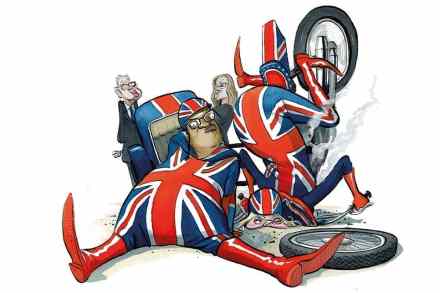
Crash course: how the Truss revolution came off the road

Liz Truss and Kwasi Kwarteng wanted to shake things up. They were radicals in a hurry, keen to show that Britain was under new economic management. Theirs would be an unapologetic pro-growth agenda: no more genuflection in front of failed orthodoxies, no more being paralysed by fear or criticism. As a sign of this, they abolished the 45p tax rate for the highest earners: a move that many Tories longed to make, but did not dare. It seemed Truss and Kwarteng would leap in where other Conservatives feared to tread. This lasted just ten days. As the tax plan was reversed and No.

I feel sorry for Kwasi Kwarteng

In Singapore last week, I was asked: do ministers just come in, reach for the dumbest available policy and go ahead without asking anyone what the consequences will be? I explained the mindset. They do not ask because they do not want to hear the reply. In their minds, they are up against old thinking that just wants to keep Britain on the same declinist path – or ‘cycle of stagnation’ as Kwasi Kwarteng described the record of his Tory predecessors – and if you want to break new ground, don’t ask the people who will always say no. This is what Labour’s far-left Bennite wing think. Labour ministers didn’t try proper socialism because they were cowed by a combination of ‘experts’, the civil service and the City establishment.

Will the free-market cause ever recover from Liz Truss?

In theory, I should be delighted about the Liz Truss project. She is saying the things I’ve been arguing for years: talking not just about lower taxes but about basic liberty and how it relates to everyday life. She’s passionate about these ideas – and sincere. I remember watching her deliver a rallying cry, a salute to the ‘Airbnb-ing, Deliveroo-eating, Uber-riding freedom fighters’. This was just over three years ago when she was a Treasury minister. Her speeches were getting punchier and her one-liners becoming newsworthy and memorable. She was turning into one of the most recognisable faces of classical liberalism in Britain – a development which clearly delighted her. Truss asked for this job.

What did Kwarteng say to the free market think tanks?

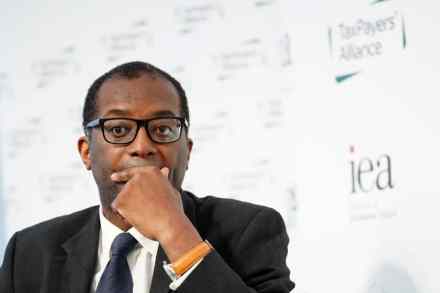
When Liz Truss and Kwasi Kwarteng entered Downing Street, laser focus was not only applied to them, but also to the free market think tanks they had worked with over the years. This evening, Kwarteng paid a visit to two of them, as the Institute of Economic Affairs and The Taxpayers’ Alliance hosted the Chancellor at Conservative party conference for one-on-one conversations. Similar to his speech yesterday, Kwarteng used the opportunity to try to take some heat out of his mini-Budget. When asked if market reaction was part of the Treasury orthodoxy he and Truss had been taking aim against for weeks, he shook his head and pointed to the ‘global context’ instead.

Are the Tories in the business of managing decline?

Kwasi Kwarteng's speech to Tory conference was an attempt to get his party back behind him after his U-turn on the 45p rate. He acknowledged it a number of times in his address, opening by saying it had been a 'tough' day, but insisted that the government needed to keep going. The members in the hall laughed as he referred to 'a little turbulence' and insisted that 'we are listening'. After the U-turn, it was quite audacious to insist the government had an 'iron commitment' to anything After the U-turn, it was quite audacious to insist the government had an 'iron commitment' to anything, but his commitment today was to 'fiscal discipline' and the 'central and guiding mission' of the government to grow the economy.

Everything’s under control, says Kwasi

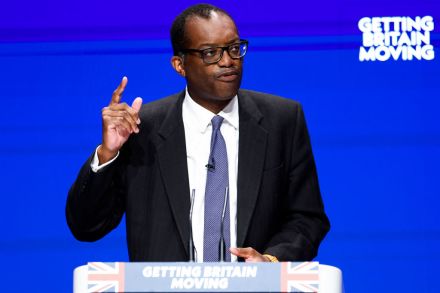
You could tell Kwasi Kwarteng was aware of his words and tone as he delivered his Conservative party conference speech to a hall full of Tory members this afternoon. It was a delicate set of circumstances, with him having had to U-turn on his plan to abolish the 45p tax rate only this morning. But perhaps more importantly he learned a lesson after the mini-Budget: his words can move markets. And he’d be loathe to push them into freefall again. Kwarteng worked hard to compensate for the total lack of lip-service he had paid to fiscal discipline in his mini-Budget. He praised the UK’s status of having the ‘second lowest debt-to-GDP ratio in the G7.

Now Nadine goes for Truss

It's day one at Tory conference and already tensions are running high. Conservative MPs are coming out to attack Liz Truss's 45p tax cut, angry activists are muttering about mutiny and the markets are braced for more turmoil tomorrow. So who better than Nadine Dorries to calm the situation? Now relieved of her Cabinet post, the former Culture Secretary has time on her hands and she's certainly putting that to good use. Alongside an anguished Sunday Times interview today – in which Dorries bemoans the loss of Boris as 'one of the world’s great leaders' – the pugilistic parliamentarian has now taken to Twitter to turn her guns on Johnson's successor.

City slickers’ reaction to Kwarteng’s unfunded plan is entirely rational

‘Fury at the City slickers betting against UK plc,’ shouted the Daily Mail on Tuesday, after Monday’s mayhem saw the pound hit an all-time low of $1.03. A more accurate corporate metaphor, though less punchy as headline material, would have been something like this… Activist mavericks seize boardroom control of giant sluggish utility. Novice finance director slashes prices, raises dividends for rich shareholders, shuns in-house forecasters and says he’ll borrow whatever it costs. To which markets reply: ‘Blimey, mate, that’s bonkers. So we’re dumping your shares and the cost of your debt just doubled.’ And that, I’m afraid, is an entirely rational response, not a wickedly speculative one.

Maybe Nanny does know best

Not least among the shivers down my spine as I listen to Liz Truss and Kwasi Kwarteng pump up the rhetoric on their economic revolution is the evocation of myself – myself when young. Like Ms Truss, I too joined the Liberal party as an Oxbridge fresher. I too believed in the power of personal choice. I too had a dream of unhindered competition liberating the animal spirits of enterprise and individual genius. I too told myself that we liberals must grit our teeth and keep the faith when sink-or-swim left some to sink. I too thrilled to the metaphor of ‘tall trees’ being allowed unencumbered access to the light.

Why is the right not making the moral case for lower taxes?

There was an article recently in the increasingly woke but still useful New Scientist which attempted to gauge the degree to which luck was responsible for who we are and, hence, an individual’s life circumstances. I think it came in third place after genes and the environment – which are also both down to luck, really, I suppose. The thesis seemed to be we pay too little attention to the role of luck when considering why one man is a millionaire and the other is a lavatory attendant or a book reviewer. I would beg to differ. Ascribing luck to one’s unfortunate position in life is very prevalent indeed and is as left-wing an argument as blaming the class system or the colour of one’s skin (although with slightly less justification).

Truss can’t hide from the crisis she created

For a politician who only a few days ago was bravely mocking Vladimir Putin as a ‘sabre-rattling’ loudmouth ‘desperately trying to justify his catastrophic failures,’ Liz Truss has turned out to be the greatest coward ever to be prime minister. At least Putin feels the need to justify the catastrophe he has inflicted. Truss and her Chancellor believe they can hide away like children putting pillows over their heads to escape a bad dream, and say nothing at all. The public may not understand the full ramifications of the crisis the Conservatives have unleashed in a moment of ideological delirium.