Kenya

The wonder of nature’s ability to heal itself

A decade ago, I planted 12 acres of trees in a field that had proved unsuitable for productive grazing. The trees themselves are doing well but the most remarkable change has been the increase in birds, invertebrates and flora. Each year brings new species, new levels of abundance. It has been very satisfying and strangely quick. We’re encouraged to think that the planet’s natural processes work if not always at a geological pace, at least not in the instant reward timeframe that characterises our own brief lives. In Nature’s Echo, the leading ecologist Thomas Crowther takes this capacity for nature’s rapid recovery as one reason why we should temper pessimism about environmental catastrophe.
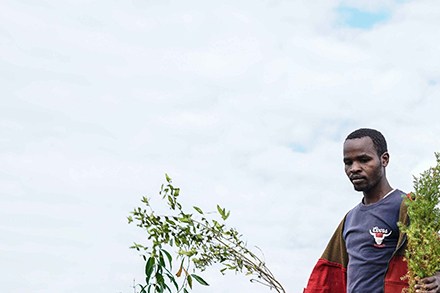
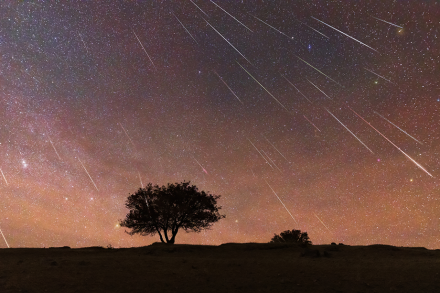
The joyful mayhem of meteorite hunting in Africa

Nairobi Eastleigh, the Somali quarter in Nairobi, was a scene from Blade Runner but in African Islamic dress. Muezzin calls to prayer bounced off canyons of rickety concrete towers. My friends led me through the bazaar of smuggled electronics, perfumes, truck tyres, gold dealers and money changers. In this monsoon version of Harrods, I imagined you could buy whatever came to mind: Tehran’s uranium, a live Quagga, Ovid’s lost work Medea or an intact Spitfire. That great Arabist Tim Mackintosh-Smith, writing about the souks in Yemen, observed that he probably saw his old school blazers in among the piles of secondhand clothes there – and it was like that. One just has to ask in Eastleigh, the biggest market in Sub-Saharan Africa.

The cattle rustlers have returned

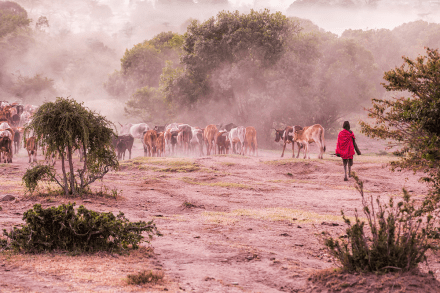
Kenya When a mob of Somali cattle I bought in Kenya’s far north arrived on the farm in February, we quarantined them in a remote corner. To protect them against lions they slept in a boma with high drystone walls topped with treacherous thorns, guarded by a fierce police-licenced guard named Joseph. The Somalis are great stockmen, though these beautiful beasts, known as Awai, are more long-legged and rangy than our traditional ranch Borans. My lorryload of cattle had survived a two-year drought on rocks and dust and they could walk hundreds of miles to water, yet they were randy and highly fertile. These are ancient cattle, of the sort that you see in petroglyphs and ochre painted on rock faces across Africa. I have fallen in love with them.

Ladies love an eye patch

Kenya While we were loading two stud bulls and eight hoggets onto a lorry in my ranch’s yard in the African dawn this morning, the farmer buying them saw my bandaged right hand and asked with great concern: ‘Ooh my brother! Did you injure yourself handling your cattle?’ Kenyans are by nature warm and kind. ‘Don’t worry,’ I said standing in an honest expanse of cow shit. ‘It was no accident. Just an operation to straighten out my fingers.’ ‘Do you find it tiresome to drive?’ asked a ranching neighbour at an ebullient lunch overlooking the wilderness towards Mount Kenya this afternoon. ‘No, but it’s tricky if I try to shoot in the general direction of a monkey raiding the garden.

Immigration policy should discriminate

From our US edition

Many years ago, a friend described one of my serious literary novels as “clever.” I was offended – but I shouldn’t have been. The friend was from across the pond, where I now understand “clever” means smart. For Americans, cleverness implies a shallow, facile intelligence. Applied to people, it hints at sly, calculating deviousness or cunning. It has no positive moral qualities, as westerners understand them. Tax evasion can be “clever.” Let’s move on to “culture” – a big, fuzzy word we throw about with careless abandon, that often summons images of traditional clothing and cuisine. But parsed in its most profound sense, culture might best be defined as “what a people admire and what they deplore.

I Dream of Lamu

From our US edition

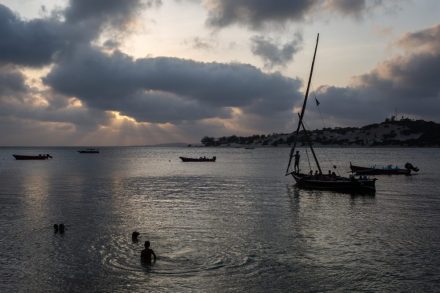
An hour after the propeller plane lifts away from Wilson, Nairobi’s regional airport, it is arching over the blues and greens of the Lamu archipelago; a pattern of islands that extend 130 kms to the Somali border. Views of Lamu, which is also the name of the island and the stone town, have the dreamlike quality of an acid trip; the candy-pink minaret of the main mosque rising over coralline houses in the oldest, continuously inhabited, settlement on Kenya’s Swahili coast. And beyond the hazy shoreline, confetti-scatterings of white are the dhows that powered the fortunes of this former hub and deep-sea port. These criss-crossed the Indian Ocean on seasonal monsoon trade winds swapping ivory and slaves from the African hinterland for silks and spices from India, Yemen and Oman.

The inside track on racing syndicates

Billy Connolly once declared that Scotland had only two seasons: June and winter. Perversely, though, just as the northern swallows are setting their alarm clocks and checking departure times for Cape Town and Johannesburg, it has become the Oakley tradition to head for the Isle of Mull. In recent years the accompanying essentials, Mrs Oakley, a case of good wine, long wellies and a surf-addicted flat-coat retriever, have been supplemented by author Felix Francis sending me in late August his latest forthcoming ‘Dick Francis novel’.  When Motivator won in 2005 he had more owners than any Derby winner in history – 230 of them Racing’s continuance owes much to partnerships and syndicates.

The fun of the Shergar Cup

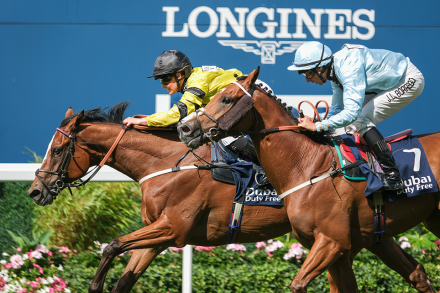
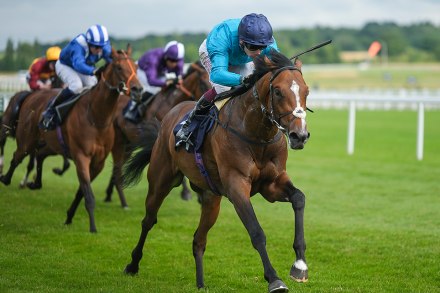
Gary Lineker once summed up football as ‘a simple game. Twenty-two men chase a ball for 90 minutes and at the end, the Germans always win.’ Ascot’s Dubai Duty Free Shergar Cup, a team contest in which four teams of three international jockeys, one of them restricted to female riders, compete for points on randomly drawn horses, is going the same way. In this month’s contest the Ladies team, led as usual by everybody’s favourite girl next door Hayley Turner and including Yorkshire’s Joanna Mason, won for the fourth time in six years. Hayley herself triumphed in two of the six races and for the third time collected the Alistair Haggis Silver Saddle for the most points.

Has there ever been a jockey like Oisin Murphy?

We are blessed these days with a rare stream of jockey talent including the likes of William Buick, Ryan Moore, Tom Marquand and Rossa Ryan. Well clear of the pack though in the chase for the jockeys championship is former champion Oisin Murphy, and five minutes in the winners’ enclosure rather than on the track left me convinced at Newbury last Saturday that if I still had shares in a horse, Oisin would be the one I’d want riding it – and not just because of the two trebles he notched up last week. Successful trainer Hugo Palmer wasn’t in evidence but surrounded by a gaggle of owners after the 4.10 Novice Stakes, Oisin truly earned his £162.79 rider’s fee by giving them a state-of-the-art debrief.

A tale of two safaris

From our US edition

To grasp the untamed vastness of Samburu County, it’s necessary to get high. Above the thickets of acacia trees, thorny branches like barbed wire against the cloudless sky. Out of the Rift Valley’s rubbly trenches, dotted with bleached animal skulls and groves of candelabra-like doum palms clustered around some-time watering holes. To the peak of Sundowner Rock, for instance. After scrambling up its boulder-strewn slopes — wishing for the agility of the bug-eyed, Bambi-like dik-diks that prance about this terrain — I flop down on a sun-warmed granite slab and savor an eagle’s eye view of the bushland below. Legions of acacias and wiry shrubs mottle the red earth.

safari

My father vs the killer lion

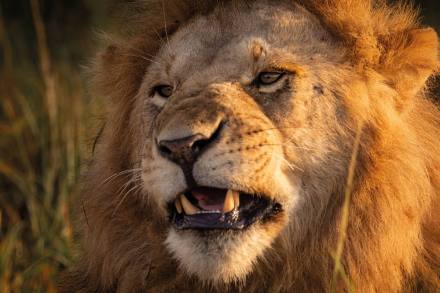
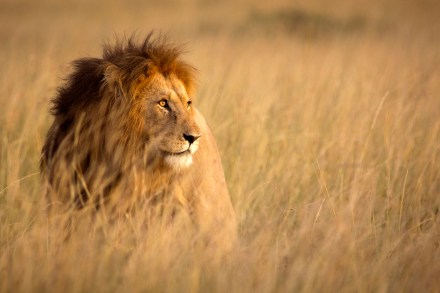
Laikipia, Kenya This month, in broad daylight on our Kenyan farm, a lioness mauled one of my bull calves. Before she could make a kill, a quick-witted herder intervened and drove the beast off. My son Rider loaded the injured calf into the pickup and brought it home, where he gently cleaned the tooth and claw wounds, then injected the poor creature with antibiotics and a painkiller. Big cat injuries go bad fast, but we all felt cheered that the calf, to my mind a future champion Boran bull, had survived and might pull through. The next morning the calf got to his feet and suckled his mother. What a sight that was. The morning after that, the mother was out grazing with her calf when she inadvertently bashed into a tree in which hung a beehive.

My battle with the dreaded ‘black cotton’

Laikipia, Kenya By the time I set off from the farm before dawn we’d had 22in of rain in the past month. At the bottom of the valley I saw in the headlights that our lugga, or seasonal watercourse, had become a roaring torrent of brown water after yet another downpour overnight. If I tried to cross the Landcruiser would be swept away in the flood. This rainy season the land has become a sea of mud, with a thousand streams of water splashing down from the plains, our days and nights serenaded by bullfrogs. Normally I would stay put, give up on any travel and wait it out. There have been times when heavy rains have made a wonderful sanctuary of the farm, surrounded by seas of mud and oomska, isolating us from the world for days or weeks at a time.

Downhill all the way: the decline of the British Empire after 1923

The British Empire, the East African Chronicle wrote in 1921, was a ‘wonderful conglomeration of races and creeds and nations’. It offered ‘the only solution to the great problem of mankind – the problem of brotherhood. If the British Empire fails, then all else fails.’ Stirring words – and not those of some sentimental Colonel Blimp back in London. They were written by the newspaper’s editor, Manilal A. Desai, a young Nairobi-based lawyer and a prominent figure in the large Indian community in Kenya. But, as Matthew Parker observes in One Fine Day, an ambitious account of the empire at the moment of its territorial zenith on 29 September 1923, Desai’s encomium came with a caveat: Either the British Empire must admit the equality of its different people...

How to combine city break and safari in Kenya

Nairobi is blossoming. With its vibrant art world, nascent farm-to-fork restaurant scene and unique hotels, east Africa’s biggest city is increasingly on the radar of international travellers. ‘We’re definitely seeing people wanting to stay longer in Nairobi,’ says Rose Hipwood of the Luxury Safari Company. ‘It’s absolutely a cosmopolitan city now. Rather than flying in and flying straight out on safari, people are wanting to extend their stays and see what restaurants, bars and museums there are.’ The country's safari offering is developing, too. Away from the crowds of the Maasai Mara, lesser-known hotspots are finding a following – devoid of people but brimming with nature.

The man-eating leopard of Laikipia

Laikipia Plateau, Kenya Until only a few years ago, the constellations blazed across the sky above the farm at night and there was not a single electric light on any horizon. On many evenings I found myself with my rangers sleeping on the tracks of cattle rustlers heading into Kenya’s wild north with no fences between us and the Ethiopian frontier. Today the wildness is gone, the tarmac almost reaches our farmstead, the phone network reaches everywhere and the good old days of gunfire and adventures and great dances of warriors with their beads and flashing spears will survive only in memory. And so it is quite surprising when even today a man gets eaten by a leopard a stone’s throw away from home.

There are almost no animals left – but we’ve been here before

Laikipia You know things are bad when the zebras are thin. Even during most droughts, zebras are like matrons at the gym in stripey spandex stretched around plump buttocks. Pastures vanished long ago and our plains resemble Sudan’s Batn-el-Hajar – the Belly of Stones desert – so that I cannot even recall what they were like when they were last thick with green grass. The zebra foals are dying, the elephants are thin, while the buffalo disappeared a while back. The dry has killed quite mature trees which now shudder with the sound of termites and crash to the ground. To the north of us, horned skulls and dried carcasses litter the trail where the cattle-keepers trekked their animals vast distances in search of rain. Up there the countryside is silent.

Hell is an English train journey

Delayed, on Southern Rail Home From the Hill is a 1987 documentary by Molly Dineen about Hilary Hook, an elderly colonel who after a life in Kenya and the Far East retires to a nasty flat in England. Poor old Hilary has never had to prepare his own food and now, in his twilight years, he can’t even open a can of soup. He is horrified by Britain, its culture and bad weather. When I first saw Molly’s superb film as a young man it struck a chord. Some 35 years later, on a brief visit to England from Kenya, I can almost hear and feel myself becoming Hook. It’s not so much that neither of us can cook for ourselves. It’s more that under this dome of grey skies and public service announcements, we both miss the gaudy melon flower of home.

Who killed Dicky?

From our US edition

Local chief Panta wore a government-issue khaki uniform with epaulettes, beret and swagger stick. On a pleasant stroll to our farm springs, he observed how plenty of blood had been spilled over this water. We sat on the glassy-smooth black rocks around the water pools and the chief retold for me a story more infamous in its day than the Happy Valley tale of Lord Erroll’s murder, but now completely forgotten. Welshman Dicky Powys, from a family of authors and philosophers and cousin of our ranching neighbor Gilfrid, arrived in Kenya in 1931 to farm. Young Dicky learned the local Maasai vernacular fluently and got on with everybody. His employer had rented pasture in Laikipia around our springs for a vast flock of sheep and Dicky pitched camp here.

dicky

After Covid, Kenya’s flower industry is gearing up for its next challenge

The alpine slopes of Kenya’s extinct volcanoes are the floral equivalent of Bordeaux. It’s there that the roses grow for the world’s weddings, funerals and Valentine’s Day bouquets. The higher the altitude, the larger your flower head, and roses raised in the shadow of Mount Kenya’s glaciers, or on the vast caldera of Mount Elgon, come in a dazzling spectrum of colours, petal shapes and scents. In normal years, billions of blooms fly out of Nairobi, destined for everywhere from Shanghai and Riyadh to Melbourne and Slough. But in 2020, the roses bloomed in vain. The world’s skies emptied of aircraft in March 2020, and Kenya’s rose growers threw away mountains of flowers that could not be exported.

Why a church in Jerusalem is the model for all family-owned holiday homes

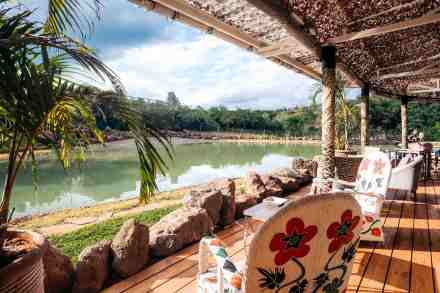
Malindi, the Indian Ocean When I lived in Jerusalem a long time ago, I often visited the Church of the Holy Sepulchre, where the Catholics, the Greeks, the Syrians and Armenians had their separate territories within the sacred complex of Christ’s Calvary, tomb and Resurrection. (The Ethiopian priests were all unfairly banished to the roof.) Every year, one of the denominations would say: ‘The ceiling is blackened by candle smoke — we should clean it.’ And all the other denominations would say: ‘Noooo — this is a terrible idea. It should not be done.’ The next year, another of the denominations would also say: ‘The ceiling is blackened by smoke, let’s clean it.