Kenya

Wild life | 13 December 2018

Laikipia, Kenya ‘The End,’ I typed. The book had taken me 14 years to write. I rose from my desk and stretched; outside, go-away birds glowered down from the fever trees and a dust devil coiled across the valley. ‘A walk at last!’ I grabbed my cattle stick — and up leapt the labrador, the collie and Potatoes, the mongrel. In a riot of tails, the dogs rushed out of the open front door with me striding in pursuit and there, on the front porch, I came face to face with an eight-foot long spitting cobra. ‘Look, and be afraid!’ the cobra Nag hisses at Rikki-Tikki-Tavi. But unlike Kipling’s mongoose, on our farm we adore snakes. I lie in bed watching delicate little brown-lipped house snakes in the coconut thatch above, hunting for geckos.

Wild life | 13 December 2017

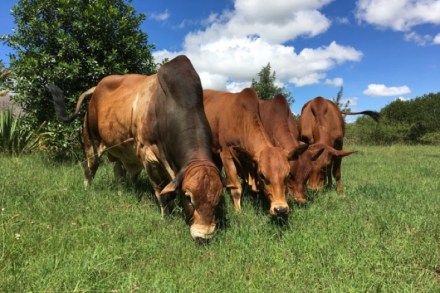
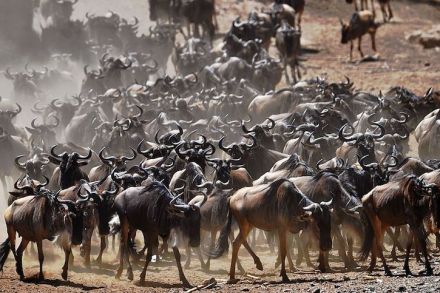
Laikipia, Kenya   The zebra lacks a rumen and eats at least twice as much as a cow. On our modest Kenyan ranch we run several hundred head of Boran cattle. In our arid conditions, this number is carefully calculated on a stocking rate of so many beasts to the acre. If you add hundreds of zebra to the pasture you swiftly finish your grass. During this year’s drought, and the chaos beyond our boundaries, wild animals were poached and they starved. Many arrived on the farm so desperate that they smashed through walls and fences to get in to where it was safe. I let them stay. The elephants came and went as they pleased, barging through any barrier.

Wild life | 1 November 2018

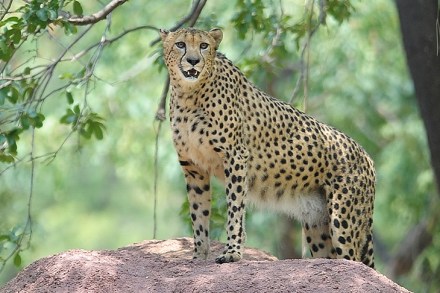
Laikipia   My two Jersey bulls Halcyon and Hosanna were grazing happily on the lawn in front of the house when a pride of lion breached the 7,500-volt high-security fence enclosing our garden, pounced on the cattle and broke both of their necks. I am down by 24 sheep so far this year thanks to the old leopard who patrols the hillside above us. A cheetah boldly tried to grab a calf in the valley the other day. The pasture grass I planted at huge expense has attracted great numbers of oryx, buffalo, zebra, eland, gazelles and warthog. The electric fences I placed around the perimeter of the farm have completely failed to keep out the roaming elephant, giraffe and plains game.

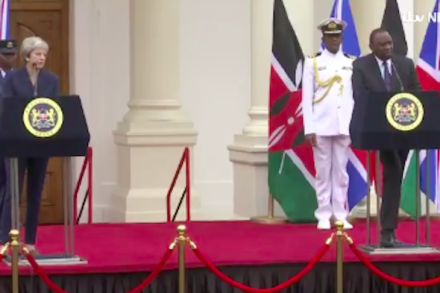
Watch: Kenyan President forgets the name of Boris Johnson – ‘the bicycle guy’

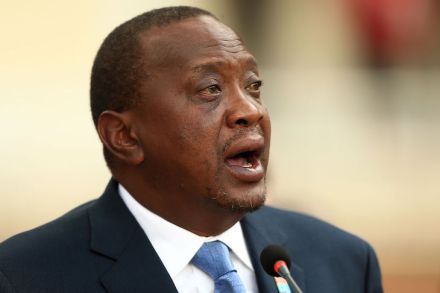
It can be hard adjusting to life after high office. One minute you're one of the most powerful people in the country, the next, people are struggling to even remember your name. It’s not something that usually affects Boris Johnson, who is accustomed to spending time in the limelight even after he’s left high-profile positions. But it appears his stardom outside the UK might already be waning. Despite Boris visiting the country only last year, Kenyan President Uhuru Kenyatta is already struggling to remember who he is. In a press conference alongside Theresa May this afternoon he recalled the visit, saying: ‘Last year, if you recall, the Foreign Secretary then, Boris...erm...Boris, Boris...Johnson. The bicycle guy, that one’ https://twitter.

Wild life | 28 June 2018

Laikipia, Kenya A minotaur head glowers at me through the bathroom window while I am brushing my teeth in the morning. It’s George the bull, who wants his ears scratched. After I get dressed, it’s time to select a cattle stick, known here as a finbo, from an umbrella stand stuffed with crooks, wands, withies, shillelagh-like cudgels and rods that a biblical prophet might have forgotten had he come to supper. I choose my favourite, a finbo that balances perfectly in the hand like a drum major’s malacca cane. Outside, a Jersey bullock is sprawled on the garden path, chewing the cud.

Wild life | 31 May 2018

Laikipia I wake at 4 a.m. these days. At that time you might hear a lion or a braying zebra, but the birds and bullfrogs are quiet under the constellations. False dawn comes an hour later with the liquid song of sandgrouse and the bustards cackling as they angle into the first light. Just before sunrise the birdsong becomes a sound cloud rising from the valley up on to the plains. The cattle spill out of the boma bellowing and mooing and then later, at seven, comes the sound of men’s voices arriving at work, diesel engines warming up, chickens, dogs barking. My father used to rise at 5.30 a.m. — but he always had a siesta after lunch, wherever he was in the world. When I was youngI often saw the dawn only because I had not yet gone to sleep.

Wild life | 5 April 2018

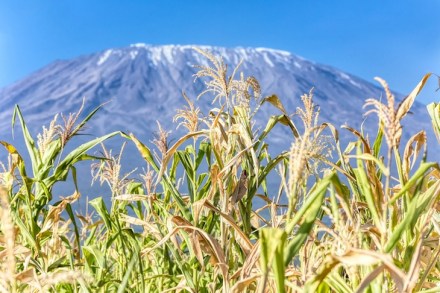
Laikipia, Kenya Erupe is a Kenyan farmer. He owns a smallholding of a few acres not far from my own place. When we meet our talk is usually about the vagaries that preoccupy farmers: crops, rain, livestock diseases and market prices. On his little patch he built a dwelling from mud and wattle with a corrugated iron roof. Inside, a picture of Jesus on the wall stared down on the poor but growing family, their only possessions a couple of beds, a chair, a radio and some faded photographs of relatives. Outside the hut my friend grew an avocado tree, bananas, a guava and a small patch of blue gums for shade and firewood. Beyond that he and his wife had tilled the soil with jembe mattocks. They planted maize and beans.

The camp was calm. Then the river began to roar

When Rudolf Hess, Hitler’s deputy, ejected from the aeroplane he was flying solo to Scotland, he parachuted to the ground and, injured, was taken to the local police station. This was 1941 and he had come on a doomed mission to draw the United Kingdom into peace negotiations. Hess’s aim was to deliver his proposals to the 14th Duke of Hamilton, another keen aviator and the first man to fly over Mount Everest, whom he fancifully supposed might be sympathetic. Douglas Douglas-Hamilton met him, then flew straight to England to report to Churchill.

Lake Turkana, Kenya: postcard from the edge

As I write, a great gale is blowing in from Lake Turkana. The dry hills on the other side, always faint, have disappeared. Sheets of warm rain lash our tent, rollers crash on to the white sandy shore, huge pelicans struggle against the wind, the flamingos are gone, and fishermen like thin black sticks — Lowryesque — from the Turkana tribe can be seen streaking up the beach ferrying equipment from their now-beached wooden fishing canoe to a clump of doum palms where they’ll shelter. But nobody is cold. The lake feels like a tepid bath when we swim (where humans fish, the Nile crocodiles stay away), while the air temperature has plummeted within hours from about 45˚C (113˚F) to more like a muggy English summer.

Wild life | 8 March 2018

Laikipia Off Madagascar the other day the Indian Ocean gave birth to a little storm called 11S. As its gyre turned clockwise over the sea, 11S gained momentum until it was a huge vortex of thunder and lightning christened Tropical Cyclone Dumazile. Like a naughty lover yanking away the shower curtain so that everything in the bathroom is sprayed with hot water, Dumazile pulled the entire weather system of mainland Africa eastwards. The effect was to suck the clouds from the steamy jungles of Congo’s river basin across the equator and dump their entire contents over our farm in highland Kenya. There was I enjoying the dry season. ‘How’s the farm?’ asked people through February. ‘Dry,’ I said.

Wild life | 8 February 2018

Laikipia I woke with the breath of a leopard a few feet from me as I lay in my bed. Before he came there were the sounds of Laikipia’s darkness: nightjars, insects, a wandering hyena. Then it all went abruptly silent and I heard him exhale, just on the other side of the bedroom door. I got out of bed and listened to him snuff the air. A hiss came from the back of his throat, then a deep-throated cough. Our three dogs sat up in their baskets, ears up, hackles raised, silent and staring. At dusk I had put them — Jock, the labrador, Sassy the collie, and our mongrel bitch Potato — in the bedroom to sleep close to me because the leopard had been after them for a string of nights. A leopard loves nothing more than a dog to kill.

Wild life | 11 January 2018

Kenya  First comes a distant hum, rising in volume until I hear it coming straight at me like Niki Lauda behind the wheel of his Ferrari. The blue sky darkens. I duck as swarming bees zoom overhead, trailing their queen. They are gone again in a second, coiling off in a shadowy murmuration across the veldt. After the rains, several swarms hurtle over us daily looking for homes, criss-crossing in the air. When bees nest in our farmstead walls we leave them be. Anybody who has had bees live under the eaves will know how cosy it is to lie in bed at night, listening to the soporific thrum of countless beating wings.

Portrait of the Week – 2 November 2017

Home A great ferment of accusations of sexual impropriety was made against people in Parliament and out of it. Bex Bailey, a Labour party worker, said she was raped, not by an MP, at a party event in 2011 and a senior Labour official discouraged her from reporting it. Jared O’Mara MP had the Labour whip withdrawn while claims were investigated that he had called a woman he met ‘an ugly bitch’. Tulip Siddiq, a Labour MP, said that cases of sexual misconduct cases at Westminster could run into hundreds. Sir Michael Fallon, the Defence Secretary, was even driven to apologise publicly for putting his hand on the knee of Julia Hartley-Brewer during dinner 15 years ago, although she said that she had not been ‘remotely upset or distressed’.

Wild life | 2 November 2017

Laikipia   Flying home across Laikipia’s ranchlands with Martin after a farmers’ meeting, I see the plateau dotted with cattle and elephants. Stretching away towards the north, it is all green after good rains. I think to myself that farming is hard enough without having to deal with toxic politics: will there be a drought, and what about the ticks, or foot-and-mouth disease; will your cattle get rustled, or flocks of quelea and hordes of zebra devour your crops? After months of politics in Kenya, the news comes in that Uhuru Kenyatta has been declared our president again. This comes as a great relief because most people in Kenya are exhausted by politics after months of crisis. We just want to get back to work. Everybody is broke.

Wild life | 5 October 2017

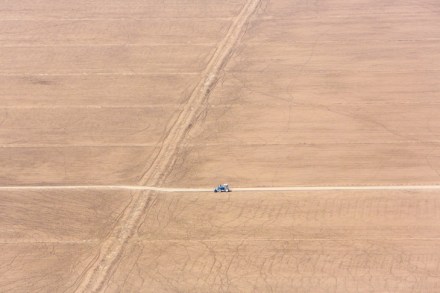
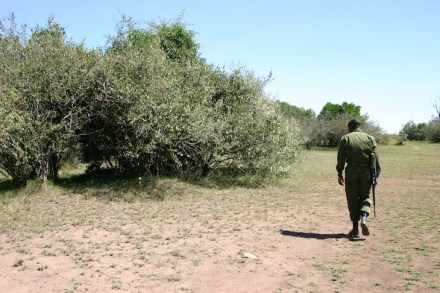
Laikipia Ripping up the black cotton soil on the farm’s high savannah I get a sense of what it must have been like to be a sodbuster on the Great Plains of America 150 years ago. Riding my big yellow tractor I find it thrilling to plunge through virgin land that has been innocent since time began, but it also makes me feel intensely sad that it had to come to this. Through the clouds of dust and diesel fumes I can see a giraffe pouting at me from above a stand of acacia trees that will soon be torn out. Herds of zebra, oryx and eland are retreating as the lines of freshly turned tilth advance across tawny grasslands stretching northwards all the way to Ethiopia. I am destroying wildness in order to survive. We never built a safari camp for tourists.

‘Kill! Kill!’ yelled the mob

 Laikipia, Kenya Following Kenya’s recently concluded elections, I took a walk on my Laikipia farm and lit up a cigar, stale because I had saved it for a day when I might hear a bit of good news that never seemed to come. I felt it was the end of a terrifying five-year ordeal when I frequently sensed my life was in extreme danger. A few weeks before at a rally on the plains near our farm boundary, our local MP, Mathew Lempurkel, had allegedly declared: ‘If we win this election we will take this land… We will make sure all wazungus (white people) go to their homes.’ This speech was recorded by witnesses, and Mathew was arrested and charged with incitement. But my MP was no stranger to criminal cases.

Wild life | 24 August 2017

Indian Ocean coast Like most men I wonder if I have been much good as a father, but one thing I got right was that I gave our children, Eve and Rider, the Indian Ocean. Before they could even walk my Claire taught her babies to feel happy splashing about in the sandy coral pools below my mother’s house, and this was where she taught them first to swim. They were still tiny, with curly blond locks, when they ran at the roaring breakers on the beach, getting completely lost in the white foam, then bobbing up to the surface with squeals of delight. They made up names for waves: small ones were ‘tippitisers’, a big one was an ‘abragabir’ and a huge one was called ‘Mickey Mouse Club’. They both grew up winning swimming races at school.

Diary – 17 August 2017

To the Business School at the University of Edinburgh to be interviewed on the theme of ‘Great Political Disasters’. Main criteria for inclusion: decisions, often taken for short-term reasons, whose unforeseen consequences have echoed down the ages. Everyone will have their own little list, but mine included the Balfour declaration, Partition, Suez, Wilson’s failure to devalue in 1964 (which haunted subsequent Labour governments), Denis Healey’s IMF loan in 1976 (which he later admitted had been unnecessary and which led to the Winter of Discontent and the election of Margaret Thatcher), the poll tax, Iraq and the Brexit referendum (yes, I realise that the jury is still out on that last one).

Wild life | 27 July 2017

Kenya   We are on the beach, where our home is full of dystopian stories. My daughter Eve is whizzing through her A-level summer reading list, and as we share her books around we all have our noses in post-third world war Australia, the Republic of Gilead, in a submarine London and totalitarian future states. The novelist Lionel Shriver, an author of dystopias herself (with whom I once shared a house in Nairobi, before she called me a ‘spiritual pygmy’ in the dedication of her book Game Control ) says, ‘The greatest joy of dystopian fiction is that it’s make-believe. We can experiment with disaster imaginatively, close the book, then mix that martini.

Wild life | 29 June 2017

Laikipia, Kenya   During our evening walk on the farm, Claire kept looking around nervously instead of engaging in conversation. At one point the dogs ran ahead, probably thinking that they were after the scent of a rabbit. Seconds later, they tore back past us, leaving a trail of dust, and heading after them came a bull elephant moving at quite a pace, trunk up, ears flapping. Claire took off after the dogs and I followed, briskly but grumpily. I had been irritated by Claire’s anxiety in the bush, excited by the story of an incident that had happened a few days before, when an elephant had charged and completely flattened a man on the plains nearby. It was probably the same elephant and, I grudgingly had to admit, she was right.