Kenya

My ocean voyage from hell

Kenya Wondering what this year will bring, at dawn this morning I stood in the waves in front of our beach house and watched two Swahili sailing dhows battling through monsoon surf, heading out to the fishing grounds. For 1,500 years mariners off our East African coast have voyaged in these lovely boats and now, just in the past couple of years, fibreglass hulls have started to replace teak planking, and outboard motors instead of lateen sails propel men across the ocean. I was looking at the end of a long history. In my life I’ve enjoyed wonderful sea safaris on dhows, hunting for tuna and ambergris and waves to surf — and I wonder what’s ahead.

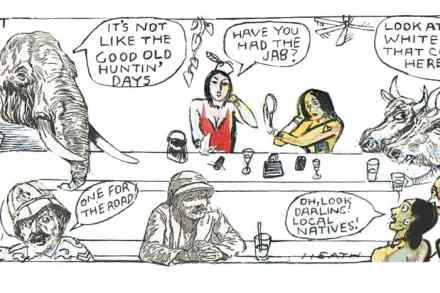
The universal appeal of the African savanna

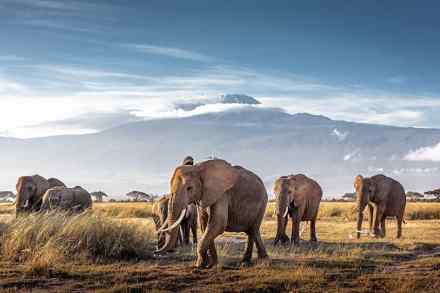
My wife and I were lucky to escape for a long-delayed birdwatching holiday in Kenya over Christmas. To have been warm, sunlit and free while so many in Britain were not won’t endear me to most readers, I realise. Nairobi was rife with Covid and Christmas cancellations devastated the tourism industry. So we had the extraordinary Elephant Watch Camp run by Saba Douglas-Hamilton in the Samburu National Reserve almost to ourselves. Baboons and vervet monkeys wandered freely through the camp, and in the night the river flash-flooded after a storm in the hills to the west, but the tents were safe. Elephants were everywhere, feasting on fresh vegetation after a long drought.

A long-forgotten tale of sorcery and a severed head

Laikipia Plateau, Kenya Our local chief Panta wore a government-issue khaki uniform with epaulettes, beret and swagger stick. On a pleasant stroll to our farm springs, he observed how plenty of blood had been spilled over this water. We sat on the glassy-smooth black rocks around the water pools and the chief retold for me a story more infamous in its day than the Happy Valley tale of Lord Erroll’s murder, but now completely forgotten. Welshman Dicky Powys, from a family of authors and philosophers and cousin of our ranching neighbour Gilfrid, arrived in Kenya in 1931 to farm. Young Dicky learned the local Maasai vernacular fluently and got on with everybody. His employer had rented pasture in Laikipia around our springs for a vast flock of sheep and Dicky pitched camp here.

Africa’s empty vastness has vanished under the concrete of the present day

Kenya   When I was a child in Kenya, the road from the Indian Ocean up to Nairobi was still a dirt track, with the way frequently blocked by a rhino or large herds of elephant. A few decades later, the route has two railways and the road is an unbroken column of lorries heading all the way to the Congo. Africa is growing so fast that older people like me feel a kind of existential jetlag — or a sort of phantom limb syndrome, in which our eyes still see empty wilderness, plains and forests of a recent past that have vanished under the concrete of the present day. Whatever still survives is changing at tremendous speed. Twenty years ago two lonely stone pillars stood on the empty savannah west of where I write this on the farm we have built up.

Our farm is a haven for lost souls

Laikipia He was turned out in a crisp bush ranger’s uniform and handled his assault rifle like a man hardened in the field for years to take on bandits and elephant poachers. ‘Ah Mario, what a pleasure it is to meet you again after all this time,’ I said. His severe military face collapsed into a beaming smile as he snapped to attention and slope-armed his weapon. He then relaxed and we chatted for a while on the roadside in our farming district, where I’ve been around so long now that I frequently encounter people whom I’ve known all their lives. Some, like Mario, even have a few wrinkles, greying hair, a couple of wives and several children. The farm has always been a refuge, remote from towns and the life outside.

Switch over to Eurosport: BBC’s Olympic coverage reviewed

I’ve not been allowed anywhere near the TV remote control this week because of some kind of infernal sporting event taking place in Japan. You may gather that I have mixed feelings about the Olympics: on the one hand, I like most of the competitors, who are so much more affable and modest (those delightful Gadirova twins!) than the overpaid, overindulged prima donnas who recently took part in the Euros. Also, it’s impossible not to get sucked into the drama of individual stories such as that of Beth Schriever, the humble, underfunded former teaching assistant who took gold in the women’s BMX.

How WhatsApp mums saved Kenya’s castaway children

Kenya In March, Global Britain signed a new, post-Brexit trade deal with Kenya. This was a welcome agreement for my homeland, where the pandemic has caused tremendous economic suffering, but where comparatively few deaths have occurred among the fit, young population. Weeks later, on 9 April, the UK condemned its former colony to the red list of countries. Non-citizens were banned from travelling to the UK from Kenya, while arriving UK passport holders faced a £1,750, ten-day incarceration in a quarantine hotel. Such extreme measures were imposed on the excuse that a ‘significant’ number of passengers arriving from Nairobi tested positive for a variant of concern.

Did I catch Covid from a naked-rumped tomb bat?

Laikipia Until I promised to slaughter a fat-tailed sheep with a goat thrown in for a feast, the farm cowhands looked doubtful about going for their vaccinations. ‘Come on, it won’t hurt you,’ I cajoled. A panther-like man I’ve seen pursuing bandits with a rifle and reckless courage announced that he was frightened. The others nodded and rubbed their left arms. But at the offer of meat and sizzling fat over an open fire, everybody cheered up. Time was running short. A village clinic two hours away in Maasai country had phoned to say its supply of doses was sitting there unused and would I urgently muster some people?

Why I’m investing in sheep

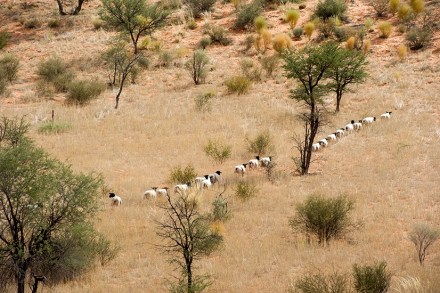
Laikipia In the past I had a low opinion of sheep. During my first forays into farming I saw them as creatures hell-bent on dying, with lung diseases, rotten feet or nasal maggots. Their legs snapped in ant-bear holes and hyenas tore them to pieces. To stem tides of oviform death we dipped, injected, dewormed and castrated. Many hours evaporated searching for stray animals. I found them dreary, sold off my flock and concentrated on cattle. Up here, north of Mount Kenya, people name their sons after special bulls and men hold important conversations in among the cattle at evening, so that the talk can be inspired in bold and manly ways. Everybody loves cattle.

The healing power of sweat

Laikipia In one of Kenya farmer Karen Blixen’s short stories, a character says: ‘I know of a cure for everything: salt water… Sweat, or tears, or the salt sea’. After two months on the Indian Ocean shore since Mum left us, I set off on the two-day drive back to the farm. At dawn in Tsavo I had breakfast watching a young leopard, and passed a herd of 400 buffalo, many elephant, kudu, giraffe and buck. In four hours on the back roads I saw just one car. I reached the Nairobi highway, overtook scores of juggernauts and then diverted along the track following the Selengei river, where Ernest Hemingway used to hunt, passing very few cars until I arrived in town towards evening.

The art of mourning well

Malindi, Kenya I’ve learned that mourning must be tackled ever so gently. As a younger man, when friends were killed in Africa’s wars I’d become angry and drink. When Dad died I cut adrift in Yemen for a time. Following Mum’s death a month ago, I decided to stay quietly at her home on the beach. The Kaskazi monsoon whirls through the house and white horses roar on the reef. Soon after dusk the memories appear more vivid than in daylight and these parade through my fitful sleeps until dawn, when I can at last get up and trek along the foreshore among ghost crabs and sandpipers. Each morning I box with my coach Amani, before starting work. I run the Laikipia farm by telephone and spend my days on Zoom calls to England.

Eccentric, artist and storyteller: in memory of my mother Doreen Sanders

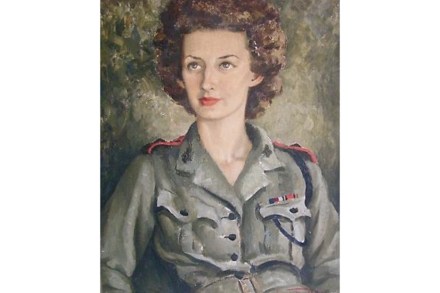
Indian Ocean coast ‘I love you’ became just ‘love’, and that was the last word Mum was able to say to me. Her children had been in and out for days, she had met her great-grandson from America for the first time and messages flooded in on the phone, from all around Kenya and from her grandchildren in Europe. Then one evening the two of us were alone together in her bedroom, surrounded by family photos and all her memories of India, Arabia and great-grandson. She was in my arms and it became so quiet I decided to play Vera Lynn’s ‘We’ll Meet Again’ on my phone, since it might remind her of her years of war service in Burma, when she was still a teenager.

The many good things to come out of lockdown

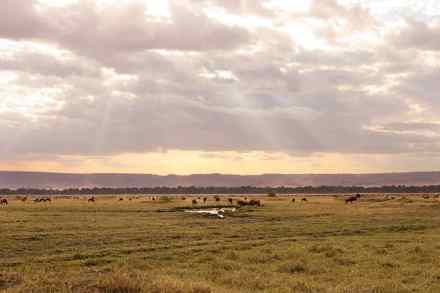
Laikipia I was drinking in the fresh air on the high earth wall of my farm dam last week, when I saw a low white cloud coming straight at me from the northwest. The distances you can see up here are immense, across tawny savannah towards blue hills on the horizon, an unfenced land stretching for days and days of travel to the Ethiopian frontier. As I was standing there, filling my lungs and feeling free and happy, the white mist got ever closer and began to resemble confetti. The low, fluttering cloud was entirely silent. And then I saw it was a multitude of white butterflies, all flying on exactly the same southeasterly bearing. In the days since, they have migrated in never-ending millions from dawn to dusk, pausing on flowers to fill up on nectar, before taking to the skies again.

The perils of being a Kenyan farmer’s wife

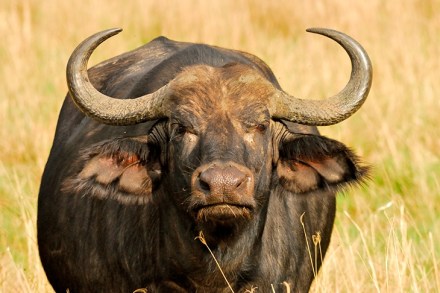
Laikipia As the train pulled into Victoria my wife Claire, back home on the farm in Kenya, revealed that a buffalo was charging her. ‘Oh dear!’ she exclaimed as the phone line went dead. She called back minutes later, out of breath, to explain she had been walking our three dogs when the beast came thundering across the savannah and chased her half a mile. It later turned out that lions had injured the buffalo, which put it in a foul mood, gave it a bad limp and — thankfully — slowed it down. That was just the first drama for Claire, when she put on her gumboots and ran the ranch for me while I was away.

What a relief it is to be back among level-headed Kenyans

Kenya I stood under huge skies in the open country of our farm in northern Kenya and, after months of London lockdown, I remembered those Japanese tourists I had once seen, weeping with wonder at the sight of Africa’s savannah after their lives imprisoned in cities. I’ve been savouring every little detail of home since we returned the other day: the taste of water and mangoes, the joys of talking cattle with the stockmen, seeing my 95-year-old mother at last, birdsong and crickets, long treks with our dogs tearing off wildly after baboons and buck. I woke up before dawn when several lions noisily killed a zebra in front of our house. I lay in bed listening to them scrunch up the animal’s bones and felt that all was well in the world.

Why we’ll all be fleeing to Nigeria

I keep thinking what I’ll do when we regain our liberty — and I picture that beer at the end of Ice Cold in Alex, when after surviving his trek through the Sahara, a sweaty John Mills traces his finger up the frosted schooner, drinks the golden liquid down in one and says: ‘Worth waiting for.’ A month ago I had big ambitions for the future at home on the farm in Kenya. We were planting thousands of avocado trees, we were about to start rearing organic broiler chickens, there was a tilapia farm to expand, a new dairy project, and preparations for the Nairobi livestock breeders’ show later this year, when we hoped to compete with a string of Boran beef cattle. The event was cancelled and all my farm plans were delayed when the flights home to Kenya were closed.

Our exile in NW1

Laikipia The sweetest sound to me now is the dawn chorus of birdsong at home on the farm. I lay awake in bed and listened, as a light rain fell on the coconut thatch above me. When I walked out into the garden the three dogs burst out of the house to go off exploring. While I made coffee in the kitchen, our cats Omar and Bernini rubbed against my legs until I fed them and then in walked Long John Silver the orphaned calf, looking for a bowl of milk. I headed out to the crush where the herds were coming in to be dipped. Cattle were mooing, the sheep were bleating and the cowhands were whistling and shouting. With dew sparkling on the grass and the air alive with the hum of bees, I felt so grateful to be here. Home.

Wild life | 27 June 2019

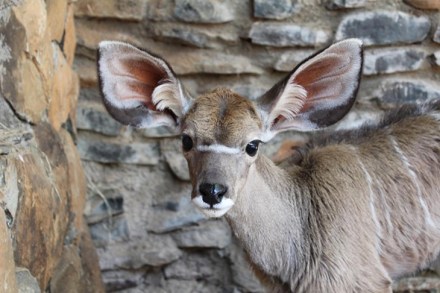
Laikipia, Kenya   On 5 April this year, my neighbour Torrie’s sister Vicki died during an operation in a Nairobi hospital. Torrie, who is the livestock manager on the next-door ranch of Loisaba, adored her and was terribly sad, as was Don, her partner for 40 years. To me, Torrie resembles a thin Dylan Thomas who has been left to bake in the tropical sun for decades. He spends his days out in the heat, caring for 4,000 head of cattle, 500 sheep and goats and 150 camels — and he does his job very well, losing few animals. On the evening of Good Friday, exactly a fortnight after his sister’s death, rangers brought in a baby greater kudu antelope.

Wild life | 2 May 2019

Laikipia, Kenya   ‘An elephant has fallen over,’ said the man running up to me. My first thought was that poachers had killed the animal for its tusks. ‘Has it been shot?’ The man shrugged. ‘He was eating leaves, then he just fell over.’ As Claire and I made our way to the place, I was worried. Around our home, where we see elephants almost daily, I have come to learn that our destinies are closely interwoven. Meet a calm elephant who goes on browsing while gently billowing his ears because his herds are not being hunted and we know our valley is at peace. A skittish elephant is a harbinger of danger, a sign that poachers or armed raiders are about.

Wild life | 7 February 2019

Kenya   As the Union Flag was lowered during Kenya’s Uhuru ceremony in 1963, the Duke of Edinburgh turned to the country’s new leader, Jomo Kenyatta. ‘Are you sure you want to go through with this, old chap?’ History fails to record Jomo’s reply, but last week I asked my Nairobi lawyer, Mary, to look back on 55 years. What would Kenyans have preferred — wealth under Empire or liberty come what may? Quick as a flash Mary said: ‘Independence.’ I find Kenyans tend to sympathise with Britain’s countdown to its own Uhuru. Out here, where we have faced odd challenges, people are bemused by no-deal dystopian scenarios. A little rioting, a run on currency, traffic jams, parmigiano shortages, pet passport disruptions — no problem.