Kemi badenoch

Can I be cancelled twice?

One of the biggest regrets of my life was saying yes when Jo Johnson asked if I wanted to be on the board of the Office for Students (OfS) in the autumn of 2017. It wasn’t a particularly prestigious position: the OfS was to be a new regulator of higher education in England and I would be one of 15 non-executive directors. But because it was a public appointment it would be made by the prime minister, which meant I was a political target. When it was announced on 1 January 2018, the offence archaeologists went to work, sifting through everything I’d said or written dating back 30 years in the hope of finding evidence that I wasn’t a suitable person to take up the role. The idea was to force me out, embarrass Theresa May and end my career into the bargain.

Have we been too quick to judge Kemi Badenoch?

20 min listen

Kemi Badenoch is just over a month into her tenure as leader of the opposition, and already she has been criticised for her performances at PMQs and for failing to offer much in the way of policy proposals. It has been a consistent gripe of many of Badenoch’s detractors that she is a culture warrior or a one-trick pony. However, we might get a better idea of what the Conservatives will look like in the new year once her series of policy commissions get under way. So, how will she position her party? And, as countries around the world turn rightward, can she wrestle herself into conversations with Trump and the like? Oscar Edmondson speaks to Katy Balls and Paul Goodman, former editor of Conservative Home.  Produced by Oscar Edmondson.

Labour vs the NIMBYs, plus are sandwiches ‘for wimps’?

16 min listen

Today Downing Street has continued its reset – that is definitely not a reset – by providing more details on Labour’s plan to cut the planning red tape and deliver a housing revolution. Their target is to build one and a half million new homes over the next five years by building on green belt land and giving councils mandatory targets. This has predictably been met with robust opposition from several groups who are concerned about the plan, which involves building on a green belt area the size of Surrey. Can Labour win its battle against the so-called NIMBYs (not in my backyard)? In other news, it is publication day here at The Spectator! Our special Christmas triple issue is now available online and on newsstands.

‘I will die protecting this country’: Kemi Badenoch on where she plans to take the Tories

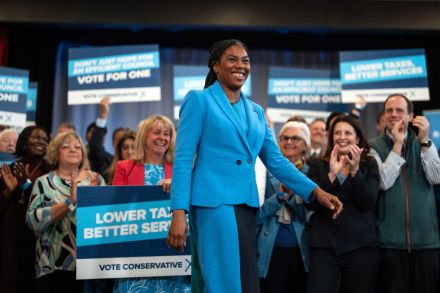
‘It’s like a start-up,’ Kemi Badenoch explains of her new job, as she plumps down on a sofa in the Spectator offices. A month into her tenure as Conservative party leader and she is discovering the upsides to being out of power. ‘Everyone around me in the leader of the opposition office is there because of me – not because they happened to be there when I got there. That changes the dynamic quite a bit.’ ‘What’s a lunch break? Lunch is for wimps. I don’t think sandwiches are a real food’ She says the ‘biggest difference’ so far between being a secretary of state and leader of the opposition is that the role is ‘actually a lot less lonely’.

Kneecap are basic but thrilling

It was Irish week in London, with one group from the north and one from the south. Guinness was sold in unusual amounts; green football shirts were plentiful; and so, at both shows, was a genuinesense of joyful triumph – these were the biggest London venues either group had headlined. The Irishness was much more visible onstage at Kneecap, not least because, as a proudly Republican group, they can’t really not make a big deal of being from west Belfast. Their statements have prompted the inevitable fury from some quarters: Kemi Badenoch (as business secretary) refused them a £15,000 grant to help them tour, on the grounds that the British state should not be aiding those who despise it.

What Kemi Badenoch can learn from her enemies

Kemi Badenoch, in an act of unusual awareness for an MP, intends to learn from her own party’s mistakes as well as Labour’s. She must have been reading the Greek statesman Plutarch’s ‘How to profit from your enemies’, one of his 78 essays and dialogues on a wide range of topics, from the intelligence of animals to old men in politics. Politics, he said, always encouraged spite, envy, and rivalry. These encouraged the wise man ‘to stay on guard, do everything with due care and attention, and lead a more mindful life’. The reason he gave for this was that there was a weakness in us that made us ‘feel more ashamed of our faults before our enemies than our friends’.

I listened to a solid week of Woman’s Hour…

I was a weird kid, and though I harboured the usual innocent girlish ambitions of being a drug fiend and having sex with pop stars, I also nursed a desire to appear on Woman’s Hour. As a shy, provincial virgin, the programme opened up a world of women’s troubles from anorexia to zuigerphobia – and I was keen to have A Complicated Life. Here was the wet hand of today’s lily-livered sensibilities I had anticipated From my twenties to my fifties I appeared on it several times; my last outing was in 2016, as – like most other institutions – it was captured by the trans cult, leading to the show’s best presenter, Jenni Murray, leaving in 2020. Since then, the programme might more accurately be named What Is A Woman’s Hour.

Portrait of the week: Trump’s victory, Kemi’s shadow cabinet and footballer killed by lightning

Home Kemi Badenoch, the new leader of the Conservative party, appointed a shadow cabinet. She made Robert Jenrick, whom she beat for the leadership, shadow justice secretary; Dame Priti Patel, shadow foreign secretary; Chris Philp, shadow home secretary; Mel Stride, shadow chancellor. Alex Burghart was given Northern Ireland and the Cabinet Office, with Laura Trott at education, Edward Argar at health and James Cartlidge at defence. Badenoch had been elected leader by 56.5 per cent of the 95,194 members’ votes (compared with the 57.4 per cent for Liz Truss in 2022), in a turnout of 72.8 per cent (compared with the 82.2 per cent in 2022). The Pitt Rivers museum in Oxford returned to Borneo a sun hat acquired in 1923 from the Brooke family, who ruled Sarawak.

Inside Kemi Badenoch’s first shadow cabinet

At her first shadow cabinet as Tory leader, Kemi Badenoch walked into the room and declared that there were ‘still too many people’. Various advisers hastily left. It was an indication of how she plans to do things differently. Even the invitation list for politicians has been slimmed down – the shadow attorney will not attend, and some roles have been axed, such as deputy leader. No ‘readout’ of discussion topics was emailed to hacks afterwards to update the lobby on what happened. Kemi Badenoch can start off her leadership by pitching herself ason the same side as rural voters The reason? Badenoch wants shadow cabinet meetings to be a safe space for political debate. She herself has been stung by leaks from these meetings in the past.

Has Kemi Badenoch formed a unity cabinet?

14 min listen

Kemi Badenoch's shadow cabinet continues to take shape: Chris Philp has been appointed shadow Home Secretary, with the biggest news being Robert Jenrick's decision to accept the position of shadow Justice Secretary. Jenrick's proposal to leave the ECHR was one policy disagreement with Badenoch, could this cause the Conservatives problems in the future? And what do her appointments say more broadly about her programme: has she put party unity above policy? Oscar Edmondson speaks to Katy Balls and the FT's Stephen Bush. Produced by Patrick Gibbons and Oscar Edmondson.

Who will make up Kemi’s shadow cabinet?

12 min listen

Kemi Badenoch is the new leader of the opposition, and we have an early indication of who will make up her shadow cabinet. She has already chosen her chief whip in loyalist Rebecca Harris; Nigel Huddleston and Dominic Johnson will be party chairman; Laura Trott will be shadow education secretary; Neil O’Brien will be shadow minister for education – crucially, a Jenrick backer. Is she going for party unity? Who will take the top jobs in team Badenoch? Also on the podcast, it’s anything-but-the-budget-week for Labour, who are trying to move the agenda along from last week’s fiscal event with a raft of announcements. Today, the prime minister unveiled his plan to ‘smash the gangs’ and announced that university tuition fees would rise.

Badenoch must explain why the Tories deserve power

Kemi Badenoch’s victory was not overwhelming. Her margin of victory was smaller than of any of her Tory predecessors since the current leadership rules were introduced. With the support of 57 per cent of the membership and a third of MPs – similar proportions to what Liz Truss managed in 2022 – her immediate task will be to unite her querulous parliamentary party and reach out to her opponents. Her finishing cry – ‘It’s time to get down to business, it’s time to renew’ – is familiar from the campaign trail. The most immediate task is building a shadow cabinet. James Cleverly’s choice to go to the backbenches frees a space but leaves an obvious alternative leader untainted by her leadership if she stumbles in the coming years.

Kemi vs Robert: who would be the best Tory leader?

Ed West on Robert Jenrick It’s a testimony to the sheer unpopularity of Keir Starmer’s government that only three months after voters gave the Conservatives their biggest electoral kicking in two centuries, Labour has already lost its polling lead. Indeed, it has achieved this so quickly that its opponents still don’t even have a leader. But as much as Labour has failed to impress, its dire poll numbers reflect a wider trend across the western world, where political leaders are now roundly hated almost everywhere. This suggests something more profound is going on. If politicians are disliked, it’s in part because western countries are so badly governed, although Britain seems especially so.

Tory leadership debate: who came out on top?

13 min listen

Robert Jenrick and Kemi Badenoch, the final two candidates for the Tory leadership, went up against each other on a special GB News show last night. Kemi came out swinging in defence of her ‘culture warrior’ tag, but many wanted some more meat on the bones when it comes to her stance on policy. Meanwhile, Jenrick clearly had a message to land – but will the membership see through his plea to ‘end the drama’? And did either of them manage to change any minds? Katy Balls speaks to Lucy Dunn and Giles Dilnot, editor of Conservative Home. Produced by Cindy Yu and Oscar Edmondson.

The real problem with the Tory leadership contest

James Cleverly found some unlikely support in parliament on Monday night. Having just been ousted from the Tory leadership contest, he won warm words from the Home Secretary. Yvette Cooper, speaking at a Westminster drinks reception, was sympathetic. She said she knew what it was like to come third in a leadership contest. For her, it was in 2015, when she lost to Jeremy Corbyn and Andy Burnham. For Cleverly, it was this month, when he was defeated by Kemi Badenoch and Robert Jenrick. She wasn’t sure who should feel worse. ‘Yes, sister!’ shouted Cleverly in solidarity. But Cooper wasn’t finished yet. She ended by diagnosing his problem: he couldn’t count. The Tories are still piecing together what happened in the final parliamentary rounds of the leadership contest.

Tory leadership: what on earth just happened?

13 min listen

Westminster is reeling from the shock result that James Cleverly has been knocked out of the Conservative Party leadership race, only a day after coming first in the previous round. Kemi Badenoch topped the poll, with Robert Jenrick second and only one vote behind her; Cleverly lost two votes. What on earth happened? To try and make sense of it all, Cindy Yu is joined by Katy Balls and new Spectator editor Michael Gove. Having worked with them all, what's his assessment of the candidates? Produced by Patrick Gibbons and Megan McElroy.

Tory wars, the reality of trail hunting & is Sally Rooney-mania over?

43 min listen

This week: who’s on top in the Conservative leadership race? That’s the question Katy Balls asks in the magazine this week as she looks ahead to the Conservative Party conference. Each Tory hopeful will be pitching for the support of MPs and the party faithful ahead of the next round of voting. Who’s got the most to lose, and could there be some sneaky tactics behind the scenes? Katy joins the podcast to discuss, alongside Conservative peer Ruth Porter, who ran Liz Truss’s leadership campaign in 2022. We also include an excerpt from the hustings that Katy conducted with each of the candidates earlier this week. You can find the full interviews on The Spectator’s YouTube channel: https://www.youtube.

Who’s on top in the Tory leadership contest?

In recent years, the Conservative party conference has become something of an irrelevance. Often it is little more than a networking event, filled with dull speeches, all carefully stage-managed by No. 10. But next week’s gathering in Birmingham will be one of those rare Tory conferences that decide the party’s future. The leadership race has gone on for so long that the conference will be a political talent contest, with the four remaining leadership candidates – Kemi Badenoch, Tom Tugendhat, James Cleverly and Robert Jenrick – setting out their stalls. ‘We know each other’s lines so well now that we could imitate each other,’ says one leadership contestant. ‘There is definite growing regret that it’s taking so long,’ says a member of the shadow cabinet.

Why the Tories lost – by the Tory leadership candidates

As the four candidates prepare to make their pitch at the Conservative party conference in Birmingham, we quizzed them about their ideas and ambitions. Why did the Tories lose the general election? JAMES CLEVERLY: We lost the ear of the British public. They stopped listening to us. We over-promised and under--delivered on a load of issues so our election promises were met with real cynicism. People had literally closed their ears – and minds – to our arguments. Even if we had had the best policy platform in the world, people weren’t willing to give us the time of day. If we make fewer promises but make sure that we deliver on all of those promises, we will regain trust. But that means being disciplined.

Are the Tories brave enough to be conservative?

The Conservative party is out of power – and that’s not easy if you’ve been in power for more than a decade. Even after a short spell in government there are certain aspects of life that you miss. The drivers and others who used to manage your life and get you around. The legions of advisers. The security detail (if you held one of the high offices of state). And the civil servants who do your bidding. That last one is a joke, of course. I know most readers will, like me, have found it difficult to listen to Conservative ministers complaining about civil servants during their 14 years in power. There might well have been cause to moan that civil servants were all a bunch of lazy lefties for the first couple of years.