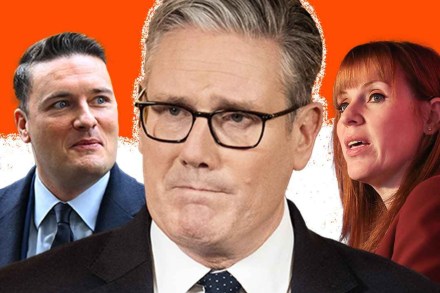
Keir starmer

‘We’ll wake up on 8 May and realise that the Conservative party’s gone’: Inside Reform’s plan to devour the Tories

When Zia Yusuf first walked into the headquarters of Reform UK, he gestured at the empty room and asked: ‘Where’s the office?’ Ed Sumner, the party’s director of communications, replied: ‘This is it. It’s empty. This is the party.’ That was not even two years ago. Since then, Nigel Farage and Yusuf have built a party from scratch and expect to be the biggest winners in the local elections on 7 May. With more than 270,000 members, their grassroots base is the largest in Britain, bigger than both Labour and the Tories. ‘I would argue no party has built political infrastructure and established itself more quickly in British history than Reform,’ Yusuf says.

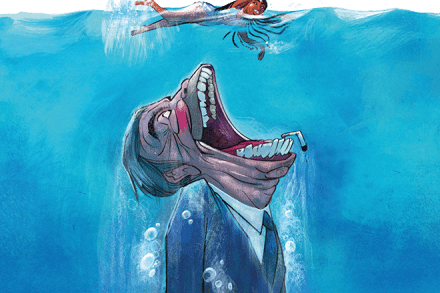
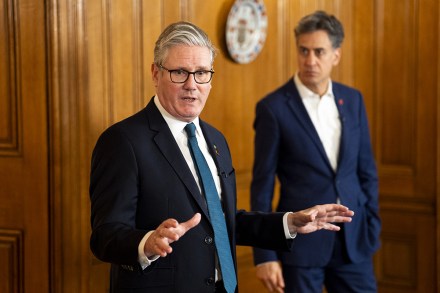
Keir Starmer has surrendered to Ed Miliband – and we are all paying the price

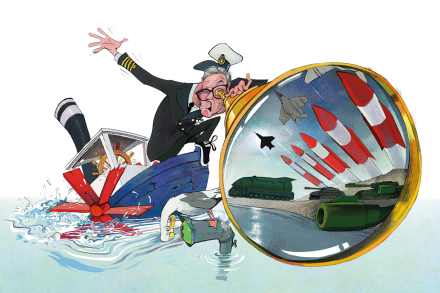
Labour MPs who want Wes Streeting to be their leader have, apparently, one great fear. If their man triggers a contest, they are terrified it will lead to Ed Miliband entering the race to stop the Health Secretary – and coming out top. A Miliband premiership would, they worry, be the death of Labour. I’ve got news for them: we are already governed by Ed Miliband. This is now his administration. And they, and the rest of us, had better get used to it. Keir Starmer is no longer really in charge of this government – if he ever really was. He is Prime Minister in name only. His foreign policy, at this time of war, is Ed Miliband’s. His economic policy, Ed Miliband’s. His Chancellor, his political positioning, his very quest for meaning. All. Ed. Miliband.
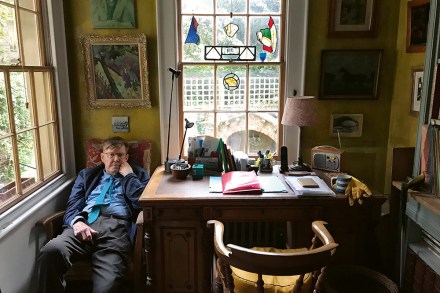
A revival of Alan Bennett’s early work is long overdue

It is a curious literary form, the published diary. A surprising number of the classic diarists did write for eventual, usually posthumous, publication – Chips Channon under a 60-year embargo, A.C. Benson, Samuel Butler, in his wonderful notebooks, and surely the possibility was in the minds of Samuel Pepys and the Duc de Saint-Simon. More recently, great diaries have been published within the author’s lifetime. James Lees-Milne’s first instalment came out 30 years after the period it described. Alan Clark’s initial offering, covering 1983-92, appeared in 1993. Tony Benn’s hilariously tedious volumes emerged on a rolling programme which slowly caught up with the events they described.

Is Labour sleepwalking back to the EU?

Two big topics on the agenda today as Keir Starmer has his pitch – again – on the cost of living. He told us towards the start of the year that every minute not spent tackling the cost of living was a minute wasted, so what has he been doing in all that time? Also today, ahead of her Mais Lecture this week, Rachel Reeves has been laying the groundwork for closer ties with the European Union. This does seem like a change of rhetoric from the Chancellor, who is openly suggesting that Brexit was a mistake. So what would closer ties look like? And is this the only lever that remains for her to deliver growth? James Heale and Tim Shipman discuss. Produced by Megan McElroy.

Is the government right to restrict jury trials?

23 min listen

The government's plan to restrict jury trials passed its first parliamentary hurdle this week. It is one measure, amongst many, in a Bill designed to reduce the huge backlog currently facing the Courts. Labour MP Karl Turner and Danny Shaw, a former adviser, join Isabel Hardman to discuss why they have each come to their own, different conclusion about the merits of the Bill. For Danny, it is a pragmatic yet principled measure that will help mitigate an extreme situation. Karl, for his part, is – as you will hear – ferocious in his opposition, and argues that the evidence simply doesn't back it up. Amongst the debate though, there are moments of agreement – from the state of the justice system, to the government's handling of such a controversial measure.

Is the government right to restrict jury trials?

The insidious rise of Tannoy spam

Six people meet for a picnic on Richmond Green. They eat Popeyes chicken nuggets, Sainsbury’s sausage rolls, M&S sandwiches, Cadbury Mini Rolls and Walkers crisps. They drink a bottle of Pinot Grigio and several cans of Sol lager. How do I know? I’m no detective but they’ve made it easy for me. After they’ve finished, they’ve simply got up and left the bottles, wrappers, packages and paper plates on the grass, laid out like a meal on the Marie Celeste. There’s always been litter – Bill Bryson described it as ‘a long continuum of anti-social behaviour’ – but this is something different. It feels more like social anarchy, a total blankness. I can’t get my head around it.

Revenge of the cheese-eating surrender monkeys

From our US edition

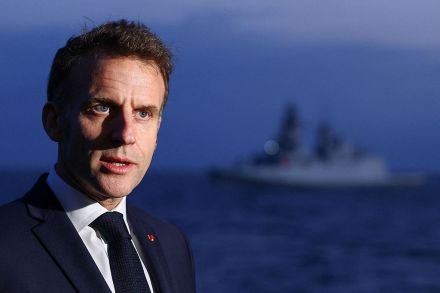
French President Emmanuel Macron’s approval rating rose by six points last week. It will likely continue to climb following his visit to the Charles de Gaulle aircraft carrier on Monday. The pride of the French navy recently arrived in the eastern Mediterranean to protect Cyprus, and Macron was in his element as he strode across the deck of the carrier. A photograph of the occasion appeared in the New York Times underneath the headline: "France Is Sending a Large Naval Force to the Middle East." The last time there was a great conflagration in the Middle East, France was very much on the sidelines Macron was helicoptered onto the Charles de Gaulle from a press conference at an air base in Cyprus.

Is the special relationship over?

The US Defense Secretary Pete Hegseth has said today will be the most intense day yet of American strikes on Iran. Over the weekend, Donald Trump claimed the war could soon be over – and suggested the US has already effectively won. He also took aim at Keir Starmer, accusing Britain of joining wars America has ‘already won’. Deputy and US editor Freddy Gray joins the podcast to explain what’s really happening in Washington and why he believes the ‘special relationship’ may be over – and not coming back. Economics editor Michael Simmons also joins to discuss the fallout. As oil prices surge and markets react, Reform UK is seizing on renewed pressure over the cost of living. What does the crisis mean for Rachel Reeves – and how serious could the economic consequences become?

Is the special relationship over?

Trump isn’t the greatest threat to the Special Relationship

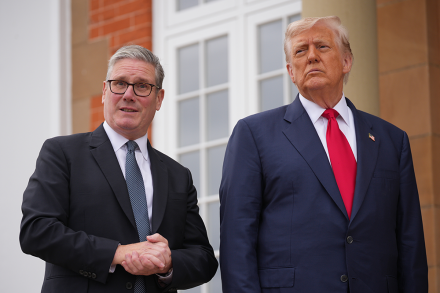
Britain’s refusal to fully back the United States over strikes on Iran has triggered an unusually public transatlantic row. It has also revived an old question about the future of the so-called "Special Relationship." When Donald Trump returned to the White House last year, many in Westminster doubted Keir Starmer could build a workable relationship with him. The two men could hardly be more different in temperament or politics, and predictions of an early rupture were widespread. For a time, however, Starmer appeared to defy those expectations. Britain weathered Trump’s latest tariff wars better than most countries, and the Prime Minister seemed to have found a cautious way of managing Washington’s unpredictability.

special relationship

‘Whose side are you on?’: how Keir Starmer alienated Britain’s allies over Iran

The American-Israeli attacks on Iran were publicly called Epic Fury, but behind the scenes it is Britain’s handling of the war which provoked that reaction – not just from Donald Trump but from the UK’s allies in the Gulf. A Labour peer was in Washington when the first missiles slammed into Tehran on Friday evening and Keir Starmer refused to voice support. A member of the Trump administration told the peer: "Britain used to not contribute that much, but you were a good ally. Now you’re contributing nothing and you’re not even a good ally." A version of events has quickly become established: a Prime Minister with a near-religious belief in international law hid behind the advice of his Attorney General, Richard Hermer, that the attacks were illegal.

starmer

‘Whose side are you on?’: How Keir Starmer alienated Britain’s allies over Iran

The American-Israeli attacks on Iran were publicly called Epic Fury, but behind the scenes it is Britain’s handling of the war which provoked that reaction – not just from Donald Trump but from the UK’s allies in the Gulf. A Labour peer was in Washington when the first missiles slammed into Tehran on Friday evening and Keir Starmer refused to voice support. A member of the Trump administration told the peer: ‘Britain used to not contribute that much, but you were a good ally. Now you’re contributing nothing and you’re not even a good ally.’ A version of events has quickly become established: a Prime Minister with a near-religious belief in international law hid behind the advice of his Attorney General, Richard Hermer, that the attacks were illegal.

Tracey Emin should remake her bed

Sir Keir Starmer’s position on the US bombing of Iran is inglorious, but one should suspend disapproval to understand how he must have been thinking politically. His party had just lost the Gorton and Denton by-election to the Greens (backed by a strong Muslim vote). His leadership had never seemed weaker. So he calculated that he could not unequivocally back the actions of Israel and Donald Trump. He will have had the Iraq war in mind, particularly the role of the attorney general. Over Iraq, the then attorney general, Lord Goldsmith, was criticised for seeming to change his legal advice to Tony Blair in order to legitimise British participation in the invasion. Sir Keir’s Attorney General, Lord Hermer, is much more central to the administration than an AG ever should be.

If only Britain was as important as Iran thinks we are

I am becoming rather fond of Prime Minister Starmer’s major foreign policy announcements. In early January, after US forces swooped into Venezuela and took President Maduro to New York to face trial, Keir Starmer was keen to get straight out in front of the cameras. There he said that he wanted to stress that ‘the UK was not involved in any way in this operation’. As though the whole world had been expecting to hear that the British armed forces were indeed central in snatching the narco-terrorist from Caracas. This week it was again Starmer’s turn to stand behind a podium, British flags behind him, and deliver another statement that absolutely no one thought necessary. Speaking about the US-led strikes on Iran, he announced solemnly: ‘I want to set out our response.

Has it all gone wrong between Trump and Starmer?

‘The Special Relationship only exists when the Americans want something,’ a former Downing Street aide observed after Donald Trump rejected the Chagos Islands deal. There are profound differences between London and Washington over military action against Iran while the fourth anniversary of the war in Ukraine this week has exposed further fault lines. The result is that Anglo-American relations are at their worst point since the general election. Starmer’s team argues he should not be ousted at a time of huge international instability. But the reality of the Anglo-American relationship raises three questions. Where did things go wrong? Does the PM still have some kind of relationship with Trump?

Inside the daring plan to reclaim the Chagos Islands

Peros Banhos on the Chagos archipelago looks like your basic tropical island paradise: turquoise waters and golden sands, waves lapping on a palm-fringed beach. But step off the strip of sand into the wall of green behind, and you’re enveloped by mosquitoes. The old well you were counting on for water is a shallow puddle. And the silver fish between your feet dart past a net, despite not having seen one in 50 years. The jungle has grown over the old British colonial buildings, and the jungle is a harsh place. Four Chagos Islanders have been here more than a week, along with the man who brought them, Adam Holloway – former MP, ex-Guards officer, an adventurer seemingly from an earlier era. This is not, as the Foreign Office briefed journalists, ‘a political stunt’.

How Keir Starmer might still hang on

A government minister and I dined just after the fiasco of the 2017 general election, with Theresa May clinging to office. We agreed our feelings: ‘Well, she’s utterly useless, but she’s got to stay.’ Similar emotions arise today. Nobody – and I genuinely mean nobody – can truthfully say that Sir Keir Starmer is doing a good job, but politics is not, thank goodness, a logical occupation, so it does not necessarily follow that he should resign. If you lead your party to a victory fair and square in a general election, it is your duty to try to go on governing until the next one. You owe it to voters and colleagues. It could even be said that you owe it to the office itself. The British premiership must not decline into a ‘King for a day’ stunt.

Apart from Mandelson, who is Labour’s biggest freebie lover?

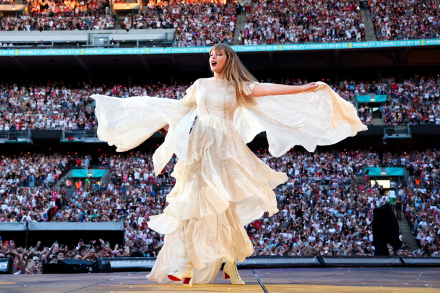
Keir Starmer is Labour’s king of freebies. He promised to clean up politics, but has accepted more free stuff than all his party’s leaders since 1997 combined: more than £100,000 in tickets, accommodation and clothing. In 2024, the Prime Minister said it was ‘right to repay’ the cost of some freebies, and stumped up for six Taylor Swift tickets, four tickets to the races and some clothes for his wife (total value: £6,000). Where Starmer has led, his MPs have followed – including those who now might hope to succeed him. Eleven other Labour MPs (and Ed Davey) accepted Taylor Swift tickets courtesy of football clubs and music companies. Seven cabinet members took money from Lord Alli. Few have not watched a football match from complimentary box seats.

Is Starmer back from the brink?

13 min listen

After a dramatic day in Westminster, the threat to Starmer appears to have receded – at least in the short term. But with the Gorton and Denton by-election less than three weeks away, (more) trouble could be on the horizon. Luke Tryl – from pollsters More in Common – and James Heale join Patrick Gibbons to discuss. Produced by Patrick Gibbons.

Is Starmer back from the brink?
lai

Jimmy Lai cannot be left to die in jail

The decision to sentence Jimmy Lai to 20 years in jail in Hong Kong is no surprise, but it is no less shocking or heartbreaking. For his family, especially his courageous wife Teresa, son Sebastien and daughter Claire, who have advocated so tirelessly for their father over the past five years, one can only imagine the pain and grief they feel. Sebastien and Claire have walked the corridors of power in Washington, DC, London, Ottawa, Brussels, Paris and beyond, and sat in television studios for hour after hour, seemingly to no avail. For Hong Kong, this is yet another dark day, yet another nail in the coffin of the city’s freedoms. And for everyone who cares about liberty, the rule of law and basic human rights, this sentence is a punch in the solar plexus.

The Epstein files have triggered a crisis in Britain

From our US edition

It is not just in Washington that the Epstein files continue to dominate. In Westminster, the political reverberations of the Department of Justice’s investigation are threatening to bring down the British government. At the center of the drama is Peter Mandelson: a former Tony Blair aide who served, until recently, as Our Man in DC. Keir Starmer, the Labour Prime Minister, named him British ambassador to America last year, reasoning that the oleaginous uber-networker could be the nation’s "Trump-whisperer." But the DoJ’s initial email dump in September exposed the closeness of his relationship with Epstein, with whom he shared a love of power and money.