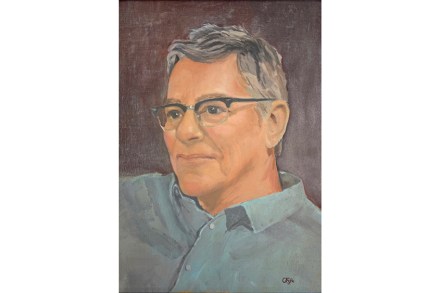
Jeremy clarke

Reading Jeremy’s words only gets harder

Provence In the hope of renting out the main cave house during the summer, I’ve been clearing to make room for guests. At the bottom of a cupboard I found two of Jeremy’s Barbour jackets. He bought them compulsively in secondhand shops and I’ve given away three already. Standing at the clothes recycling bin in the car park, I remembered just in time to check the pockets. With Jeremy you never know what you’ll find. The other month, rooting about for scissors in his as yet uncleared bedside cabinet drawer, I found a sizeable lump of granite-hard hash which must have been at least six years old. My hippy ceramicist neighbour Geoffrey was delighted.

The joy of meeting ‘randomers’

Provence Life was complicated when I fled to Provence in November 2014 with no job and very little money. At first a comedian friend and his wife lent me their second home. The intention was to stay for six months, recover from a traumatic marriage break-up and write a book about my father, who was a giant (7ft 4in) and had for a spell in 1938 toured Nazi Germany and England as part of a world-famous revue. I was also planning to learn copy-editing in the hope that when I got back, I could get a job as the oldest-ever publishing intern. But in those days I didn’t even have a laptop and since money was running out, I had to abandon both ideas and find work.

Tales from the Jeremy Clarke Memoir Club

Provence The other Monday I hosted the third annual meeting of the Jeremy Clarke Memoir Club on what would’ve been his 69th birthday. At the far end of the dining table, deep in the bare rock of the cliff, there’s a 27-inch high plaster cast of a bust by my ex of our youngest daughter as a youthful Baucis from Ovid’s Metamorphoses. The sculpture is bedecked with necklaces, a small bunch of faux anemones and part of the headdress I wore as a 21-year-old bride. In front of the bust I placed my grandmother’s black basalt Wedgwood urn which contains the remainder of Jeremy’s ashes. André began the meeting with the five-day odyssey his Italian father took alone on foot across the Alps in 1936, to escape conscription into Mussolini’s Blackshirts.

How I met Jeremy

In the early 2000s, academics, philosophers, politicians, members of the royal household and business people – including the CEO and the owner of a newspaper group – sometimes came round to the house for tea, drinks or dinner. Anxious to keep up, I started to read the papers more thoroughly. The Economist and New Statesman I found dull. On the recommendation of a friend, I bought The Spectator. The writing was better. Sometimes you’d find arguments for and against a subject, for example fox hunting, in the same magazine. But more than that – it was entertaining. Jeremy Clarke’s Low Life column, however, was in another league. It was poetry; brilliantly observed, lyrical, fearless and funny.

James Heale, Angus Colwell, Alice Loxton, Lloyd Evans, Richard Bratby, Christopher Howse and Catriona Olding

38 min listen

On this week’s Spectator Out Loud: James Heale analyses the splits in Labour over direction and policy (1:27); Angus Colwell asks if the ‘lanyard class’ are the new enemy (6:21); Alice Loxton explains why bite-sized histories have big appeal (9:58); Lloyd Evans reports on how Butlin’s is cashing in on nostalgia (15:00); Richard Bratby on Retrospect Opera, the non-profit record label that resurrects the forgotten works of British opera (20:40); Christopher Howse provides his notes of typos (27:27); and, Catriona Olding reflects on the death of her partner, the Spectator’s Jeremy Clarke, two years ago this week (32:15).  Produced and presented by Patrick Gibbons.

The reactionary bohemian: Jeremy Clarke was one of a kind

A world without Jeremy Clarke is a glummer place. The author of this magazine’s Low Life column for 23 years, who died on Sunday morning, was a spirited writer of the old school. He loved a rollicking good time, a beautifully turned phrase, a good gossip, casting an observant eye over life’s absurdities, and England. He despised the hypocrisy of the progressive middle classes, big egos and TV boxsets. He had quirkily conservative views, but friends of all classes and races, a deep knowledge of an unusual range of subjects, including rural matters, and a cheerful modesty that belied his talent as a writer.

Goodbye, my dear Low Life colleague

He bore his death sentence more gracefully than most heroes I’ve read about. As the end approached, his columns showed no self-pity or regrets. Meticulous detail was Jeremy’s forte, and atmosphere. Oh, how I envied his ability to convey the mood of a place, the setting that he was writing about. He could replicate a conversation in a pub as if he had recorded it, and it never once sounded made up.  He was the patron saint of the poor but happy. Unlike his predecessor Jeffrey Bernard, who weekly lamented about being broke and ill, Jeremy was the exact opposite, describing his cancer towards the end like a disinterested scientist quoting from a medical case.

Move over, Mrs Bennet – I’ve seen two daughters married in less than a month

Provence A few days before my middle daughter’s Oxfordshire wedding this summer, my youngest announced that she and her fiancé, who’ve been together for years, were getting married within weeks. They’re moving abroad and bringing their wedding forward would help, she said. Two daughters married in less than a month. Mrs Bennet would be proud or envious. On hearing the news I panic-booked an easyJet flight to Edinburgh for the day before the youngest’s wedding, only to realise it got in at midnight, just 12 hours before the ceremony, and had to abandon that and rebook for the previous day.

My dinner date with the detective

Provence ‘What do you mean?’ I wanted to ask the man who told me last autumn it was time to move on. I hoped he didn’t mean find a new boyfriend. I like him and his wife a lot and it was meant kindly – so I kept quiet as we stood in their kitchen and they gave me instructions for my weekly visits to check the house after they left for winter. But it stung. Jeremy was still with me night and day in everything I did. I tried not to let my face fall a second time when the man told me he was paying someone else to drive his Aston Martin back to England. I wanted to ask the same question of another man, a widower friend of a friend, who said, in an otherwise ordinary message: ‘This isn’t an offer or a request, but how do you feel about sex?

The ‘Clooney effect’ hasn’t touched my corner of Provence

Provence My eldest daughter’s husband is from Como. In the early 2000s George Clooney caused a stir in the town when he bought a villa on the lakeside nearby, triggering what’s become known as the Clooney effect – a rise in house prices and the number of ‘bougie’ shops and restaurants catering for an increasing number of visitors. Rather than take a boat trip and gawp at the Villa Oleandra, visitors would be better heading to Gardone on Lake Garda and visiting Gabriele D’Annunzio’s insane Il Vittoriale. Unlike Clooney, D’Annunzio (1863-1938), whose motto was ‘Me ne frego’ (I don’t give a damn), was a short, ugly, almost blind, toothless early 20th-century proto-communist/fascist war hero.

Letters: You can grow to hate Wagner

Disappearing England Sir: Rod Liddle’s reference to Labour’s intention to build 1.5 million new houses (‘The great bee-smuggling scandal’, 13 July), even though there is not a shortage, leads one to worry where they will be located. The green belt was introduced for London in 1938 and the Town and Country Planning Act of 1947 extended powers with local authorities for self-designation. In 1937, John Betjeman wrote for one of his BBC talks: ‘England is disappearing and there is growing up, where the trees used to be and where the hills commanded blue vistas, another world that does not seem to be anything to do with England at all. This new world lives in ill-shaped brick horrors, for which it has had to pay through the nose.

My nights with the eagle owls

Provence Summer has arrived. The evenings are warm enough to sit out on the balcony terrace and watch the lights come on in the village below. Each night at ten, the great limestone cliff, into which my little house was built, is floodlit for a couple of hours. On cue two huge baby eagle owls (fully grown wingspan 170cm) begin rehearsing for adulthood and flap clumsily, then majestically, around the rock, calling for their parents and terrorising the smaller nesting birds hidden deep within the crags and crevices. English women wearing broderie anglaise dresses, straw hats and anxious smiles drift about The annual migration of tourists has begun too. On market day the car parks are full by 9.30 a.m. and the queue for Patricia’s cheese stall is 12 deep.

My dreams of Jeremy Clarke

The other week my eldest daughter and I were staying with friends in Richmond for the launch of Jeremy’s third collection of Low Life columns. The night before the anniversary of his death – the day of the launch – I woke at 2 a.m. and unable to sleep was back in the cave holding Jeremy’s hand; machines clicking and beeping as his life ebbed unpeacefully away. He died at 9 a.m.  A few weeks after Jeremy died, I dreamt he walked into the house… he looked fit, strong and full of life At 9.05 a.m., in tears and still wearing a nightie, jumper and flip-flops, I ran downstairs, almost colliding with one of our hosts, out the back door to the bottom of the garden. Beyond the high wooden fence and gate a path ran parallel with the Thames.

Who will my wife marry next?

Since I had a brush with death a couple of years ago, I have often wondered who my far younger wife, Carla, might marry after she has buried me. When I was out for the count in intensive care in Ravenna, the hospital’s duty priest, an Argentinian, even administered the last rites. ‘They do it just in case these days,’ Carla told me, as if it had all been a bit of a laugh, which I suppose it may well be if you believe, like her, that death is the prelude to eternal life. The other day, a herd of donkeys came charging into our garden out of the blue and I soon put two and two together They belonged to our nearest neighbour, Gianni, a farmer.

Veep show: who will Trump pick for his running mate?

47 min listen

This week: Veep show: who will Trump pick for his running mate? Freddy Gray goes through the contenders – and what they say about America (and its most likely next president). ‘Another thought might be buzzing around Trump’s head: he can pick pretty much whoever he wants because really it’s all about him. He might even choose one of his children: Ivanka or Donald Junior. What could sound better than Trump-Trump 2024?’ Freddy joins the podcast. (02:10) Next: Will and Lara take us through some of their favourite pieces from the magazine, including David Shipley’s piece on the issues in the criminal justice system and Patrick Kidd’s article on the C of E’s volunteering crisis.  Then: Everest.

Letters: Biden is alienating Britain

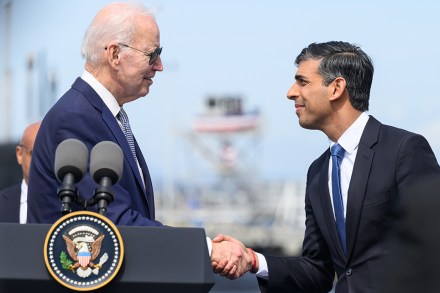
Joe Shmoe Sir: Your piece ‘Not so special’ (Leading article, 8 July) was right. Joe Biden doesn’t like us and a brief 45 minutes with Rishi Sunak last week doesn’t change that. In Saudi Arabia last year, Biden compared Israel’s treatment of Palestinians with Britain’s past in Ireland. This was outrageous – what about the US historical treatment of Mexicans, Cubans and Filipinos, and Biden’s friendliness towards IRA terrorists? Britain enjoyed excellent relations with the US under Kennedy, Reagan and Clinton, all of whom had Irish ancestry, and it is self-indulgent and a dereliction for this President to make his chosen personal background an issue, as he does.

The BBC and a 21st-century media madness

The story of the famous BBC television presenter who, at the time of writing, has still not been named, has all the elements of 21st-century-media madness – something allegedly sexual which may or not involve a person too young for such things; a desperate hue and cry to see who will dare to name the accused first; anonymous accusers; a clash between strong legal rules about the accused’s anonymity and the strong social media custom of ignoring them; a confusion as to whether the ‘victim’ is a victim or whether he/she even believes he/she is a victim; gabby lawyers; the Sun; an angry mum; a stepfather; ‘fresh allegations’; a ‘concerned’ government which does not exactly know what it is concerned about; show-off MPs who want to use parliamentary privilege to name the ac.

Life with Low Life: my happy years with Jeremy Clarke

‘Am I gonna die today, Treen?’ I kissed his cheek. ‘Darling, your oxygen, blood pressure and pulse are fine and you’re a good colour. Since you woke up you’ve had a poached egg on toast, plain Greek yoghurt with berries, granola and maple syrup, a Snickers bar, a piece of fruit cake, a baked fresh mackerel with tomatoes and a Mini Magnum. It’s two o’clock – if you do die it’ll be from gluttony.’ Jeremy was modest, kind, passionate and loving. He was a great laugh and a terrific dancer. We had a blast This was early May. Jeremy, paralysed from the chest down, was attached to three syringe drivers for pain control and had a urinary catheter in situ.

Jeremy Clarke would have felt at home in Pompeii

Classical literature has the reputation of being pretty serious stuff, far removed from the world that Jeremy Clarke inhabited. But he would have felt perfectly at home in Pompeii. Take the conversation decorating the grave monument of the bar-owners Lucius Calidius Eroticus and Fannia Voluptas (beat that, Frankie Howerd!): ‘Innkeeper! The bill!’ ‘You’ve had a sextarius of wine, and bread: one as. Relish, two asses.’ ‘Right.’ ‘The girl, eight asses.’ ‘Right.’ ‘Hay for the mule, two asses.’ ‘That mule – it’ll be the ruin of me.’ Jeremy would also surely have admired the lifestyle and works of the scandalous author Petronius, whom the historian Tacitus described as follows: ‘He slept during the day and spent the nights in business and pleasure.

Letters: Jeremy Clarke was an example to us all

Goodbye, Jeremy Each week I opened The Spectator at Low Life in part to read that brilliant column and, more recently, to see how Jeremy Clarke was coping with his deteriorating health. Always hoping the column would be there; that he had, despite excruciating pain, penned us another. Like very many of his regular admiring readers, I had found the last two weeks disturbingly sad and last week we learned that he has died and is free at last from his suffering. As an oncologist, during a career treating thousands of patients, at first ones with prostate and other urological cancers, and later ones with breast cancer, I have seen the ravages of metastatic cancer in its many and varied forms and observed how people cope in their individual ways.