Jeremy clarke

High life | 24 November 2016

 New York   If only my wordsmith friend Jeremy Clarke had been with me. What fun he’d have had with the ungallant thing I did last week. Jeremy’s writing thrives on such occasions, but alas he’s in the land of cheese and impressionism. I had just finished lunch with my friend Alex Sepkus, a designer of unique jewellery, and a Catholic priest whose name I will not reveal in view of what followed. After all, the Catholic Church loves sinners, but hooliganism is discouraged. I was walking up Fifth Avenue, which was packed to the gills with shoppers, hawkers and tourists. When I got to 56th Street, it was blocked off by armed police and steel barriers.

Podcast: Jeremy Clarke’s Low Life

When The Spectator ran a readers’ survey to ask your opinion of the magazine, which writers you like and what you'd like to see more of, an overwhelming number of your responses said ‘more Jeremy Clarke’. So here it is: you can now listen to Jeremy read a selection of his columns – from his starting in 2001 – in our podcast, ‘Jeremy Clarke's Low Life’. To listen and subscribe in iTunes, click here (and please, if you enjoy the podcast, do leave a review). Here's our RSS feed to subscribe in almost any podcast app. Or listen in your browser on SoundCloud.

High life | 24 September 2015

Gstaad Jeremy Clarke has wiped me out again, for a change. His accounts of the high jinks on board the SpectatorAt the age of 79, I'm seriously contemplating becoming a bird-watcher cruise had the mother of my children laughing out loud, something she’s not known for among those of us who consider laughing loudly a staggering breach of taste. Never mind, Jeremy’s talents and his ability to describe the indescribable in vivid prose is a badly kept secret among those of us who love good writing. The only thing wrong with Jeremy is that he shows me up week in, week out. Being the fall guy does not suit me one bit. And I hope I won’t be falling this week in Amsterdam, where I’m competing in the world veteran judo championships. This is my last competition ever.

What really happened on the Spectator cruise

Ok, so first things first. Jeremy Clarke didn’t fall overboard after all. He did, though, dance all night every night (almost), have everyone in stitches and host a rip-roaring High Life vs Low Life pub quiz. He even wore a fez with unexpected aplomb. Taki forwent the delights of his own High Life to join ours. He was exceedingly generous to his dining companions with his wine choices, and had us enthralled with his insider tales of Spectator days gone by and libel actions lost (mainly) and won (occasionally).

High life | 3 September 2015

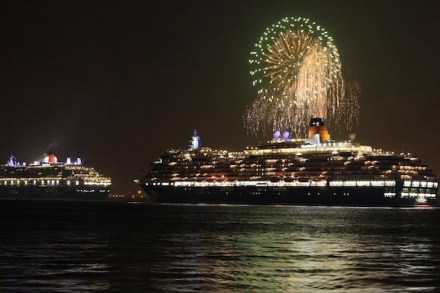
 On board MS Queen Victoria   They remain engraved on my brain, like something out of a Greek tragedy, so beautiful, such legends, and then they were gone. I am referring, of course, to those ocean liners of a bygone era, those romantic boats that dreams were made of, a fantasy world of Aubusson carpets and Lalique lamps gone to sea. As an impressionable young boy crossing the ocean with my parents, there were no finer rooms afloat, and every couple dancing at night in the various ballrooms looked like Fred and Ginger — elegant, romantic and as graceful as the ships. The first time I crossed was 1952, on the Constitution, delivered that year from Bethlehem Steel, a cool beauty with the classic counter stern and a noticeable rake on her superstructure.

Diary – 2 July 2015

‘Hello. I’m lesbian threesome,’ the young lady tells Taki. ‘And I’m Mongolian rampage,’ says the young man beside her. We’re at Jeremy Clarke’s book launch in the Spectator’s back garden, to which he invited a dozen Low Life readers chosen for submitting the best stories of drunken debauchery. Some were summarised in Jeremy’s column last week, which made for a marvellous party. Throughout the evening, guests tried to match the face to the story. Which reader was kneecapped by a pimp in Amsterdam? Who was the academic who got into a drunken fight with a janitor over the affections of the chemistry teacher? My favourite exchange of the night: ‘Do you think that’s the chap who was whipped naked with riding crops?

High life | 25 June 2015

Last Wednesday, 24 June, Pugs held a luncheon in honour of our first member to depart for the Elysian Fields, or that large CinemaScope screen up above, Sir Christopher Lee, age 93. Pugs club is now down to 19 members, the ceiling being 21. Our president for life, Nick Scott — I was actually the first chief, but was overthrown in a bloodless, as well as a vote-less, coup by Nick — gave a wonderful address, and we broke our custom concerning the presence of ladies. Our guest of honour was Lady Lee, Christopher’s widow. Now there’s nothing more that a poor little Greek boy can add to Sir Christopher’s obituaries, which were numerous, glowing, detailed and well deserved.

The Fifa case: American justice at work as the world’s CCTV system

‘In matters of criminal justice,’ said NatWest Three defendant David Bermingham after a London court extradited him and his co-defendants to face Enron-related US fraud charges even though nothing they were accused of looked like a crime under UK law, Britain was becoming ‘the 51st state of America’. Many Swiss citizens must have felt they were living in the 52nd when Department of Justice agents decided, as I put it in 2013, to ‘topple a whole bowling alley of gnomes of Zurich’ in an assault on Swiss banking secrecy that forced the closure of the country’s oldest bank, Wegelin.

Low life | 28 May 2015

On 26 June there is a party at the Spectator office at 22 Old Queen Street to launch a paperback collection of Low life columns. If you would like to come, please send an account, in about 800 words, to editor@spectator.co.uk by 15 June of your worst or funniest debacle when intoxicated. If more than 12 readers send a story, then the senders of the 12 best stories will be invited. The following, for example, is an account of what happened to me only last week. At the literary festival bar I ran into a writer I’d met a couple of times at parties. He was perched at the bar and waved me over, asked me what was I having, and appeared so pleased to see me that I felt sorry for him. I asked him whether he was speaking.

Low life’s Limpopo legend

‘You’ve got a lot to live up to,’ said the ranger. ‘The last Spectator journalist who stayed here was Jeremy Clarke. He made quite the impression.’ Like some sort of Zulu legend, our ‘Low life’ columnist’s time at Shambala game reserve is now talked about around the campfire — or braai as it is known in South Africa. ‘I heard he commandeered a safari vehicle and set off to find a drinking hole,’ said one of the camp staff. ‘He held a wet T-shirt competition,’ said another. ‘All the local women were very impressed.’ Apparently even Douw Steyn, who owns the reserve, still reminisces about Jeremy’s time there. You might not have heard of Steyn, but you will know his work.

Jeremy Clarke’s heartbreak and A.L. Kennedy’s dislike of dates

A.L. Kennedy Novelist I dislike dates. It’s either a yes, or a no. Why date? Sadly, I am both bad at reading the signals which indicate the outbreak of a date and attractive to people who are bad at signals. This means that I end up — often in coffee shops — with a variety of men who suddenly exhibit enthusiasms I cannot return. Among these gentlemen would be the portly chap in Day-Glo cycle shorts, the man who brought an ugly plant with him, the man who cried, the man who talked unendingly about the rows he used to have with his last girlfriend, the man who sat next to me, miserably unable to speak at all, and the man who got crawling-drunk and then confessed something, mumbly, before hiding in his hotel room for a day.

Why you should never meet your heroes

As we become steadily accustomed to life in the Age of Celebrity, it’s become a truth that, as Mark Mason put it in the Speccie last month, ‘meeting your heroes is almost always a bad idea’. Reading the letters page in the London Review of Books, it seems that this advice extends to visiting any place associated with your heroes. Last summer Max Long, an undergraduate at Magdalen College, Oxford, arrived at Patrick Leigh Fermor’s old house at Kardamyli in Greece, hoping to pay homage to one of his heroes.

I felt so awful I almost prayed that we would crash

This is about life up high. Two weeks ago The Spectator had that rapscallion and mischief-maker Peter McKay writing about how great it is to pilot a plane. (He’s taking lessons and has flown solo.) I’ve always been told that riding a motorcycle and piloting a plane are about the same, and McKay is a motorcyclist. His build, looks and accent are far more suited to riding on two wheels than to piloting a plane (that role is more one for a Cary Grant type). But I am being snobby and writing like McKay — cattily. Reading about flying brought back pleasant memories, but also a tragic one. When my little girl was 19 and at UCLA (that’s a university in Los Angeles, for any of you unfamiliar with places of higher learning), she informed her mother and me that she wanted to become a pilot.

Letters: Lord Lawson is not banned from the BBC, and Wales is wonderful

No ban on Lawson Sir: You write that the BBC ‘has effectively banned’ Lord Lawson from items on climate change unless introduced with ‘a statement discrediting his views’ (Leading article, 12 July). There’s a lot of muddled reporting of this story. Lord Lawson hasn’t been in any sense ‘banned’, and the Editorial Complaints Unit finding didn’t suggest that he shouldn’t take part in future items.

Spectator letters: America as a genetic experiment, and a gypsy reply to Rod Liddle

The American experiment Sir: One can test Nicholas Wade’s hypothesis that social and political life is genetically determined (‘The genome of history’, 17 May) by constituting a nation along European lines, admitting immigrants from all over the world, and measuring the extent to which these immigrants assimilate to the dominant culture. That experiment is called the USA, and the evidence from that country suggests that within a generation or two these immigrants hold social opinions more like those of other Americans than natives of their ancestral countries. Cultural inheritance therefore outweighs genetic inheritance in the political sphere, and historians may rest easy.

The Spectator’s 2013 carol concert: an open invitation

It’s December, advent calendars are on the wall and being prematurely raided (in my house, anyway). And it’s just ten days until the event of month: the Spectator’s carol concert with the amazing choir of St Bride’s. It's a stunning church but quite a small one: we only have 200 tickets and most have been sold. But there are still a few left, which you can buy online. It’s in aid of Cancer Research UK and a warm invitation is extended to any Coffee Housers who’d like to come and join us. The evening is our own (condensed) lessons and carols – the lessons being read by our own saints: Rod Liddle, Jeremy Clarke Melissa Kite and others. And the music: well, here’s a sample.

Jeremy Clarke: The day I walked into a postcard

This time last year the postman delivered a picture postcard depicting a village square in Provence. The photograph on the front of that postcard was contemporary, but the colours were digitally manipulated to invest the image with a nostalgic, hand-tinted, vintage air. The square was eerily deserted. No customers were seated at the tables under the gay sunshades set out under the trees. Time stood still. I’d never been there. I hadn’t even heard of the place. And yet the square and its forsaken tables seemed oddly familiar. The photograph transmitted a nostalgic sweetness which was almost sinister. An invitation was implied. ‘Come!’ the picture seemed to be saying. ‘Life! You belong!

Low life | 21 March 2013

The final few passengers straggled aboard and a sulky, petulant-looking BA steward, his orange face creased with sleep, passed through economy slamming up the overhead lockers. Though trained to be cheerful, democratic and polite, tonight, at least, none of these crowd-pleasing attributes came naturally to him. The rictus grin said: Economy, I despise you all. I had a row of seats to myself and fervently hoped this state of affairs would prevail. The last to board was a young couple burdened with hand luggage and a sleepy child each. Mum and the kids arranged themselves in the row in front of me, while Dad, a huge blond-haired man, squeezed himself into the end seat of my empty row, from where he leaned forward and continued to direct, encourage and make suggestions to his wife and kids.

The woman on the airport bus

By jogging from the railway station to the grim concrete underpass outside the arrivals terminal, I caught the last courtesy bus from bus stop K to the budget hotel with seconds to spare. Cheapskate that I am, I was glad to be spared the humiliation of being charged £20 by a cynical cab driver to be taken the long way round the one-way system to a destination less than a mile away. Which is what normally happens to me at Gatwick. I was tired after a long journey and the issue had assumed an importance in my mind that was perhaps disproportionate. So my euphoria at seeing hotel bus number H2 cantering between the concrete pillars towards me was probably also disproportionate. The driver was genial; his bus like an empty cavern.